

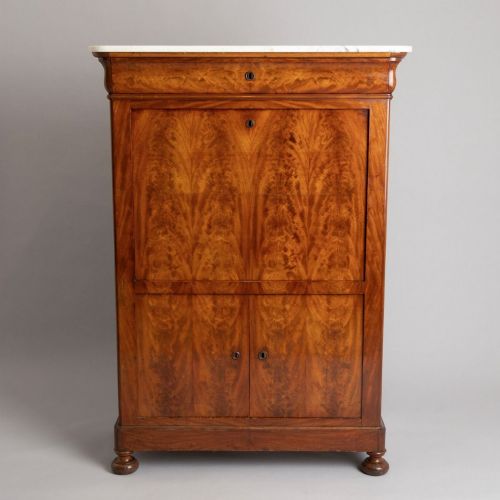


Empire Mahogany Desk
An empire mahogany desk brings classical symmetry and rich timber warmth to a room, offering a commanding centrepiece for study or writing.
Empire Mahogany Desk
An empire mahogany desk embodies the formal restraint and classical motifs of the early nineteenth century, drawing on French Empire, Regency, and later revival periods.
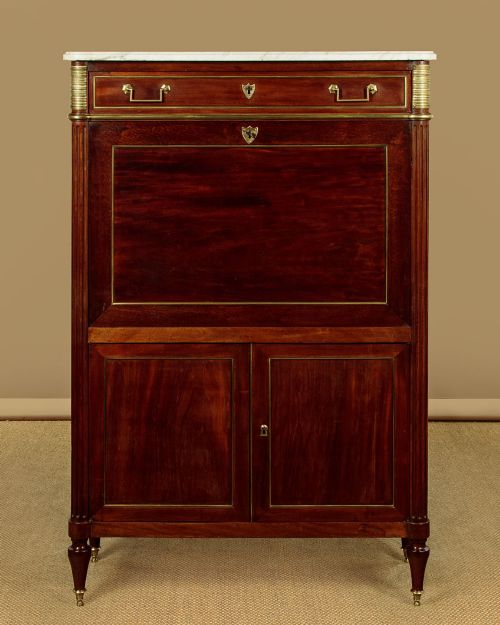
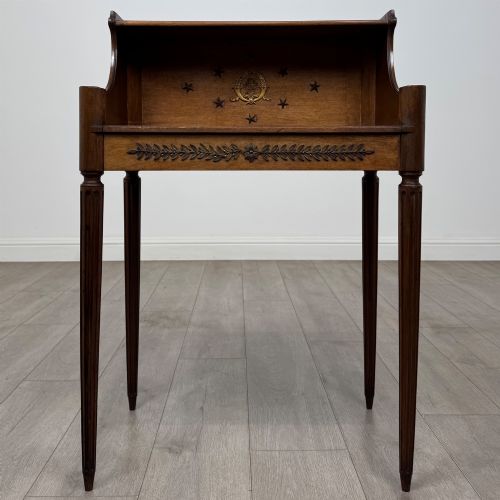
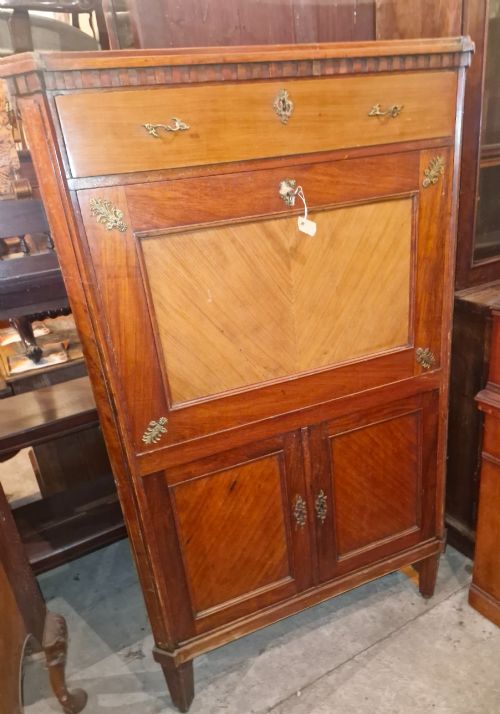
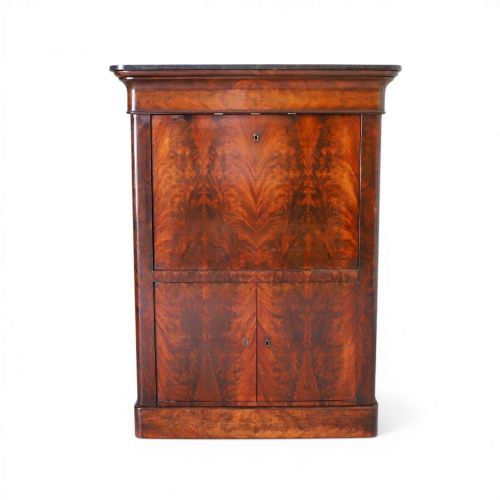
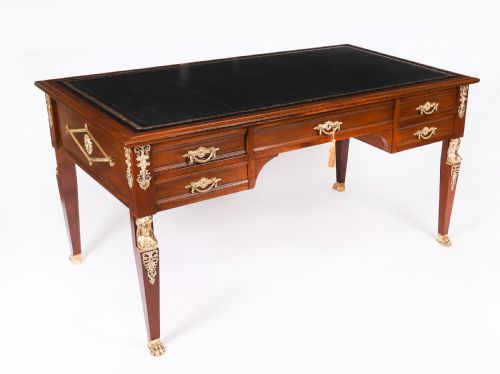
The version most commonly met on this page is the French bureau-plat or the upright secretaire à abattant, featuring rich dark timber construction.
These pieces originated in continental workshops and subsequent British adaptations, bridging the gap between grand reception rooms and functional studies.
How they were made
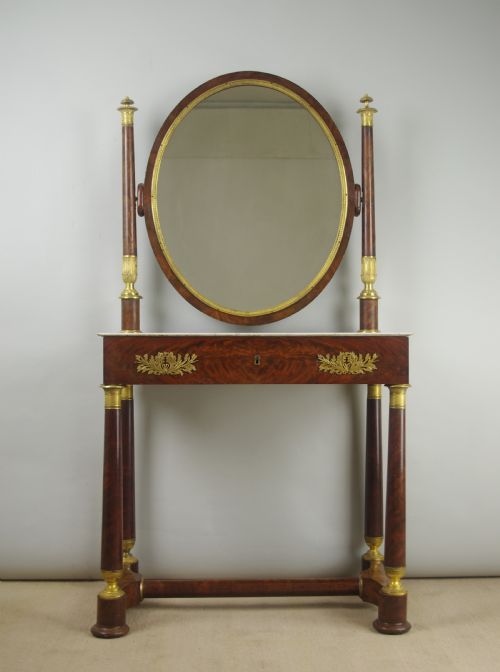
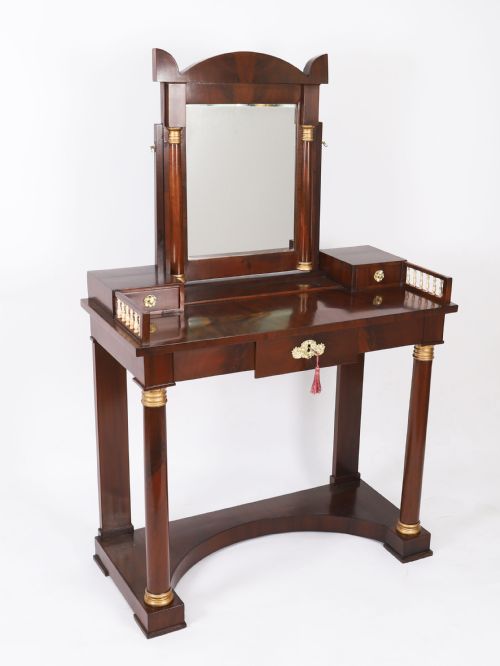
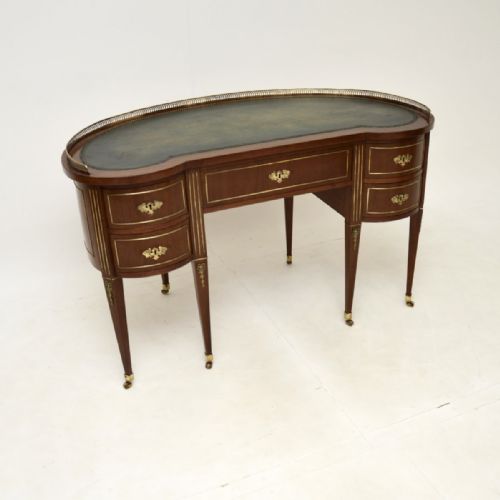
Cabinetmakers utilised dense mahogany and flame mahogany veneers laid over secondary carcassing, paired with contrasting brass and ormolu mounts.
Surfaces were frequently finished with inset tooled leather writing panels, while structural elements incorporated cast bronze details and marble tops.
Many secretaires hide ingenious secret drawers behind dummy book spines and spring-loaded panels.
What varies in quality
The standard of execution depends heavily on the crispness of the cast ormolu mounts and the selection of figured flame mahogany veneers.
Finer examples display careful internal drawer configuration and harmonious proportions, whereas simpler pieces rely on standard timber figure without elaborate metalwork.
Jean-Joseph Chapuis·Krieger
The Empire Mahogany Desk Glossary
- Ormolu
- Gilt bronze ornamentation applied to furniture. This technique creates bright golden highlights against dark mahogany surfaces.
- Secretaire à abattant
- An upright fall-front desk. It conceals a fitted interior of small drawers and pigeonholes behind a vertical writing flap.
- Flame mahogany
- Timber cut to reveal a distinctive flickering grain pattern. Cabinetmakers reserved this for prominent drawer fronts and tabletops.
- Fauteuil de bureau
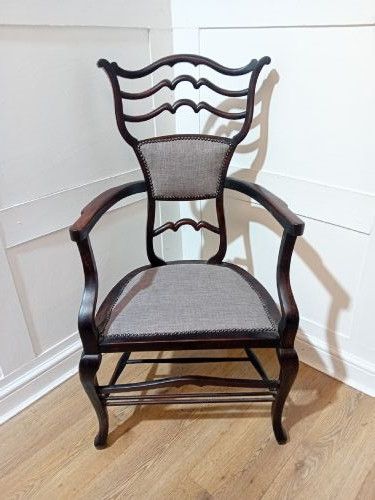
- An upholstered desk armchair. These chairs provide curved backrests designed for extended periods of writing.
Empire Mahogany Desk: Frequently Asked Questions
What is an empire mahogany desk?
An empire mahogany desk is a formal nineteenth-century writing table or cabinet defined by classical proportions, dark timber, and often gilt metal mounts.
These pieces reflect the design influences of the French Empire and subsequent revival periods, combining architectural dignity with practical workspace.
How do you use a secretaire abattant?
A secretaire abattant provides a drop-front writing surface that pulls down to reveal internal compartments and hidden drawers.
When closed, the drop-front conceals correspondence and paperwork, presenting a tidy upright cabinet facade in a room.
How do you distinguish original empire from revival?
Original pieces typically date from the early nineteenth century and show construction methods, timber patination, and hand-chased ormolu consistent with that era.
Revival pieces often date from the late nineteenth or early twentieth century, utilising slightly different internal framing and machine-finished hardware.
Where should an empire desk go?
A bureau-plat functions best floating in the centre of a study or library because finished mahogany panels wrap around all four sides.
Upright secretaires and cylinder desks suit placement against a primary wall, serving as both functional writing stations and display surfaces.