




Empire Crystal Basket
An empire crystal basket brings classical French lighting into a room through tiered glass drops and classical metal mounts.
Empire Crystal Basket
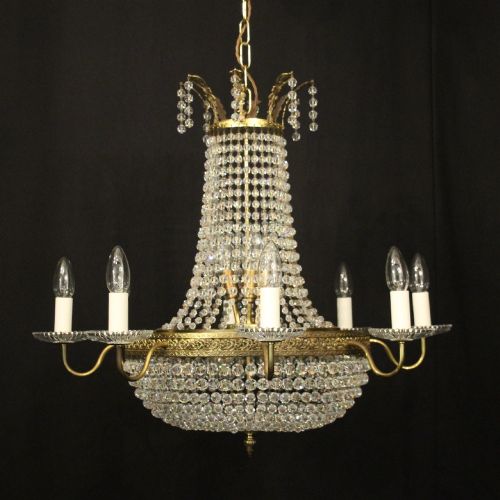
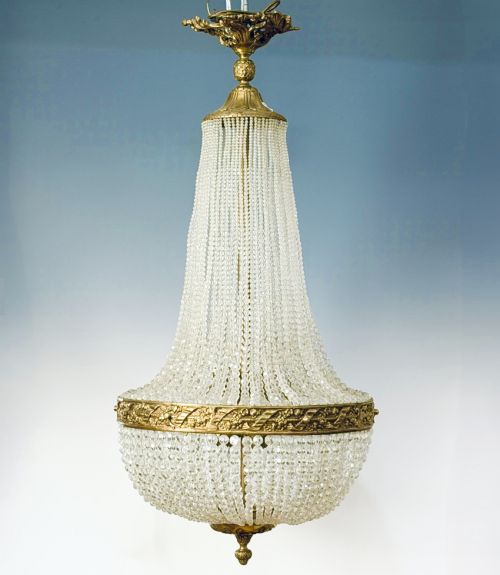
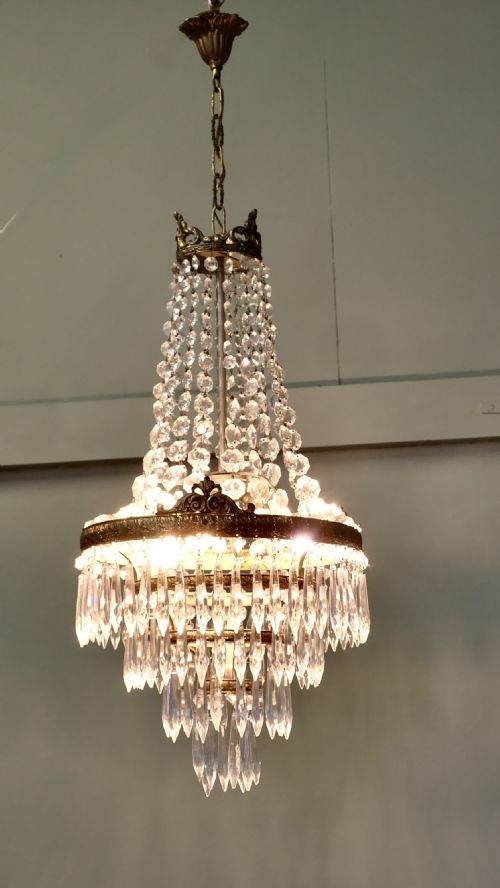
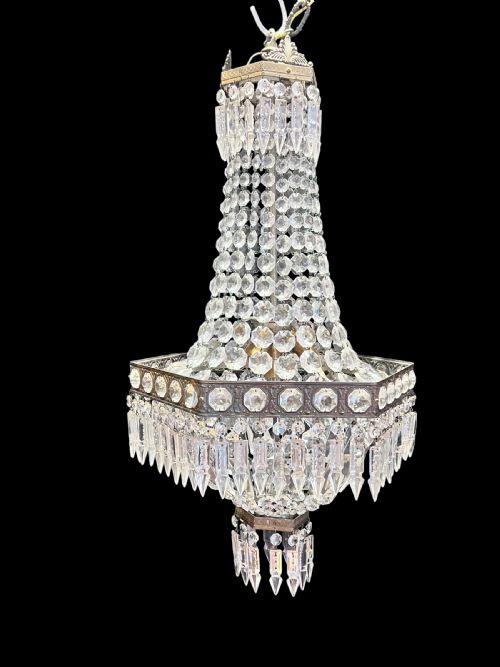
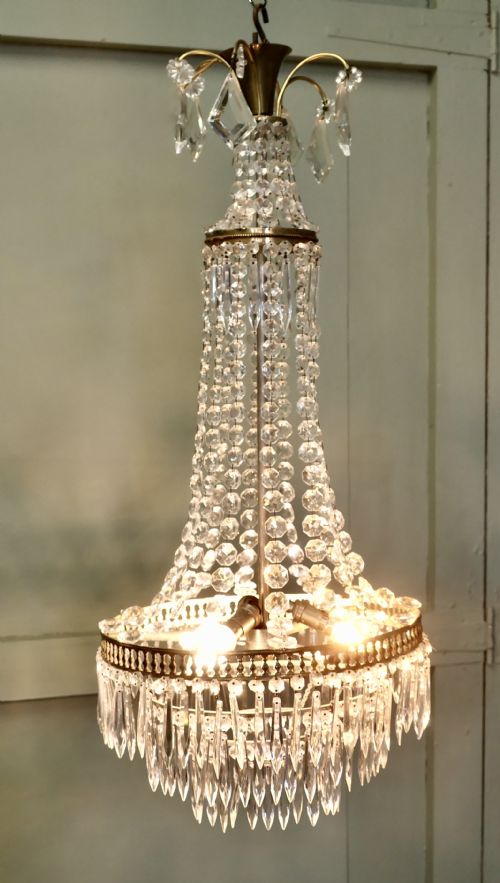
When you search for an empire crystal basket, you are looking at decorative hanging light fittings and centrepiece bowls that draw on classical French design. The pieces on this page span the nineteenth century through to the 1930s, taking forms such as single light basket chandeliers, tent and waterfall arrangements, and wall lights.
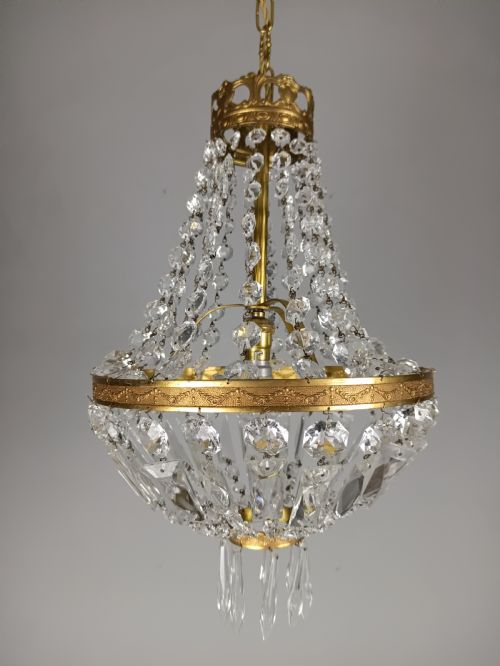
You will encounter pieces styled in the French Empire and Regency manners alongside Edwardian and later interpretations. Many examples combine glass bowls or baskets with structured brass, ormolu, bronze, and gilt brass frames, often finished with blue prisms at the top and centre.
The selection ranges from petite eight inch bag chandeliers and wall fittings to large tent and waterfall chandeliers. These objects merge functional illumination with ornamental glasswork, using faceted drops to catch and reflect light.
How they were made
Makers constructed the frames of these pieces using cast metals including brass, ormolu, bronze, and gilt brass to form rigid structural baskets and coronas. These metal mounts provided the secure armature required to suspend hundreds of individual glass elements.
The glass components rely on cut glass and cut crystal, shaped into beads, prisms, and drops. Artisans hung these elements in tent and waterfall configurations or arranged them to form the body of the basket itself.
Empire Crystal Basket Retail Price Guide 2026
Typical asking prices for empire crystal basket among the pieces listed under this phrase on Sellingantiques today, from the lower quarter to the upper quarter. They describe what is for sale here now, not the wider market.
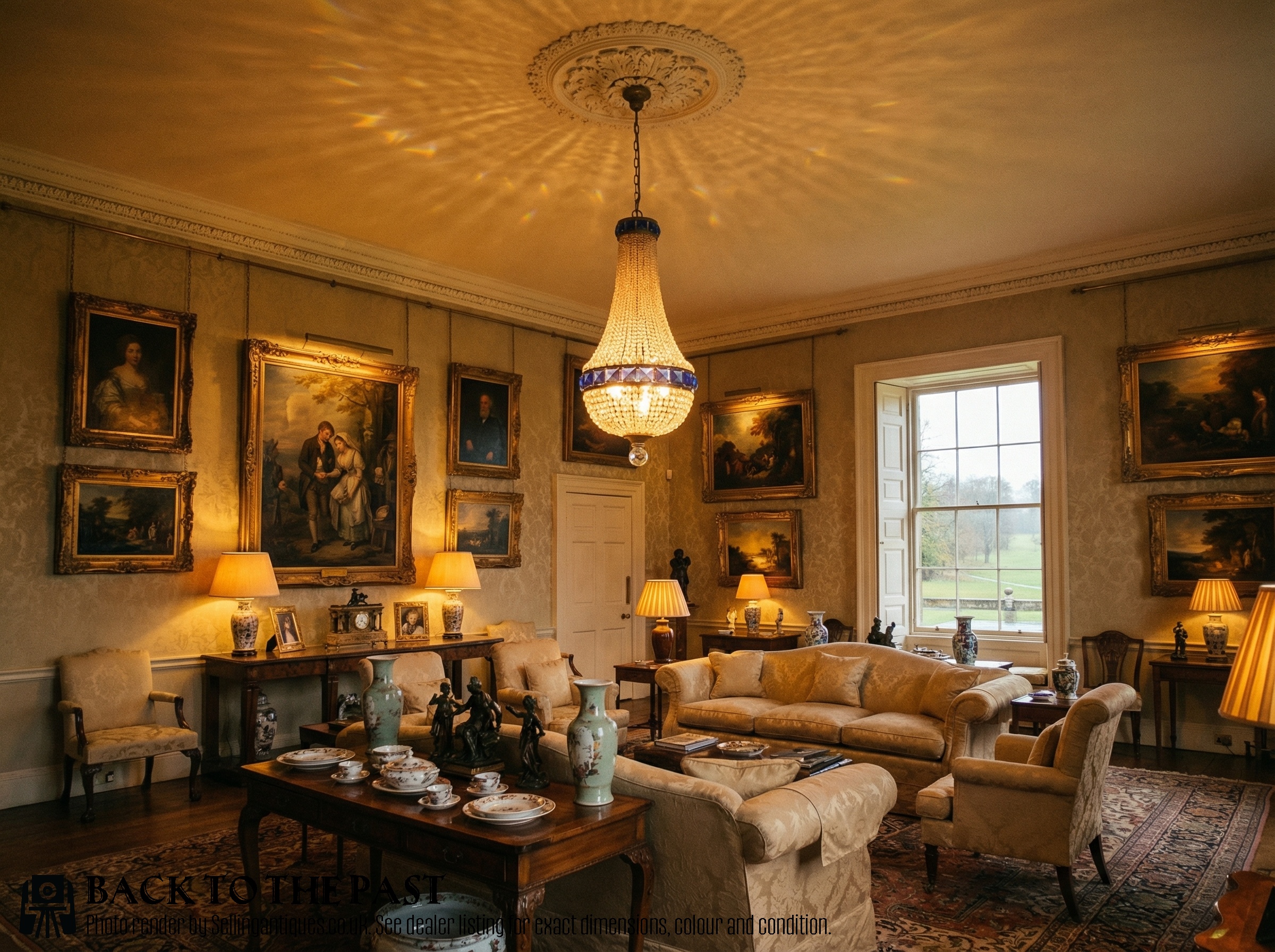
Some early twentieth century bead chandeliers feature unexpected blue prisms tucked away at the top and centre.
What varies in quality
Quality in these pieces rests on the precision of the metal casting and the clarity of the glasswork. Heavier bronze or ormolu mounts with crisp detailing separate finer examples from simpler brass frames.
The cut of the crystal determines how effectively the piece refracts light. Deeply faceted prisms and consistent matching drops indicate a higher grade of manufacture than pressed or uniform glass.
The Empire Crystal Basket Glossary
- Tent and waterfall
- A lighting configuration where upper strands of beads form a conical tent shape above a lower cascade of cascading crystal drops. This arrangement defines many classical basket chandeliers.
- Ormolu
- A gilded bronze technique used for decorative metal mounts and furniture fittings. It provides a rich golden finish on the structural elements of French lighting.
- Prism
- A cut glass pendant designed to refract light into spectral colours. These hang from the frames and borders of the baskets.
- Bag chandelier
- A compact lighting form shaped like a small pouch or bag, densely packed with glass beads and drops. These smaller fittings suit lower ceilings and intimate spaces.
Empire Crystal Basket: Frequently Asked Questions
How do I hang a crystal basket chandelier?
These chandeliers suspend from ceiling hooks using their integrated metal loops or chains, matching the weight of the brass and bronze frames.
Ensure the hanging point is secured to a ceiling joist to safely support the combined weight of the metal structure and glass components.
Where should I place a wall light version?
Wall lights suit hallways, flanking mirrors, or framing chimney breasts to provide balanced secondary illumination in a room.
Position them at a height that keeps the glass prisms at or slightly above eye level for comfortable viewing.
How do I clean the crystal drops?
Carefully wipe individual glass prisms and beads using a lint-free cloth dampened with a mild solution of warm water and washing-up liquid.
Keep the metal frames dry during cleaning to protect finishes such as gilt brass, ormolu, and bronze from moisture damage.
What period do these pieces belong to?
The pieces available span from the nineteenth century through the Edwardian era up to the 1930s, incorporating French Empire and Regency design influences.
Earlier examples feature hand-cut crystal and fire-gilded bronze, while twentieth-century pieces often utilise machine-cut glass and simpler brass frames.