

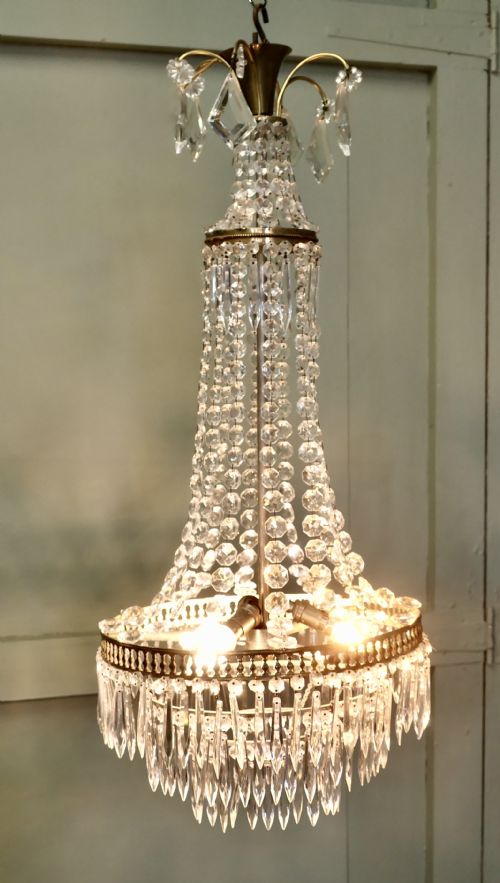


Empire Style Ceiling Lamp
An empire style ceiling lamp brings formal classical proportion to a room, offering striking illumination through structured tiers of brass and crystal.
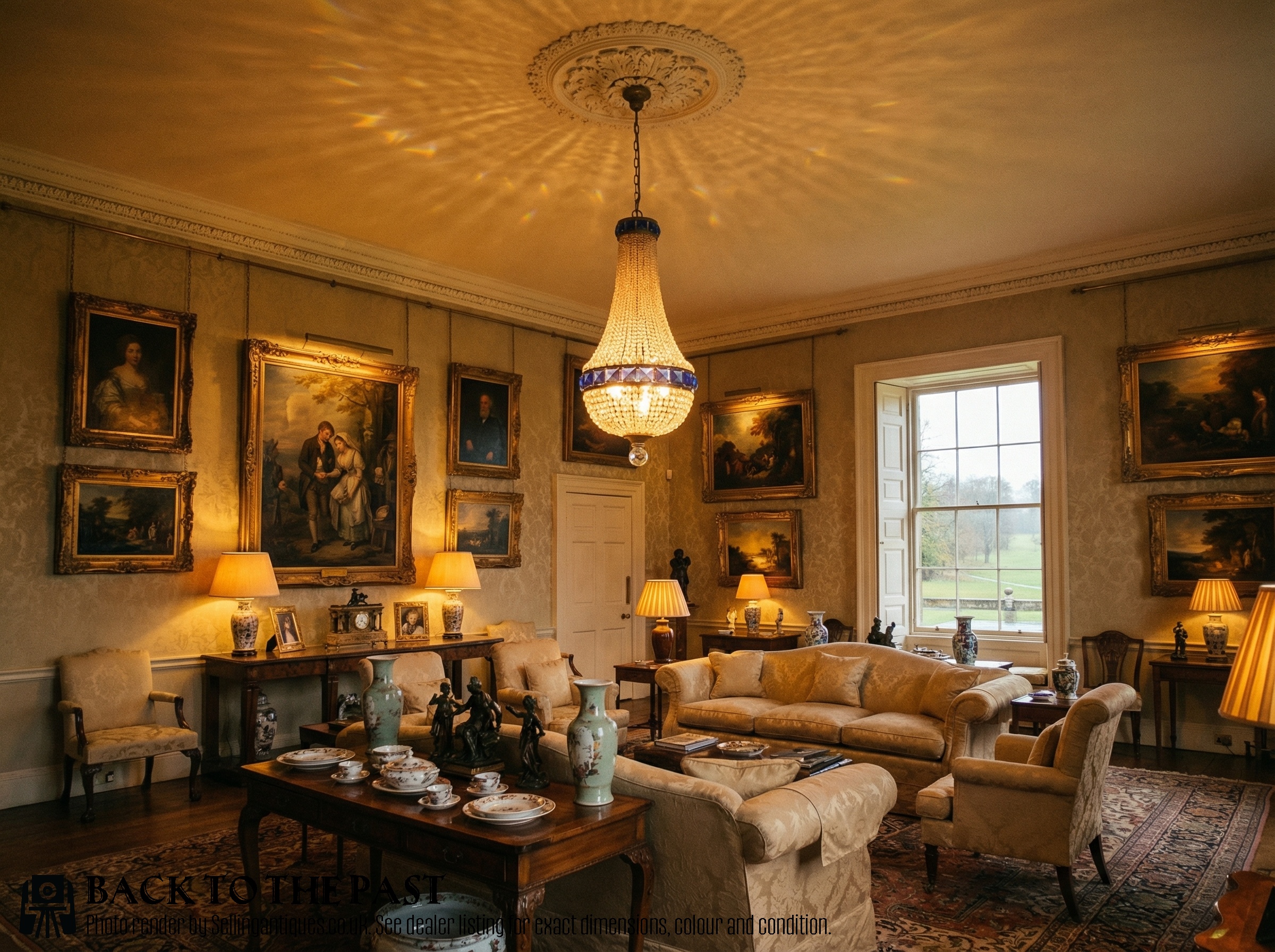
Empire Style Ceiling Lamp
An empire style ceiling lamp draws on neoclassical design principles, featuring symmetrical forms and classical ornamentation designed to command a room. These fixtures appear across multiple decades, including nineteenth century examples alongside revival pieces from the early twentieth century.
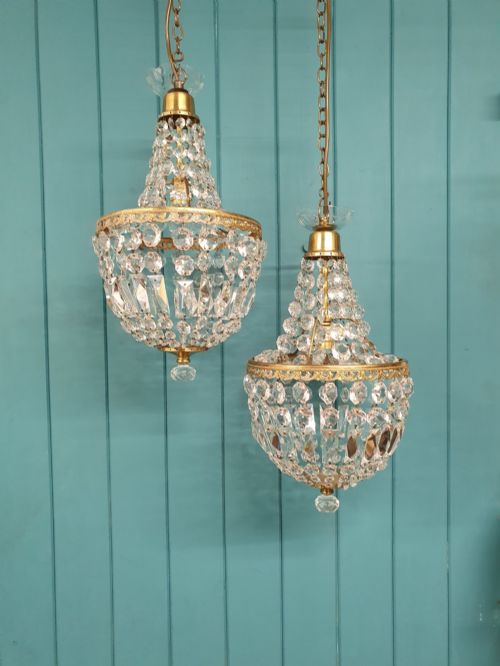
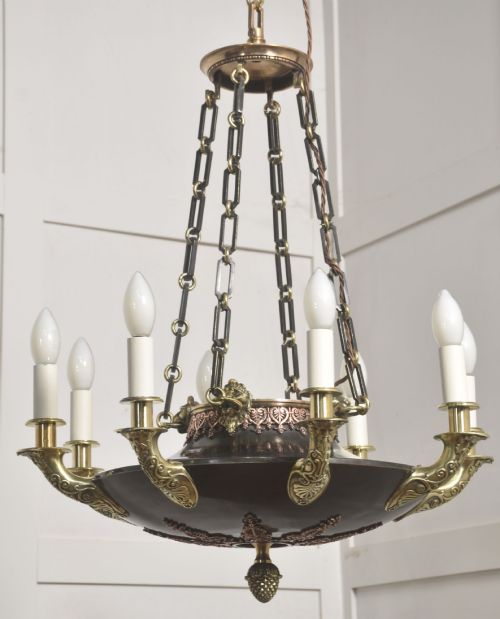
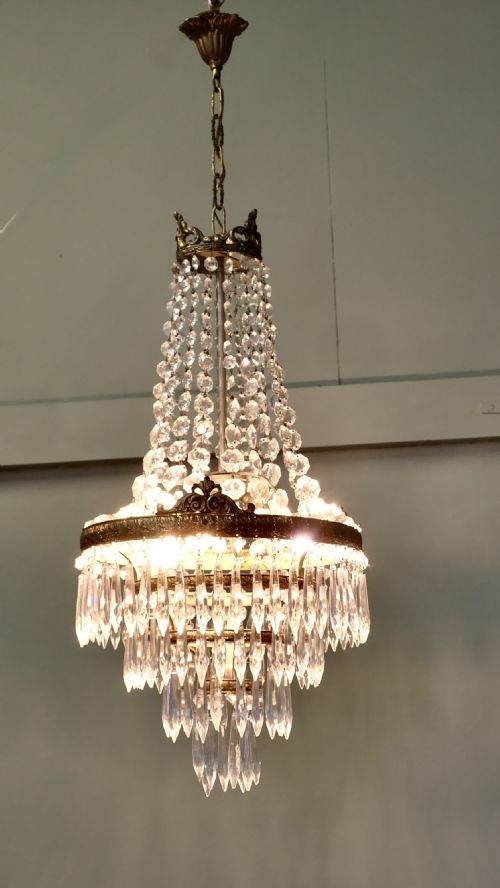
The selections available range from single light basket chandeliers to multi-tiered tent and waterfall configurations hung with glass and crystal drops. Brass and gilt bronze form the structural backbone of these pieces, often accented with patinated surfaces or delicate blue prisms.
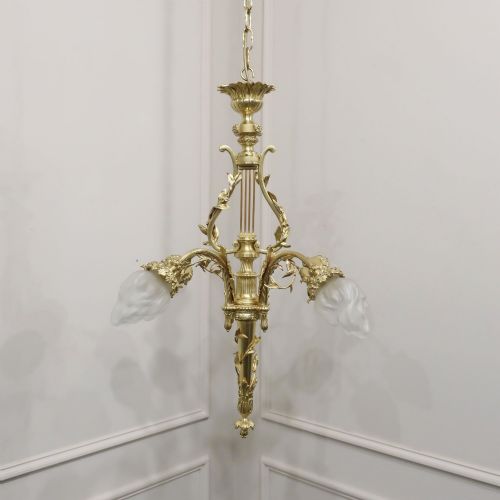
Originating predominantly from French workshops, these ceiling lights span diverse configurations such as lyre designs, colza hanging lights, and multi-arm chandeliers. Buyers encounter both grand sixteen-light installations and more compact single-light fittings suitable for smaller spaces.
Evaluating quality and craftsmanship
The finesse of the metal casting dictates the overall standard of the piece, with crisper detailing in the bronze and brass mounts separating superior examples from simpler productions. Hand-chiselled ornamentation and well-defined classical motifs indicate higher workshop standards.
The clarity and cut of the crystal components also drive distinction, where genuine cut glass prisms produce sharper refraction than moulded glass alternatives. Additionally, integrated proportions between the metal corona, the body, and the cascading drops define the visual success of the lamp.
Empire Style Ceiling Lamp Retail Price Guide 2026
Typical asking prices for empire style ceiling lamp among the pieces listed under this phrase on Sellingantiques today, from the lower quarter to the upper quarter. They describe what is for sale here now, not the wider market.
Some early twentieth century examples feature unexpected blue prisms tucked away at the centre, adding a sudden flash of colour to the traditional crystal cascade.
The Empire Style Ceiling Lamp Glossary
- Empire style
- A design movement originating in France during the early nineteenth century, characterised by heavy neoclassical influence, military motifs, and classical symmetry.
- Tent and waterfall
- A lighting configuration where strings of crystal beads form an upper tent shape above a cascading lower tier of hanging drops.
- Gilt bronze
- Bronze metal treated with a thin layer of gold or gold-coloured alloy to produce a bright, luxurious metallic surface.
- Colza lamp
- A nineteenth century lighting mechanism that utilised colza oil, often adapted into hanging light fixtures during later revival periods.
- Prism
- A cut glass or crystal element designed to refract light into spectral colours, suspended from the frame in various geometric shapes.
Empire Style Ceiling Lamp: Frequently Asked Questions
How do I clean an empire style ceiling lamp?
Maintenance requires gentle dusting of the metal frame and careful washing of individual crystal drops using warm water and mild soap.
Techniques must avoid harsh chemical cleaners that could strip the gilt or patinated finish from the brass and bronze components.
Are these lamps suitable for low ceilings?
Most empire style ceiling lamps feature hanging chains or drops that extend downwards, making them better suited for rooms with generous ceiling heights.
Compact single-light basket fixtures or shorter flush variants provide alternative options when vertical space is restricted.
What is the difference between original and revival pieces?
Original pieces date from the nineteenth century or earlier, bearing the authentic manufacturing techniques and material patination of their era.
Revival pieces, often produced in the early twentieth century, replicate these classical forms while utilising contemporary wiring standards of their time.
How do I determine the correct size chandelier?
Sizing depends on the room dimensions and the intended placement, balancing the physical diameter of the metal frame against the square footage of the space.
Larger tent and waterfall configurations demand wider clearance to ensure the scale complements the surrounding furniture and ceiling height.