

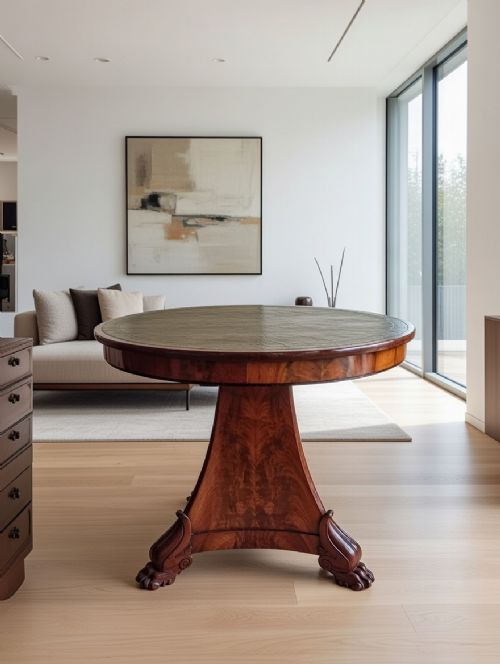
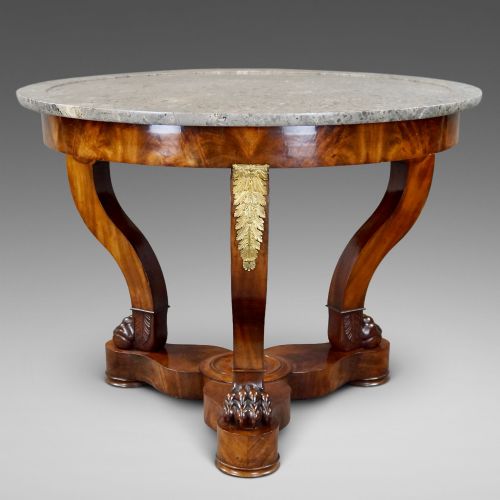


Empire Center Table
An empire centre table brings classical proportion and presence to a room, standing as the focal point of a well-composed interior.
Empire Center Table
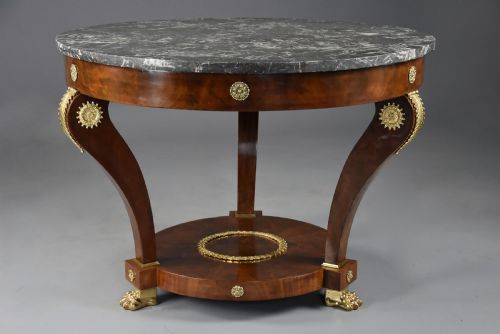
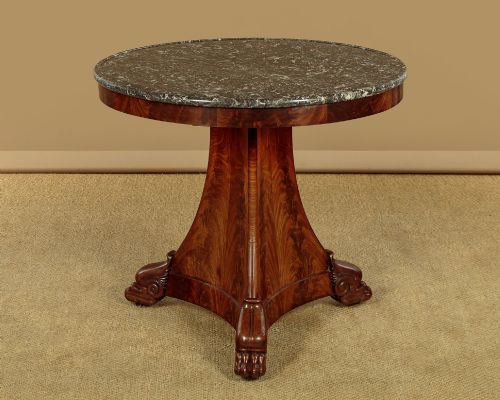
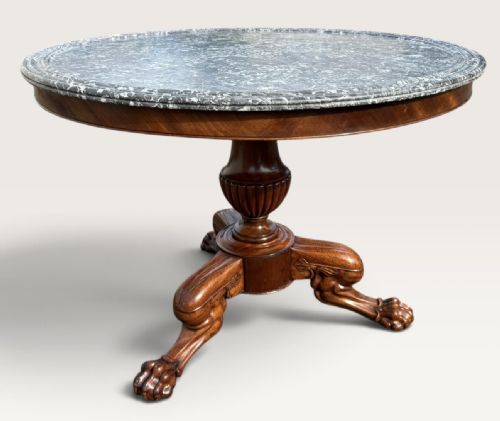
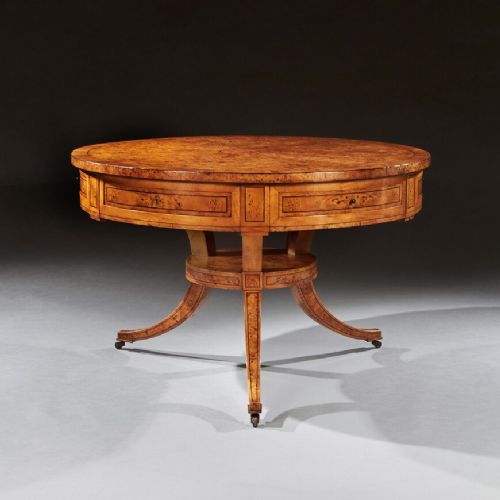
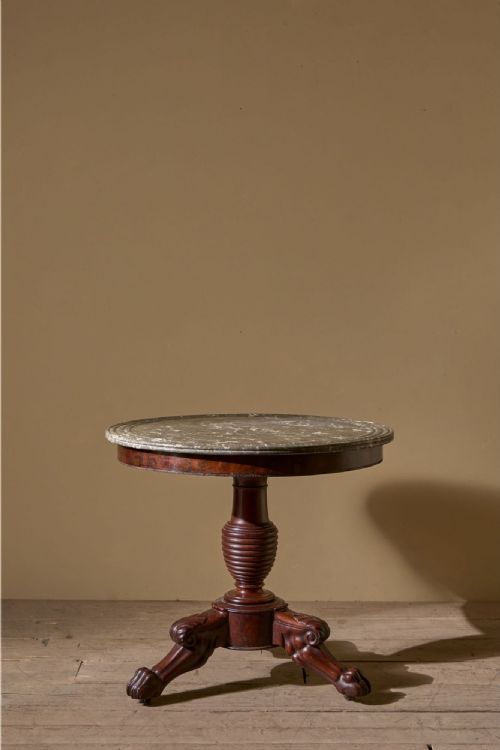
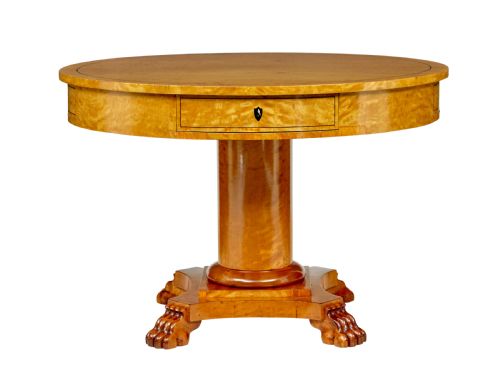
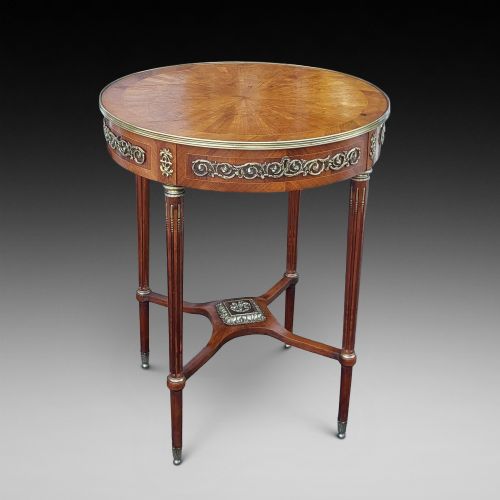
An empire centre table is designed to stand free in the middle of a room, finished on all sides with a circular or occasionally oval top. The pieces gathered under this phrase span the nineteenth century, including pieces from the French Empire, French Restoration, Charles X, and Swedish Biedermeier periods.
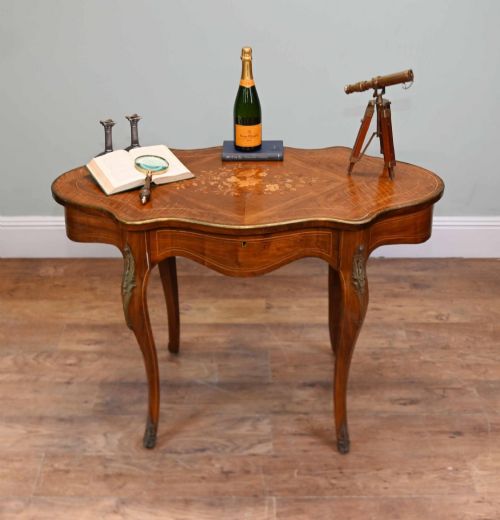
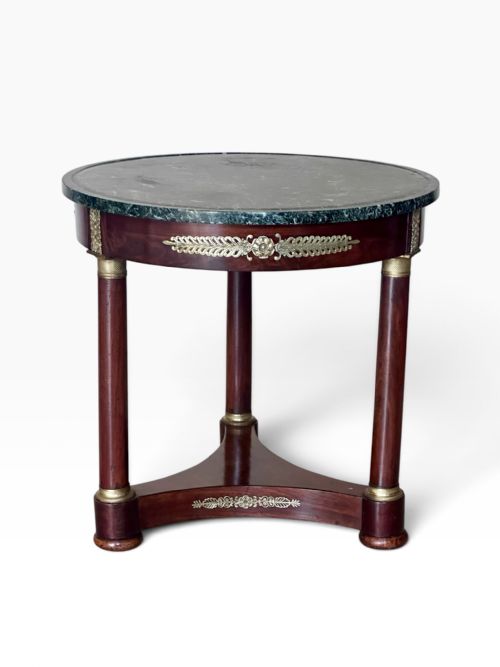
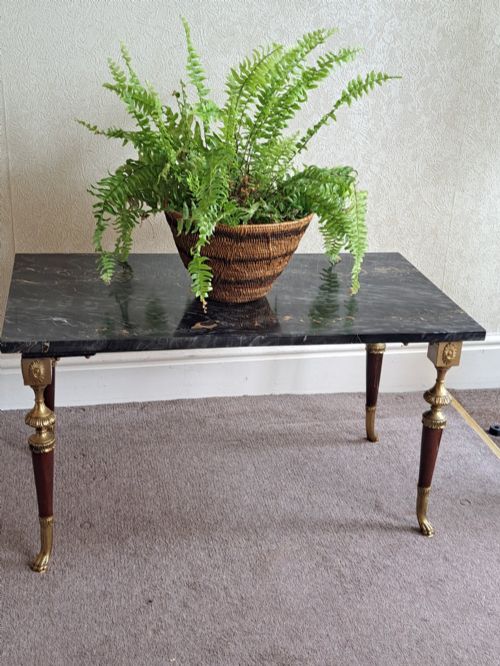
The most common form on this page is the gueridon, a round pedestal table frequently topped with white, grey, or black marble. Alongside these pedestal tables, buyers find occasional tables, sofa tables, and occasional side tables that share the vocabulary of classical revival design.
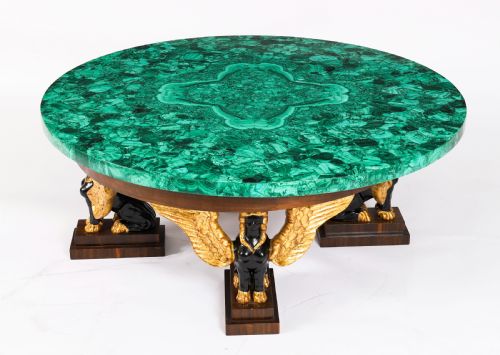
Origins stretch from French workshops to Scandinavian studios, encompassing walnut, mahogany, burr elm, birch, and ebonised wood. Many examples incorporate architectural pedestals supported by winged figures, swans, or brass mounts.
Materials and construction
Cabinet makers utilised dense hardwoods such as mahogany, kingwood, and walnut, often laid as veneers over stable secondary timbers to create expansive circular surfaces. Burr root maple, burr elm, and birch appear in Scandinavian pieces, displaying distinct natural grain patterns.
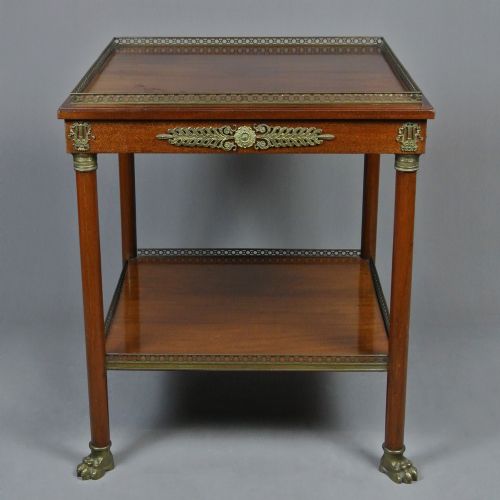
Surfaces frequently integrate heavy slabs of inset marble, resting securely within wooden rims or stone troughs. Ormolu, cast brass, and giltwood provide structural and decorative mounts, accentuating the architectural lines of the central pillars and pedestals.
Empire Center Table Retail Price Guide 2026
Typical asking prices for empire center table among the pieces listed under this phrase on Sellingantiques today, from the lower quarter to the upper quarter. They describe what is for sale here now, not the wider market.
Periods represented span French Empire, Regency, Charles X, and Swedish Biedermeier revival movements.
Factors of quality
Quality rests in the crispness of the carving and the weight of the materials used in the base and top. Finer examples display deeply chased brass or ormolu mounts and tightly figured timber veneers matched symmetrically across the circular top.
The integration of the central pillar to the platform base dictates the stability and proportion of the piece. Superior construction ensures the marble or timber top remains level and firmly seated without excessive secondary reinforcement.
JACOB
The Empire Center Table Glossary
- Gueridon
- A small round table on a central pillar, originating in seventeenth-century France and remaining popular through the nineteenth century. These tables frequently feature marble tops and heavy pedestals.
- Ormolu
- Gilded bronze used for decorative mounts on furniture. It provides bright metallic contrast against dark mahogany and ebonised wood surfaces.
- Biedermeier
- A Central European style dating from the early to mid-nineteenth century, focusing on clean lines and domestic comfort. Woods like birch and walnut are utilised to display natural grain without excessive ornamentation.
- Charles X
- A French style spanning the 1820s and 1830s, bridging the Empire period and the July Monarchy. Pieces from this era often employ lighter native timbers and simpler geometric veneering.
- Sofa table
- A rectangular table traditionally placed in front of or beside a sofa, often fitted with drop leaves and paired trestle supports. The form emerged in the Regency period and continued into later revivals.
Empire Center Table: Frequently Asked Questions
Where do I place an empire centre table?
These tables are designed to stand in the middle of a room, functioning as a surface for lamps, books, or floral arrangements. Because they are finished on all sides, they command attention from any angle.
In larger spaces, an empire centre table anchors a seating group or fills a wide entrance hall. Smaller gueridon variants fit comfortably beside armchairs or in reception rooms.
How do I care for a marble top?
Marble surfaces require simple maintenance using soft cloths and mild, non-acidic soap solutions to prevent staining. Avoid placing citrus or vinegar directly on the stone, as acid etches the polished finish.
Periodic waxing is unnecessary for polished stone, though wooden bases benefit from appropriate furniture wax applied sparingly. Using coasters protects both the marble and the underlying timber frame.
What is the difference between Empire and Biedermeier?
Empire furniture draws directly on Roman, Greek, and Egyptian classical motifs, featuring dark mahogany, gilt bronzes, and monumental architectural supports. The aesthetic is formal and grounded in imperial grandeur.
Biedermeier tables originate from Germanic and Scandinavian regions, favouring lighter birch and walnut timbers. They strip away heavy metal mounts in favour of minimalist geometry and emphasis on wood grain.
Can I use a gueridon as a coffee table?
Many nineteenth-century gueridons and occasional tables match the height and proportions required for modern seating arrangements. Their circular tops offer convenient access from multiple surrounding seats.
When selecting a table for daily use, consider the stability of the central pedestal and the durability of the wooden or stone surface.