


Empire Bronze Clock
An empire bronze clock brings monumental weight, classical allegory and precise French or English movement to a mantelpiece.
Empire Bronze Clock
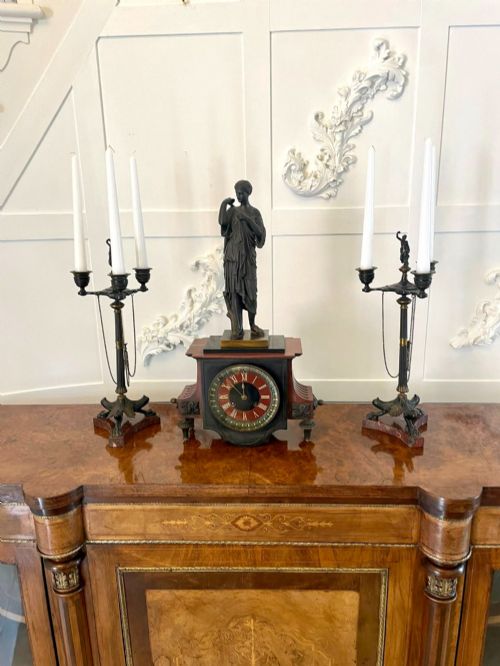
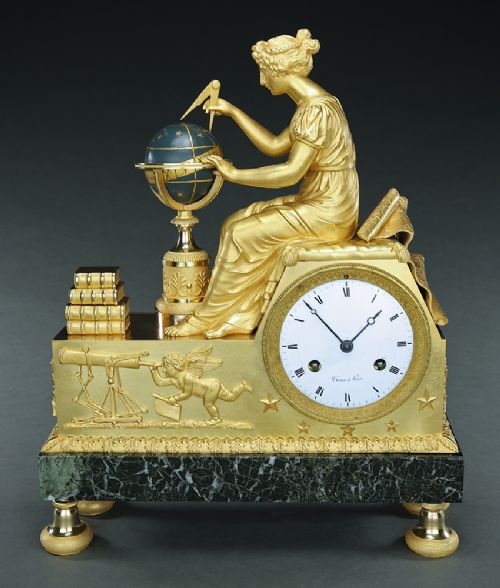
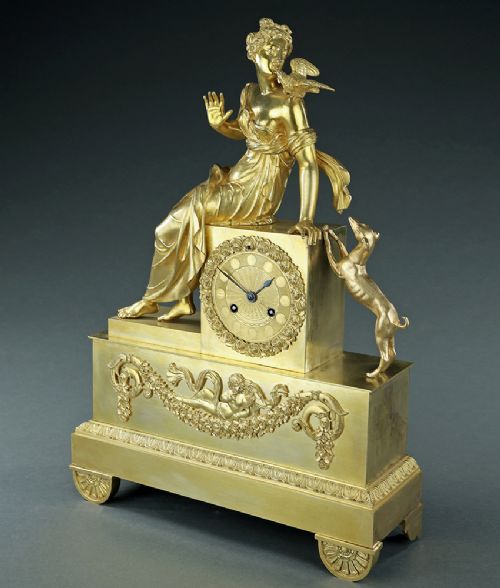
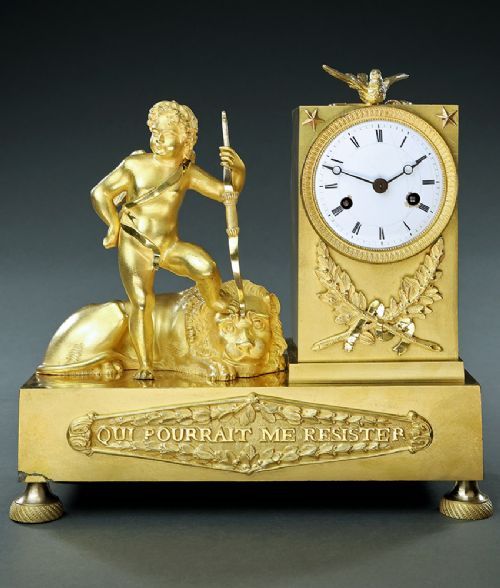
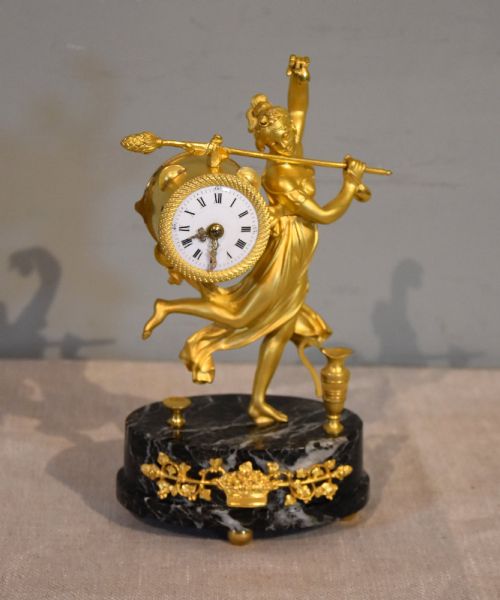
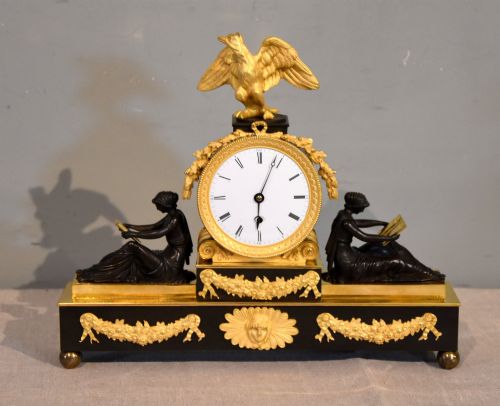
An empire bronze clock stands as a formal centrepiece, combining cast metal figures with architectural bases of marble or mahogany. These pieces span the 18th century, Regency and Victorian periods, often taking the form of mantel clocks, portico clocks or complete garniture sets flanked by matching vases or candelabra.
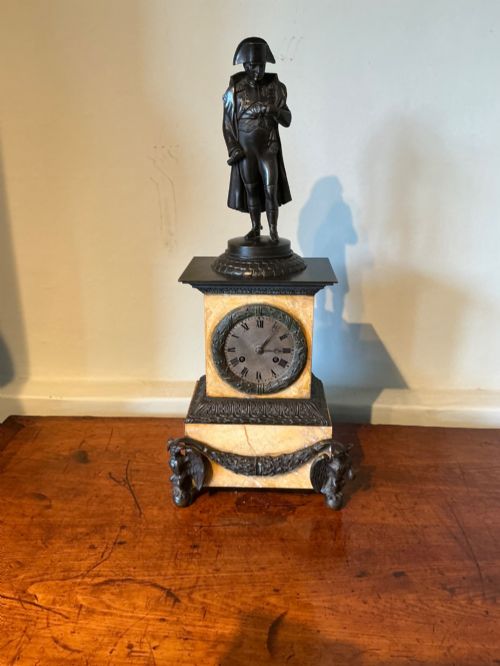
The subjects draw heavily on classical mythology, military triumph and romantic allegory, depicting figures such as Napoleon, Cronos or Urania. Buyers encounter both French works from makers in Paris and English Regency interpretations featuring brass and gilt details.
How They Were Made
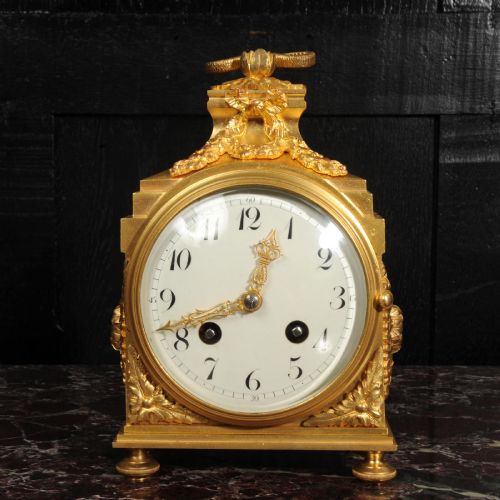
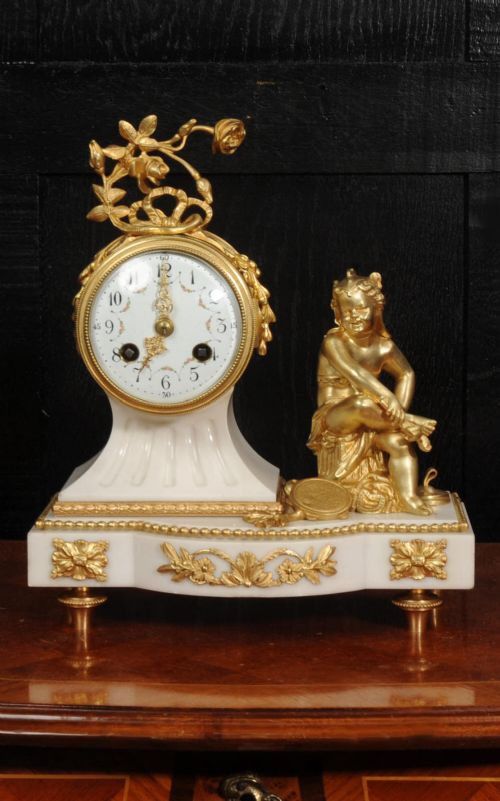
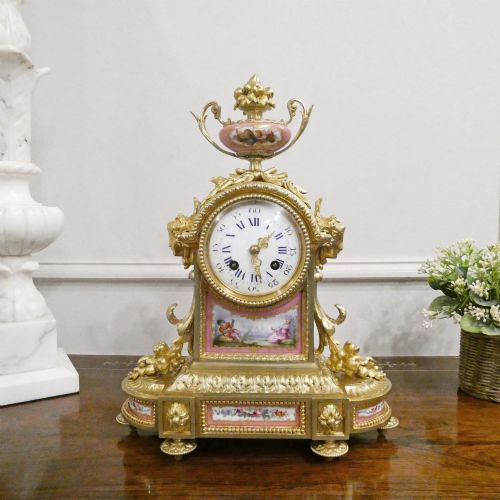
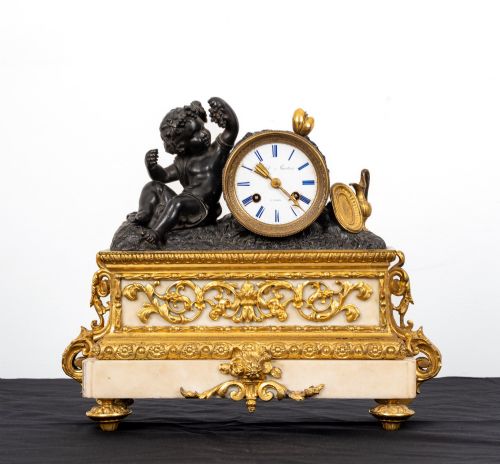
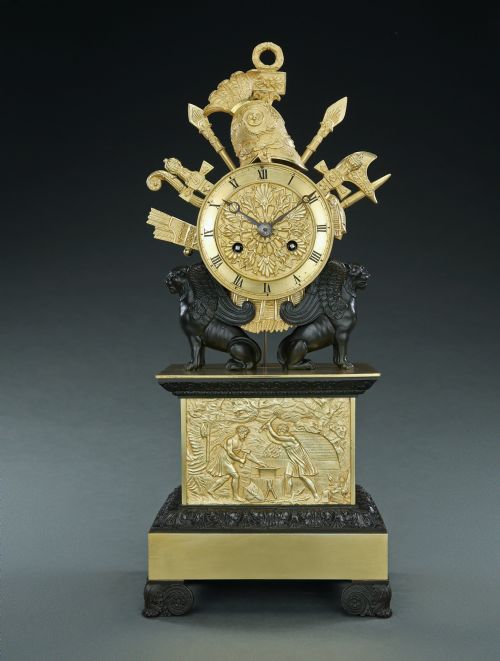
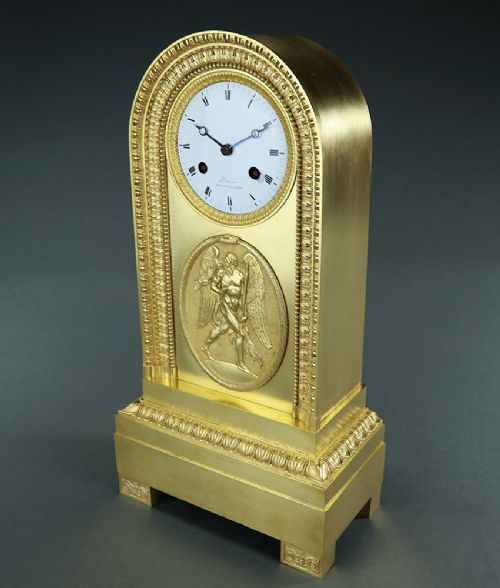
Casings combine patinated bronze and bright ormolu alongside bases carved from rouge or green marble, ebonised wood and cut crystal. Metal components rely on traditional lost-wax casting and mercury gilding to achieve contrasting dark bronze highlights and luminous gold surfaces.
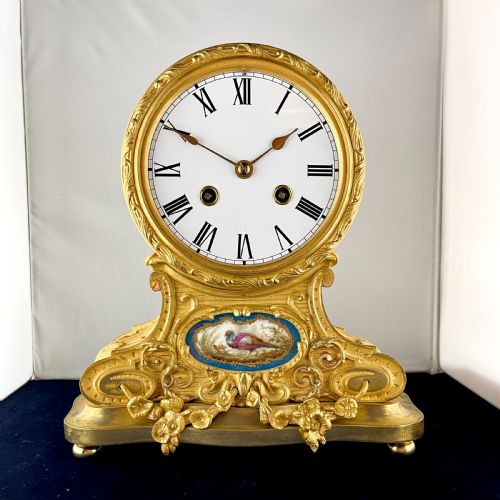
Clock faces incorporate white enamel dials paired with delicate hands, housed behind glass bezels and driven by mechanical movements produced by established continental and domestic workshops.
Listings feature 19th-century French and Regency periods alongside materials including gilt bronze, ormolu, marble, enamel and cut crystal.
What Varies in Quality
The distinction rests in the crispness of the bronze chasing and the depth of the gilding across the cast ornaments. Superior examples display sharply defined facial expressions, finely textured drapery on figures, and heavy, solid marble plinths rather than thin veneered shells.
Movement sophistication also dictates standard, moving from standard timepieces to complex musical mechanisms or signed dials associated with recognised Parisian horologists.
Japy Freres·Siffel and Cartier·Canaillor of Paris·Breguet
The Empire Bronze Clock Glossary
- Ormolu
- Gilt bronze created by applying a mercury and gold amalgam to a bronze base before heating. This technique produces a rich, durable golden surface seen on French mantel clocks.
- Portico clock
- A tall, architectural clock style featuring four supporting pillars framing a central suspended movement. They frequently date from the Charles X and Empire periods.
- Garniture
- A set comprising a central clock accompanied by matching decorative side pieces such as urns or candelabra. These matched sets were designed to display together on a mantelpiece.
- Patinated bronze
- Bronze treated with chemical solutions to darken the surface and create subtle tonal variations. It contrasts sharply with polished ormolu details in figural compositions.
- Enamel dial
- A clock face formed by fusing powdered glass onto a copper or metal base at high temperatures. These crisp white surfaces usually feature painted Roman or Arabic numerals.
Empire Bronze Clock: Frequently Asked Questions
How do I wind an empire bronze clock?
Most mechanical movements require a specialised key inserted into the dial holes to tension the springs. Care must be taken not to overwind the mechanism.
Moving the hands should be done strictly clockwise on older movements to avoid damaging the delicate internal gear train.
How do I clean marble and ormolu?
Marble bases require a soft, dry cloth to remove dust without scratching the polished stone surface. Water and chemical cleaners can dull the porous material.
Ormolu mounts should be dusted gently with a dry brush, avoiding metal polishes that strip away historical gilding.
Were these clocks French or English?
The majority of empire bronze examples originate from Parisian workshops and makers during the height of the French Empire and subsequent revivals. Regency examples from London makers also appear in domestic brass and gilt.
French pieces typically emphasise cast bronze figural groups, while English alternatives often focus on architectural restraint.