





Empire Birch Furniture
Empire birch furniture brings pale warmth and clean classical lines to a room, led here by Swedish chests and tables.
Empire Birch Furniture
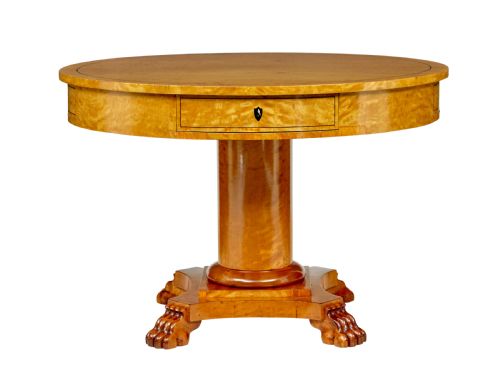
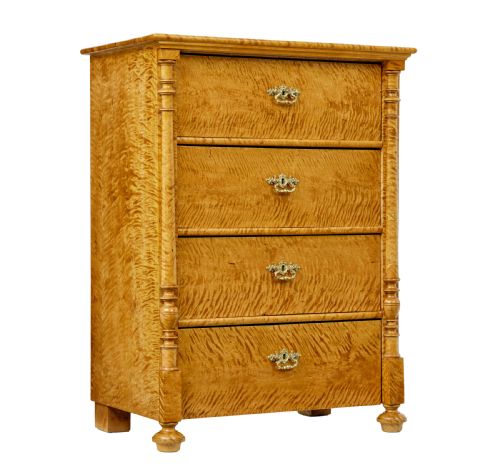
Empire birch furniture encompasses classical seating, tables and storage pieces originating primarily from nineteenth-century Sweden. These items combine the striking grain of native timber with the architectural silhouettes of the Empire and Biedermeier periods.
The selection on this page centres heavily on chests of drawers, sofa tables, and centre tables alongside armchairs and writing furniture. Most examples date from the nineteenth century, including later revival pieces that emulate earlier Swedish designs.
How they were made
Cabinetmakers utilised birch, flame birch, tiger birch and Karelian birch, frequently applying veneers over secondary woods such as pine to highlight the timber's natural figure. Surfaces often display contrasting details in ebonised wood or ebony.
Metal accents appear through cast or chased ormolu mounts, whilst iron structural supports occasionally reinforce tables and seating. Construction methods combined solid timber framing with precise veneering techniques suited to the distinctive grain.
Empire Birch Furniture Retail Price Guide 2026
Typical asking prices for empire birch furniture among the pieces listed under this phrase on Sellingantiques today, from the lower quarter to the upper quarter. They describe what is for sale here now, not the wider market.
Secondary materials recorded across the inventory include pine for internal framing, alongside ebonised wood, ebony, iron and ormolu for decorative and structural accents.
What varies in quality
Quality rests in the selection and matching of birch veneer, where dramatic flame or tiger figuring elevates a piece above plain timber surfaces. Cabinetmakers who carefully bookmatched veneers across drawer fronts achieved a much higher standard of visual balance.
The integration of contrasting ebonised details and ormolu mounts also defines the upper tier of execution. Finer examples retain crisp architectural mouldings and harmonious proportions that reflect their Swedish Empire or Biedermeier origins.
The Empire Birch Furniture Glossary
- Flame birch
- A figured timber variety showing a wavy, undulating grain pattern resembling flickering flames. Cabinetmakers prized this timber for prominent surfaces on chests and tables.
- Biedermeier
- A Central European style spanning the nineteenth century that favoured domestic comfort and clean lines. It stripped away excessive ornamentation to celebrate the natural beauty of woods like birch.
- Ormolu
- Gilded bronze mounts applied to furniture for decorative contrast. These metallic elements highlight classical motifs on tables and case pieces.
- Secrétaire
- A desk or chest of drawers featuring a fitted writing compartment with a drop-front or sliding surface. These dual-purpose forms combined storage with workspace.
- Ebonised wood
- Timber treated to imitate solid ebony, creating dark accents that contrast sharply against pale birch veneers. This technique defined many classical mouldings and structural details.
Empire Birch Furniture: Frequently Asked Questions
What is empire birch furniture?
These pieces comprise nineteenth-century tables, seating and storage items made primarily in Sweden using native birch timbers. They draw upon classical Empire and Biedermeier design traditions.
The style is defined by pale wood grains, architectural proportions and contrasting ebonised details or ormolu mounts.
How do I clean birch surfaces?
Dust regularly with a soft, dry cloth to prevent dirt accumulation on the veneer. Avoid chemical polishes that can damage nineteenth-century finishes.
Maintain stable humidity levels in the room to protect the wood and veneer from splitting or warping over time.
Where were these pieces made?
The listings on this page consist largely of nineteenth-century Swedish craftsmanship. Cabinetmakers in Sweden adapted international Empire styles into a distinctive domestic tradition.
Birch was widely available locally, making it the primary material for both provincial and sophisticated urban workshops.
How do I identify a Biedermeier piece?
Biedermeier furniture focuses on clean forms and unadorned surfaces that showcase the natural grain of woods like Karelian birch. These designs emphasise practicality alongside refined proportions.
They often lack the heavier gilt bronze ornamentation of earlier French Empire styles, preferring subtle ebonised contrasts instead.