


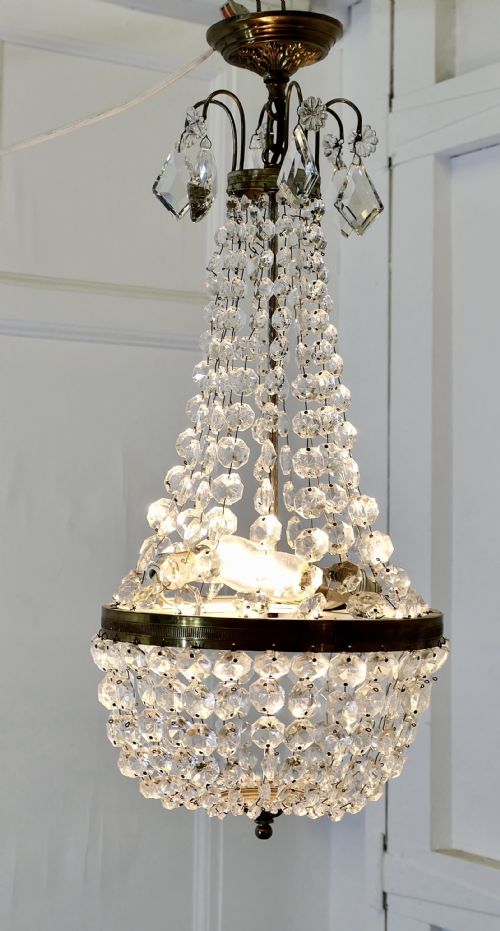

Empire Basket Light
An empire basket light brings neoclassical symmetry and sparkling crystal drops to a high ceiling.
Empire Basket Light
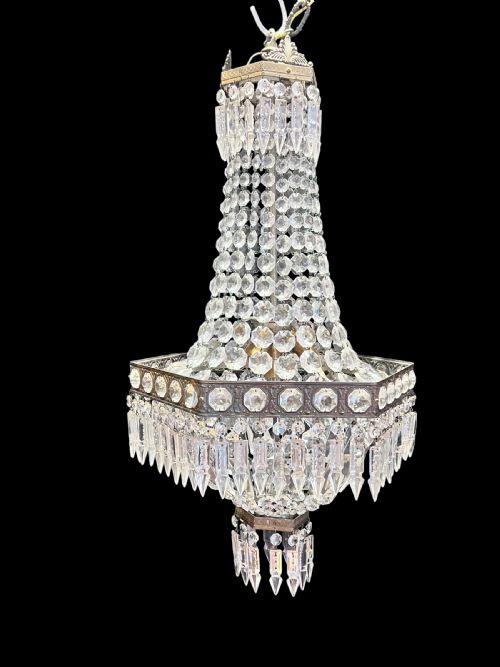
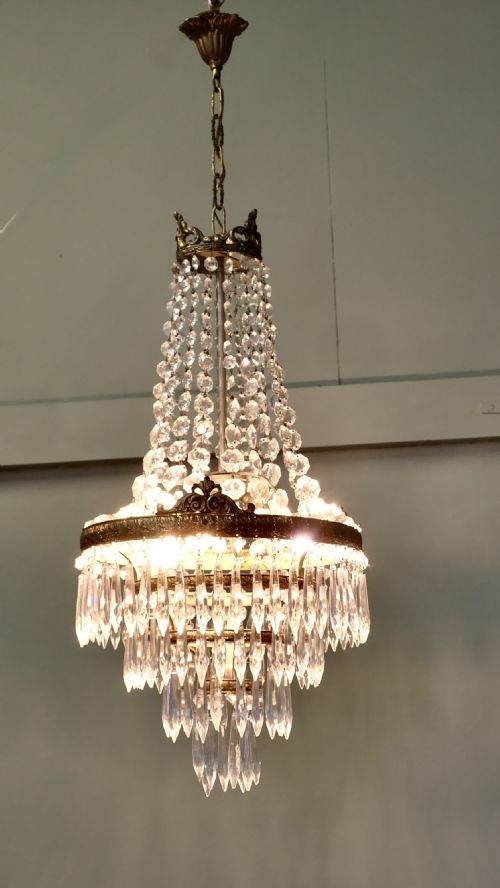
An empire basket light takes the classical vocabulary of the nineteenth and early twentieth centuries and applies it to domestic illumination. When you search for this phrase, you encounter French chandeliers and wall lights spanning the nineteenth century, Edwardian era, and the 1900s to 1930s. These pieces combine formal grandeur with intimate scale, often taking the form of single light or multi-light fixtures suspended by chains or frames.
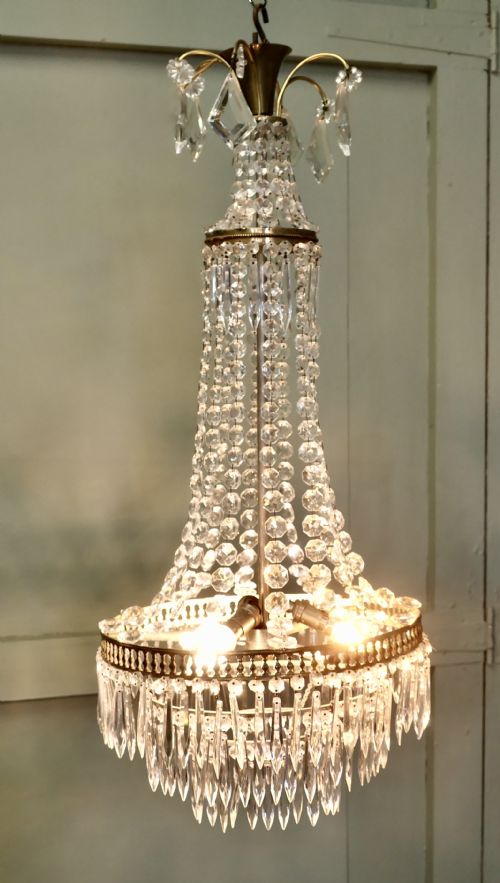
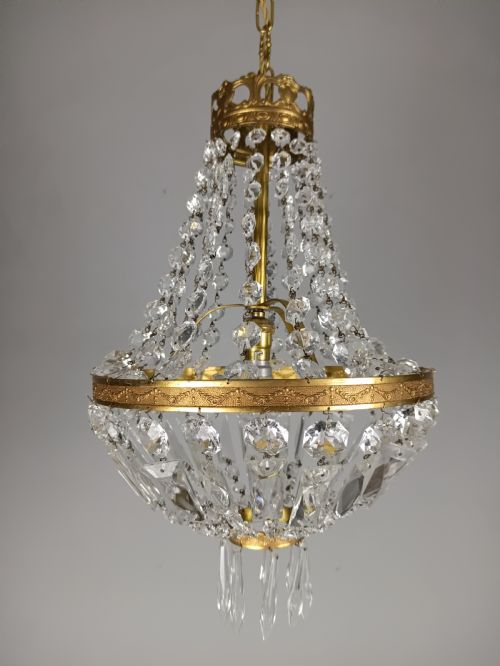
The prevailing format on this page is the basket chandelier, frequently styled in the French Empire or Regency manner. You will find examples featuring tent and waterfall configurations, bag shapes, and prism-adorned bowls that catch and scatter light. Materials range from delicate cut glass and crystal to robust brass, gilt bronze, and even jasperware.
Proportions vary from petite eight-inch fixtures to substantial large chandeliers suited for principal reception rooms. While many date from the 1920s and 1930s revival periods, earlier nineteenth-century examples appear with distinct patination and hand-cut elements. Each piece demonstrates how period makers adapted neoclassical motifs for smaller ceiling heights.
Materials and construction
Makers constructed these frames primarily using brass, gilt brass, and gilt bronze to provide a sturdy structural skeleton. Glass and crystal components, including cut prisms, beads, and bag drops, were wired or pinned by hand to form the signature tent and basket silhouettes.
Surface treatments and metal casting reflect the manufacturing standards of the nineteenth and early twentieth centuries. The integration of blue prisms and varied cut crystal grades demonstrates the careful assembly required to balance weight and light refraction.
Some Edwardian visitors to the parlour likely dodged eight-inch prison bag chandeliers while discussing the weather.
Assessing quality and execution
The distinction between standard and superior pieces lies in the clarity and cutting of the crystal rather than the age alone. Finer examples display sharp facet edges on cut glass and thoughtful arrangement of drops that create a dense, cohesive waterfall effect without awkward gaps.
Metalwork execution separates the workshop tiers, with better pieces featuring crisp casting, securely fitted mounts, and harmonious proportions between the brass frame and the glass elements. The inclusion of specialised components, such as coloured prisms or integrated jasperware, elevates the decorative ambition of the fixture.
Wedgwood
The Empire Basket Light Glossary
- Empire style
- A neoclassical design movement originating in France during the early nineteenth century, characterised by military motifs, classical urns, and severe symmetry.
- Tent and waterfall
- A configuration where upper strings of crystal beads form a tent shape above a lower cascade of drops resembling falling water.
- Bag chandelier
- A lighting fixture featuring a flattened or rounded bag of woven crystal beads suspended beneath the main frame.
- Prism
- A cut glass or crystal pendant designed to refract light into spectral colours, hung from the frame to enhance brilliance.
- Jasperware
- A type of fine stoneware developed by Josiah Wedgwood, often featuring white neoclassical reliefs against a coloured matte background.
Empire Basket Light: Frequently Asked Questions
How do I hang a heavy brass and crystal chandelier?
Suspension requires a secure ceiling joist and a substantial brass or metal hook capable of supporting the combined weight of the metal frame and glass drops.
Professional installation is recommended to ensure the electrical wiring safely accommodates the historic fittings without straining the structural chains.
What rooms suit an empire basket light?
These fixtures suit hallways, bedrooms, and reception spaces where vertical drop is restricted but decorative presence is desired.
Smaller eight-inch or single-light versions work effectively in intimate spaces, while larger waterfall designs anchor high-ceilinged rooms.
How do I clean historic crystal drops?
Cleaning requires a mild solution of warm water and gentle soap applied by hand to each individual glass or crystal component.
Avoid harsh chemical immersion, which can strip historic lacquers from the brass frame and damage fragile wire bindings.
How can I tell a 1920s piece from an 19th-century original?
Nineteenth-century pieces typically exhibit hand-cut glass with subtle irregularities and heavier patinated bronze or brass work. Nineties and nineteen-thirties revivals often feature machine-cut prisms, standardised fixings, and brighter gilt finishes reflecting later manufacturing methods.