

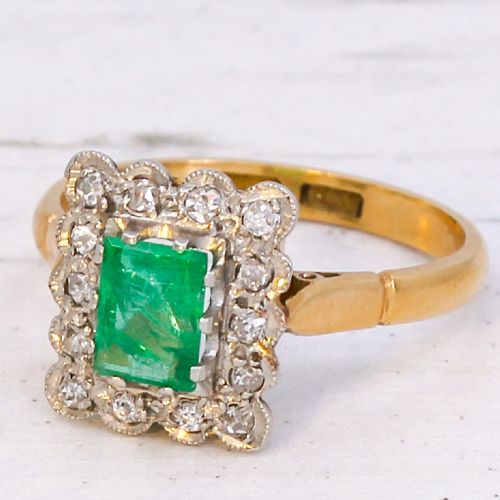
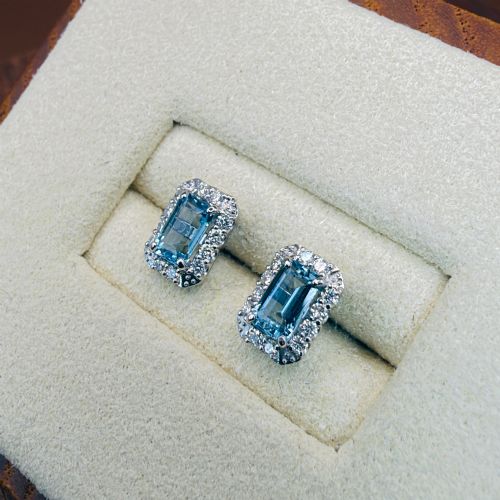
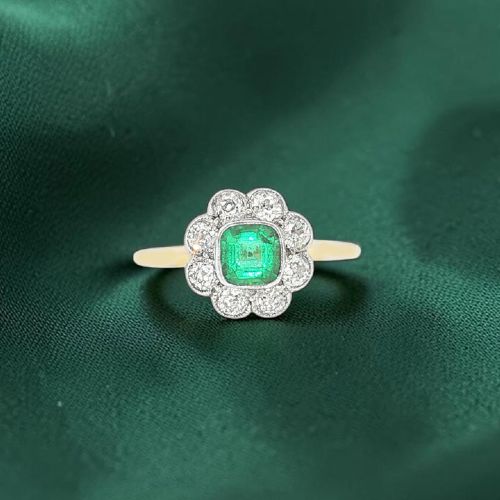
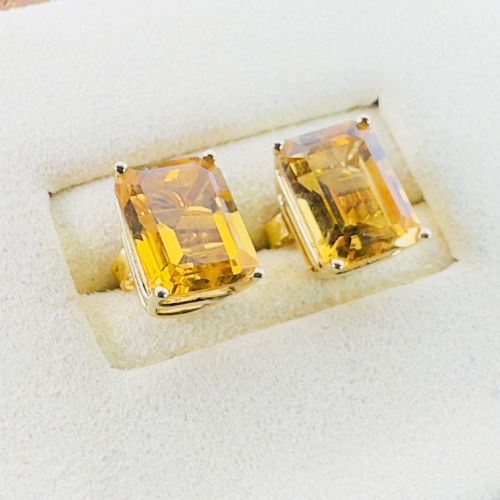
Emerald Cut Gemstone
When you search for emerald cut gemstone, you discover jewels defined by step-cut facets and clean geometric lines.
Emerald Cut Gemstone
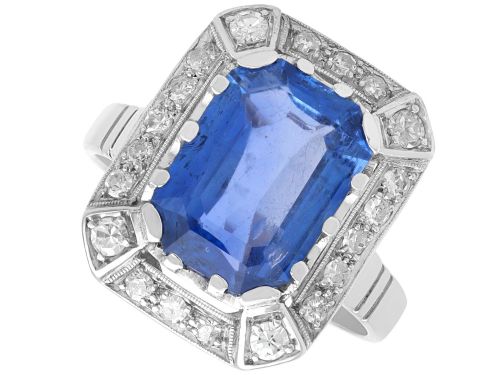
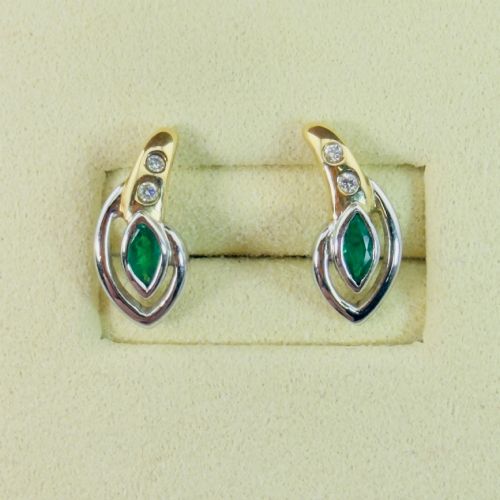
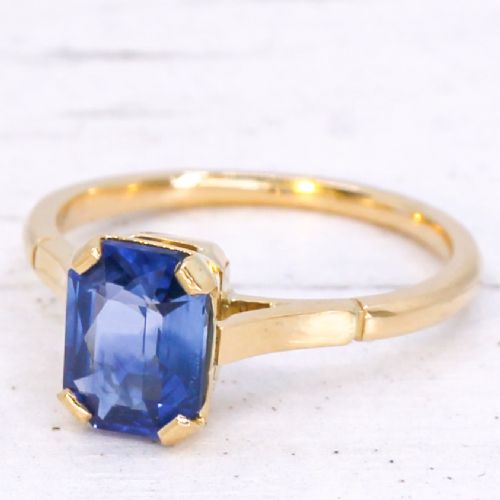
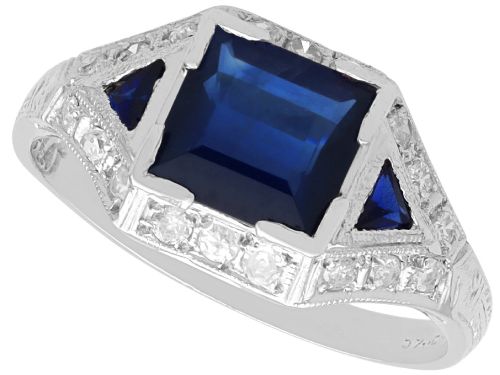
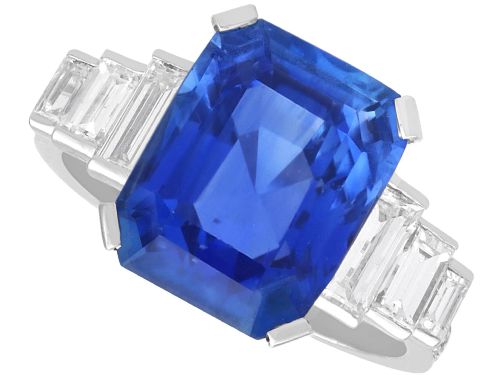
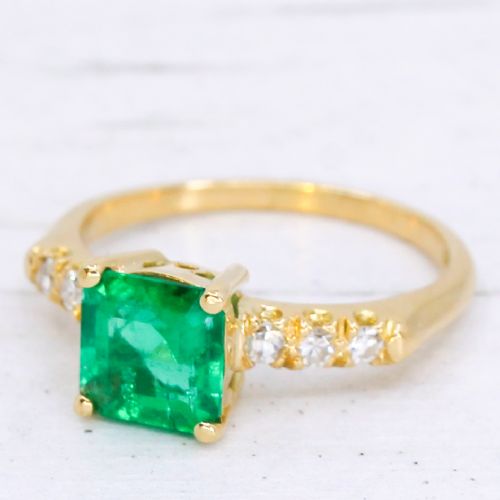
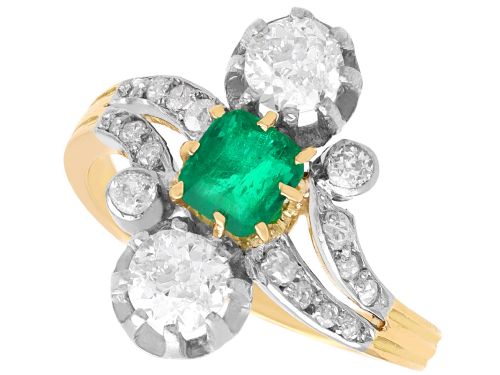
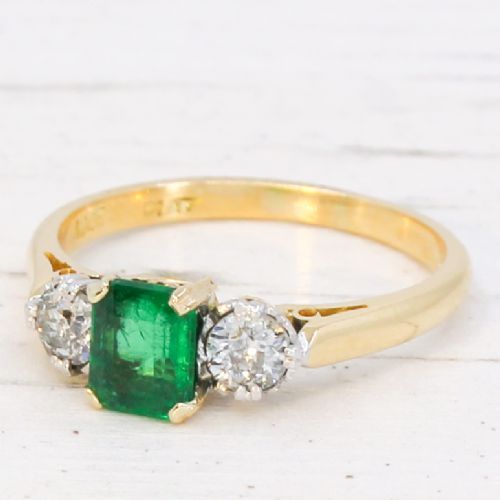
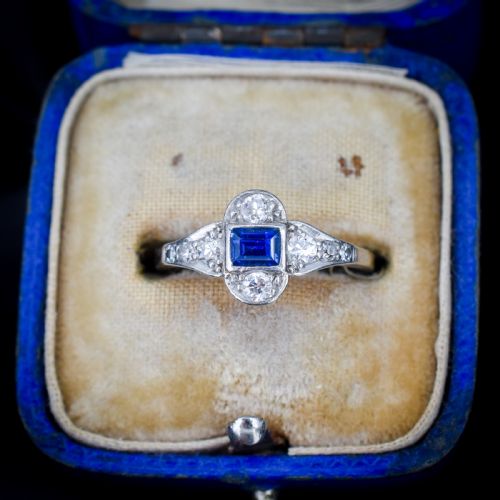
An emerald cut gemstone describes stones shaped with parallel facets and cropped corners, yielding a signature hall of mirrors optical effect. The phrase guides you toward rings, earrings, pendants, brooches and necklaces spanning Victorian, Edwardian, Art Deco, Retro and Mid-Century periods.
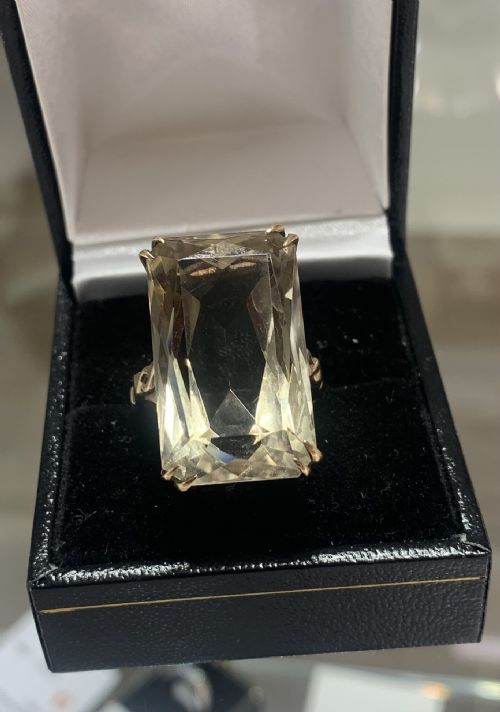
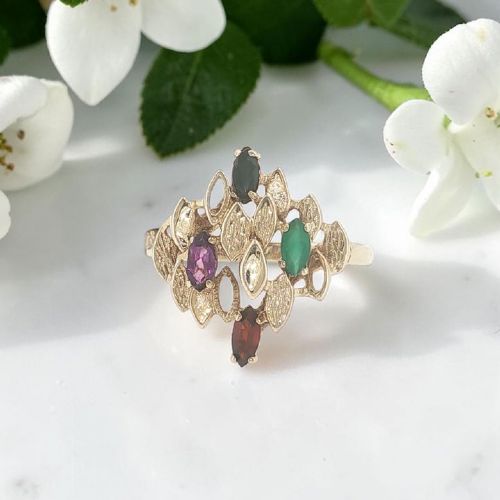
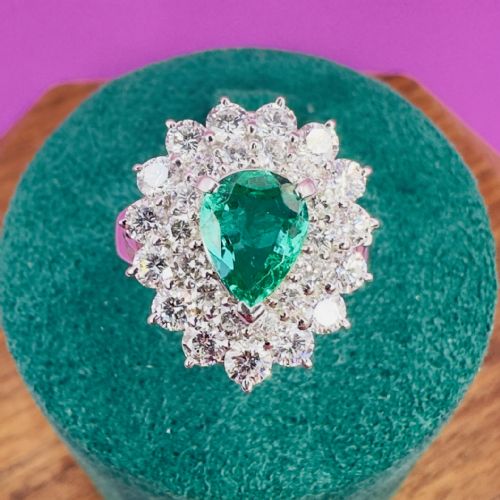
The stones you encounter range from emeralds, aquamarines and sapphires to diamonds, citrines and amethysts. They appear set in platinum, yellow gold, white gold, 9ct gold, 14ct gold, 18ct gold and sterling silver, often framed by diamond clusters or accented by side stones.
How they were made
Jewellers shaped precious stones into rectangular or square steps, a technique designed to emphasise clarity and depth over sheer brilliance. Platinum and yellow or white gold were then worked by hand to build sturdy settings, from delicate solitaire claws to heavy cocktail mountings.
Cluster and multi-stone arrangements integrated old cut diamonds alongside step-cut centre stones. Master workshops balanced metal weight with stone size, securing heavy aquamarines and emeralds with robust prongs or bezels.
Emerald Cut Gemstone Retail Price Guide 2026
Typical asking prices for emerald cut gemstone among the pieces listed under this phrase on Sellingantiques today, from the lower quarter to the upper quarter. They describe what is for sale here now, not the wider market.
Some mid-century cocktail rings carry aquamarines large enough to resemble small paperweights on your finger.
What varies in quality
Quality rests on the optical clarity of the central stone and the crispness of its step-cut facets. Stones with minimal oil treatment or high transparency stand apart from heavily included material.
The integrity of the metalwork also divides the range, distinguishing hand-finished platinum and gold mountings with secure, balanced stone proportions from simpler mass-produced settings.
The Emerald Cut Gemstone Glossary
- Emerald cut
- A rectangular or square stone shape featuring cropped corners and rows of parallel step-cut facets. This cut prioritises clarity and depth.
- Step-cut
- Facets arranged in parallel rows, commonly rectangular, that create distinct flashes of light. This contrasts with the brilliant cut.
- Cluster ring
- A central gemstone surrounded by a border of smaller stones, typically diamonds. This arrangement maximises overall visual impact.
- Minor oil
- A professional assessment noting a low quantity of fracture-filling oil in an emerald. Higher natural clarity commands greater interest.
- Old cut
- A vintage diamond faceting style characterised by a smaller table, higher crown and open culet. These stones pre-date modern round brilliants.
Emerald Cut Gemstone: Frequently Asked Questions
What is an emerald cut gemstone?
An emerald cut gemstone is a stone shaped with straight, parallel facets and bevelled corners. This geometric geometry creates a clear, transparent look that highlights the inner character of the material.
You find this form across rings, pendants and earrings from the Edwardian, Art Deco and Mid-Century eras, paired with diamonds, sapphires, aquamarines and emeralds.
How do I wear these vintage rings?
These rings pair easily with modern attire, adding historical character to daily outfits. Sturdy platinum and gold settings stand up well to regular wear.
Larger cocktail and cluster rings work well as standalone statement pieces on the hand. Delicate three-stone and solitaire versions suit stacking with plain bands.
How do I date an antique piece?
Dating relies on examining the metal alloys, mount styles and cutting techniques. Art Deco pieces show geometric symmetry, platinum settings and stylised step cuts.
Earlier Victorian and Edwardian examples often feature yellow gold, softer organic curves and old cut diamond accents. Mid-Century items introduce heavier gold weights and large aquamarine or amethyst stones.
What metals are used in these settings?
Jewellery from these periods utilises platinum, 18ct yellow gold, 14ct gold, 9ct gold, white gold and sterling silver. Platinum gained favour during the Art Deco period for its strength and bright white finish.
Yellow gold dominates earlier Victorian styles and returns in Retro designs. White gold appears frequently in mid-century cluster rings.