
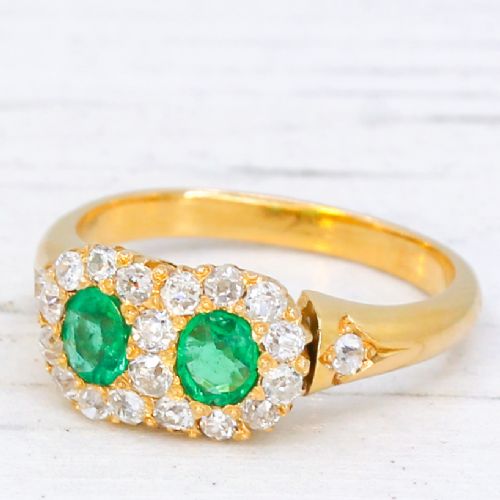
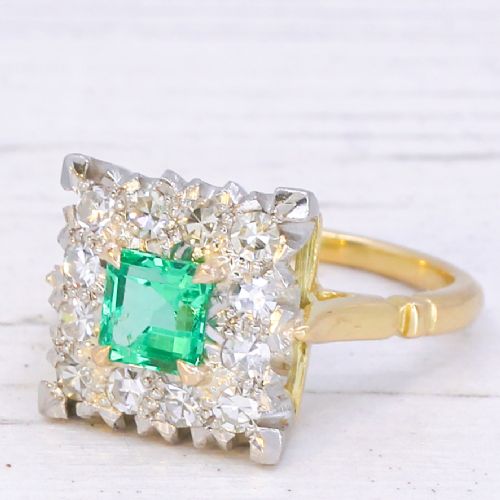
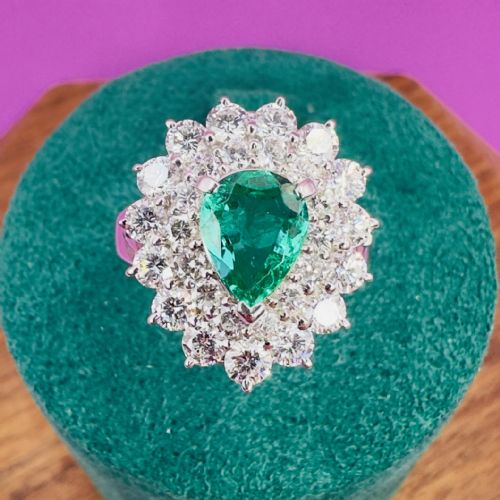
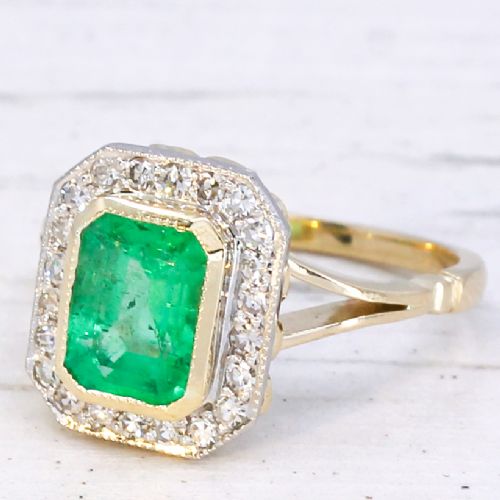
Emerald Cluster Dress Ring
An emerald cluster dress ring brings together vibrant green gems and surrounding diamonds in designs spanning from Georgian times to the mid-twentieth century.
Emerald Cluster Dress Ring
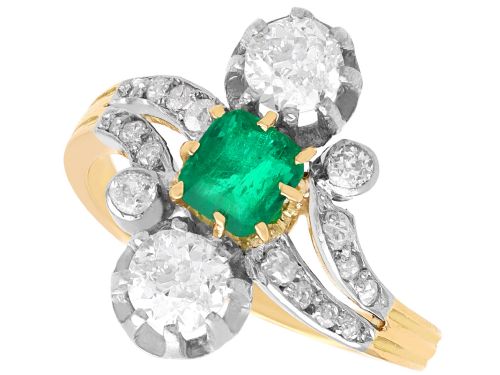
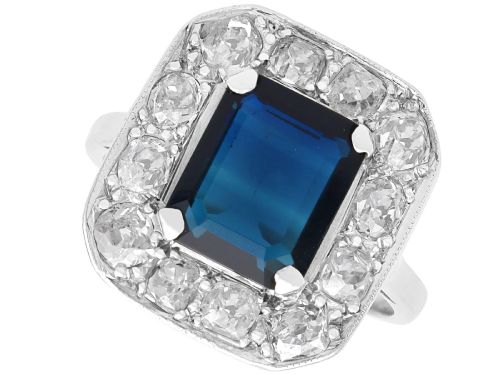
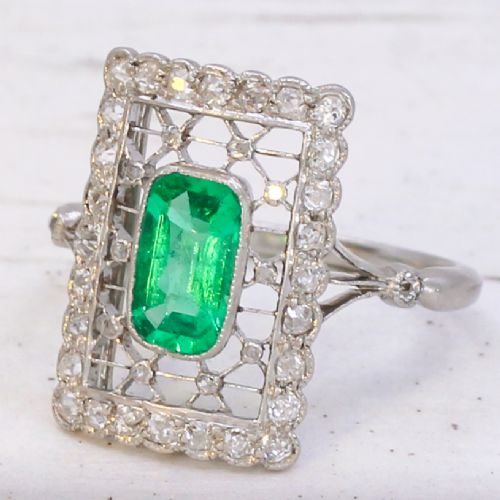
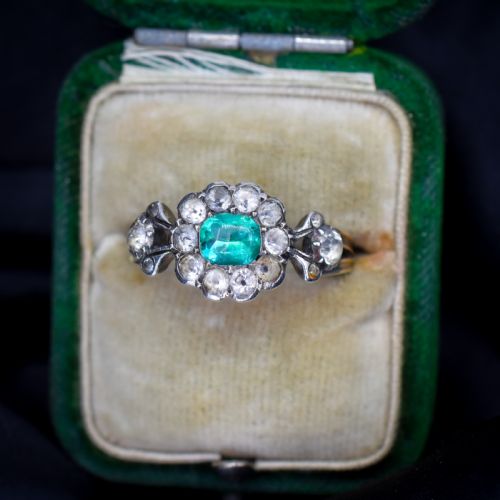
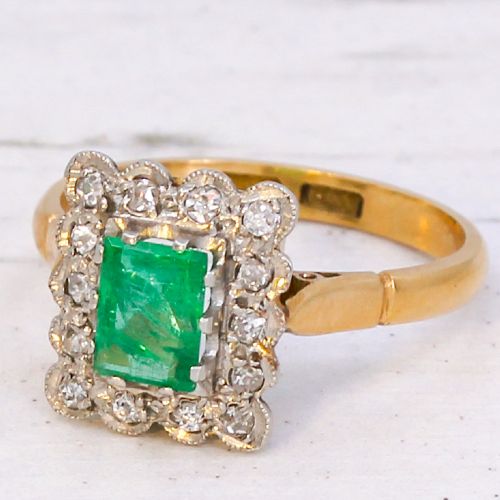
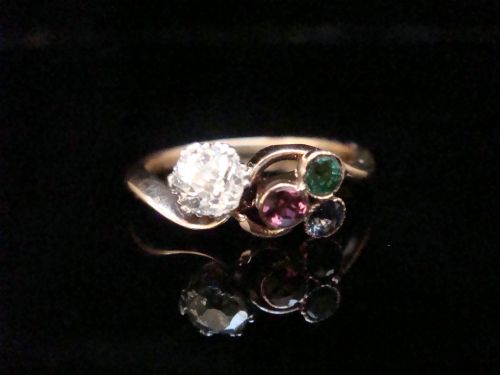
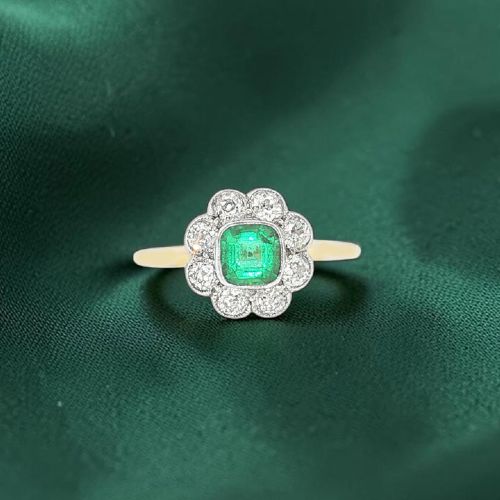
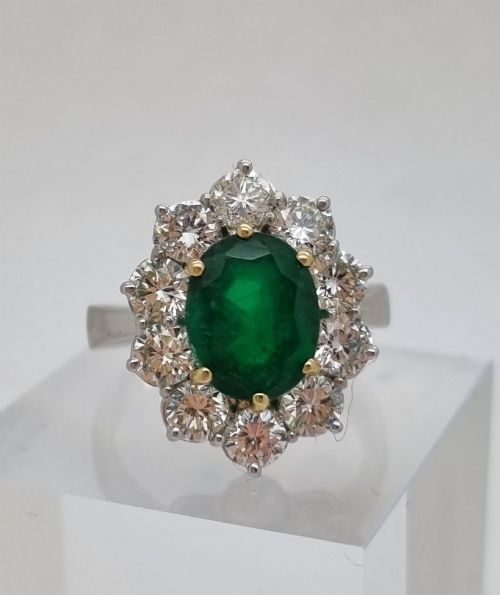
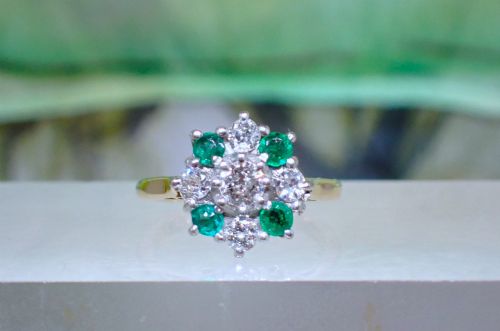
An emerald cluster dress ring places a central green beryl within a geometric border of diamonds, creating a striking focal point for the hand. The pieces gathered here range from early Georgian and Victorian examples to Edwardian, Art Deco, and mid-century modern creations.
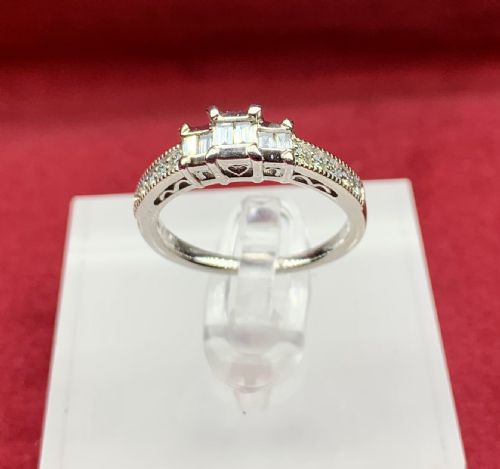
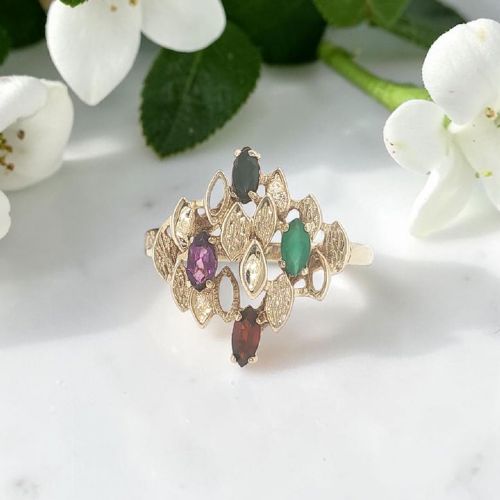
Buyers will encounter various formats, from traditional oval arrangements to elaborate platinum cocktail pieces and delicate 1950s interpretations. These rings served historically as evening wear or statement pieces, showcasing the intense hue of natural emeralds against sparkling diamond borders.
How they were made
Goldsmiths utilised platinum and various grades of gold, including yellow, white, and eighteen-carat compositions, to mount the gemstones securely. Platinum gained favour during the Art Deco era for its strength in holding intricate, delicate settings without adding bulk.
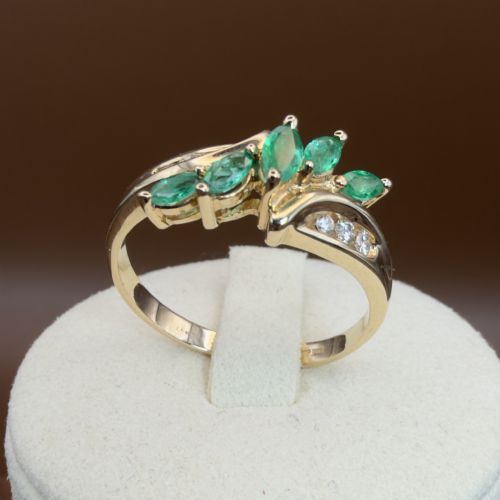
The construction typically involves claw or bezel settings for the central emerald, surrounded by grain or prong-set old cut and brilliant cut diamonds. Gemstones such as Colombian or Zambian emeralds were carefully selected and shaped into oval, pear, marquise, or princess cuts to maximise their brilliance.
What varies in quality
The quality of an emerald cluster dress ring rests primarily on the origin, clarity, and treatment level of the central beryl, alongside the matching quality of the surrounding diamonds. Colombian stones with negligible or minor oil treatments command higher regard than heavily included alternatives.
Execution and metalwork density also divide ordinary examples from exceptional ones, particularly in Art Deco and Edwardian pieces where hand-piercing and fine millegrain work demonstrate superior artisan skill. The overall proportion between the central emerald and its diamond halo determines the visual harmony of the finished jewel.
The Emerald Cluster Dress Ring Glossary
- Cluster ring
- A ring style featuring a central gemstone encircled by a group of smaller stones, usually diamonds. This layout maximises the optical impact and perceived size of the overall design.
- Old cut diamond
- A hand-faceted diamond shape typical of older periods, characterised by a smaller table, higher crown, and open culet. These stones catch candlelight and softer indoor illumination distinctively.
- Millegrain
- A decorative jewellery technique involving a line of tiny, raised metal beads along the edge of a setting. It imparts a delicate, finished texture popular during the Edwardian and Art Deco periods.
- Cocktail ring
- A large, showy ring designed to draw attention during evening social gatherings. They often incorporate high-profile cluster settings with generous gemstone weights.
- Beryl
- The overarching mineral family to which emerald belongs, sharing a chemical composition with aquamarine. Differences in trace chromium and vanadium give emeralds their characteristic green colour.
Emerald Cluster Dress Ring: Frequently Asked Questions
How do I care for antique emerald rings?
Emeralds are softer than diamonds and sensitive to harsh chemicals, ultrasonic cleaners, and sudden temperature changes. Wipe them gently with a soft, damp cloth and avoid wearing them during heavy manual tasks.
Store each piece individually in a lined jewellery box to prevent the harder diamond borders from scratching the softer central emerald or the surrounding metal mount.
What is the difference between Georgian and Art Deco rings?
Georgian rings often utilise closed foil backs to enhance the colour of gems like paste or emeralds, paired with heavy gold or silver work. Their designs feel more organic and hand-wrought compared to later eras.
Art Deco rings embrace geometric symmetry, clean lines, and platinum settings. They frequently showcase calibre-cut stones and precise, architectural patterns that contrast sharply with older, softer aesthetics.
Are these rings suitable for everyday wear?
While many owners wear vintage cluster rings daily, older settings require mindful handling due to their age and delicate claw work. Rings featuring fragile prongs or softer stones benefit from periodic checks by a professional jeweller.
Choosing a sturdy platinum or eighteen-carat gold mounting from the mid-century period offers greater resilience for regular use than lighter, more fragile antique counterparts.