


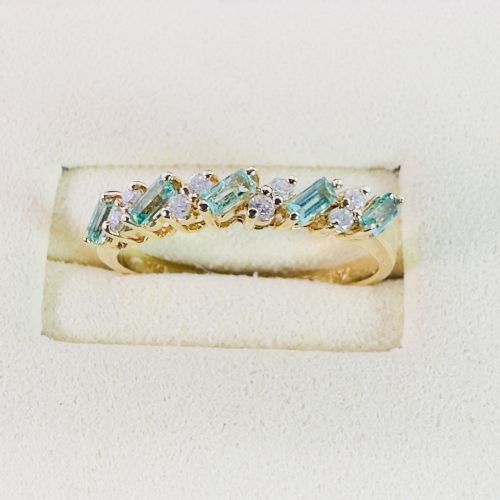


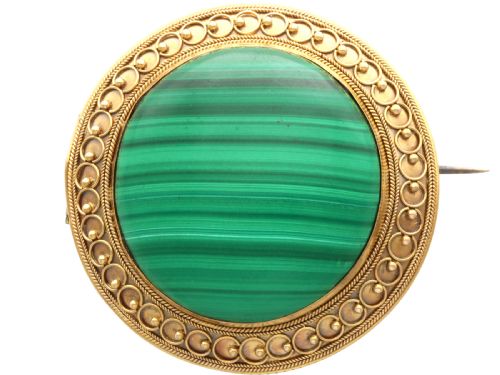


Green Gemstone Gold Band
These pieces of green gemstone gold band jewellery combine vibrant green minerals with precious yellow and white gold settings across Victorian, Edwardian, and mid-century eras.
Green Gemstone Gold Band
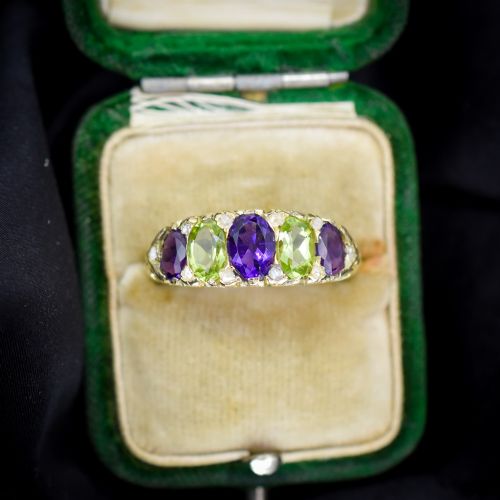
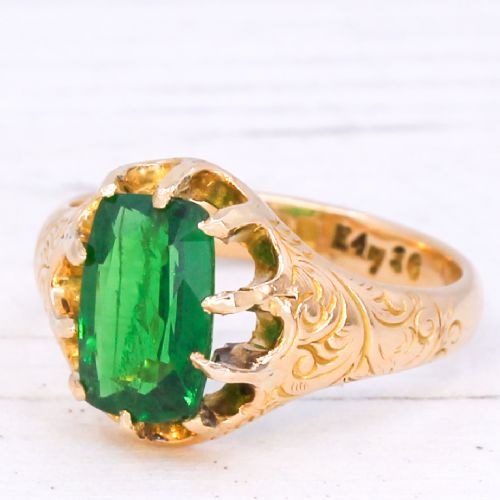
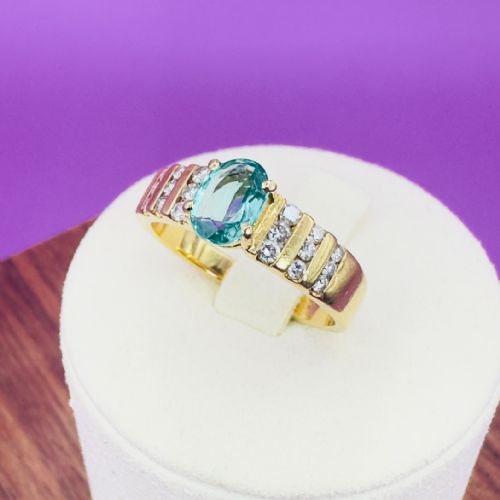
The most common forms on this page are cluster rings and five stone rings featuring emerald, malachite, jade, and tsavorite. Settings utilise yellow gold, white gold, and occasionally fifteen carat or fourteen carat gold alongside eighteen carat varieties.
Victorian and Edwardian examples sit alongside nineteen sixties cluster rings and retro cocktail rings. Each piece reflects the dominant design vocabulary of its decade, from snake drop earrings to geometric Art Deco clusters.
Distinctions in quality and execution
Quality differences emerge in the saturation and clarity of the green stones, whether transparent emerald and tsavorite or opaque malachite and jade. Superior examples feature well matched stone pairings and fine diamond accents that complement the primary green gemstone.
The execution of the gold band and setting dictates the overall refinement, from robust nineteenth century cast work to intricate Edwardian claw settings. Heavier weight pieces and intact original hallmarks or adjustable shanks indicate higher manufacturing standard.
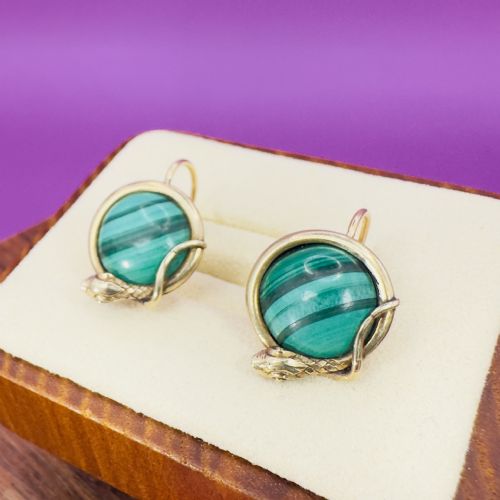
Victorian makers once carved green malachite into undulating serpents for dangling drop earrings.
The Green Gemstone Gold Band Glossary
- Cluster ring
- A ring design featuring a central gemstone surrounded by a border of smaller stones, typically diamonds framing an emerald.
- Five stone ring
- A linear setting holding five gems of similar importance across the top of the band, often alternating emeralds and diamonds.
- Old cut
- A traditional diamond facet arrangement predating the modern brilliant cut, characterised by a smaller table and higher crown.
- Malachite
- An opaque green copper carbonate mineral displaying distinctive banding, used in Victorian brooches and drop earrings.
- Tsavorite
- A vibrant green grossular garnet variety first discovered in the twentieth century, appearing in solitaire ring settings.
Green Gemstone Gold Band: Frequently Asked Questions
What periods do these green rings span?
The selection includes pieces from the Victorian and Edwardian eras, through the nineteen twenties Art Deco period, up to mid-century modern and nineteen sixties designs.
Each era brings distinct mounting styles and gemstone combinations to the gold bands.
Are these rings suitable for daily wear?
Many pieces function well for regular wear, particularly robust gold cluster rings and solid band designs from the twentieth century.
More delicate antique configurations or softer stones like malachite require thoughtful care to preserve the settings.
What green stones appear in these gold bands?
Emeralds form a large part of the selection, accompanied by tsavorite, jade, and banded malachite.
These green minerals are paired with diamonds in cluster and five stone configurations across yellow and white gold.
How do cluster rings differ from five stone rings?
Cluster rings group smaller accent stones tightly around a central green gemstone to create a concentrated visual impact.
Five stone rings arrange gems in a row across the finger, creating a balanced horizontal line of alternating colours.