


Embossed Sterling Silver Box
When you handle an embossed sterling silver box, you hold a tangible piece of late nineteenth or early twentieth century craftsmanship designed to secure personal treasures.
Embossed Sterling Silver Box
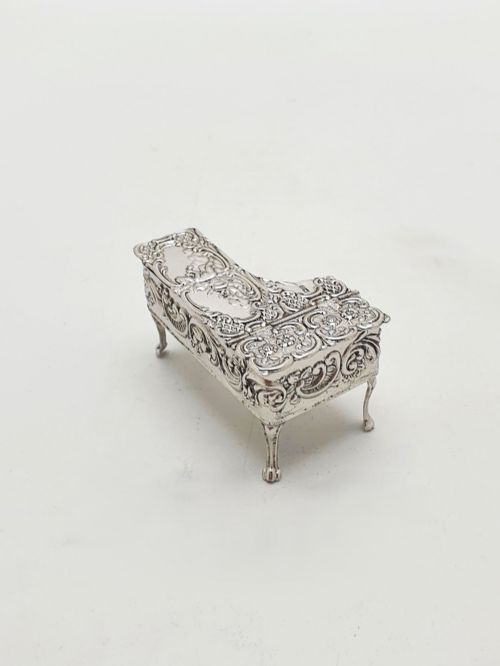
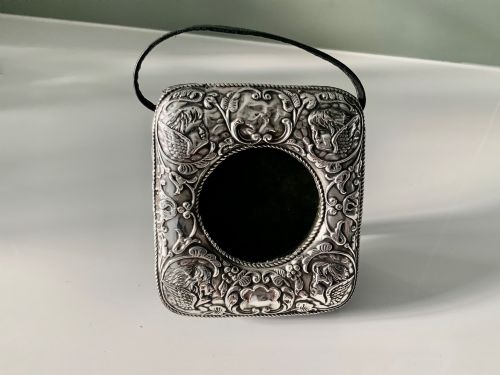
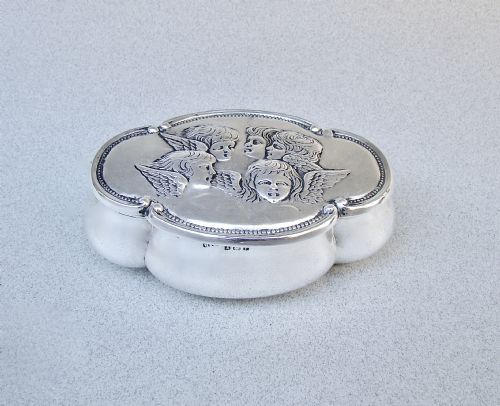
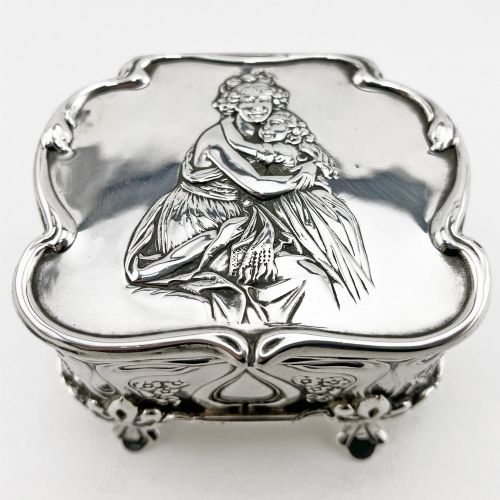
An embossed sterling silver box encompasses a range of small domestic containers created to hold trinkets, snuff, pills, or tea. The pieces seen here span the Victorian and Edwardian periods, stretching from the late nineteenth century into the early decades of the twentieth century.
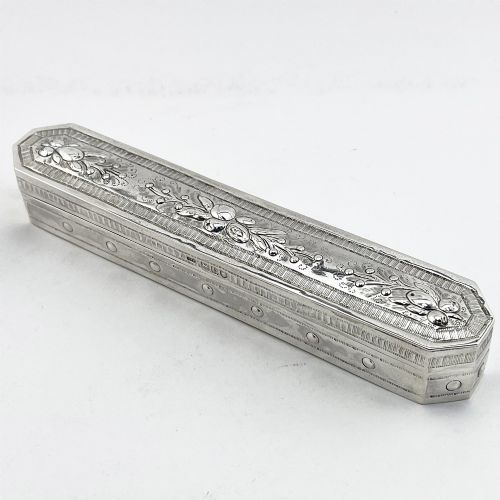
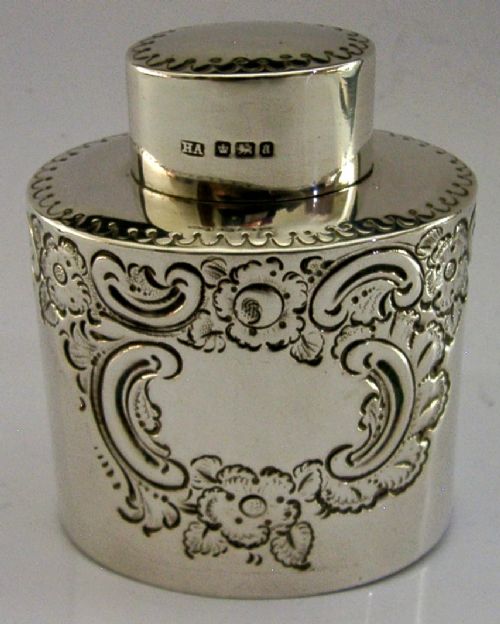
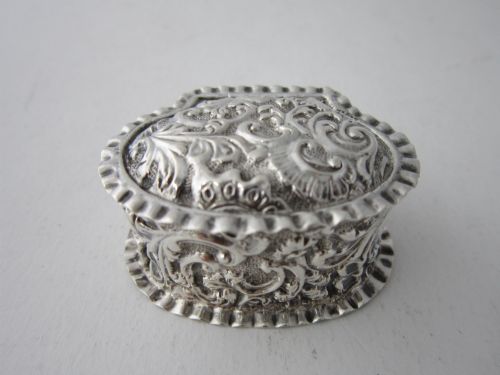
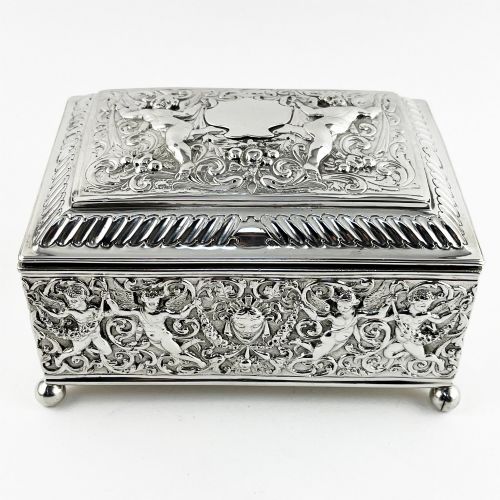
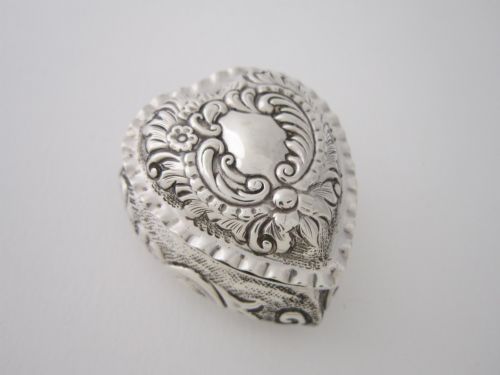
The forms most frequently encountered on this page include heart-shaped trinket dishes, small pill containers, jewellery caskets, and tea caddies. Makers fashioned these functional items using solid silver, often pairing the metal with internal linings of velvet, silk, or gold gilt.
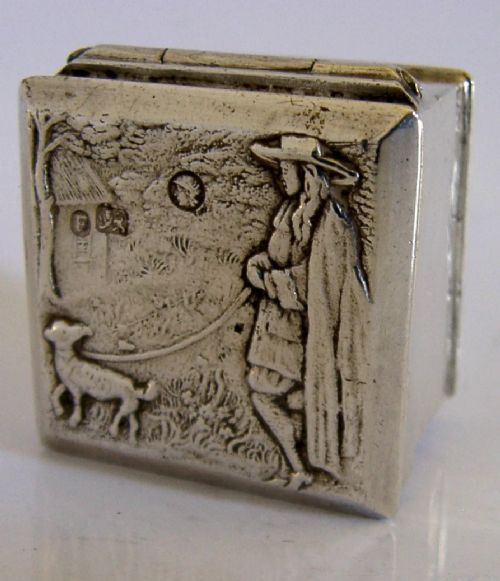
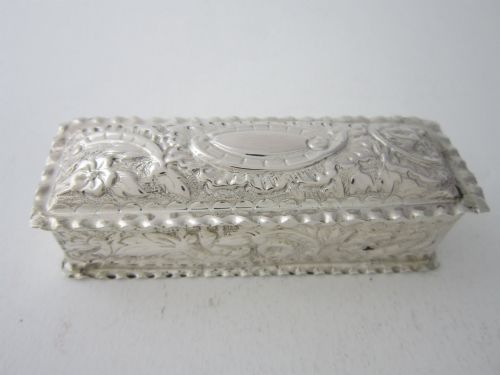
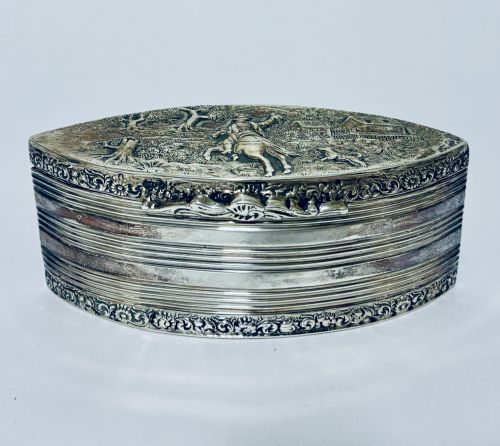
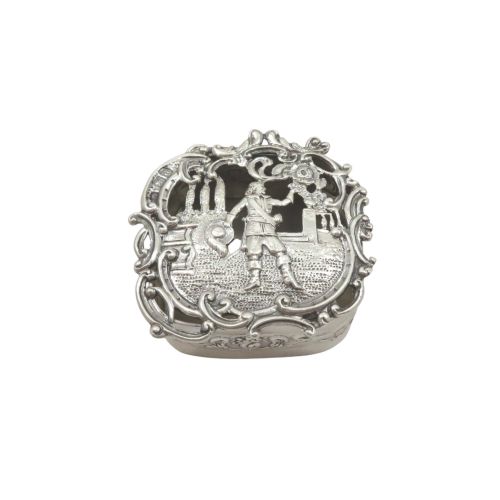
Originating largely from British assay offices in cities such as Birmingham and Chester, these vessels reflect the prevailing design revivals of their day. Buyers find Rococo scrolls, floral repoussé motifs, and occasional castle top lid scenes on pieces that served both ornamental and utilitarian roles in period dressing rooms.
How they were made
Silversmiths constructed these boxes using sterling silver sheets, shaping the body through hammering, pressing, and soldering techniques. Artisans then applied decoration from the exterior using the repoussé and chasing method, pushing and punching the metal from behind to raise floral, scroll, or figural motifs in relief.
Many interiors received secondary treatments, including gold gilt washes known as silver gilt or vermeil, while others incorporated fitted velvet, silk, or satin linings to cushion delicate contents. Lids often hinged precisely to the body, securing with snug friction fits or small clasps.
Embossed Sterling Silver Box Retail Price Guide 2026
Typical asking prices for embossed sterling silver box among the pieces listed under this phrase on Sellingantiques today, from the lower quarter to the upper quarter. They describe what is for sale here now, not the wider market.
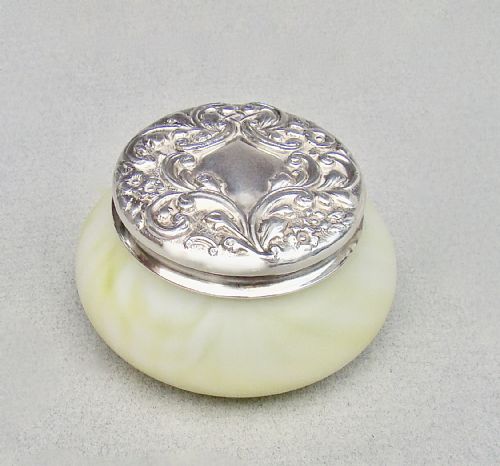
The material selection across these pieces ranges from plain polished sterling silver to gold gilt interiors and satin glass bodies.
What varies in quality
The distinction between standard containers and superior examples rests upon the crispness of the repoussé work and the depth of the metal relief. Skilled silversmiths maintained sharp definition in floral petals and figural scenes without thinning the silver wall to the point of structural weakness.
Weight and structural integrity also dictate the calibre of a piece, observable in the substantial feel of the metal and the alignment of the hinged lid. Maker marks and clear assay hallmarks add provenance, distinguishing ordinary domestic silver from works produced by recognised master workshops.
Henry Matthews·Thomas Hayes·William Hutton and Sons·William Comyns and Sons·William Neale and Sons
The Embossed Sterling Silver Box Glossary
- Sterling silver
- A silver alloy containing 92.5 percent pure silver by mass and 7.5 percent other metals, usually copper. This standard composition provides the durability required for domestic hollowware and decorative boxes.
- Repoussé
- A metalworking technique where the artisan hammers and pushes the metal from the reverse side to create a raised design in relief. It forms the primary decorative method seen on these embossed lids and bodies.
- Silver gilt
- Sterling silver that has been coated with a thin layer of gold on its interior or exterior surfaces. This process protects the metal from tarnishing and adds a rich, warm tone inside trinket and snuff containers.
- Assay mark
- A stamp or series of stamps applied by an official office to indicate the fineness of the metal, the maker, and the year of testing. British pieces frequently display leopard heads, anchors, or city shields alongside date letters.
- Vesta case
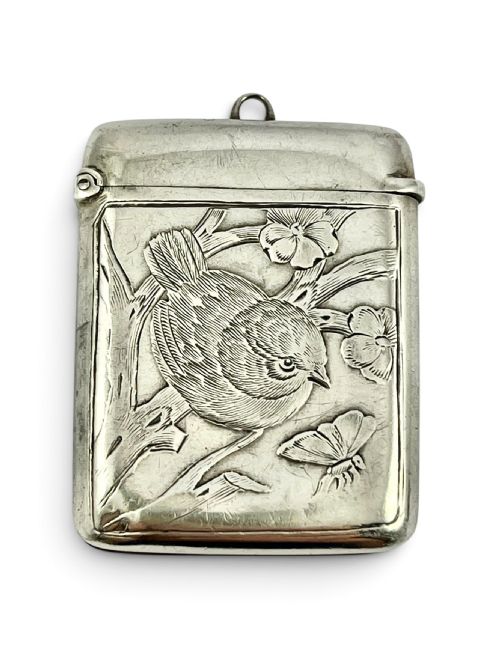
- A small pocket container designed to hold matches and keep them dry. Edwardian examples often feature matching embossed decoration to the companion boxes on this page.
Embossed Sterling Silver Box: Frequently Asked Questions
What were these small silver boxes used for?
Victorian and Edwardian households utilised these containers for storing personal valuables, including rings, pins, and visiting cards. Gentlemen and ladies also carried smaller versions in pockets or reticules for snuff, pills, or safety matches.
Over time, these objects transitioned from functional pocket items to dressing table ornaments displayed to catch the light. Their varied sizes accommodated everything from loose tea leaves in caddies to precious keepsakes tucked into velvet-lined caskets.
How do I date an embossed silver box?
Dating relies heavily on the hallmark stamped into the silver, which typically includes a specific letter indicating the year of assay and a town mark for the office. Stylistic clues such as Art Nouveau curves or heavy Victorian floral repoussé also point toward specific decades.
Comparing the decorative motifs against documented periods helps narrow down production years when hallmarks are rubbed or partially worn. Examining the style of the maker's mark provides a further anchor for the timeline.
How should I clean antique sterling silver?
Cleaning requires a soft microfiber cloth and a mild, non-abrasive silver polish formulated specifically for antiques. Avoid aggressive scrubbing that can wear down the delicate raised details of the repoussé work.
Leaving a gentle patina in the recessed areas of the embossing often enhances the visual depth of the design. Store the items in dry environments away from direct sulfur sources to slow future tarnish accumulation.