
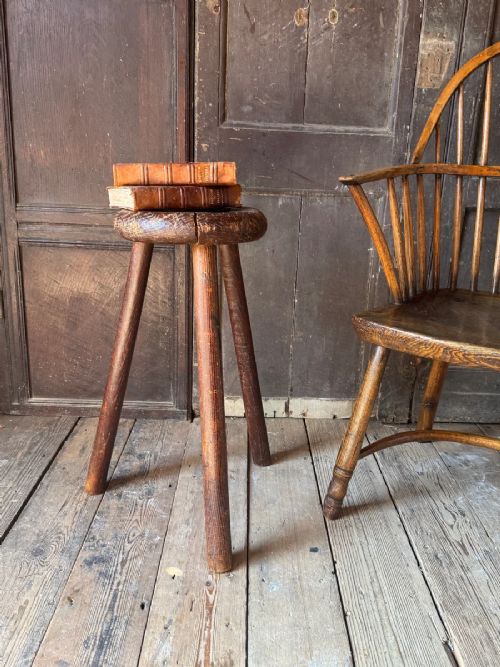
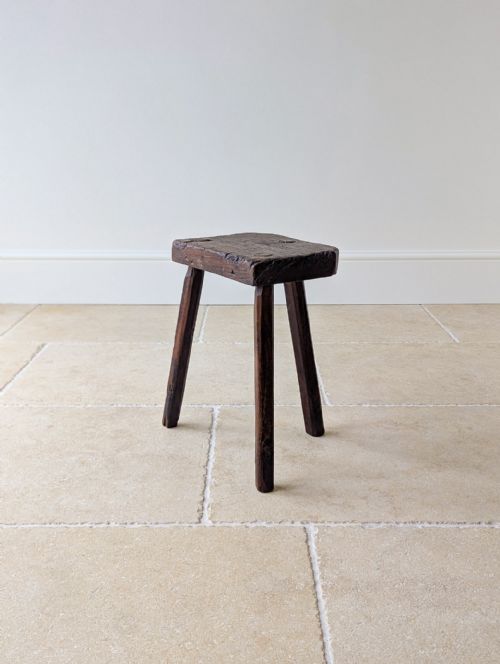
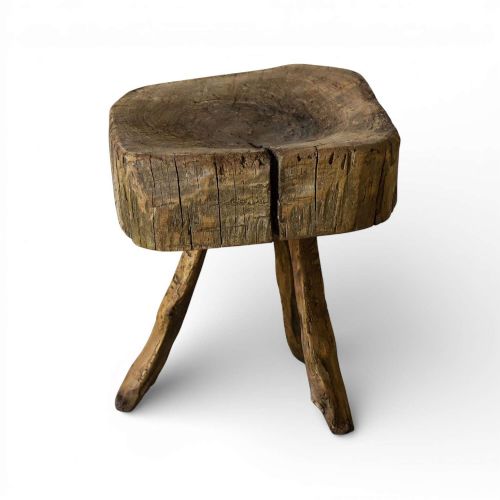

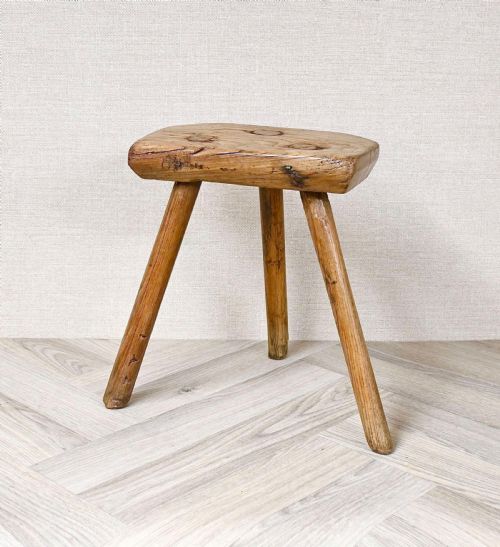
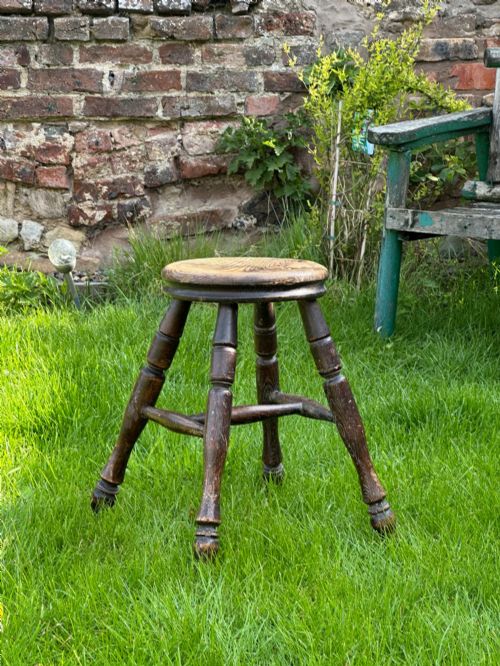


Elm Tripod Stool
An elm tripod stool brings honest vernacular charm to a room, offering sturdy rustic character shaped by generations of practical use.
Elm Tripod Stool
When you search for an elm tripod stool, you are looking at practical country furniture shaped by centuries of vernacular tradition. These pieces range from simple milking and dairy stools to specialised workshop seats like jeweller's and cutler's stools.
You are most likely to meet nineteenth-century examples on this page, alongside occasional eighteenth-century pieces. They appear in styles such as rustic country, Victorian country, and traditional vernacular, often retaining traces of old paint or the natural grain of the wood.
While primarily designed as seating, the listings also include robust chopping blocks and small occasional tables sharing the same three-legged construction. Their origins span English and French provincial workshops as well as Chinese vernacular traditions.
How they were made
Makers built these stools using solid timbers suited to heavy domestic and workshop tasks, combining elm for the tops with ash, beech, or oak for the legs and supports. Elm was chosen for the seat because its interlocking grain resists splitting under pressure.
The construction relies on traditional joined or pegged methods, where three legs are tenoned directly into the underside of a thick plank or live-edge slice of wood. Some surfaces show the marks of original paint, while others highlight the natural figured grain of the hardwood.
What varies in quality
The distinction between a standard utility seat and a superior example lies in the character of the timber and the honesty of the construction. Pieces cut from a solid slice of live-edge elm or featuring gnarled original legs display a stronger visual presence.
Quality also depends on the survival of original surfaces, such as early paint finishes or deep patination built up through decades of handling. Specialised forms tied to specific trades, such as Birmingham jeweller's stools or cutler's stools, carry greater functional interest.
The Elm Tripod Stool Glossary
- Vernacular rural
- Everyday objects made by local craftsmen for practical use rather than following high-style academic designs. This tradition defines the honest construction of country furniture.
- Live edge
- A woodworking style that incorporates the natural outer edge of the tree into the design of the piece. It highlights the organic shape of the timber.
- Milking stool
- A small low seat traditionally used by agricultural workers during dairy tasks. These items typically feature three splayed legs for stability on uneven ground.
- Patina
- The surface sheen and deep colour developed by wood and paint over many years of handling and wear. This quality indicates genuine age and use.
- Windsor
- A style of seating construction where legs and spindles are fitted directly into a thick wooden seat rather than a frame. It provides robust structural integrity.
Elm Tripod Stool: Frequently Asked Questions
What is an elm tripod stool used for?
These pieces served practical roles in dairies, workshops, and farmhouses as sturdy seating for daily labour. Today they function well as compact side tables, bedside surfaces, or standalone decorative accents in a room.
Their minimal three-legged footprint makes them easy to tuck into tight corners or use as impromptu plant stands.
How do I spot a genuine antique country stool?
Look for natural wear patterns, deep patination in the timber, and construction methods that show hand-tool marks rather than modern machine shaping. Traces of early paint or pegged joinery help confirm traditional age.
Inspect the underside to understand how the legs are wedged and tenoned into the seat block.
Can I use an antique stool every day?
Most of these pieces were built for demanding manual environments and remain remarkably solid and durable. Their robust construction handles everyday sitting or supporting objects without trouble.
Avoid placing them in excessively dry or damp environments to protect the historic timber from movement.
What makes workshop stools different from dairy stools?
Workshop pieces like jeweller's or cutler's stools were tailored to specific trades, sometimes featuring specialised adjustments or sturdy bracing for intense daily work. Dairy and milking stools tended to be simpler and lower to the ground for farm tasks.
Both types share the practical three-legged design that prevents rocking on uneven floors.