


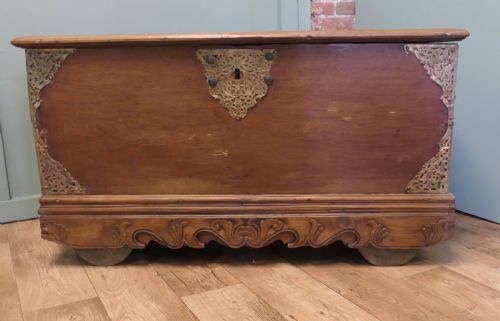
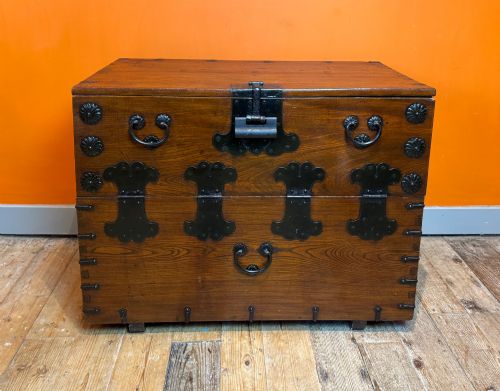
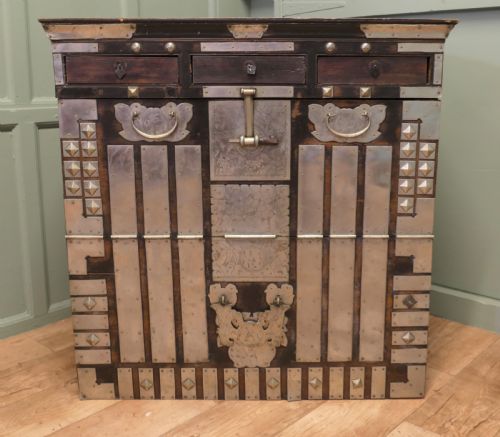
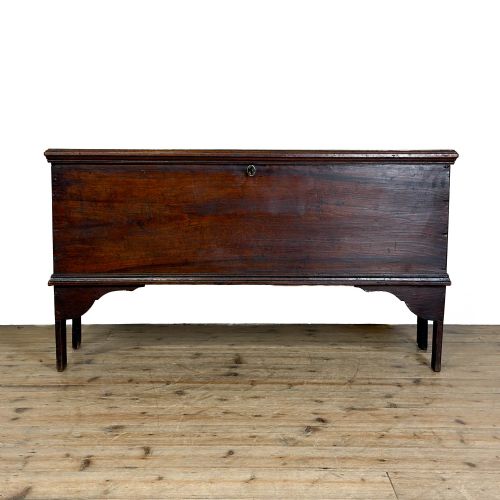
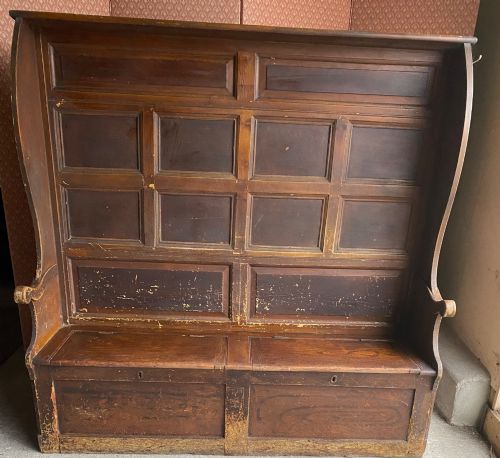
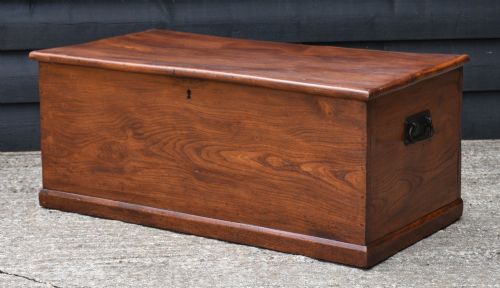
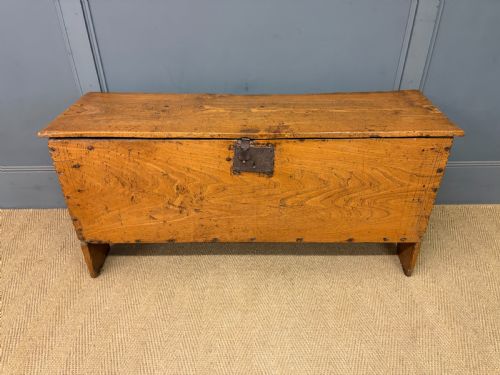
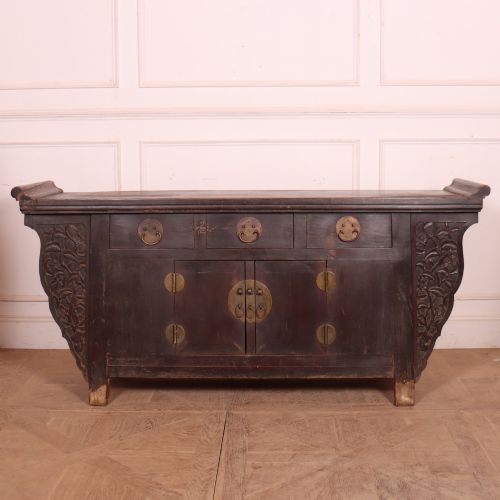
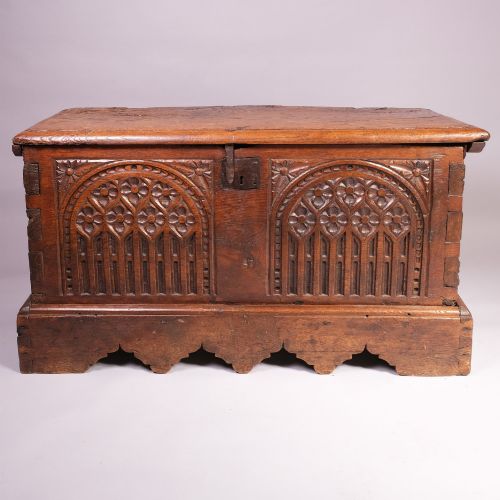
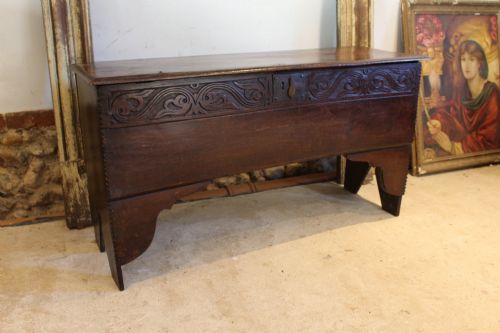

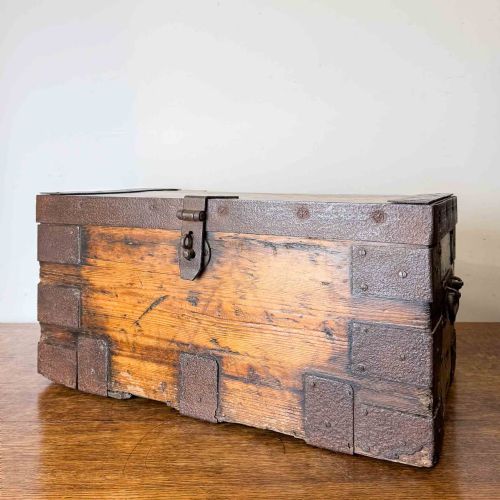


Elm Storage Coffer
An elm storage coffer brings robust country utility and rich grain into a room, serving as a sturdy trunk or blanket box.
Elm Storage Coffer
An elm storage coffer is a practical utility chest designed for holding textiles, bedding, or household goods, rooted in vernacular country traditions. When exploring this search phrase, buyers encounter pieces ranging from simple six-plank constructions to panelled chests and specialised boxes.
The material repertoire spans straightforward English country furniture alongside regional pieces from Wales, France, and China. Dating stretches from pre-sixteenth century Gothic examples through Georgian periods up to the early twentieth century.
Forms include traditional blanket boxes, mule chests fitted with drawers, bible boxes, and strongboxes reinforced with iron. These versatile items also overlap with dough bins, settles, sideboards, and heavy tool cabinets.
Materials and construction
Solid elm forms the primary structure of these pieces, often complemented by burr elm panels displaying distinctive swirling grain patterns. Secondary timbers such as pine and oak appear in structural elements or internal partitions.
Joinery methods rely on traditional techniques including simple six-plank assembly and pegged framing, built to withstand heavy domestic use. Metal reinforcement comes from iron hinges, hasps, and carrying hoops, alongside cast brass mounts and locking hardware.
Elm Storage Coffer Retail Price Guide 2026
Typical asking prices for elm storage coffer among the pieces listed under this phrase on Sellingantiques today, from the lower quarter to the upper quarter. They describe what is for sale here now, not the wider market.
Materials paired with elm across the inventory include solid oak, pine, burr elm, wrought iron, and polished brass.
Assessing quality and character
Quality rests in the selection of the timber, where striking burr figures and deep, honest patination elevate a straightforward utility box. The integrity of the original construction, from the hand-planed boards to untouched metalwork, determines the standing of the piece.
The Elm Storage Coffer Glossary
- Six-plank coffer
- A simple chest constructed from six separate boards of timber joined at the edges. This method represents one of the earliest and most direct forms of box-making.
- Mule chest
- A storage chest featuring one or more drawers built into the base beneath the main compartment. This form bridges the gap between the simple coffer and the chest of drawers.
- Bible box
- A small, portable desk or storage box historically used to hold family texts and documents. These pieces frequently feature sloped lids and fitted interiors.
- Cellarette
- A specialised lockable container designed for storing bottles of wine or spirits. They often incorporate internal divisions and robust brass carrying mounts.
- Burr elm
- A woody outgrowth on an elm tree that produces highly figured, knotty wood grain. Cabinet makers prized this material for decorative veneer and feature panels.
Elm Storage Coffer: Frequently Asked Questions
What is a six plank coffer?
A six plank coffer is formed from single boards making up the front, back, sides, lid, and base. Simple pegged joints hold the heavy elm panels together.
This method represents an early, robust style of carpentry designed for straightforward domestic storage needs.
How do I use a coffer today?
An elm coffer provides generous concealed storage for blankets, linens, and everyday household items in a living room or bedroom. The flat top also allows the chest to function as a bench or display surface.
Positioning the piece away from direct heat sources helps protect the dry elm timber from splitting over time.
What is the difference between a coffer and a mule chest?
A standard coffer opens from the lid to access a single open cavity inside the main body. A mule chest adds one or more pull-out drawers beneath this primary storage space.
This added drawer section makes accessing stored items much easier without needing to clear objects off the top of the lid.
How can I tell an older elm coffer apart?
Older examples display hand-tool marks, pegged joinery, and heavy iron or wrought iron hardware rather than modern fixings. The grain of the elm naturally darkens and develops a deep patina through centuries of handling and wax polishing.
Construction details, such as the thickness of the boards and the style of the hinges, point directly to specific periods like the Georgian era or earlier.