
Elm Seat Chair
An elm seat chair brings rustic character to a room through timber with deep grain and rich colour.
Elm Seat Chair
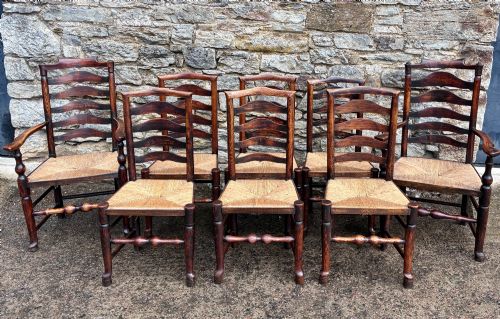
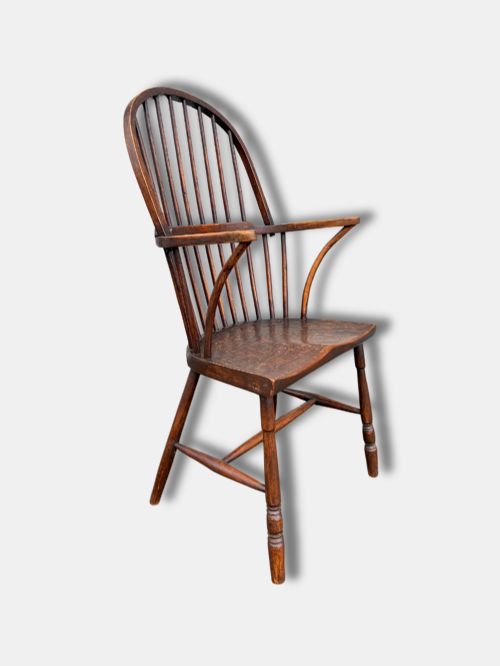
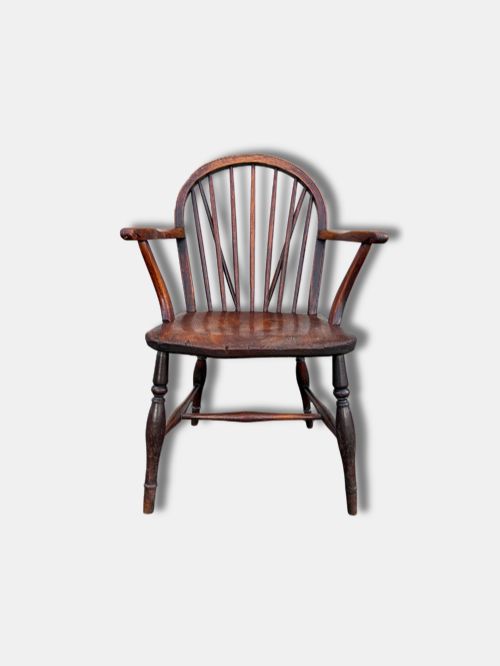
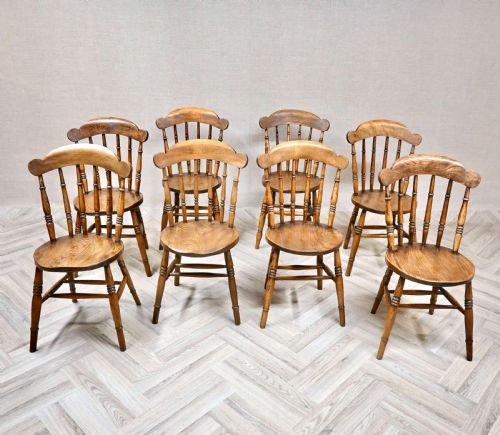
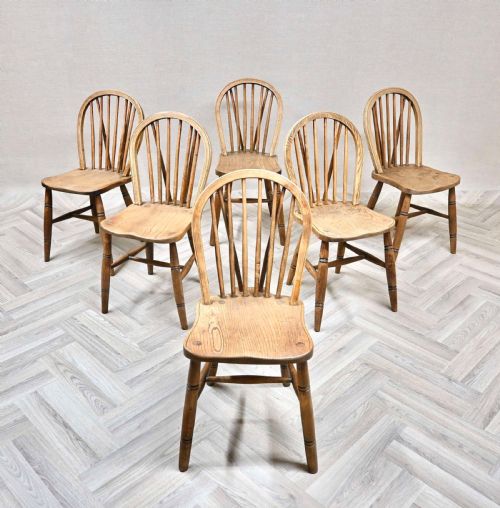
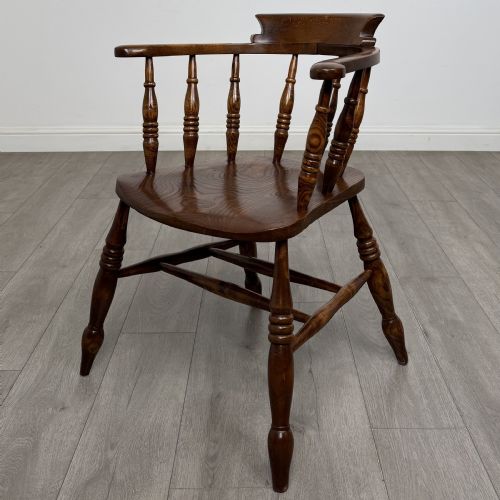
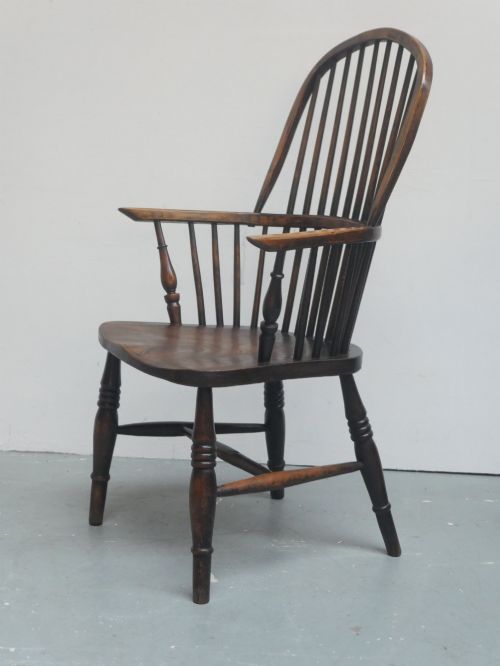
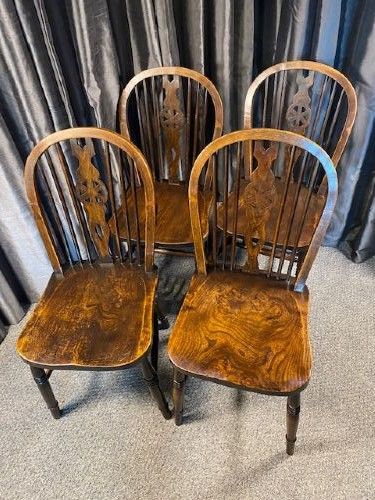
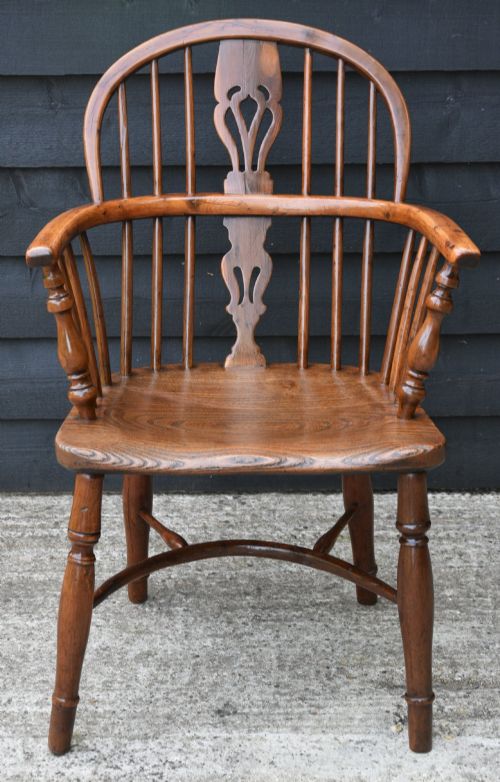
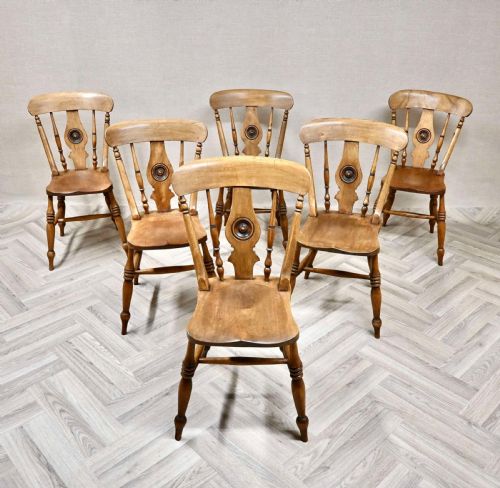
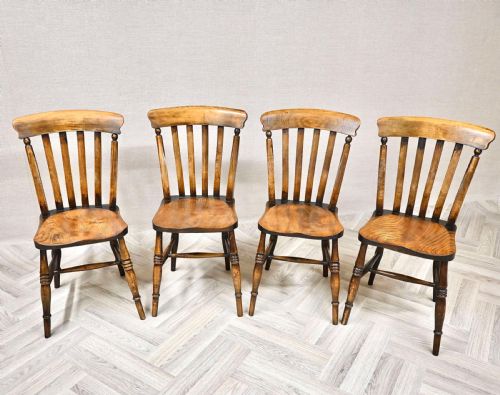
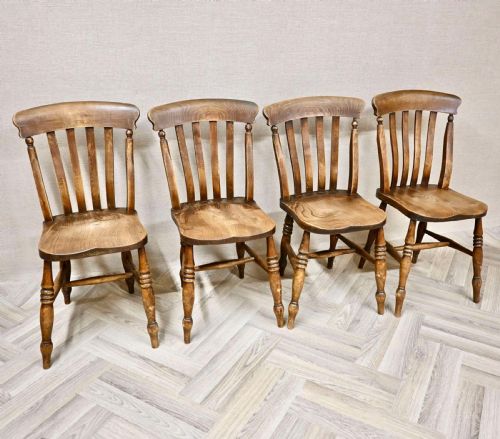
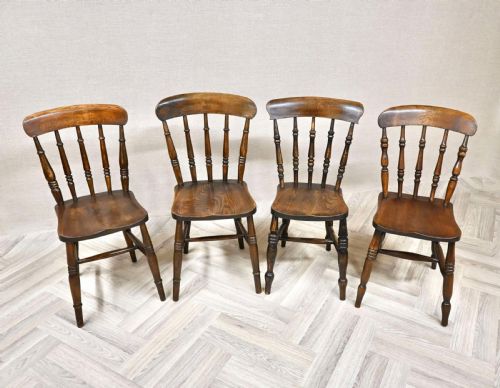
An elm seat chair is a staple of country furniture, most often encountered on this page as a Windsor armchair, kitchen dining chair, or farmhouse carver dating from the eighteenth, nineteenth, and early twentieth centuries. These seats form part of a tradition spanning English country, Victorian, and Georgian vernacular styles, appearing in sets or as single armchairs.
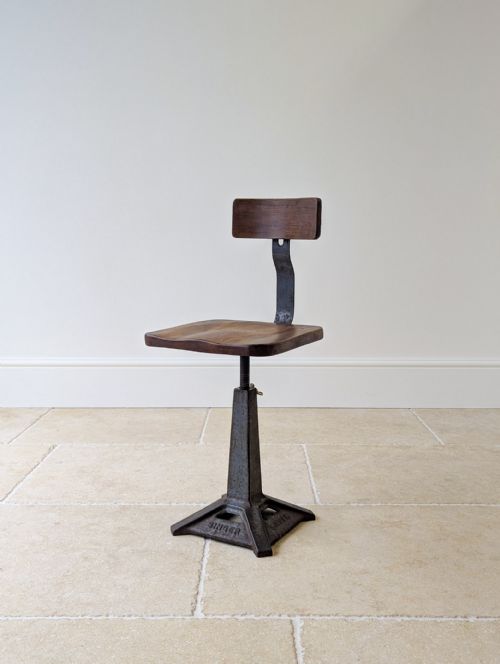
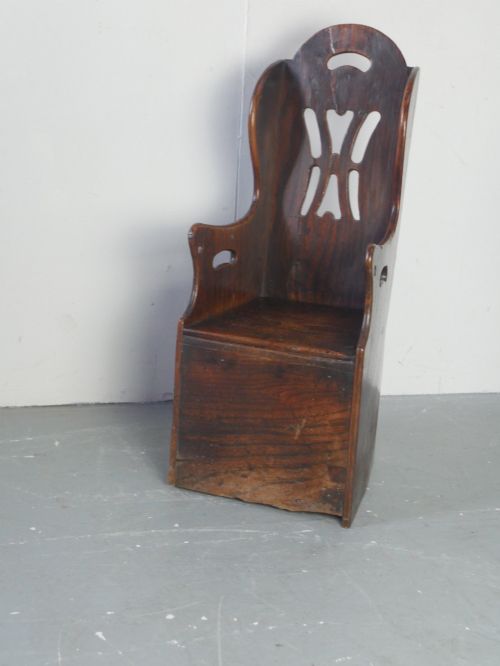
Makers shaped these utilitarian seats for everyday durability, combining solid elm saddle bottoms with turned spindles, bentwood hoops, and contrasting timbers like ash and beech. The selection includes high back and low back Windsor forms, wheelbacks, lathbacks, and smokers bows alongside children's chairs and machinist seating.
Materials and Construction
Makers selected elm for the seat board because the interlocking grain resisted splitting when bodgers drove the legs and spindles into the wood. This tough timber was paired with ash for flexible bent hoops and steam-bent arms, and beech for turned legs and stretchers.
Makers utilised green woodworking techniques, turning components on pole lathes and boring holes at precise compound angles to ensure the undercarriage stayed rigid under daily use.
The inventory includes seating formats ranging from children's chairs and office furniture to benches and dining sets.
Judging Quality
Quality rests in the depth of the saddle shaping on the seat board and the harmony of the timber's grain and patina built up over generations. Superior examples display balanced proportions in the spindle turnings and minimal replacement parts across the undercarriage.
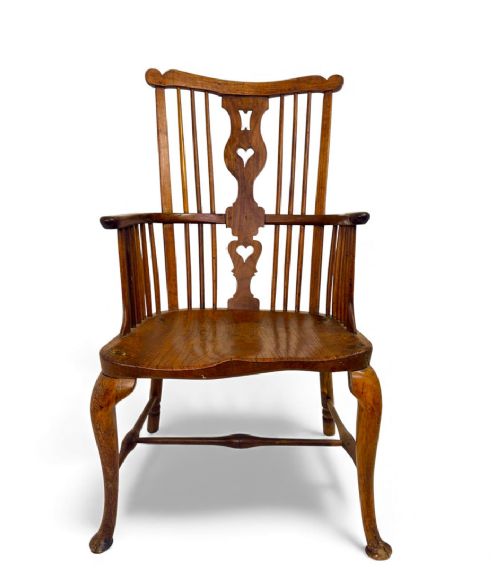
The distinction between ordinary utility seating and finer pieces lies in the crispness of details such as pierced splats, carved arm terminals, and the use of yew wood alongside elm.
The Elm Seat Chair Glossary
- Windsor chair
- A wooden chair featuring a solid timber saddle-shaped seat into which the legs and back spindles are directly fitted. The design relies on a heavy plank base rather than a conventional frame.
- Hoop back
- A continuous bentwood bow that forms the back and arms of a chair. It is typically steam-bent from a single piece of ash.
- Smokers bow
- A low-backed Windsor armchair with a rounded arms rail supported by turned spindles. It is commonly found in nineteenth-century domestic and commercial interiors.
- Splats
- The vertical central wooden strip placed inside the back of a chair. Pierced examples feature cutout decorative patterns.
- Patina
- The surface sheen and colour acquired by wood over decades of handling, polish, and exposure to light. It indicates genuine age.
Elm Seat Chair: Frequently Asked Questions
How do I clean an elm seat chair?
Dust the timber regularly with a dry cloth to prevent grit accumulating in the grain. Apply microcrystalline wax occasionally to nourish the surface without building up sticky layers.
Avoid using modern silicone sprays or harsh chemical cleaners which can strip the historic finish and soften the wood.
Can I use these chairs every day?
These pieces were built for robust domestic service and handle daily seating well. Check the undercarriage joints periodically to ensure the legs remain tight in the elm seat.
Keep timber furniture away from direct heat sources and sudden humidity shifts to prevent the wood from shrinking or splitting.
What is a penny seat?
A penny seat refers to a saddle-shaped wooden base scooped out with an adze to resemble large round depressions. This shaping made the heavy plank comfortable for prolonged sitting.
Cabinetmakers smoothed these hollows by hand, creating the characteristic contour found on traditional kitchen chairs.
How do I spot a Thames Valley chair?
Thames Valley pieces often incorporate yew wood alongside elm and feature distinctive crinoline stretchers joining the legs. These regional variations show refined turning and slender proportions.
Examine the grain on the arms and back bow to identify local timber selections typical of eighteenth-century workshops.