


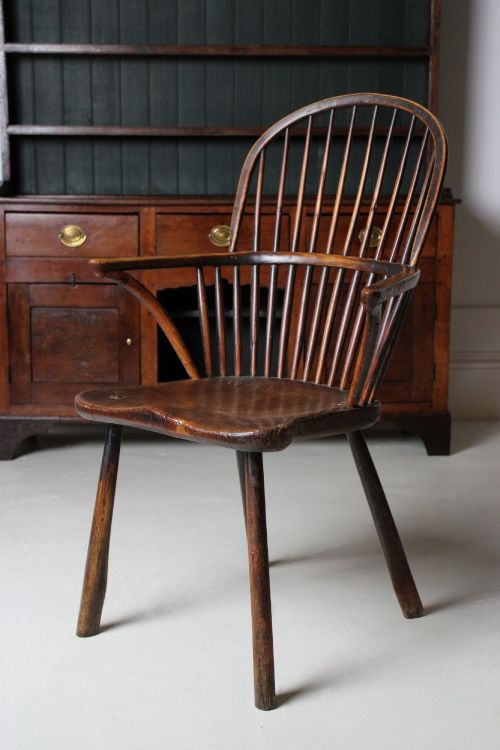
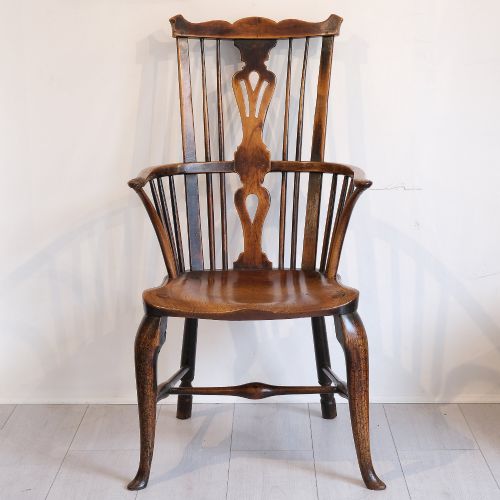
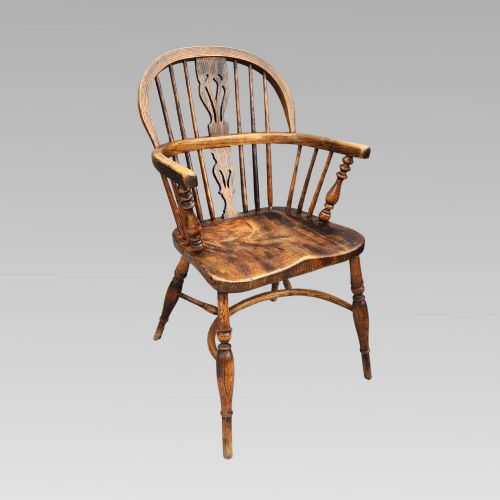


Elm Saddle Seat Armchair
An elm saddle seat armchair brings honest country craftsmanship and deep-grained timber directly into a modern room.
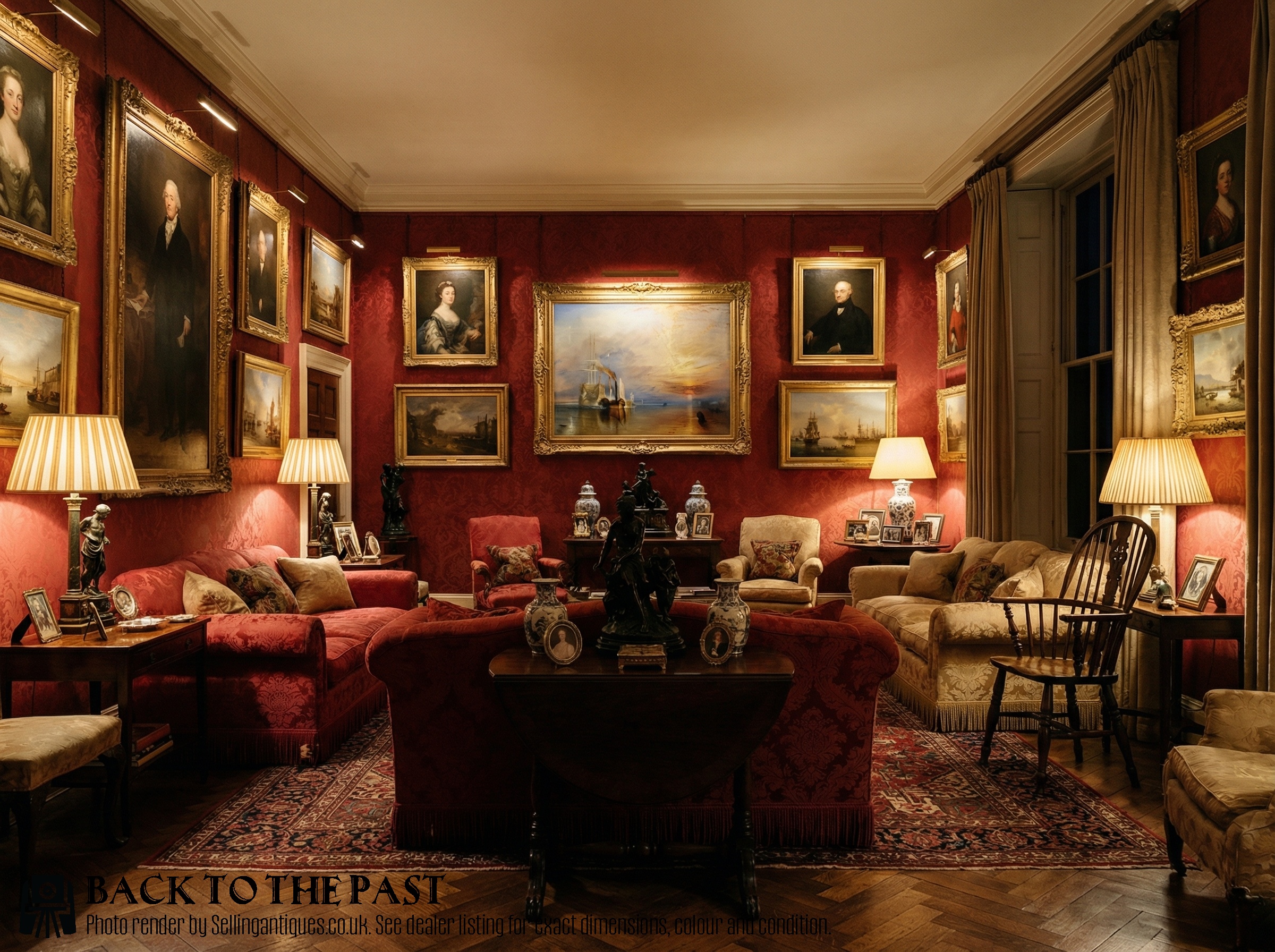
Elm Saddle Seat Armchair
An elm saddle seat armchair is a robust wooden seat designed for domestic or rural utility, commonly known as a Windsor or vernacular country chair. When you search for an elm saddle seat armchair, you encounter seating built with a sculpted wooden seat base and spindle or stick backs.
The selections span the Georgian, Regency, and Victorian periods, showcasing English country vernacular styles. You will frequently meet ash and elm combinations, along with yew, beech, and fruitwood variants.
Forms range from low back and high back Windsor chairs to comb backs, crinoline chairs, smokers bows, and desk chairs. These pieces originated in regional workshops across England, serving farmhouse kitchens, studies, and offices.
How they were made
Maker-joiners utilised solid elm for the thick saddle seats, hollowing the timber into a comfortable concave form. This dense wood resists splitting under heavy daily use.
The uprights, spindles, and legs employ contrasting timbers such as ash, beech, or yew, shaped on a pole lathe or turned by hand. Steam bending formed the characteristic curved hoops and bows of the upper backs.
The listings show pieces spanning the eighteenth, nineteenth, and early twentieth centuries, constructed from elm, ash, yew, beech, and fruitwood.
What varies in quality
Quality rests in the depth of the seat's sculpting and the harmony of the timber selection. A superior example pairs a deeply dished elm seat with well-matched ash or yew spindles.
Proportion and structural retention define the better specimens. Chairs retaining their original turned stretchers and displaying crisp joinery sit at the higher end of the range.
The Elm Saddle Seat Armchair Glossary
- Saddle seat
- A wooden chair base sculpted into a concave shape resembling a horse saddle. This shaping provides ergonomic comfort for the sitter.
- Windsor chair
- A wooden chair constructed with upright sticks or spindles inserted into a solid sculpted seat. The back and legs are separate components fitted directly to the seat slab.
- Smokers bow
- A low-backed wooden armchair with a continuous curved arm rail resting on short spindles. These chairs often served in offices, smoking rooms, and farmhouses.
- Comb back
- A Windsor chair variation featuring a high headpiece resembling a traditional hair comb. Vertical spindles rise through the arm rail to support this upper crest.
- Crinoline chair
- A Windsor armchair fitted with a curved hoop stretcher connecting the legs near the base. This hoop provides extra rigidity to the lower frame.
Elm Saddle Seat Armchair: Frequently Asked Questions
How do I identify a genuine period armchair?
Examine the construction methods and timber ageing visible on the underside of the seat and joint connections. Hand-turned components and traditional wedge-tenon joints indicate older vernacular production.
Compare the style markers, such as hoop backs or stick backs, against documented regional English country furniture designs from the eighteenth and nineteenth centuries.
Where were these country armchairs used?
These chairs served primarily in farmhouses, cottages, country houses, and rural offices. Their sturdy construction suited daily domestic tasks and seated work.
Later Victorian variants often found places in studies and smoking rooms as captains chairs or desk seating.
How should I care for an elm and ash chair?
Keep the timber away from direct heat sources and sudden temperature shifts to prevent the wood from drying out or splitting. Apply a suitable microcrystalline wax occasionally to nourish the surface.
Avoid commercial polishes containing silicones, which can damage historic wood finishes over time.
What is the difference between a high back and low back Windsor?
High back variants extend much higher behind the sitter's shoulders, sometimes incorporating comb backs or continuous hooped rails for added support. They require more vertical space in a room.
Low back versions keep the arm rail at a lower level, creating a more compact profile often utilised around desks and farmhouse tables.