






Elm Nursery Chair
These elm nursery chair examples are small vernacular seats built for children, prized for their honest regional timbers and sturdy traditional forms.
Elm Nursery Chair
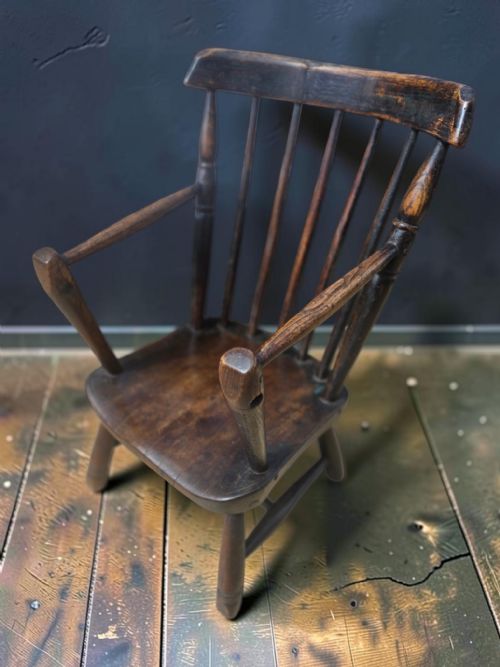
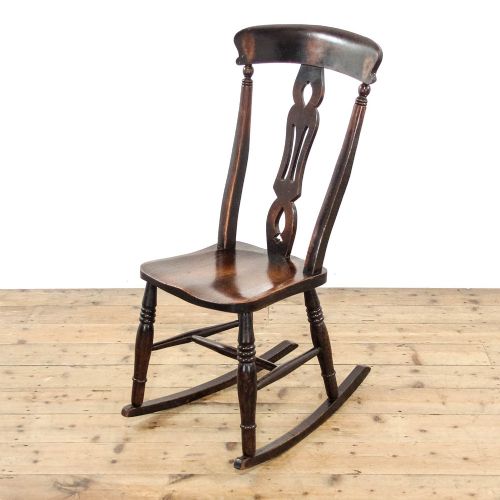
An elm nursery chair is a small domestic seat built for a child, appearing across the Georgian, Victorian, Edwardian, and later periods in regional English styles. The selection centres on country workshop pieces designed on a miniature scale, including Windsor armchairs, rocking chairs, and high chairs.
Makers produced these seating forms using local timber traditions, resulting in low armchairs, spindle-back rockers, and high chairs intended for daily domestic use. These small vernacular items mirror the full-sized Windsor and country chairs of their respective eras, scaled down for young children.
Materials and construction
Cabinet makers and rural joiners constructed these chairs primarily from elm for the seats, combined with ash, beech, yew, or oak for the spindles, legs, and bending parts. Elm provided a tough, interlocked grain suitable for solid saddle seats, resisting splitting under robust use.
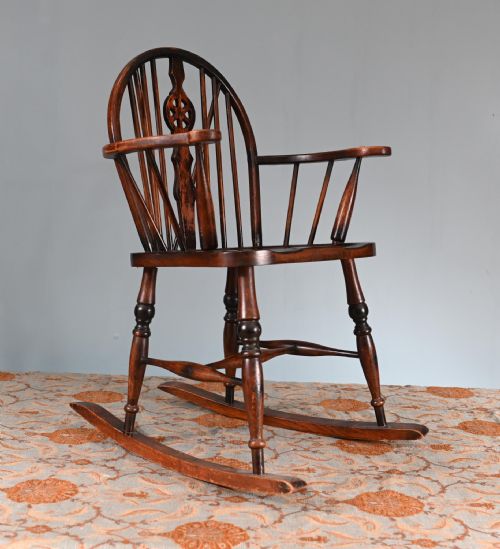
Makers utilised traditional green woodworking techniques, turning uprights on lathes and steam-bending wood for hoops and crest rails. Legs and undercarriages were wedged into bored seats using through-tennised joints, sometimes incorporating stabilizing elements like crinoline stretchers.
Elm Nursery Chair Retail Price Guide 2026
Typical asking prices for elm nursery chair among the pieces listed under this phrase on Sellingantiques today, from the lower quarter to the upper quarter. They describe what is for sale here now, not the wider market.
Some miniature Windsor rockers even included tiny crinoline stretchers, ensuring toddlers rode in properly braced comfort.
Judging quality and character
Quality in a vernacular children's seat rests upon the balance of proportions and the choice of timbers, where richly figured elm seats and contrasting ash or yew spindles create visual depth. Superior examples display confident turning on the legs and arm supports, reflecting the skill of regional makers.
The integrity of the original construction and the presence of untouched surface patination separate fine survivors from heavily restored or altered pieces. A well-balanced frame with original wedged joints demonstrates the durability inherent in traditional country craftsmanship.
The Elm Nursery Chair Glossary
- Windsor chair
- A wooden chair constructed with a thick solid timber seat into which the legs and back spindles are separately bored and wedged. This form dominates country seating traditions.
- Crinoline stretcher
- A curved metal or wooden brace linking the legs of a chair to provide structural rigidity. It earned its descriptive name from its resemblance to the hoops of Victorian skirts.
- Saddle seat
- A wooden chair seat sculpted with hollowed depressions to fit the human body. Makers shaped elm specifically for this purpose to enhance comfort.
- Spindle back
- A chair back composed of numerous thin, turned vertical rods supporting the top rail. This construction lightens the frame while maintaining strength.
- Vernacular furniture
- Objects built by local tradesmen using regional materials and traditional designs rather than following academic metropolitan styles. These pieces serve practical domestic functions.
Elm Nursery Chair: Frequently Asked Questions
What is an elm nursery chair?
An elm nursery chair is a small-scale historical seat built for children by regional makers, utilising sturdy local hardwoods and traditional vernacular construction methods.
These pieces mirror full-sized adult Windsor and country chairs from the Georgian and Victorian eras, scaled down specifically for domestic use by children.
How were these children's chairs used?
These chairs served everyday domestic functions in nurseries and family parlours, providing stable seating for young children during meals or play. High chair variations elevated infants to table height, while rocking chair formats entertained toddlers.
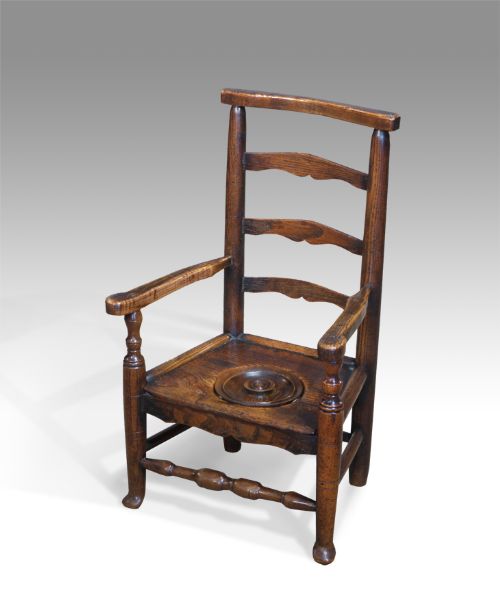
Many examples incorporate sturdy footrests or commode elements, reflecting the practical demands of historical childcare routines.
How do I care for antique elm furniture?
Antique elm requires a stable indoor environment away from direct heat sources and extreme humidity fluctuations to prevent timber movement or cracking. Maintaining consistent conditions preserves the natural oils within the historic wood.
Applying microcrystalline wax occasionally helps protect the surface patination without sealing the timber or attracting dust.