

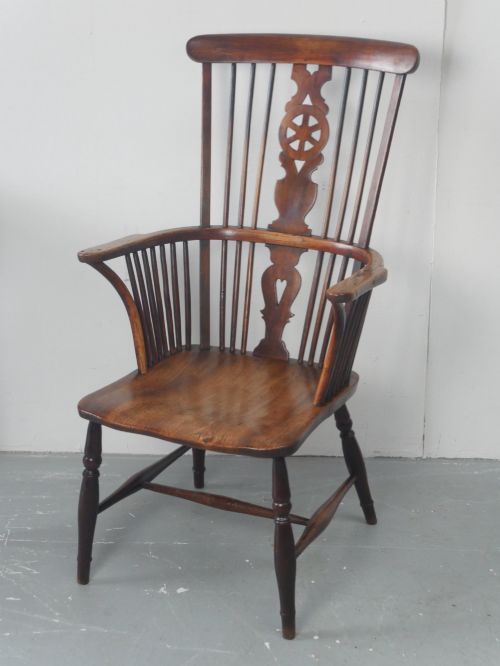
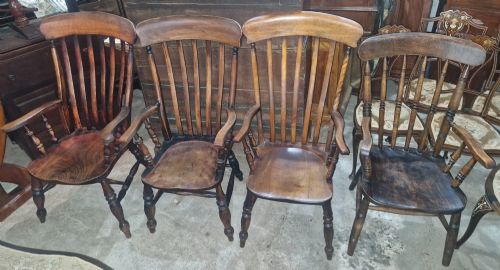
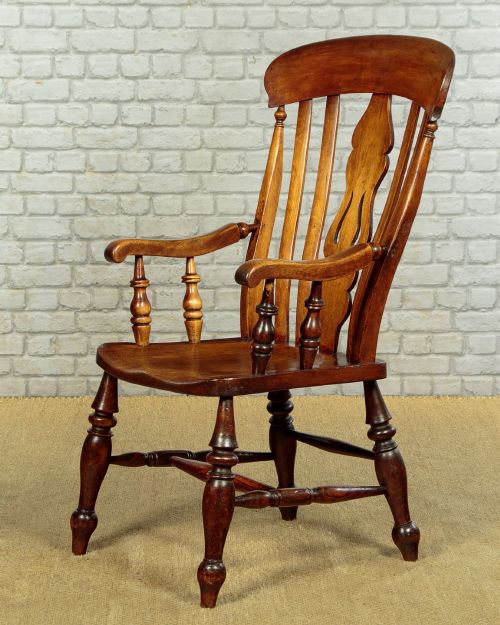
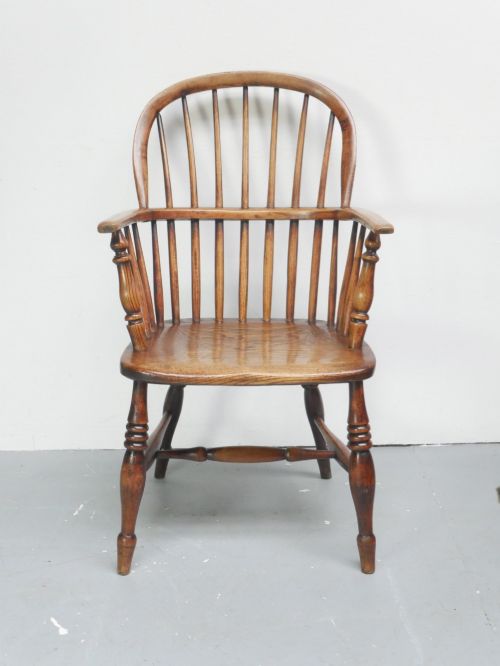
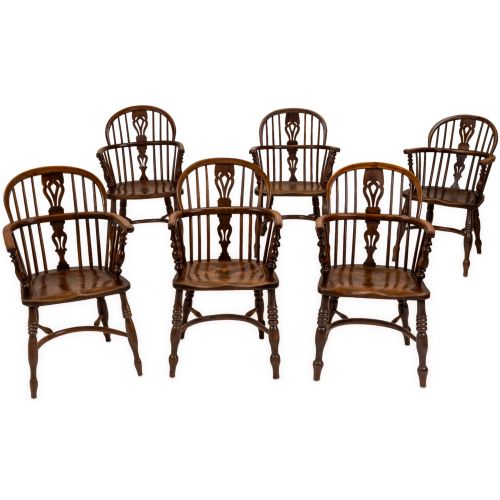
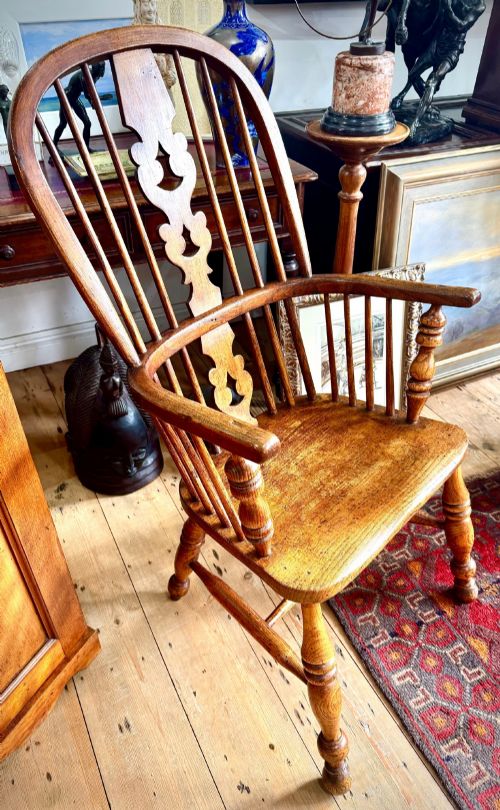


Elm Kitchen Armchair
An elm kitchen armchair brings solid traditional utility and honest rural character straight into a modern interior.
Elm Kitchen Armchair
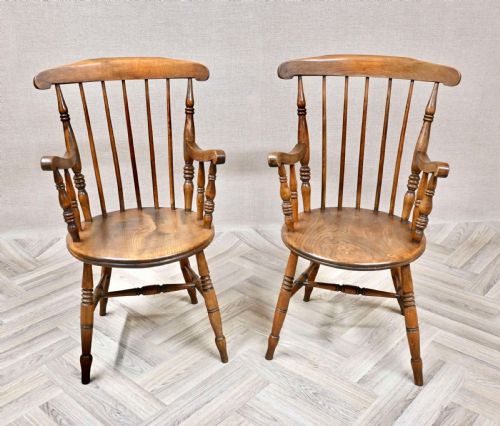
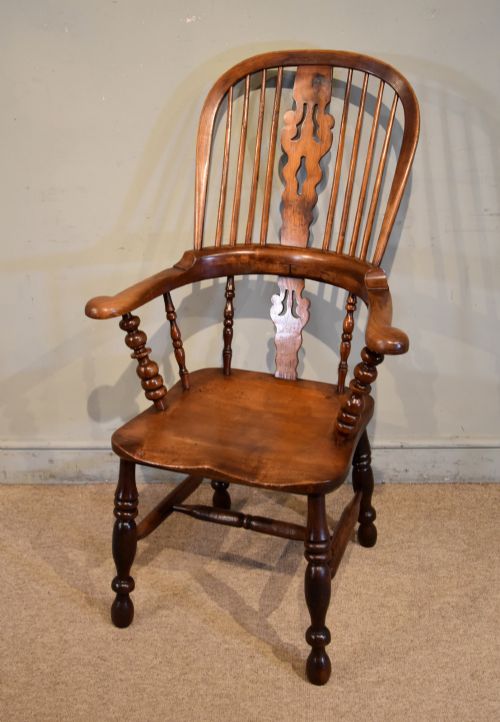
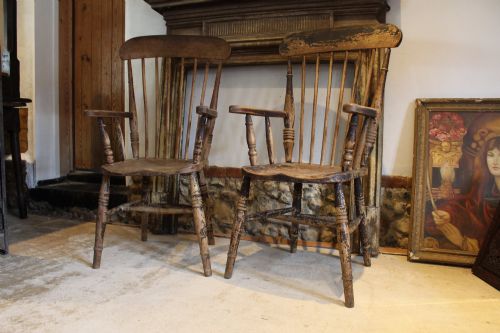
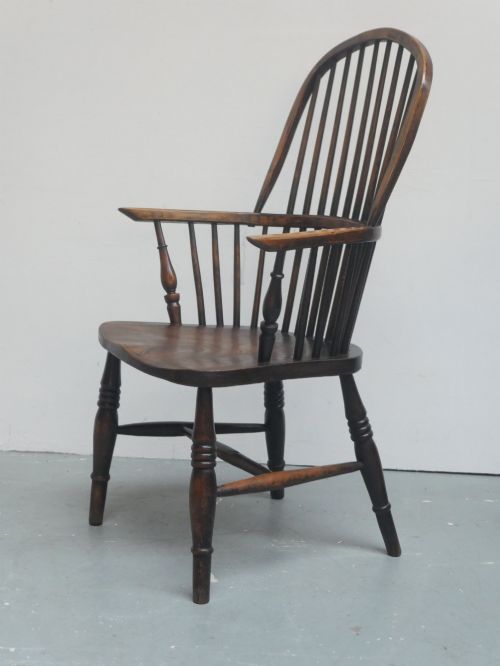
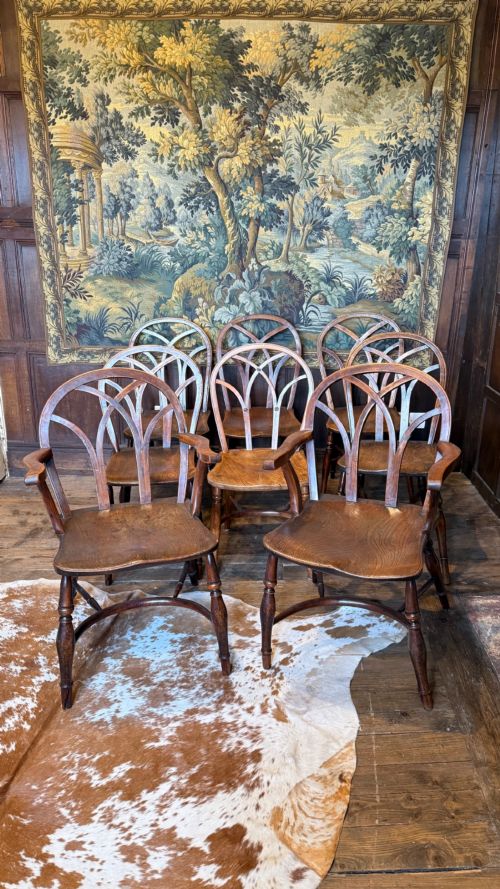
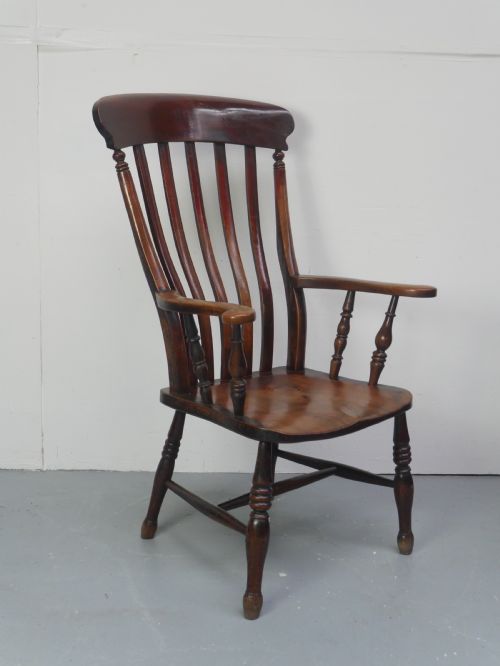
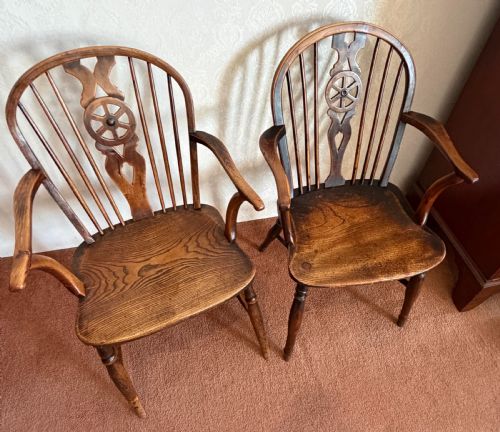
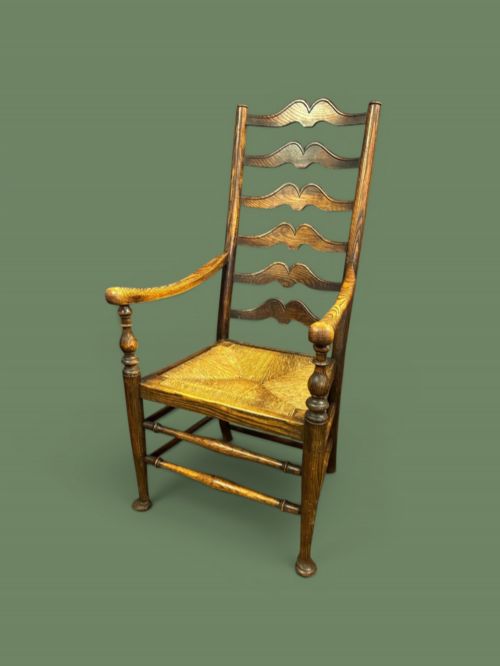
An elm kitchen armchair is a sturdy country seat designed for daily domestic use in nineteenth century households. The pieces gathered here belong predominantly to the Victorian period, spanning styles from simple stick backs and ladderbacks to classic Windsor forms.
Most examples combine an elm wood seat with supportive bentwood or turned spindles in ash, beech, or yew. Buyers will find single armchairs alongside matched or assembled dining sets intended for farmhouse kitchens.
Regional variations appear across the selection, including highback styles, lowbacks, and broad arm variants. Each piece reflects the practical craftsmanship of nineteenth century British country workshops.
How they were made
Maker construction relied on a combination of durable timbers suited to different structural demands. Solid elm provided a tough, beautifully grained seat slab that resisted splitting, while ash and beech offered flexible strength for steam-bent hoops and slender spindles.
Traditional joinery involved wedging turned legs and back uprights directly into bored holes through the thick wooden seat. Many examples incorporate crinoline stretchers or turned H-stretchers to brace the underframe against daily strain.
Elm Kitchen Armchair Retail Price Guide 2026
Typical asking prices for elm kitchen armchair among the pieces listed under this phrase on Sellingantiques today, from the lower quarter to the upper quarter. They describe what is for sale here now, not the wider market.
What varies in quality
Quality rests primarily in the depth of the sculpted elm seat and the balance of the turned framework. Superior examples feature deep, comfortable saddle seats and well-balanced proportions that combine robust utility with refined country elegance.
The integrity of the original joints and the richness of the surface patina distinguish exceptional survivals from heavily restored pieces. Uniform timber matching across sets and crispness in the spindle turnings also elevate the standing of individual chairs.
The Elm Kitchen Armchair Glossary
- Windsor chair
- A wooden chair featuring a thick solid seat into which the legs and back sticks are independently inserted. This form provides robust structural integrity through its clever dispersion of weight.
- Saddle seat
- A wooden seat base scooped and hollowed out by hand for ergonomic comfort. This shaping prevents the dense elm timber from feeling entirely flat during long periods of sitting.
- Spindle back
- A chair back constructed from a series of slender turned wooden rods. These vertical members support the sitter while keeping the overall frame visually light and open.
- Rush seat
- A woven seating surface made from dried marsh grasses twisted into cord. This traditional technique creates a textured, flexible platform common on regional ladderback chairs.
Elm Kitchen Armchair: Frequently Asked Questions
Are these chairs comfortable for daily seating?
The saddle-shaped elm seats offer surprising ergonomic support built for long hours of kitchen work. Their generous proportions accommodate everyday sitting quite naturally.
Adding a simple loose cushion can further soften the solid wood base without hiding the grain. Many owners use them daily around kitchen or dining tables.
How do I date a nineteenth century armchair?
Dating relies on observing tool marks, timber selection, and the wear patterns around the feet and arm terminals. Earlier nineteenth century pieces often show hand-turned variations in the spindles.
Later Victorian production introduced more standardised machinery while retaining traditional assembly methods. Examining the construction underneath usually reveals the era of manufacture.
How should I care for old elm wood?
Maintain the wood by applying a gentle beeswax polish occasionally to nourish the dry nineteenth century timber. Avoid placing the chair near direct heat sources that might cause the elm to shrink or split.
Regular dusting with a soft cloth keeps the surface patina intact. Proper humidity control in the room preserves both the wood and the traditional joints.