
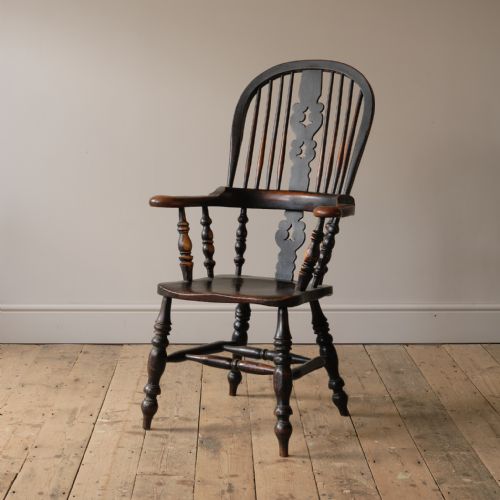
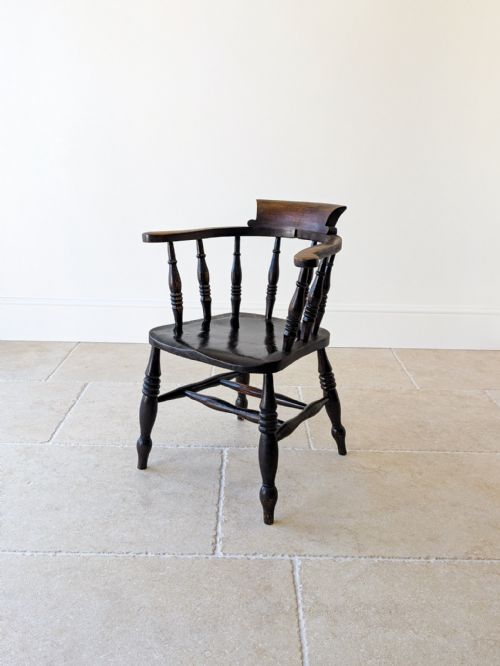

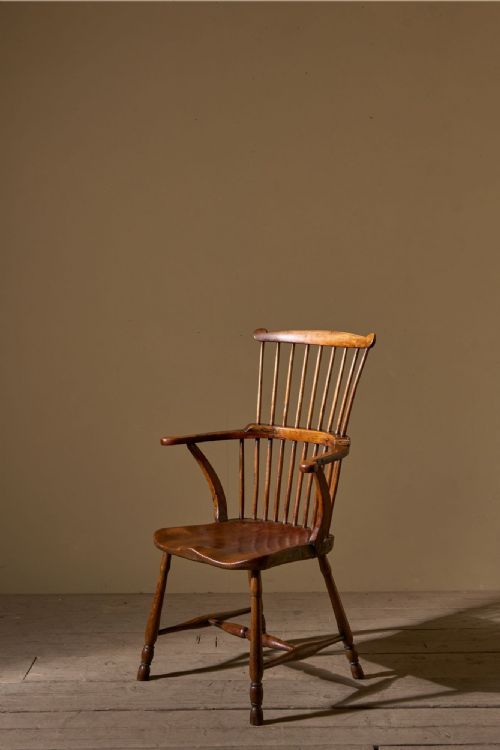
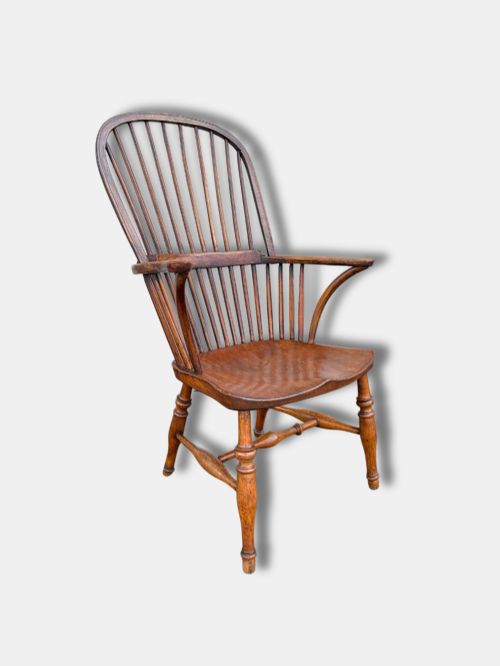
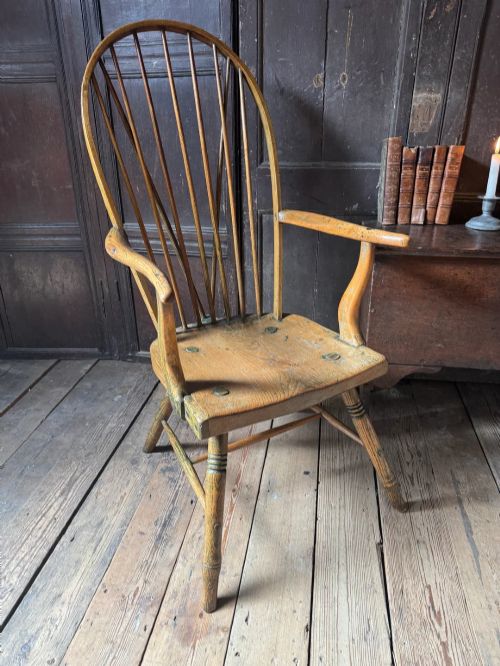
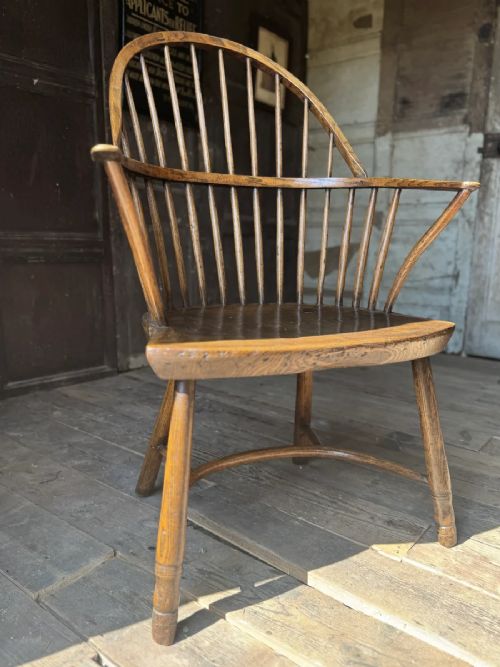
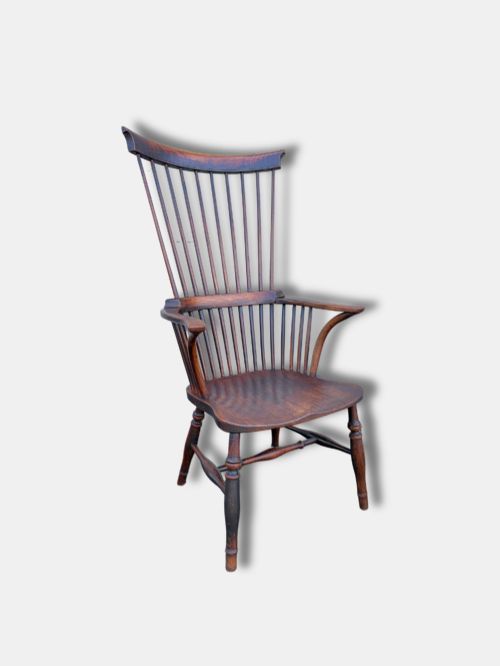
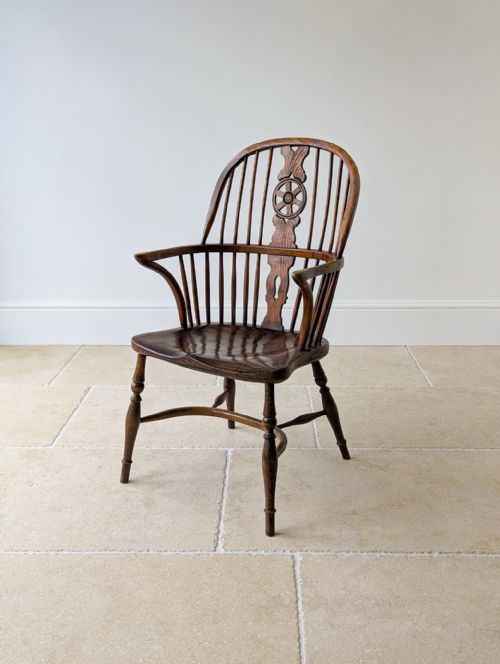
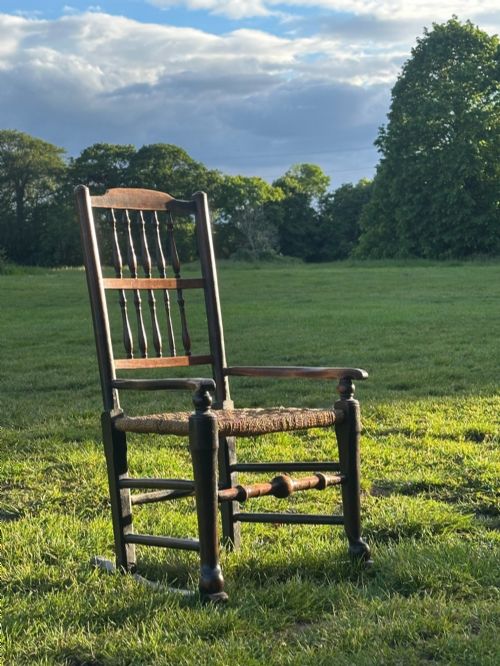
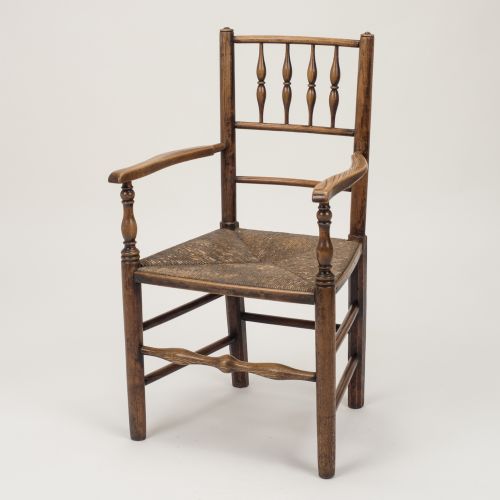
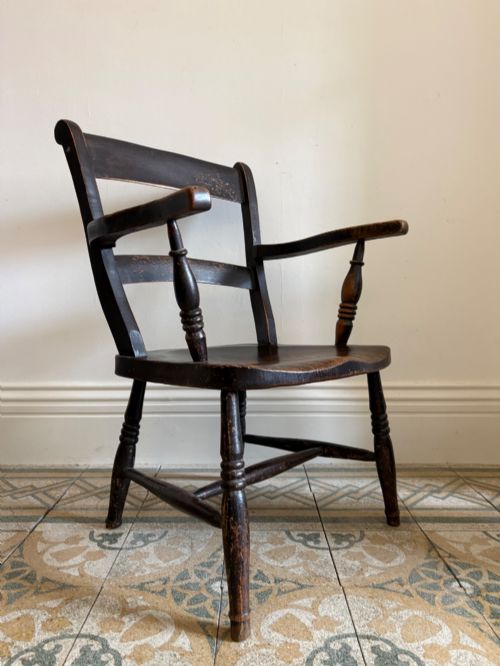
Elm and Ash Armchair
An elm and ash armchair brings together traditional vernacular seating, offering sturdy construction and distinct regional character.
Elm and Ash Armchair
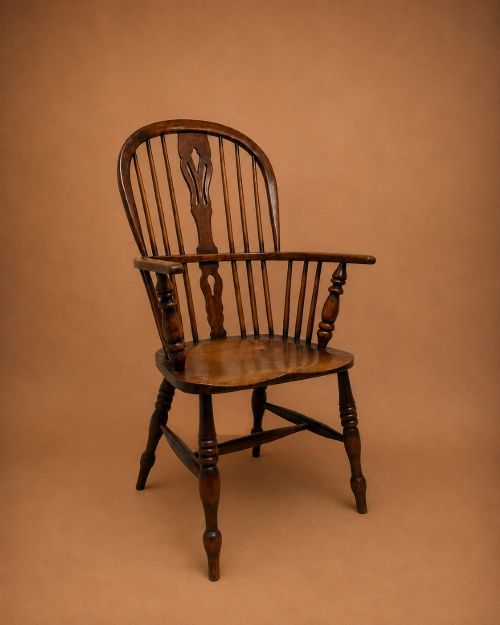
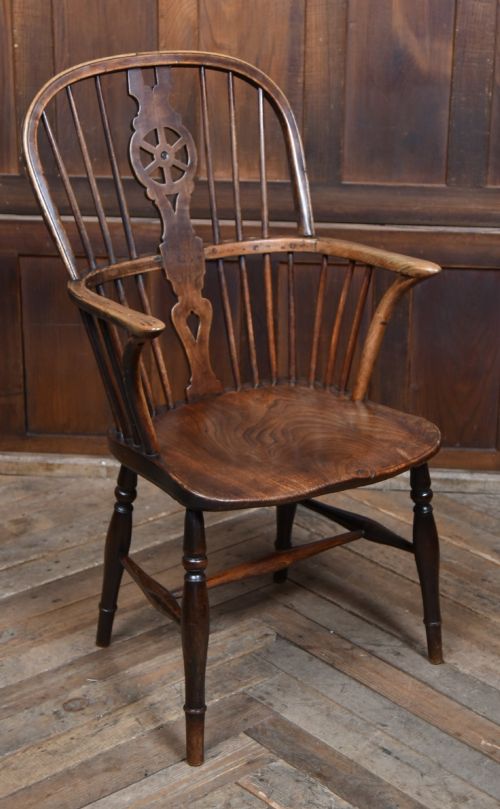
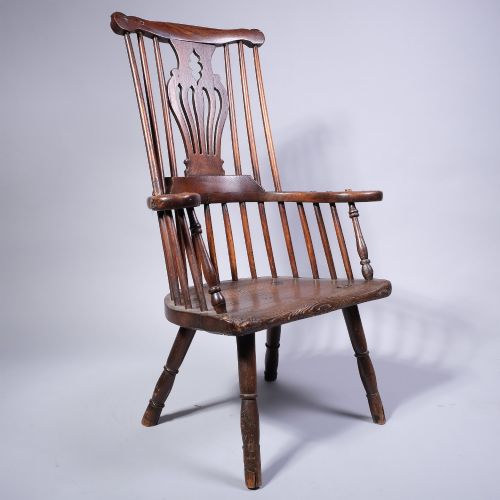
An elm and ash armchair represents traditional country seating, predominantly taking the form of Windsor chairs spanning high-backs, low-backs, comb-backs, and wheel-backs. These pieces originate across various English regions, including the Thames Valley and the West Country, reflecting local vernacular furniture traditions.
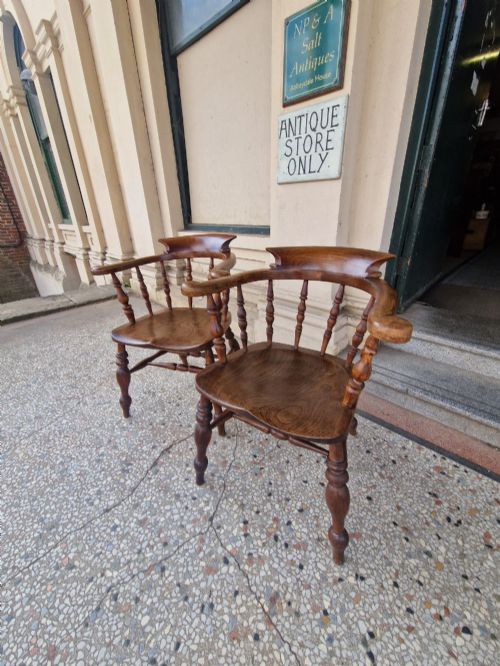
Buyers commonly encounter nineteenth-century and Victorian examples on this page, alongside eighteenth-century Georgian pieces. Forms range from captains chairs and smokers bows to rocking chairs and childs chairs, showing robust construction intended for everyday domestic use.
How they were made
Maker construction relies on timber selection matching the specific properties of each wood, combining elm for solid, resilient seats and ash for flexible spindles, backs, and legs. Additional materials such as beech, yew, fruitwood, and rush appear occasionally in frames and seating.
Traditional greenwood working techniques involve turning legs and stretchers on a lathe while shaping elm seats with an adze and scorp to achieve a comfortable, scooped contour. Steam bending forms the bowed crest rails and armrests characteristic of Windsor designs.
Listings feature eighteenth-century and nineteenth-century pieces alongside Victorian examples, constructed primarily from ash, elm, beech, and yew.
What varies in quality
Quality separates through the grace of the turning, the depth of the seat scalloping, and the overall harmony of proportions rather than simple age. Finer pieces demonstrate careful selection of timber grain, particularly where burr elm or highly figured seats meet slender, well-balanced spindles.
Construction integrity and the survival of original surface finishes dictate desirability, with untouched patination and minimal replacement parts marking superior examples. Regional specialisms also influence standing, where certain Thames Valley or West Country idioms display more refined sculptural shaping.
Fred Walker Rockley
The Elm and Ash Armchair Glossary
- Windsor chair
- A wooden chair built with a heavy solid wooden seat into which the legs and back spindles are directly dowelled. This design creates a sturdy seating form typical of English country production.
- Thames Valley
- A regional style of Windsor chair making known for crisp turning, substantial proportions, and often incorporating yew wood alongside elm and ash. These pieces represent a high point in English vernacular seating design.
- Broad arm
- A chair featuring enlarged, paddle-shaped armrests designed for writing or working convenience. This regional variation frequently appears on nineteenth-century captain chairs and smokers bows.
- Crinoline stretcher
- A curved hoop stretcher connecting the legs of a Windsor chair below the seat to provide structural rigidity. The design curves outward toward the back legs, echoing historical fashion.
Elm and Ash Armchair: Frequently Asked Questions
What is an elm and ash armchair?
An elm and ash armchair is a traditional wooden seat, most frequently found as a Windsor chair featuring a solid elm saddle seat combined with ash framing and spindles. These chairs were made by regional vernacular craftsmen across English rural workshops.
They serve as both practical seating and historical examples of domestic furniture, prized for their ergonomic comfort and enduring structural joinery.
How do you date an antique armchair?
Dating relies on observing construction methods, tool marks beneath the seat, timber weathering, and stylistic evolutions in the comb, hoop, or wheel back. Eighteenth-century examples often display primitive comb-back forms with deep country patination, while Victorian pieces incorporate steam-bent lath backs.
Regional characteristics also help narrow down the period of manufacture, as West Country and Thames Valley workshops used distinct turning patterns and timber combinations during the Georgian and Regency eras.
Where were these chairs made?
These chairs originated in rural workshops across England, with specific regions such as the Thames Valley, Lancashire, Cheshire, and the West Country developing distinct local styles. Makers utilised locally sourced hardwoods available in British woodlands.
Country joiners and specialised chair bodgers produced these pieces for farmhouses, cottages, and provincial homes, resulting in varied regional vernacular traditions.
How should I live with one?
Living with a traditional Windsor chair involves placing it away from direct heat sources and sudden temperature fluctuations to protect the seasoned elm and ash timbers. Regular dusting and occasional waxing help preserve the original surface patination.
These armchairs function well in both traditional and modern interiors as desk chairs, fireside seats, or reading chairs, offering robust daily utility.