




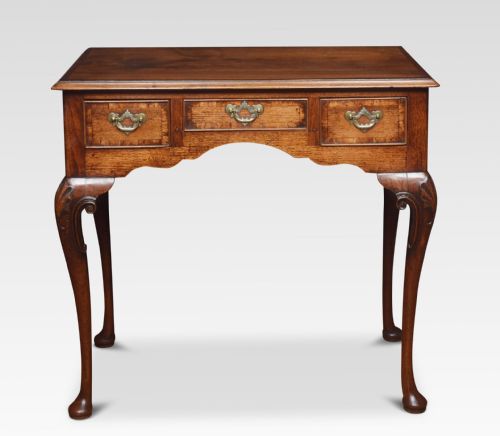


Eighteenth Century Hall Table
An eighteenth century hall table provides a narrow surface for a narrow space, combining utility with distinct period craftsmanship.
Eighteenth Century Hall Table
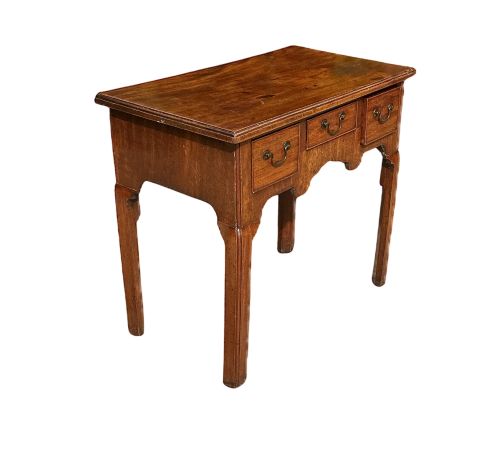
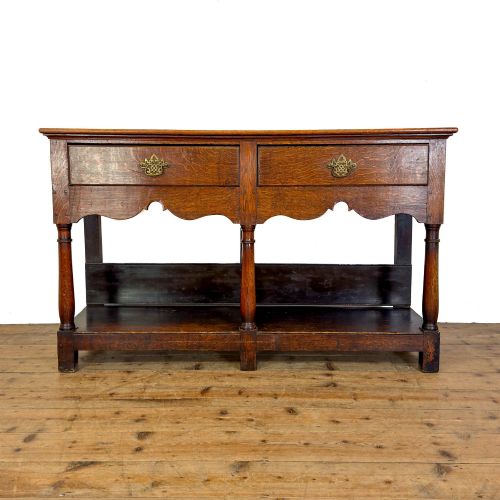
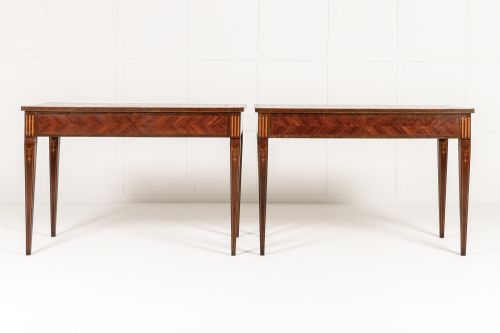
When you search for an eighteenth century hall table, you encounter side tables, console tables, dresser bases, and lowboys spanning the eighteenth century, Georgian, Regency, and Victorian periods. These pieces appear in mahogany, oak, walnut, painted pine, and kingwood, reflecting diverse regional origins.
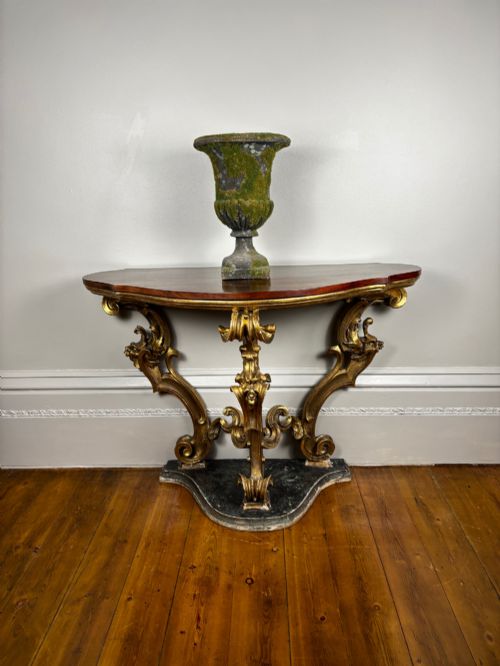
The versions most likely to meet you on this page are mahogany side tables and console tables from the Georgian and George III eras. Alongside these, Italian painted console tables and Welsh country oak pieces provide alternative forms for narrow entryways and corridors.
How they were made
Cabinet makers utilised dense hardwoods like mahogany, oak, and walnut, frequently selecting figured timber for prominent surfaces. Construction methods relied on traditional joinery to build stable frames capable of supporting daily household use.
Decorative finishes on these tables include painted wood, giltwood, and gesso, particularly on Venetian and Italian console tables. Craftspeople shaped timber using carving techniques, visible in George III and Rococo style examples.
Tables occasionally double as tea tables, proving that 18th-century guests required refreshments just as urgently as dropped door keys.
What varies in quality
The standard of a piece depends largely on the choice of timber and the precision of its construction. Figured mahogany and carefully matched walnut veneers distinguish finer examples from standard utilitarian items.
Execution of carved details and painted or gilded decoration sets apart workshop output. Tables retaining original surface treatments and coherent period hardware command greater attention than heavily altered pieces.
The Eighteenth Century Hall Table Glossary
- Lowboy
- A small low table with drawers, often used as a side table or dressing table. These typically feature cabriole or straight legs supporting a compact top.
- Console table
- A table designed to stand against a wall, frequently fixed with brackets. Italian and Venetian examples often display elaborate giltwood and painted finishes.
- Demi-lune
- A half-moon shape characteristic of tea tables and console tables. This form allows the furniture to sit flush against an entryway wall.
- Dresser base
- A lower storage unit featuring drawers and cupboards, originating from regional domestic settings. Welsh country examples demonstrate robust oak construction.
- Gesso
- A plaster mix applied to wood surfaces as a base for painting or gilding. This material allows for intricate relief moulding on decorative console tables.
Eighteenth Century Hall Table: Frequently Asked Questions
Are these tables solid mahogany?
Many tables utilise solid mahogany for structural elements and tabletops. Cabinet makers also employed mahogany veneers over secondary timbers.
Figured mahogany surfaces display distinctive grain patterns, which makers selected to enhance the visual appeal of side tables.
Where were painted console tables made?
Painted console tables frequently originate from Italy and Venice. These pieces reflect continental design preferences of the eighteenth century.
Such tables combine carved woodwork with painted or gilded surfaces, distinguishing them from British mahogany and oak furniture.
How do I identify a George III table?
George III tables often feature mahogany construction and styles associated with designers like Hepplewhite. They balance classical proportions with refined woodwork.
These pieces typically date from the latter half of the eighteenth century, demonstrating precise joinery and balanced decorative restraint.