
Eighteenth Century Dresser
An eighteenth century dresser brings heavy native timber and honest utilitarian carpentry straight from provincial dining rooms into modern interiors.
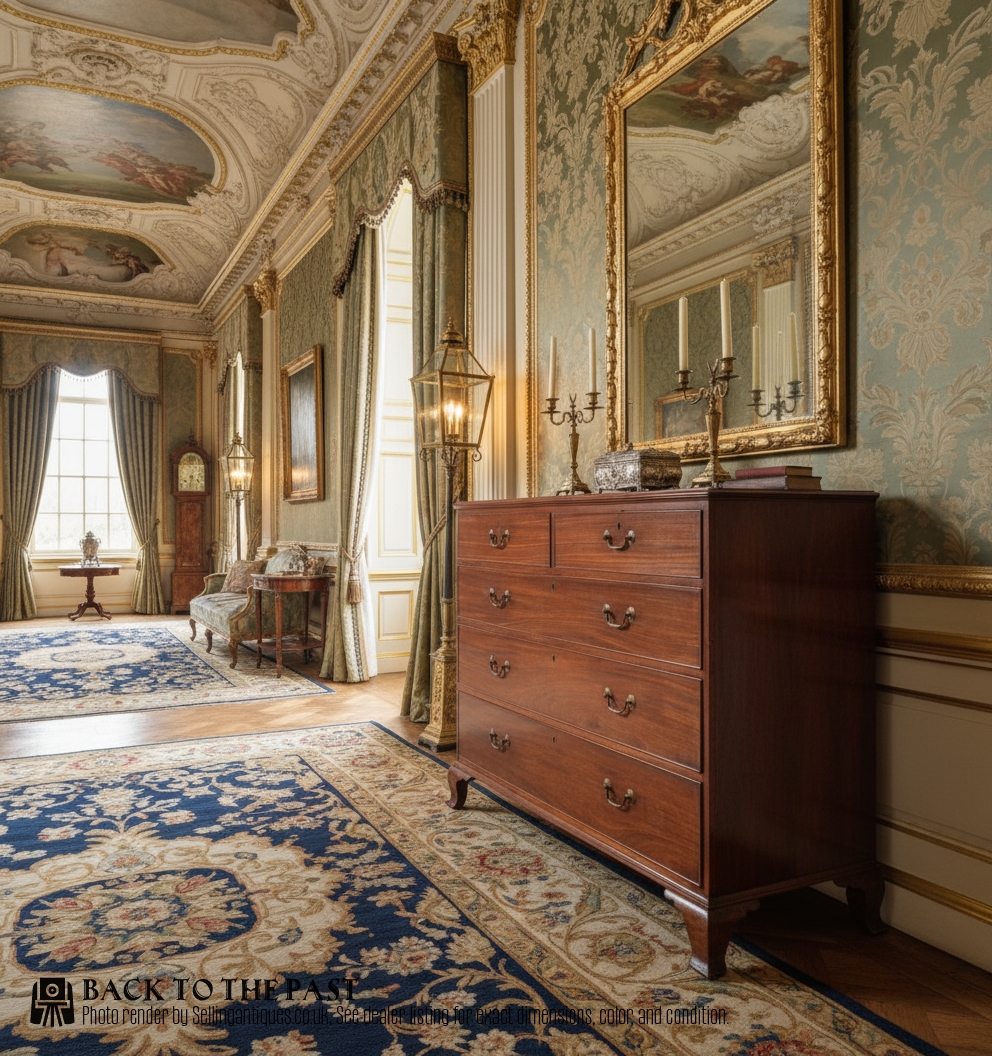
Eighteenth Century Dresser
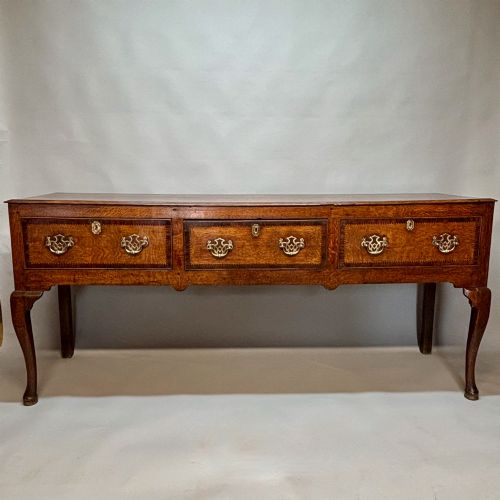
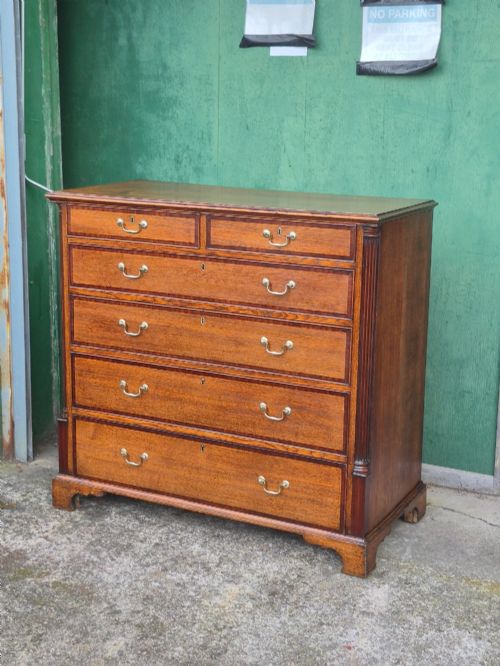
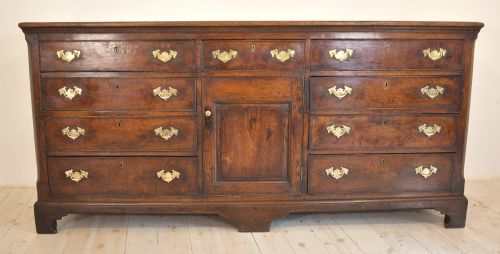
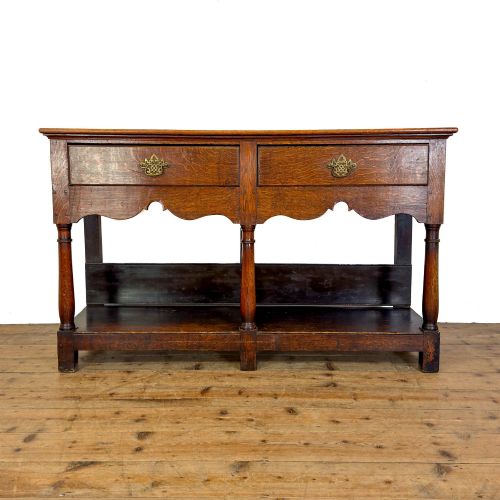
An eighteenth century dresser provides a commanding domestic footprint rooted in regional vernacular traditions. These foundational pieces primarily manifest as sturdy oak base cabinets, often featuring potboards or open lower tiers designed for heavy utilitarian service.
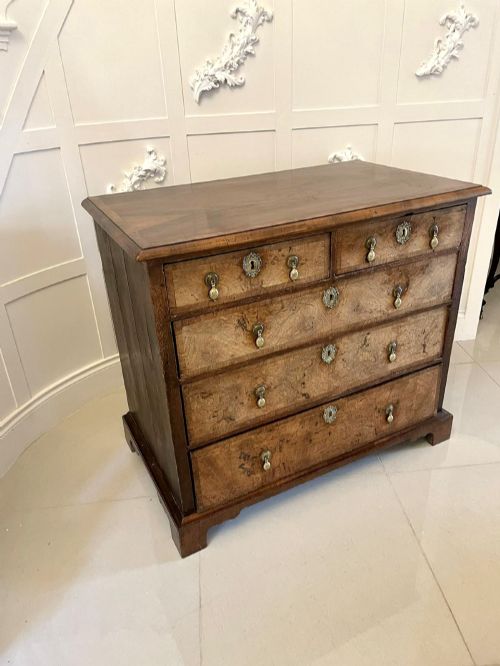
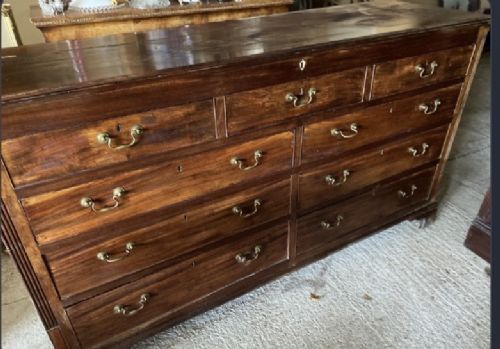
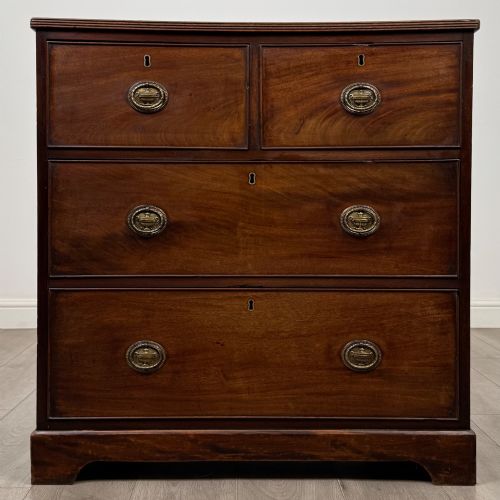
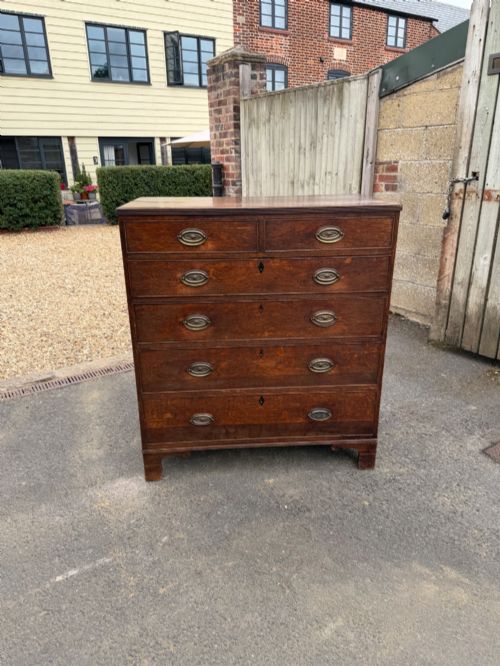
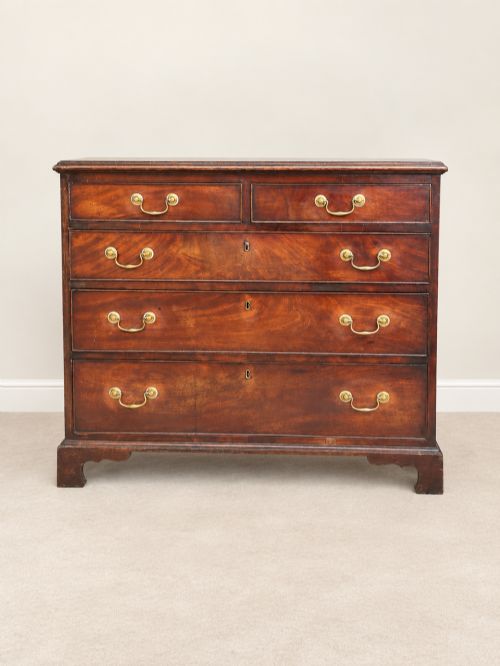
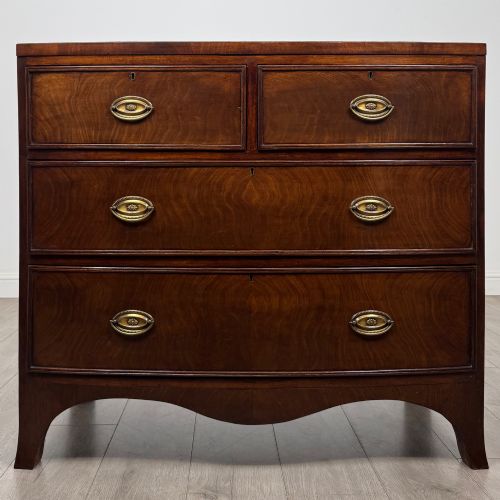
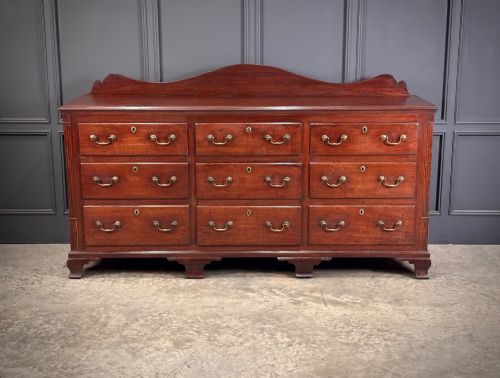
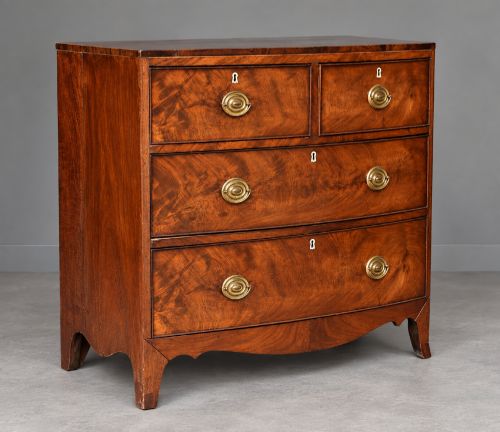
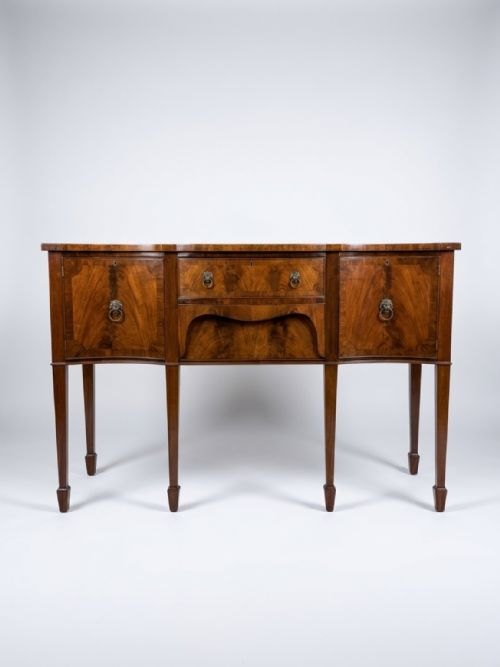
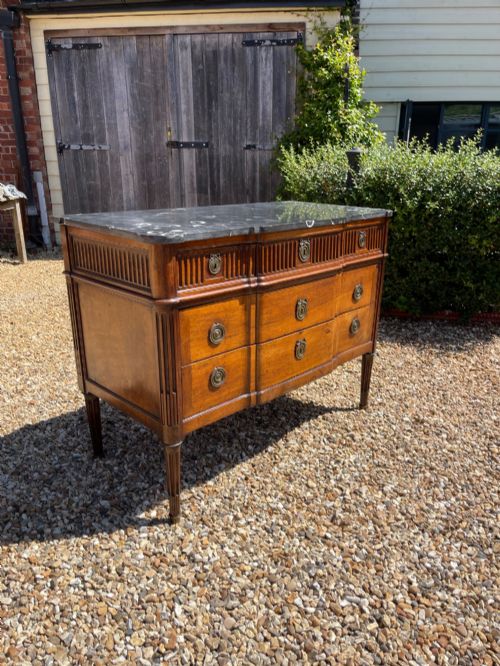
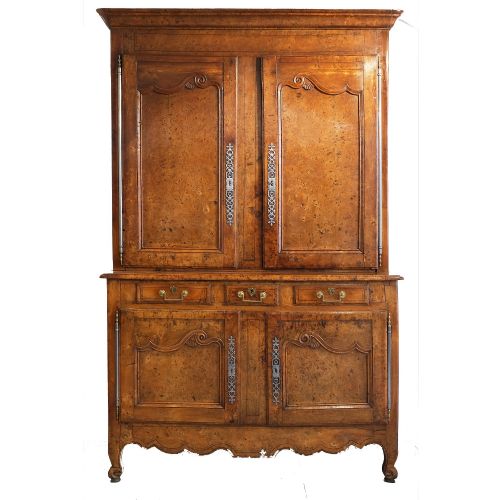
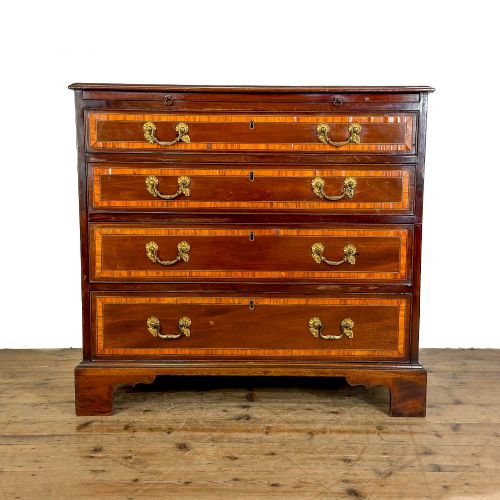
The inventory also spans related forms sharing the same era, including regional sideboards, commodes, and banks of drawers constructed from mahogany, walnut, and cherrywood. Welsh and provincial English examples dominate the selection, frequently displaying the practical joinery characteristic of rural cabinetmakers.
Materials and construction methods
Makers relied heavily on native hardwoods like oak, mahogany, and walnut, selecting dense timbers capable of enduring heavy daily domestic use. Secondary timbers often included ash and elm, particularly in structural framing and internal drawer components.
Construction techniques prioritized durability through pegged mortise and tenon joints, hand-cut dovetails on drawer boxes, and solid timber panels. Surfaces received hand-planed finishes that interacted naturally with applied waxes and oils, leaving tool marks visible across secondary framing.
Deep drawer bottoms often retain centuries of flour dust and spice residue embedded permanently into the grain by rural bakers.
Distinctions in craftsmanship and preservation
Quality rests upon the integrity of the timber selection and the restraint maintained during historical repairs. Examples retaining their original brass hardware, unblemished native board tops, and unaltered potboard lower tiers command greater architectural coherence.
The refinement of the carving and the precision of the joinery set standard provincial work apart from finer metropolitan pieces. Subtle details such as splayed feet, shaped aprons, and clean drawer linings demonstrate the maker's elevated skill level within period constraints.
The Eighteenth Century Dresser Glossary
- Potboard
- An open lower shelf built into a dresser base designed to hold heavy ceramic platters and cookware. This platform sits raised off the floor on short feet or stiles.
- Commode
- A low chest of drawers or cabinet originating in continental workshops, frequently constructed from walnut or cherrywood. These pieces often exhibit serpentine fronts and pronounced Rococo or Neoclassical styling.
- Dresser base
- The lower section of a kitchen or dining room storage unit built without the upper plate rack. These standalone timber cabinets typically feature multiple working drawers above cupboards or open shelves.
- Serpentine
- A furniture front characterised by a sweeping concave centre flanked by convex curves, or the reverse. This undulating profile requires advanced timber shaping skills.
- Bow front
- A convex, outwardly curved furniture front popular on late Georgian chests of drawers and sideboards. This design softens the room's angles while expanding internal storage volume.
Eighteenth Century Dresser: Frequently Asked Questions
Where were these dressers typically used?
These pieces served as utilitarian storage and display fixtures within farmhouse kitchens and provincial dining spaces. Families relied on them to house everyday ceramics, cutlery, and linens.
Over generations, the heavy timbers adapted easily to modern hallways, living rooms, and contemporary dining areas as primary statement storage.
How do I care for antique oak timber?
Maintain a stable indoor humidity level to prevent the native hardwoods from splitting or warping across wide surface boards. Apply natural beeswax sparingly to nourish the dry wood grain.
Avoid placing these heavy wooden items near direct heat sources or in strong sunlight that fades historical patination.
What is a potboard base?
A potboard base incorporates an open shelf situated near the floor underneath the main bank of drawers. This platform accommodated heavy pots, pans, and large serving platters.
Today, this architectural feature provides an airy visual weight beneath the heavy timber drawers above.
How do I distinguish regional styles?
Regional differences appear in timber choice and structural proportions, such as Welsh variants featuring distinct potboards and native oak construction. French provincial pieces utilise cherrywood or walnut alongside curved commode profiles.
Examining internal secondary woods and framing methods often reveals the specific geographic workshop tradition.