
Eight Dining Chairs
When searching for eight dining chairs, you are looking for a complete matched seating group designed to anchor a proper dining room.
Eight Dining Chairs
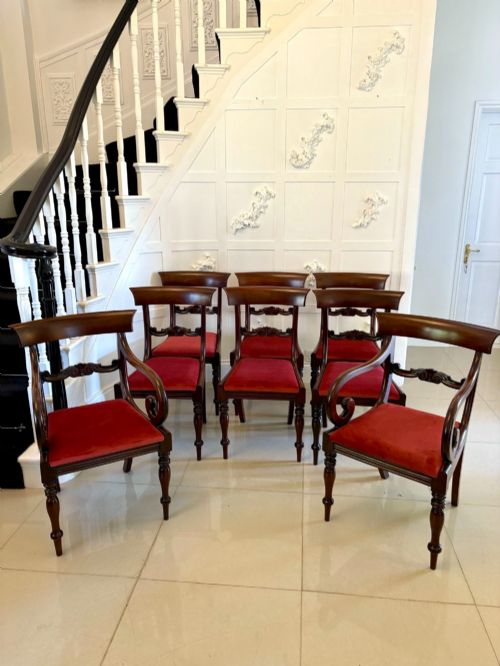
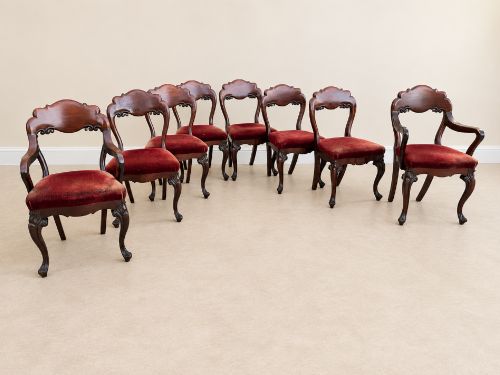
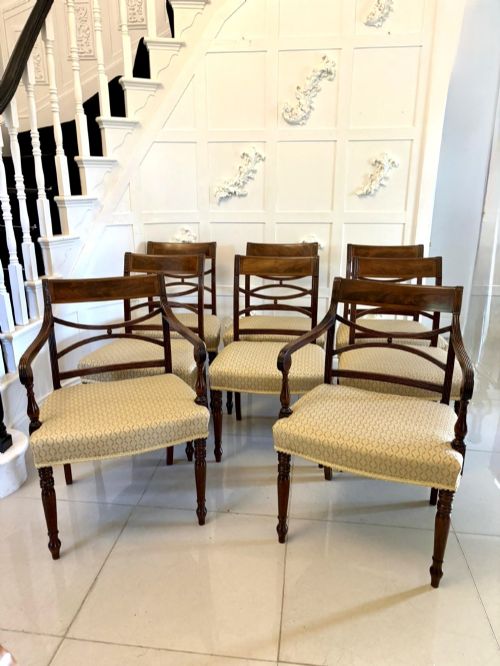
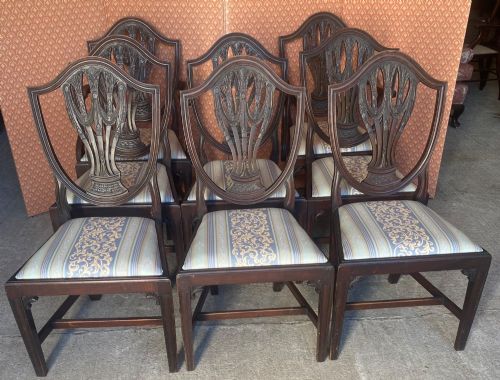
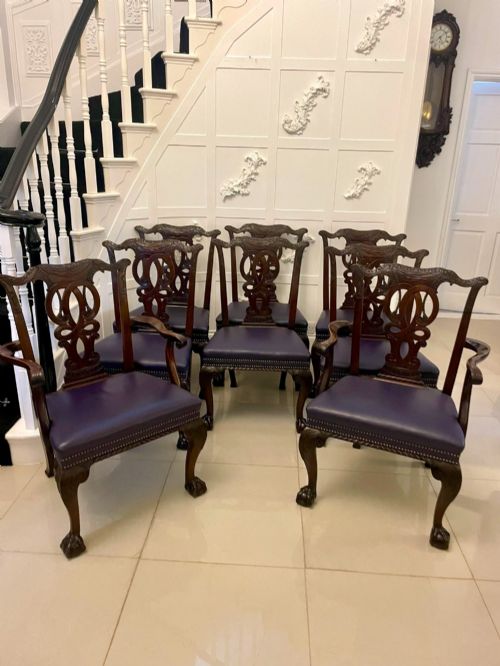
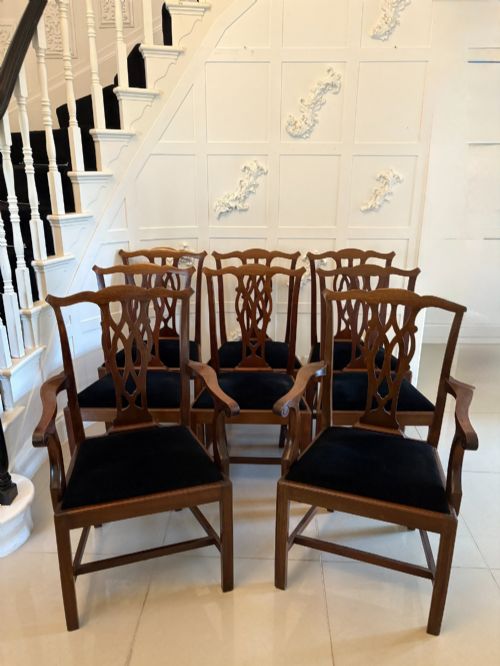
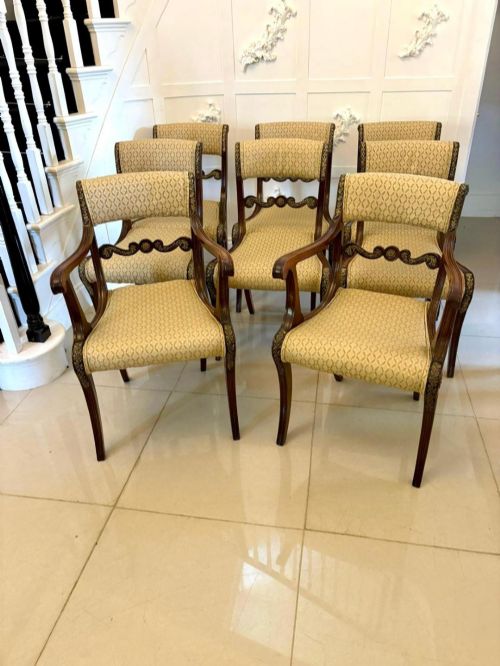
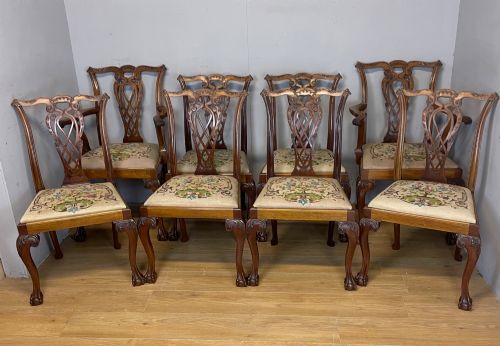
A set of eight dining chairs provides sufficient seating for a substantial dining table, spanning periods from the Georgian era through the Victorian years and into the 1920s and 1930s. The most common iteration met on this page is the nineteenth-century mahogany set, often rendered in Regency, Chippendale, or Hepplewhite revival styles.
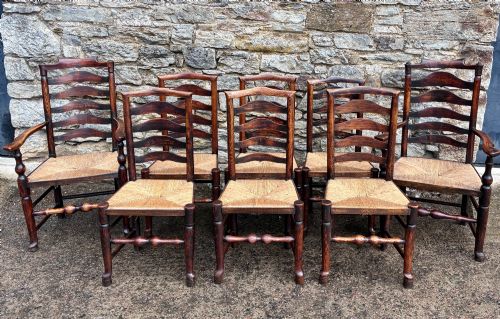
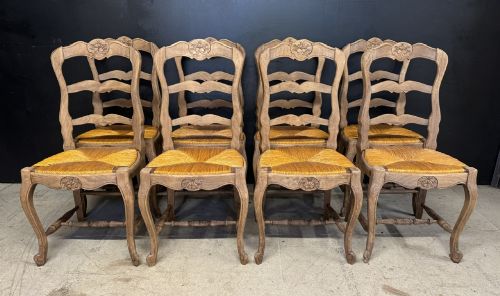
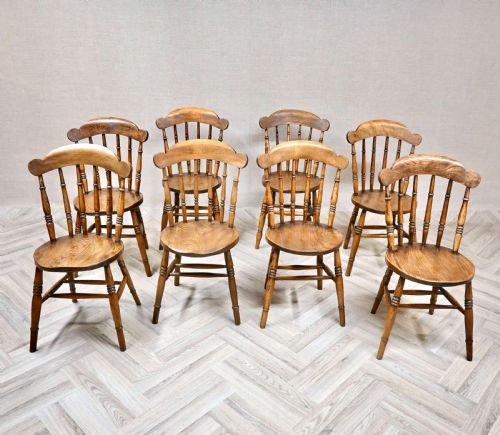
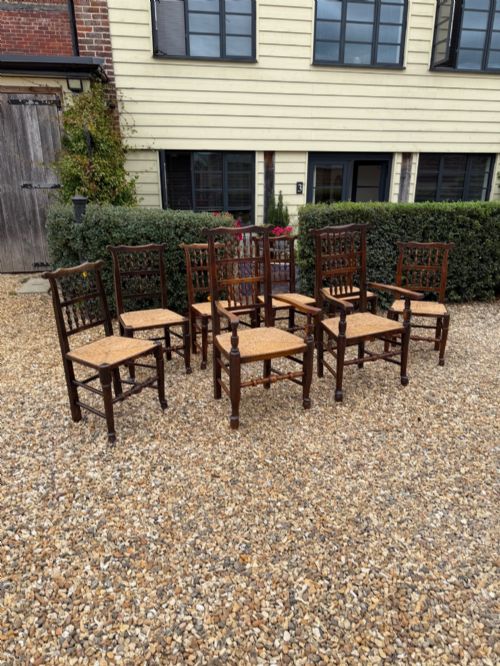
Beyond formal mahogany dining sets, searches reveal robust kitchen and farmhouse seating in oak, elm, and ash, including ladder backs, stick backs, and Windsor forms. These country pieces offer a more relaxed character while maintaining the required number for a large table.
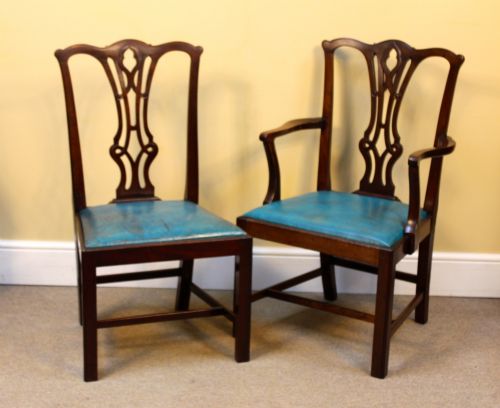
The composition of these sets frequently includes a pair of carvers with arms for the table ends, accompanied by six side chairs. This traditional arrangement recurs across Georgian, Victorian, and Edwardian examples.
Materials and construction
Timber selection defines these seats, with dense mahogany dominating the formal groups alongside oak, walnut, and occasional maple or fruitwood for country and revival pieces. Joinery relied on traditional mortise and tenon frames, reinforced with corner blocks to withstand the rigours of daily dining.
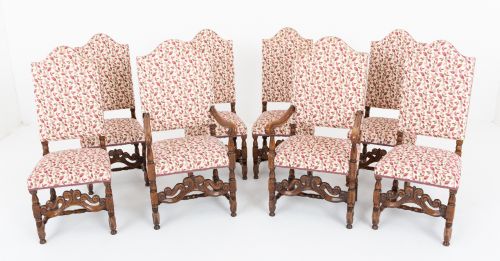
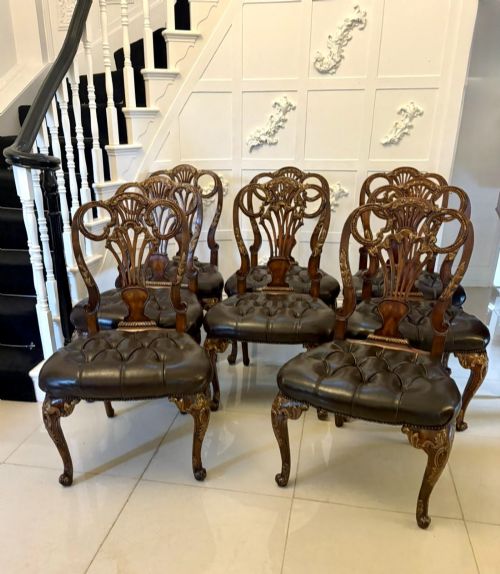
Upholstery materials range from horsehair stuffing under original leather or modern fabric to cane panels woven into high-back frames. Brass accents, marquetry inlay, and hand-carved splats add decorative detail without compromising the structural integrity of the chair frame.
Some nineteenth-century makers cleverly disguised ordinary beech wood with faux bird's eye maple paintwork to impress dinner guests on a budget.
Gradations in manufacture
Quality in a set of eight rests upon the uniformity of the timber grain and the crispness of the carved details across every single chair. Lesser sets often display mismatched replacements or varying timber tones where individual chairs were gathered together long after initial manufacture.
The integrity of the frame joints and the presence of original finish or patination separate standard examples from exhibition-grade pieces. Superior sets retain their factory rigidity without excessive wobble, showing minimal past repair to the vulnerable rear legs and crest rails.
Warings·Cowtan & Sons·Gillows·Heals·Hille
The Eight Dining Chairs Glossary
- Carver
- An armchair designed to sit at the head of a dining table, usually made as part of a matching set alongside smaller side chairs.
- Splat
- The vertical wooden strip down the centre of a chair back, often carved or pierced in styles named after Chippendale or Hepplewhite.
- Shield back
- A chair back shaped like a shield, popular during the late eighteenth century and revived extensively through the Victorian period.
- Ladder back
- A chair back featuring multiple horizontal wooden slats resembling the rungs of a ladder, typical of country and provincial seating.
- Barley twist
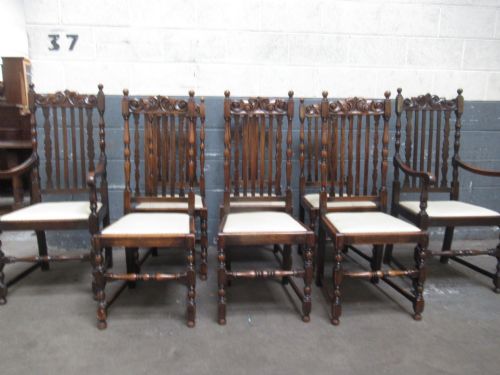
- A type of turned wooden leg or stretcher resembling a twisted rope, common in oak dining furniture from various revival periods.
Eight Dining Chairs: Frequently Asked Questions
What is the difference between side chairs and carvers?
Side chairs are built without arms to allow multiple seats to fit compactly along the sides of a dining table. Carvers feature arms and are traditionally placed at either end of the table for the hosts.
In most antique sets of eight, you will find six side chairs and two matching carvers. This configuration provides a balanced look and functional seating hierarchy for formal dining.
How can I tell a true Georgian set from a revival?
True Georgian chairs show the distinct tool marks, timber shrinkage, and hand-cut joinery consistent with eighteenth-century production methods. Revival pieces, though well made in later periods, often display machine-sawn components and different timber preparation.
Examining the underside of the seat frame and the wear patterns on the feet will frequently reveal the true age of the timber. Stylistic details alone can be misleading due to widespread revival movements in the Victorian and Edwardian eras.
Are harlequin sets authentic?
Harlequin sets consist of chairs that share similar periods or styles but were not originally manufactured together as a single group. They became popular when buyers needed eight matching seats but could only find smaller groups.
While they lack the strict factory uniformity of an original set, a well-matched harlequin group offers historical charm and practical seating for large gatherings.
How should I care for antique leather upholstery?
Antique leather requires gentle cleaning and occasional conditioning to prevent the hide from drying out and cracking over time. Avoid harsh chemical cleaners and direct sunlight, which can fade the original colour and finish.
Professional conservation is recommended if the leather is fragile or showing deep splits. Regular dusting with a soft cloth will keep the surface safe for everyday use.