

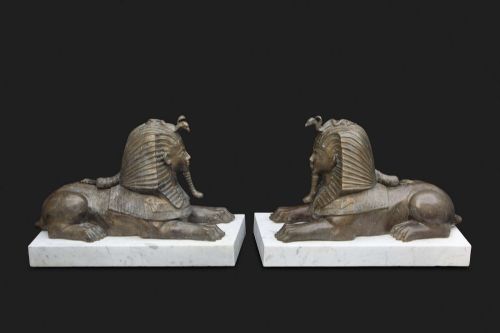


Egyptian Revival Grand Tour
These pieces of egyptian revival grand tour bring the pharaohs and antiquity directly into the nineteenth and twentieth-century home through decorative bronze, marble, and silver.
Egyptian Revival Grand Tour
An egyptian revival grand tour object captures the fascination with ancient Nile civilisations that seized European travellers and collectors from the nineteenth century onwards. You encounter decorative obelisks, sphinxes, shabtis, and chargers that translate archaeological discoveries into interior ornaments.
The selections span figures mounted on marble bases to heavy cast metal sphinxes and silver-inlaid Cairo Ware. Most examples date from the Victorian period through to the early decades of the twentieth century, reflecting successive waves of enthusiasm for classical antiquity.
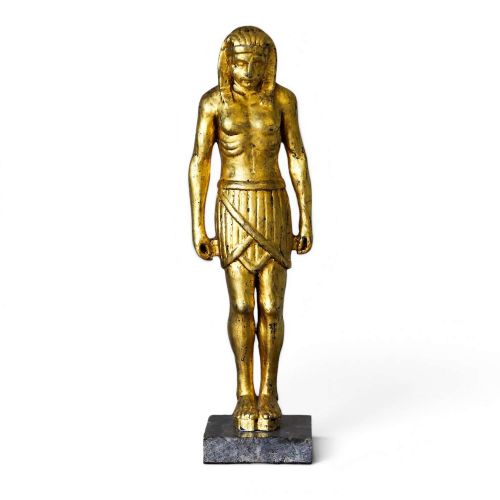
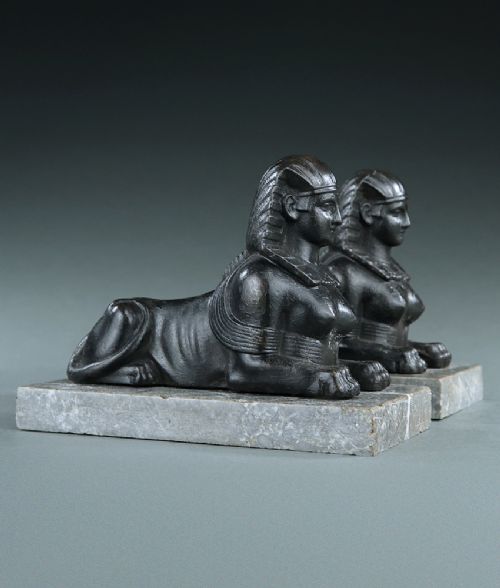
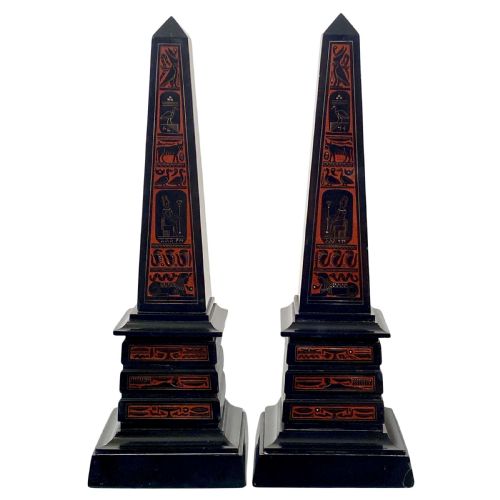
Forms range from small desktop accessories like brass obelisks to monumental bronze sculptures of Cleopatra and patinated sphinxes. These items served as tangible reminders of foreign travel and scholarly pursuits in elite domestic spaces.
How they were made
Foundry casting formed the basis for metal pieces, utilising bronze, brass, and cast iron to shape intricate sphinxes, lions, and figural candlesticks. Artisans frequently applied gilt or patinated finishes to these surfaces to accentuate sculptural detail.
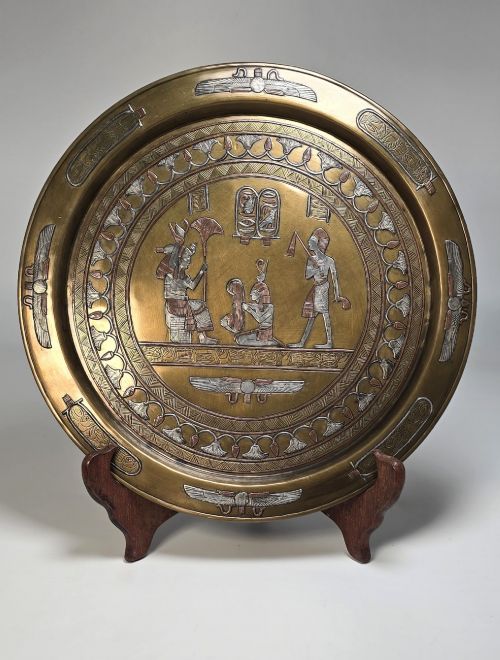
Stone workers shaped heavy materials including Rouge Griotte marble, green Egyptian onyx, granite, and Ashford marble into obelisks and pedestals. Chargers and vessels combined base metals with precise silver inlay work characteristic of Cairo Ware production.
Cast iron sphinxes stand ready to guard your desk.
What varies in quality
Material selection plays a significant role, where dense veined marbles, solid gilt bronze, and genuine silver inlay elevate an object above simpler cast iron or brass alternatives. The integration between the sculptural figure and its stone base demonstrates compositional harmony.
The Egyptian Revival Grand Tour Glossary
- Grand Tour
- A traditional trip of Europe undertaken by upper-class European young men of sufficient means to flourish their education. These journeys yielded souvenirs and antiquities that heavily influenced later decorative arts.
- Egyptian Revival
- An architectural and decorative style that incorporates the motifs, imagery, and proportions of ancient Egypt. It experienced major revivals following archaeological excavations in the nineteenth century.
- Shabti
- A funerary figurine placed in ancient Egyptian tombs to work for the deceased in the afterlife. Later revival pieces recreated these figures in wood and stone for collectors.
- Cairo Ware
- Metalwork vessels and chargers produced in Egypt featuring intricate silver and copper inlay. European travellers acquired these authentic or revival pieces as typical souvenirs.
- Obelisk
- A tall, four-sided, narrow tapering monument which ends in a pyramid-like shape at the top. Revival versions utilised various marbles and metals as decorative desktop objects.
Egyptian Revival Grand Tour: Frequently Asked Questions
What is an egyptian revival grand tour object?
These pieces are decorative items inspired by ancient Egyptian art and architecture, collected by travellers on European tours during the nineteenth and twentieth centuries.
They allowed owners to display their classical education and worldly tastes within domestic interiors through figures of sphinxes, obelisks, and shabtis.
How were these decorative pieces used?
They functioned primarily as display ornaments on mantelpieces, desks, and side tables in wealthy homes. Some items, such as candelabras and chargers, also served practical household purposes.
Larger sculptures stood as focal points in libraries, studies, and drawing rooms to signal scholarly interests.
How do I date an egyptian revival object?
Dating relies on examining the materials, casting techniques, and stylistic markers associated with periods like the Victorian era or the early twentieth century. Obelisks and figures often bear characteristics specific to nineteenth-century foundry methods.
Associated bases made of specific marbles can also help narrow down the decade of manufacture.
What materials are common in these pieces?
Foundries commonly utilised bronze, brass, cast iron, and gilt surfaces for sculptural elements and figures. Heavy stones like marble, granite, and onyx provided stable plinths and obelisk bodies.
Some specific items incorporate silver inlay on metal surfaces, particularly in Cairo Ware items.