




Egyptian Revival Art
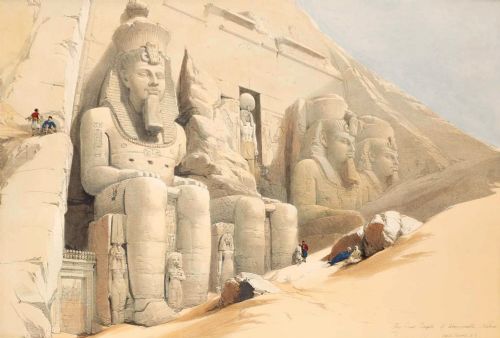
Egyptian revival art captures an enduring fascination with pharaohs, deities and ancient tombs through decorative objects spanning the Victorian era to the mid-twentieth century.
Egyptian Revival Art
Egyptian revival art encompasses a diverse range of decorative items, from utilitarian furniture and lighting to personal ornaments and figurative sculpture.
You will frequently encounter pieces shaped by Art Deco and Art Nouveau aesthetics, alongside earlier Victorian interpretations and Arts and Crafts examples.
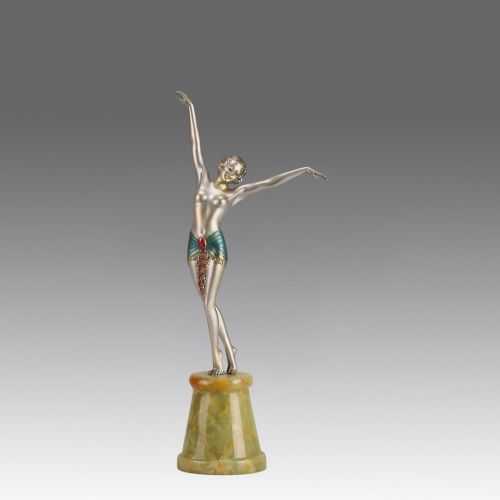
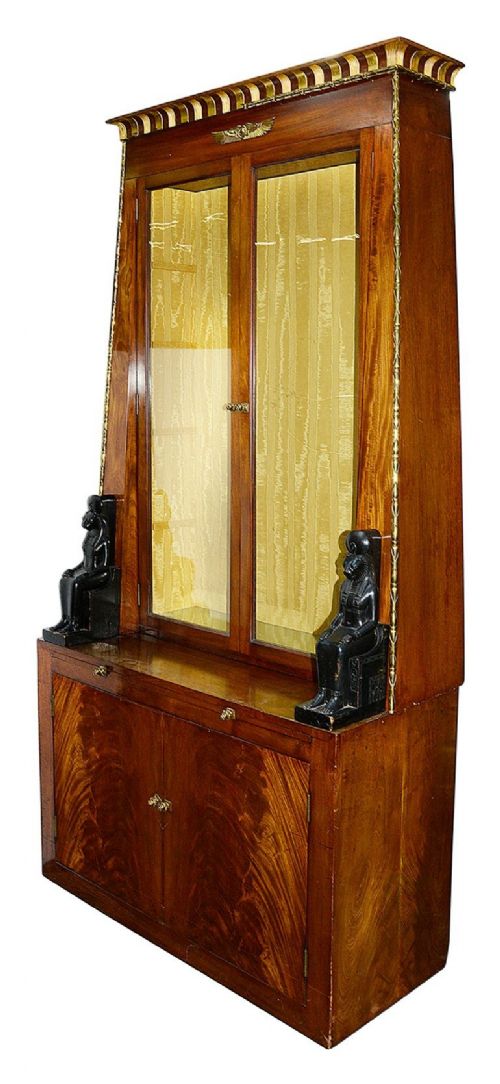
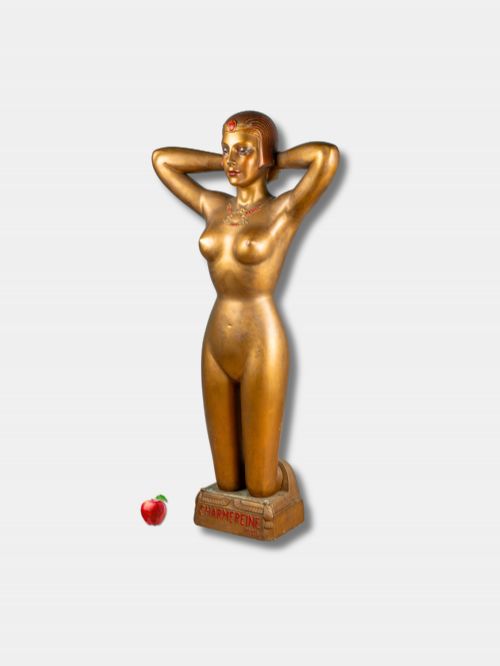
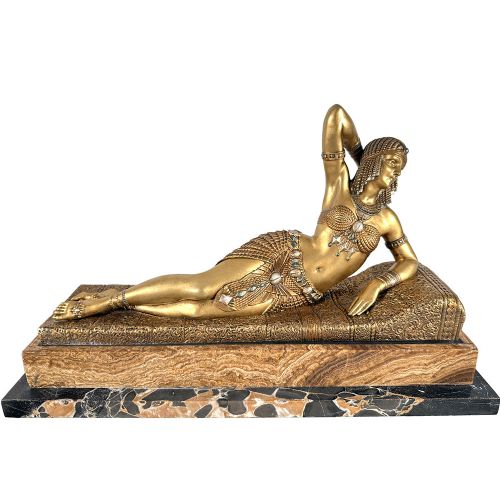
The selection includes novelty jewellery, mantle clocks with obelisks, display cabinets, seating and bronze statuary depicting dancers and pharaohs.
How they were made
Enamel work appears in plique-à-jour and opaque finishes, while other pieces incorporate carved marble, onyx, glass and polished hardwoods such as mahogany and walnut.
Materials range from bronze and enamel to marble, onyx, glass, paper, mahogany and walnut.
What varies in quality
The sophistication of the casting and the crispness of the chased detail distinguish standard production from exceptional studio work.
Material selection dictates overall impact, where genuine hardstones like marble and onyx elevate bronze sculptures above simpler metal bases.
Josef Lorenzl·Liberty & Co·Demetre Chiparus·Levinger and Bissinger·Ivan Zaiec·Piel Freres·Max Neiger
The Egyptian Revival Art Glossary
- Plique-à-jour
- An enamelling technique where translucent enamel is fired in open metal cells, creating a stained-glass effect that lets light pass through. It appears frequently in fine brooches and decorative items.
- Chrystoleum
- A Victorian method of applying hand-coloured pigments to the reverse of a glass print to create a luminous image. These prints often depict classical or exotic figures.
- Obelisk
- A tall, four-sided tapering monument ending in a pyramid-like top, frequently used in nineteenth and twentieth-century clock sets and mantel ornaments.
- Cold-painted bronze
- A process where bronze figures are painted with oil or enamel colours after casting, rather than being fired in a kiln. Careful handling is necessary to preserve the pigment.
Egyptian Revival Art: Frequently Asked Questions
What periods do these pieces date from?
The items span from the Victorian era and the late nineteenth century through the Art Nouveau period and into the Art Deco heights of the 1920s and 1930s.
Designers reinterpreted ancient motifs across multiple decades, resulting in distinct stylistic shifts between nineteenth-century antiquarianism and twentieth-century modernism.
How were propelling pencil pendants used?
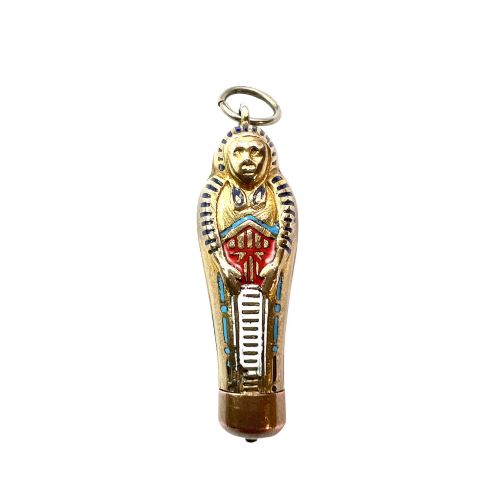
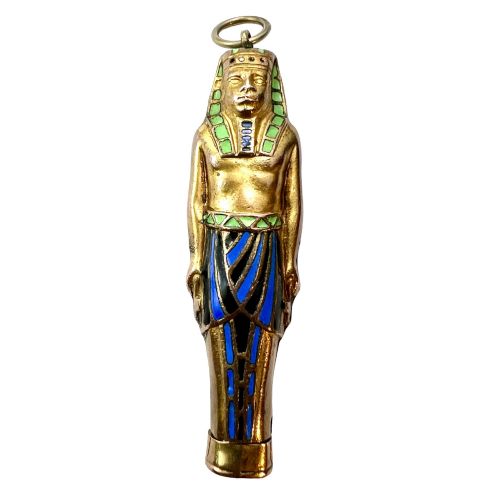
These miniature sarcophagi and pharaoh figures functioned as wearable fob pendants and charms that concealed a functional writing instrument inside.
Owners carried them on watch chains or necklaces as both practical items and fashionable accessories displaying exotic tastes.
Where do Thebes stools come from?
Thebes stools are low wooden seats inspired by ancient Egyptian furniture forms discovered during archaeological excavations, later produced by firms like Liberty and Co.
They feature turned legs and concave seats designed for domestic use within Arts and Crafts and revival interiors.
How do I care for bronze figures?
Bronze sculptures and bookends benefit from gentle dusting with a soft cloth to protect patinated surfaces and cold-painted finishes from abrasion.
Keeping them away from direct moisture and harsh cleaning agents preserves the original metalwork and applied pigments.