





Edwardian Wool Area Rug
An edwardian wool area rug brings warmth and texture to a room, drawing on Persian, Arts and Crafts, and tribal weaving traditions.
Edwardian Wool Area Rug
When you search for an edwardian wool area rug, you encounter floor coverings woven during the late nineteenth and early twentieth centuries, spanning periods from eighteen-eighty to nineteen-thirty. These textiles originate from diverse workshops and villages across Persia, Turkey, India, China, and Europe, reflecting global trade and aesthetic exchanges of the era.
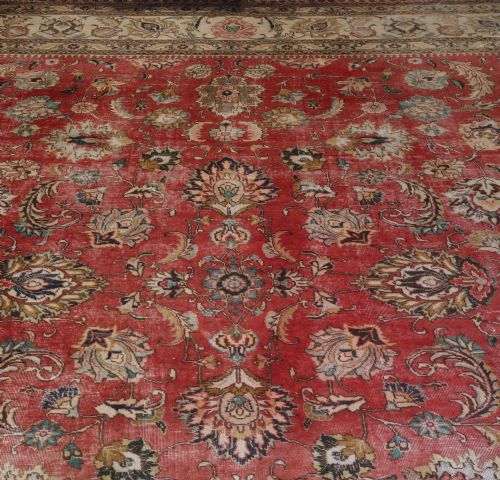
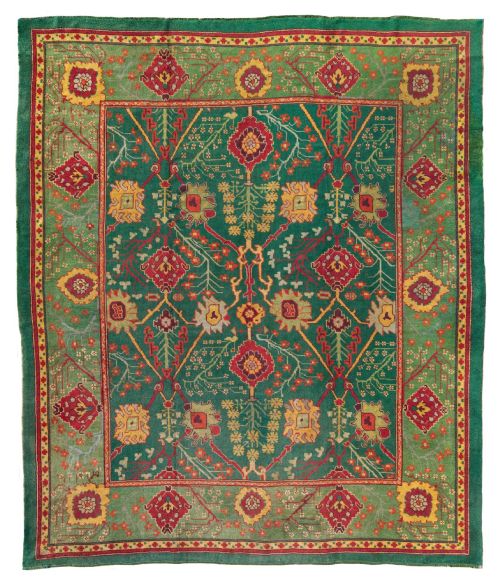
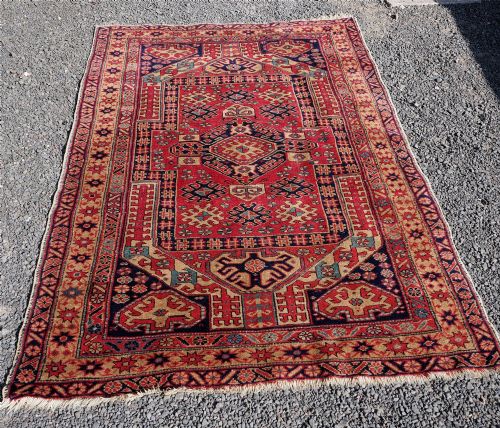
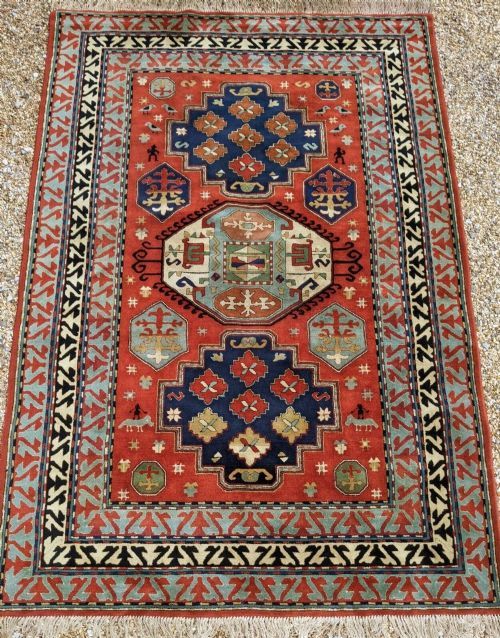
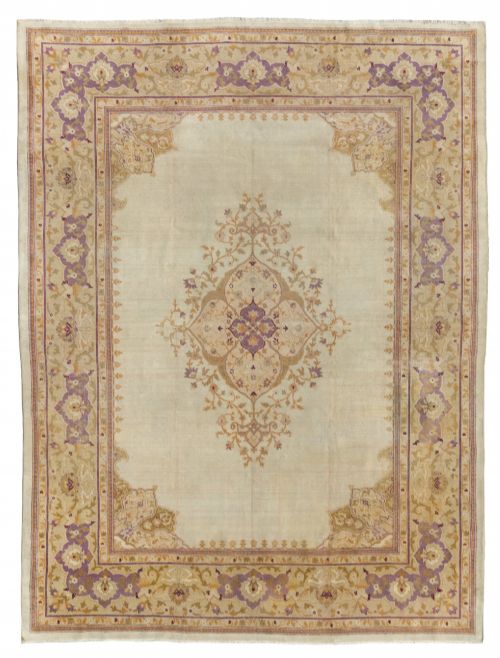
The most common examples on this page are Persian carpets and rugs displaying traditional medallion, all-over, or pictorial patterns. Alongside these, buyers find British Arts and Crafts productions, Caucasian tribal pieces, and specialised village weaves.
Makers and weavers utilised durable natural fibres to construct floor coverings intended for heavy domestic use in country houses and urban drawing rooms alike. Their varied dimensions suit both expansive reception rooms and compact spaces.
Materials and Construction
These carpets and rugs are constructed primarily from wool pile woven onto sturdy cotton foundations. The quality of the wool determines the tactile depth and resilience of the surface underfoot.
Dyes derived from natural sources provide soft pastel shades, deep reds, blues, and ivory grounds that age gracefully over decades. Weavers tied intricate knots by hand, creating dense pile structures designed to withstand daily foot traffic.
Edwardian Wool Area Rug Retail Price Guide 2026
Typical asking prices for edwardian wool area rug among the pieces listed under this phrase on Sellingantiques today, from the lower quarter to the upper quarter. They describe what is for sale here now, not the wider market.
Object types include runner formats, square area rugs, and large room-size carpets.
Distinctions in Quality
Knot density and structural integrity separate standard utility carpets from finer artistic productions. Higher knot counts permit sharper resolution in complex medallion and floral designs.
The nuance and saturation of the palette contribute significantly to overall merit. Pieces retaining balanced, harmonious tones without harsh fading command greater appreciation among collectors.
Benlian Tabriz·Gavin Morton·Tuduc
The Edwardian Wool Area Rug Glossary
- Medallion
- A large central ornamental design motif placed in the middle of the field. This central element anchors the geometric or floral composition of the rug.
- Boteh
- A stylised almond or pear-shaped motif representing a shrub or palm leaf. It appears frequently in traditional Persian weaving.
- Pile
- The vertical or slanted loops of yarn that form the usable surface of the carpet. Wool is the predominant material used for this upper layer.
- Foundation
- The underlying structural grid of warp and weft threads that supports the wool pile. Cotton is commonly utilised for this supportive framework.
- Prayer Rug
- A specialised format featuring a mihrab or arch design indicating the direction of prayer. These pieces often served devotional or decorative functions.
Edwardian Wool Area Rug: Frequently Asked Questions
How do I clean an edwardian wool area rug?
Vacuum gently without a rotating brush roll to remove embedded dust and debris without pulling the wool fibres. Professional cleaning by a specialist in antique textiles is recommended for deeper maintenance.
Avoid harsh chemical detergents or excessive moisture, which can damage the natural dyes and cotton foundations. Address spills immediately by blotting with a clean, dry cloth.
Where should I place an edwardian wool area rug?
These rugs suit low-to-moderate traffic areas such as studies, bedrooms, and formal sitting rooms where their colours and patterns can be appreciated. A quality underlay helps prevent slipping and reduces friction against hard flooring.
Keep them away from direct, continuous sunlight to prevent uneven fading of the natural wool dyes. Rotating the rug periodically ensures balanced exposure and wear over time.
How do I identify a Persian Heriz rug?
Heriz carpets typically feature bold geometric medallions and sturdy, angular corner spandrels woven with robust wool. The palette often includes deep reds, navy blues, and contrasting ivory accents.
Unlike curvilinear city carpets, the tribal-influenced geometry gives these pieces a distinct architectural strength suited to substantial furniture.
What is an Arts and Crafts rug?
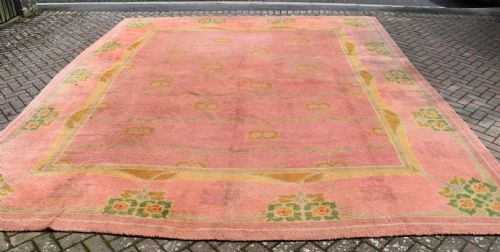
Arts and Crafts rugs, such as those associated with Donegal production, reflect early twentieth-century design reforms emphasising hand-craftsmanship and natural motifs. They often incorporate stylised floral or Celtic-inspired patterns.
These pieces typically utilise soft, earthy tones that complement the interior aesthetics of the period's domestic architecture.
How do I distinguish village rugs from city carpets?
Village rugs display more spontaneous, geometric designs and occasional intentional irregularities woven from memory by independent makers. City carpets exhibit precise, symmetrical floral curves planned on pre-drawn cartoon templates.
Village pieces often feel more rustic and varied in their execution compared to the uniform refinement of workshop productions.