




Edwardian Wooden Trolley
An edwardian wooden trolley is a practical mobile server built for afternoon tea or drinks, offering sturdy shelves and folding leaves that make entertaining effortless.
Edwardian Wooden Trolley
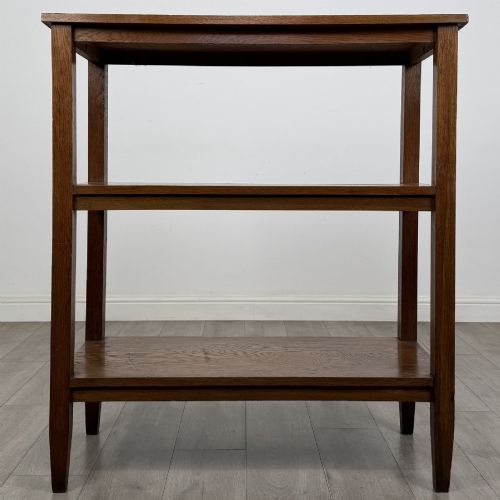
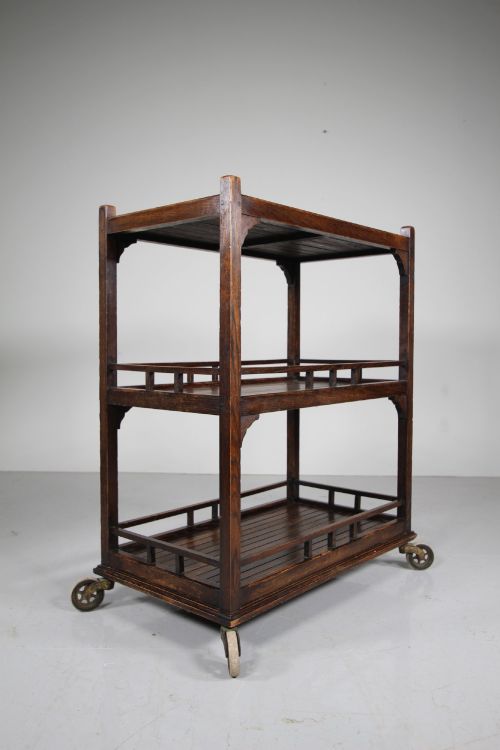
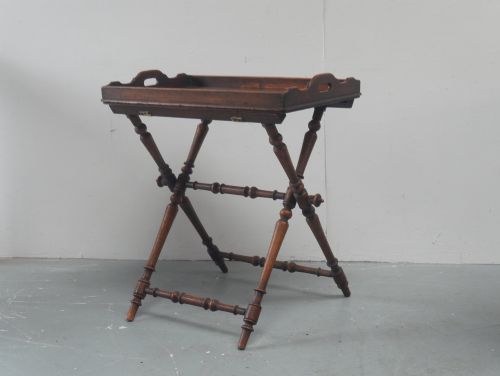
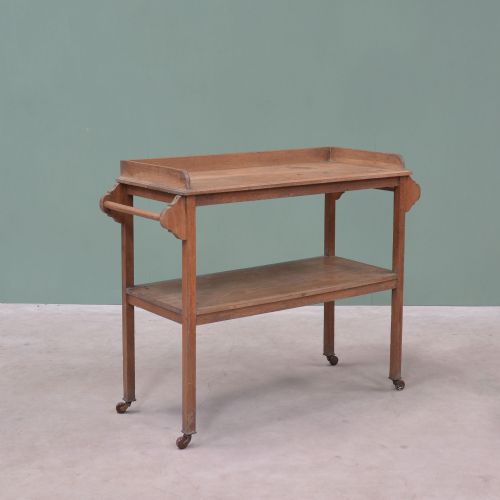
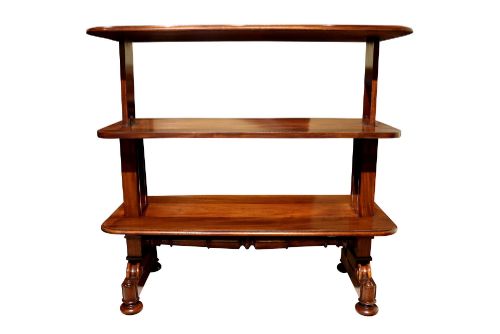
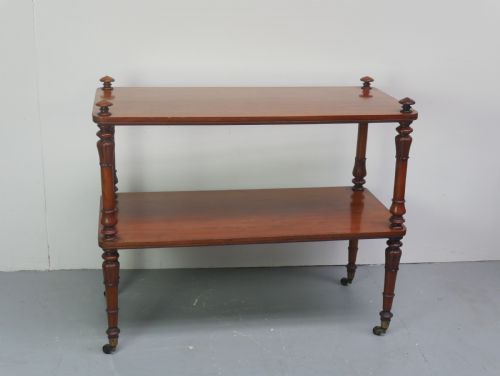
An edwardian wooden trolley brings mobile hospitality into the room, often featuring tiers, drop sides, or removable trays designed for serving tea and cake. While the search term points specifically to the Edwardian era, the listings include sturdy pieces from the Victorian period up to the early twentieth century alongside related serving forms.
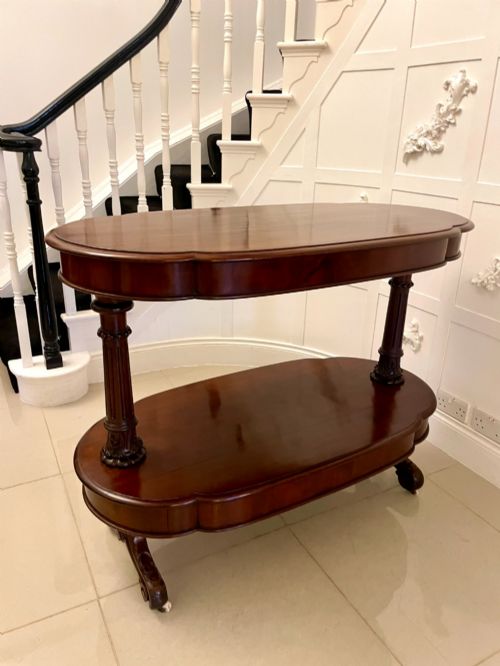
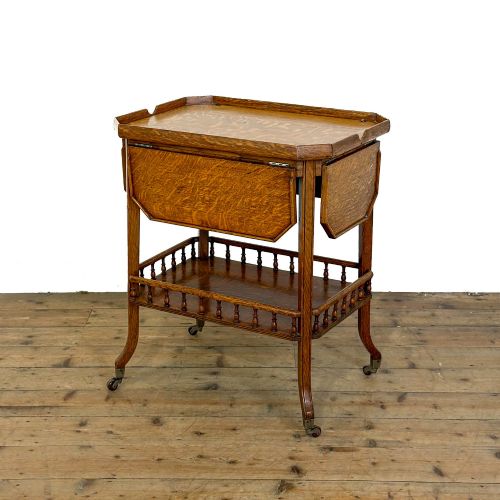
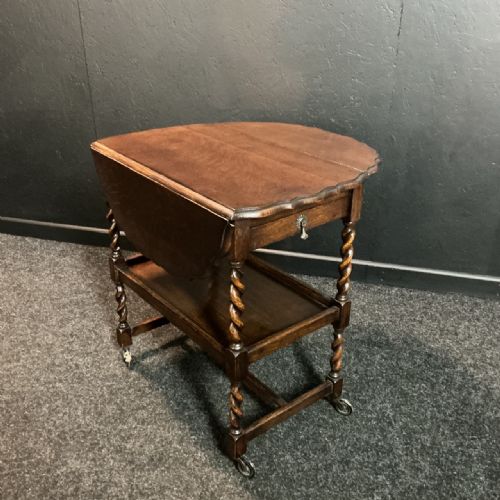
The primary forms on show are tea trolleys with two or three tiers, alongside folding variants and clever drop-leaf designs that expand the surface area when guests arrive. Alongside standard tea trolleys, the selection spans oak dumb waiters, walnut buffets, and mahogany serving tables that share the same utilitarian purpose.
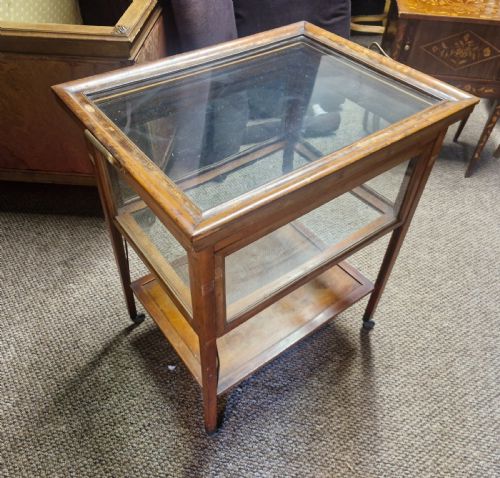
Makers and craftsmen utilised robust timbers like oak and mahogany, often pairing them with brass castors to ensure the furniture could glide across carpets and parquet floors alike. Many examples incorporate clever mechanisms such as folding tops or removable trays to transition smoothly from a side table into a server.
How they were made
The construction relies heavily on solid hardwoods like oak, mahogany, and walnut, chosen for their durability and handsome grain patterns. Cabinetmakers often incorporated satinwood and boxwood for subtle stringing and inlay work, adding gentle contrast to the darker primary woods.
Practical engineering defines these pieces, with functional details such as barley twist legs, folding drop sides, and tier supports fixed securely by skilled joinery. Metal castors in brass or iron were fitted to the base of the legs to allow smooth movement around the home.
Edwardian Wooden Trolley Retail Price Guide 2026
Typical asking prices for edwardian wooden trolley among the pieces listed under this phrase on Sellingantiques today, from the lower quarter to the upper quarter. They describe what is for sale here now, not the wider market.
Some clever Edwardian models included folding tops that transformed a tea trolley into a baize-lined card table in seconds.
What varies in quality
Quality rests in the selection of timber and the crispness of any turned or carved details, such as barley twist uprights or inlaid borders. Finer examples display harmonious grain matching across the tiers and drop leaves, whereas simpler pieces rely on plain utilitarian boards.
The integrity of the moving parts dictates daily usability, distinguishing sturdy joints and smooth-folding leaves from looser constructions. Hardware such as original brass castors and drop handles further elevates the character of a piece.
The Edwardian Wooden Trolley Glossary
- Drop side
- A hinged leaf on either side of a tabletop or trolley top that can be raised to extend the surface area or dropped down to save space when not in use.
- Dumb waiter
- A multi-tiered serving piece or trolley designed to hold food, drinks, or books without requiring a servant to stand by the table.
- Barley twist
- A spiral turning technique used on the wooden legs and upright supports of tables and trolleys, popular in various revival styles.
- Inlay
- A decorative technique where contrasting woods like boxwood or satinwood are fitted into recesses in the primary timber to create patterns.
- Castor
- A small wheel mounted on a swivel assembly attached to the base of furniture legs to enable easy rolling across the floor.
Edwardian Wooden Trolley: Frequently Asked Questions
What was an edwardian wooden trolley used for?
These trolleys were originally designed to transport afternoon tea, cakes, and drinks from the kitchen to the drawing room or parlor. Their multi-tiered shelves and removable trays made it simple to serve guests without crowding the main dining furniture.
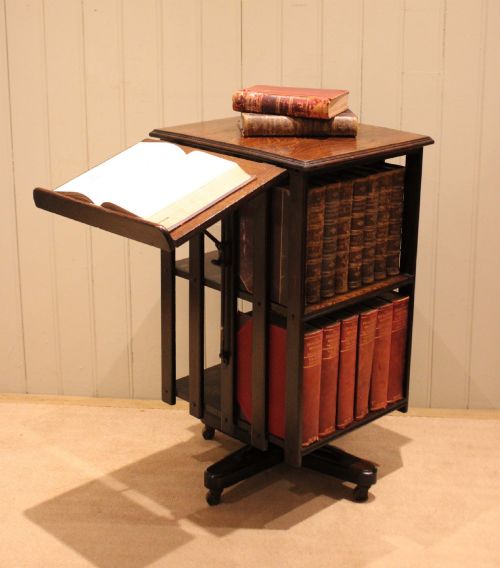
Over time, they adapted into versatile side tables and book stands when tea service fell out of daily habit. Today, many people still employ them for their original purpose or as mobile cocktail carts.
How do I care for a wooden tea trolley?
Keep the wood nourished by applying a suitable beeswax periodically to protect the finish from moisture rings and drying out. Avoid placing hot teapots or wet glasses directly onto the antique surface without coasters or protective mats.
Check the brass castors occasionally and clear away any dust or carpet fibres to ensure the wheels continue to roll smoothly. Position the trolley away from direct sunlight and strong heat sources to prevent the timber from warping.
Are these trolleys sturdy enough for heavy bottles?
Most solid oak and mahogany trolleys are built with sturdy frames and timber shelves capable of supporting standard glassware and beverage bottles. Pieces featuring drop leaves or folding mechanisms should be handled with care when fully loaded to protect the hinges.
Checking the tightness of the joints and the security of the leg supports will confirm if a particular trolley is suited for heavier serving duties. Distributing weight evenly across the tiers keeps the mobile cart stable while in motion.
How can I tell an Edwardian trolley from a Victorian one?
Edwardian pieces generally favor lighter proportions, simpler lines, and occasional satinwood or boxwood inlay reflecting updated aesthetic tastes. Victorian equivalents often display heavier timber sections, darker finishes, and more robust carving influenced by earlier revival movements.
Many listings bridge these eras or incorporate elements from both styles, reflecting continuous furniture-making traditions through the nineteenth and early twentieth centuries.