
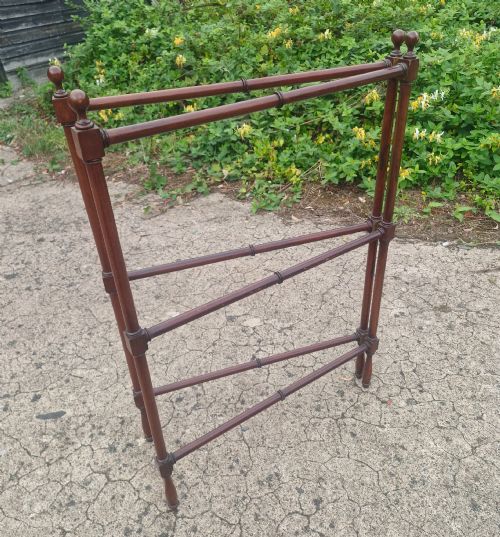
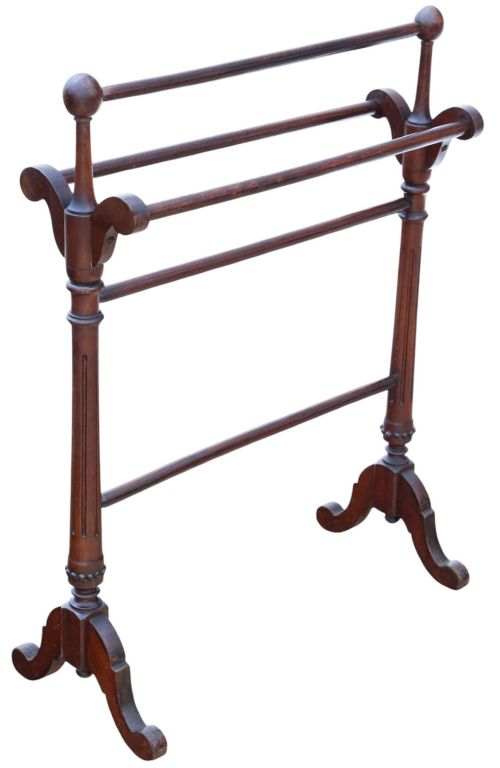
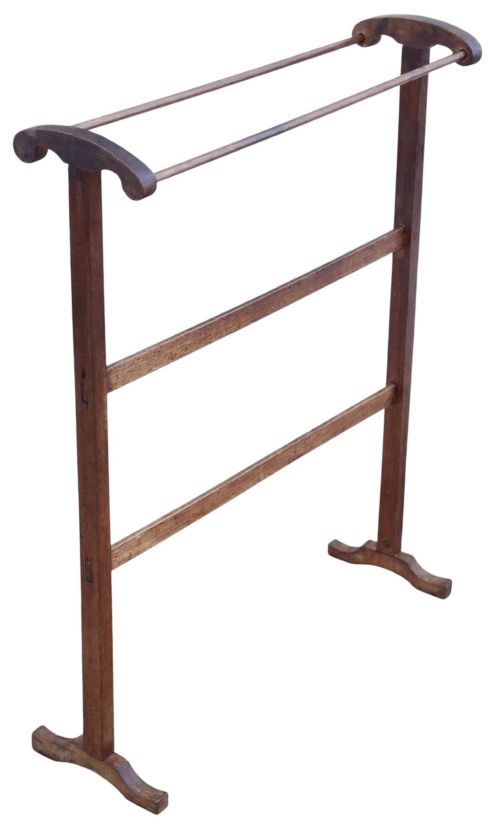
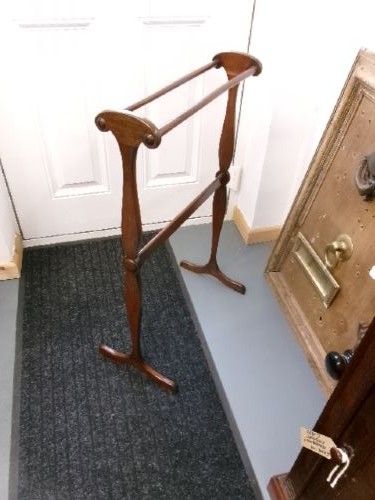
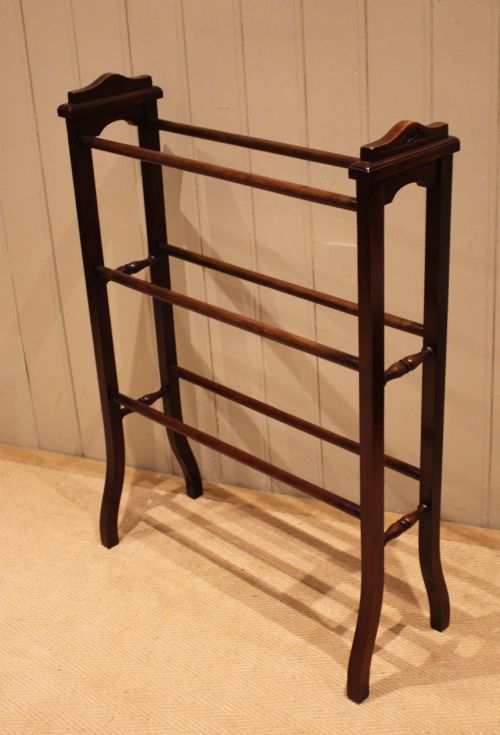
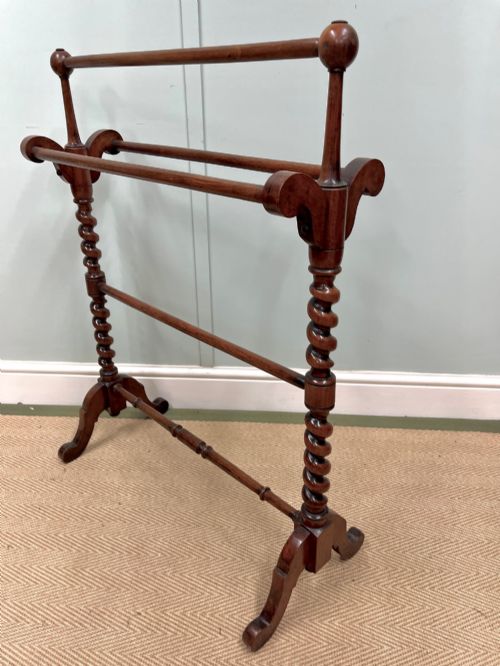
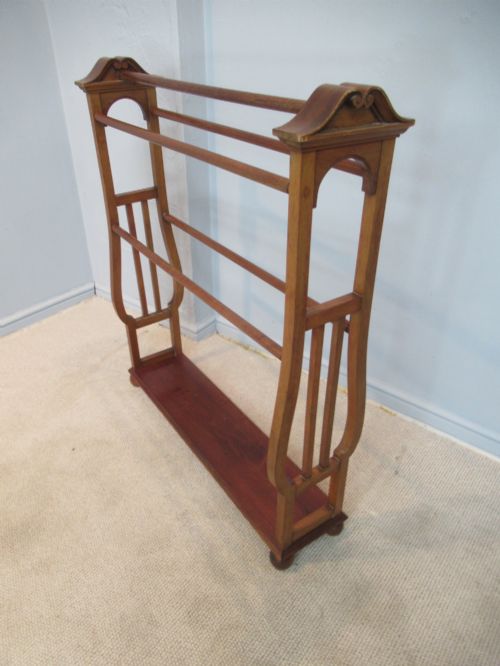
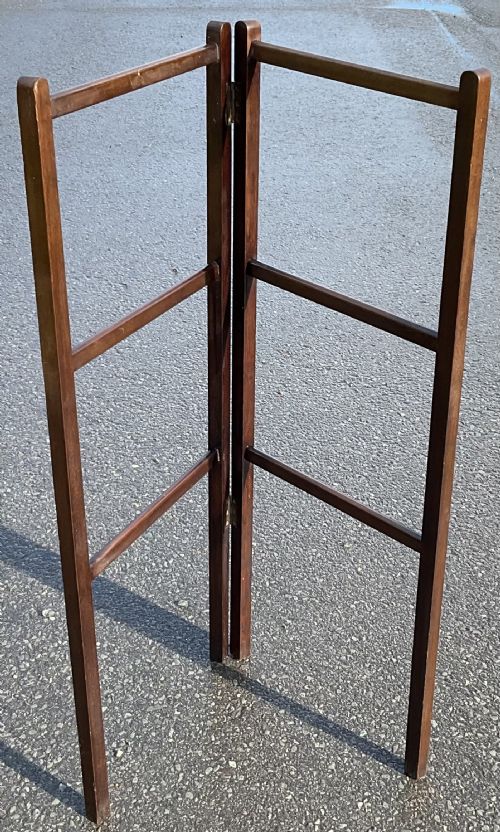
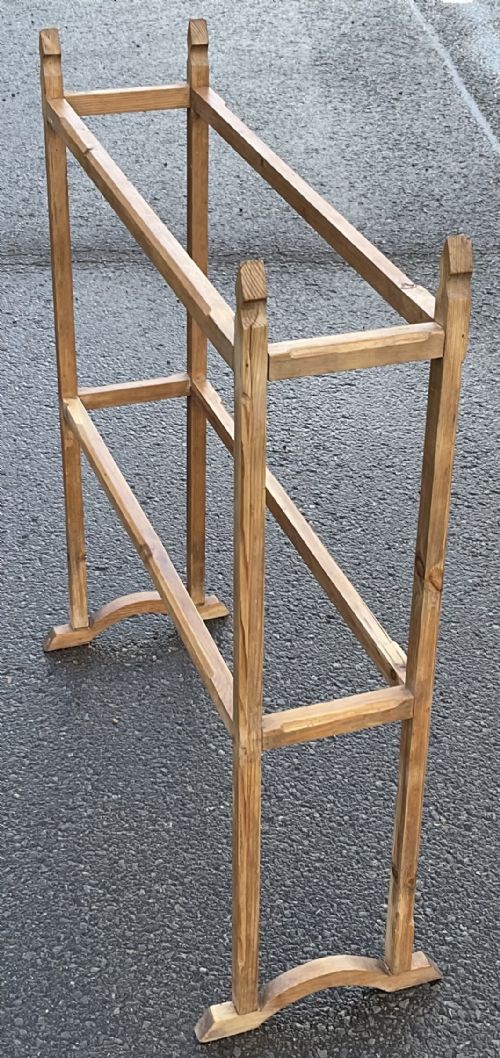


Edwardian Wooden Towel Horse
An Edwardian wooden towel horse is a practical bedroom furnishing that dries linens while introducing period timber warmth to a room.
Edwardian Wooden Towel Horse
An Edwardian wooden towel horse provides upright rails for airing and hanging household linens in domestic spaces. The selection brings together standing and folding formats constructed during the early twentieth century and the preceding Victorian era.
Mahogany forms the principal timber across the available items, alongside oak, pine, walnut, and ebonised wood. Pieces range from simple utilitarian pine stands to larger inlaid mahogany designs fitted with multiple bars.
How They Were Made
Cabinetmakers constructed these pieces primarily using solid hardwoods such as mahogany and oak, frequently employing turned uprights and joined rails. Pine served for simpler domestic items, whilst workshops added decorative detail through satinwood inlay and brass fittings.
Folding variants utilised hinges or pivoting joints to allow the frames to adjust or pack flat when not in use. Ebonised finishes provided an alternative surface treatment, achieved by staining timber to resemble costly ebony.
The selection spans pieces from the Regency era through the Victorian period and Edwardian decades, constructed in mahogany, oak, pine, walnut, and ebonised wood.
What Varies in Quality
Quality rests in the choice of timber and the sophistication of construction, distinguishing standard utility pieces from fine country house furnishings. Dense mahogany and figured oak command greater attention than utilitarian pine.
Refinement in the joinery and decorative elements, such as contrasting satinwood inlay or brass hardware, elevates a standard rail into a polished interior accessory.
The Edwardian Wooden Towel Horse Glossary
- Towel Rail Stand
- A freestanding wooden frame featuring horizontal bars designed for holding and drying towels.
- Ebonised Wood
- Timber treated with a dark stain or finish to imitate ebony. This technique was popular for achieving a sleek, uniform appearance.
- Satinwood Inlay
- Decorative contrasting wood veneer inserted into recesses on the primary timber surface. It creates geometric or floral patterns.
- Arts and Crafts
- A design movement prioritising traditional craftsmanship and simple forms over mass production. Pieces from this style often emphasise honest construction in oak.
- Standing Towel Rail
- A rigid, non-folding furniture piece designed to remain fixed in position. These often feature larger frames and multiple rails.
Edwardian Wooden Towel Horse: Frequently Asked Questions
What is an Edwardian wooden towel horse used for?
These pieces served originally in bedrooms and dressing rooms for hanging and drying household linens and garments. Today they function both as practical clothes dryers and as decorative bedroom furniture.
Their upright rail configuration allows textiles to drape without creasing while adding period character to domestic interiors.
How do I care for antique wooden towel rails?
Maintain the timber by dusting regularly with a dry cloth and occasionally applying a suitable beeswax polish to nourish the surface. Avoid placing them near direct heat sources or damp environments to prevent wood splitting.
Handle folding mechanisms gently to preserve the original joints and hinges over time.
How do I distinguish Edwardian pieces from Victorian ones?
Edwardian items often exhibit lighter construction and subtle decorative touches like satinwood inlay, reflecting changing interior tastes around nineteen hundred. Victorian examples tend to utilise heavier timbers such as dark mahogany and walnut with simpler, sturdier framing. Nomenclature in listings often records the specific decade or reign associated with the workshop output.
Are these towel rails suitable for modern bathrooms?
These items function well in dry dressing areas or bedrooms where ventilation prevents prolonged moisture exposure. Placing antique wood directly inside a steamy bathroom risks damaging the historical finish and timber joints.
Many buyers utilise them in spare bedrooms or hallways for displaying quilts and textiles.