


Victorian Mahogany Towel Rail
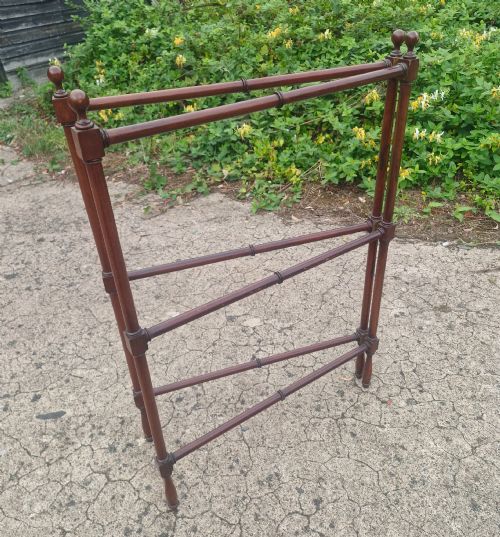
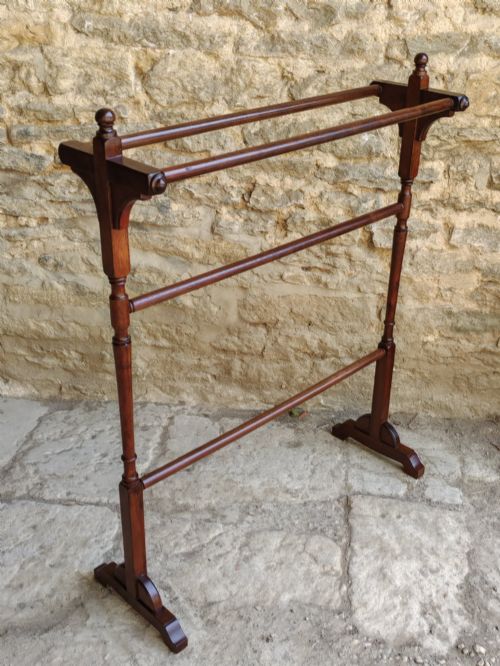
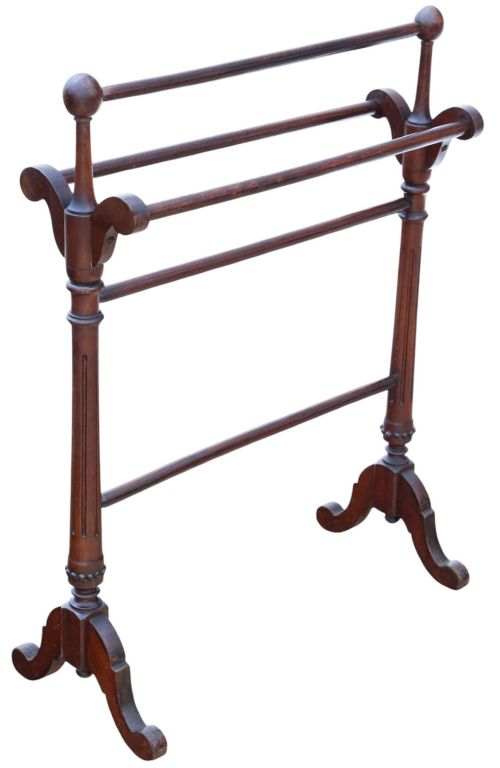
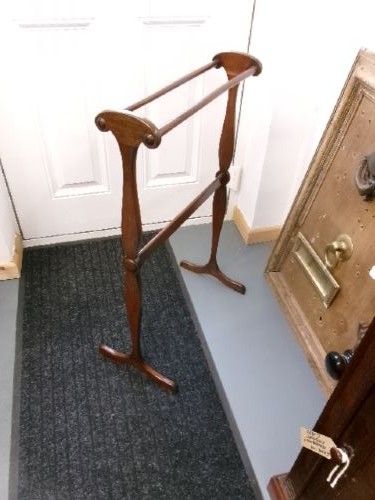
A victorian mahogany towel rail brings practical warmth and rich timber grain to a dressing room or bathroom.
Victorian Mahogany Towel Rail
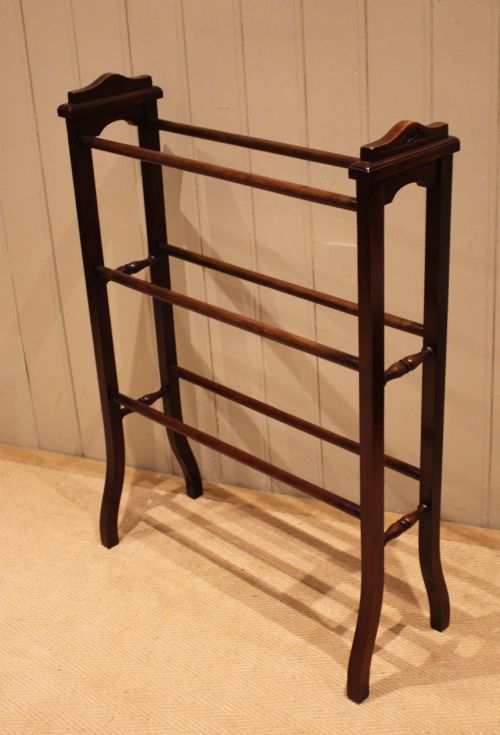
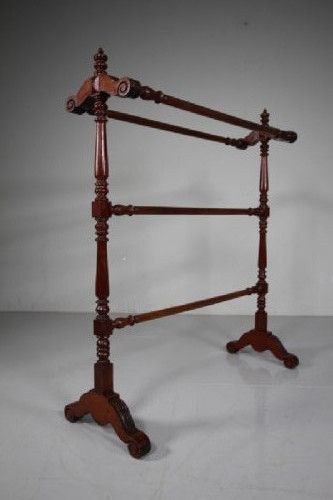
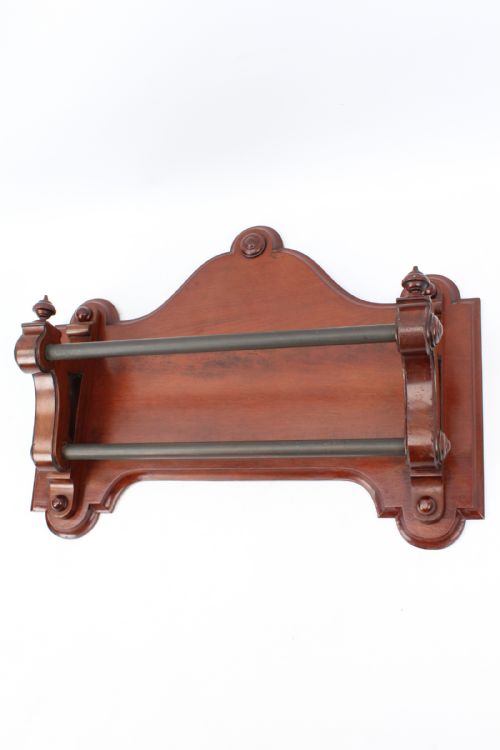
A victorian mahogany towel rail combines functional utility with nineteenth-century cabinet-making, providing sturdy rails for drying textiles. These pieces appear as standing stands, folding cheval designs, wall-mounted fixtures, and clothes horses.
Most examples found here date from the nineteenth century, including specific periods such as Regency, William IV, Early Victorian, and Edwardian. Standing and folding formats predominate, varying from small rails to large oversized and five-bar versions.
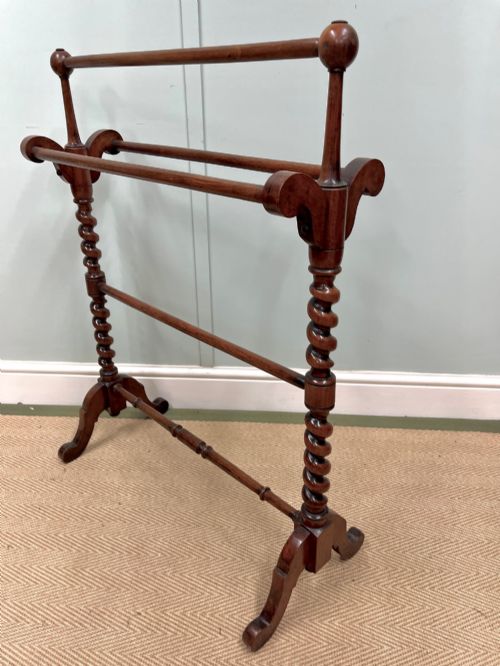
The timber used throughout these listings is mahogany, occasionally complemented by brass fittings or constructed from general hardwood. Some pieces incorporate alternative functional elements like wall mirrors or barley twist legs with splayed feet.
Judging Quality
The standard of a piece rests in the depth of the mahogany grain and the solidity of its structural joints. Superior examples display careful turning on uprights and robust hinges on folding models.
Proportion and scale distinguish finer standing rails from simpler variants, particularly in larger oversized formats or those featuring specific decorative elements like splayed feet and barley twist supports.
Formats range from simple wall mirrors with attached rails to large oversized five-bar clothes horses and multi-fold standing stands.
The Victorian Mahogany Towel Rail Glossary
- Cheval towel rail
- A freestanding pivoting frame that swings within supporting uprights. This design allows the rails to adjust angles for convenience.
- Mahogany
- A durable hardwood prized for its reddish-brown colour and smooth grain. It forms the primary structural material across these listings.
- Barley twist
- A carved spiral decorative motif applied to wooden legs or uprights. It reflects distinct aesthetic choices popular in nineteenth-century furniture.
- Folding towel rail
- A multi-section stand connected by hinges that collapses for storage. These items often feature three or more horizontal bars.
Victorian Mahogany Towel Rail: Frequently Asked Questions
How do I use a folding rail?
A folding rail pivots on hinges to expand or contract against a wall or in an open space. This allows you to drape multiple items of linen across several bars simultaneously.
When not in use, the sections fold flat to save floor space in smaller rooms. The hinged design also makes the stand simple to move between locations as needed.
Where should I place a standing rail?
Standing rails suit bedrooms, bathrooms, and dressing areas where textiles require accessible hanging space. Their sturdy bases ensure stability on wooden floors or carpets.
Position the stand away from direct heat sources to protect the mahogany timber from drying out. Ensure adequate airflow around the frame to help damp linens dry efficiently.
How do I identify a Victorian piece?
Victorian pieces typically feature solid mahogany construction and traditional joinery methods standard to the nineteenth century. Details like turned uprights and brass hardware provide clues to their era of manufacture.
Compare the specific form, such as a five-bar layout or barley twist legs, against documented styles from the period. Timbers often exhibit a rich patina acquired through decades of handling.