

Edwardian Wooden Coat Stand
An Edwardian wooden coat stand brings practical hallway storage and period character through bentwood curves or solid oak frames.
Edwardian Wooden Coat Stand
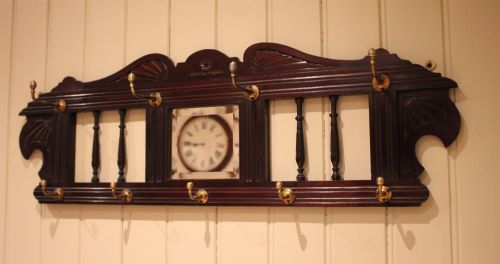
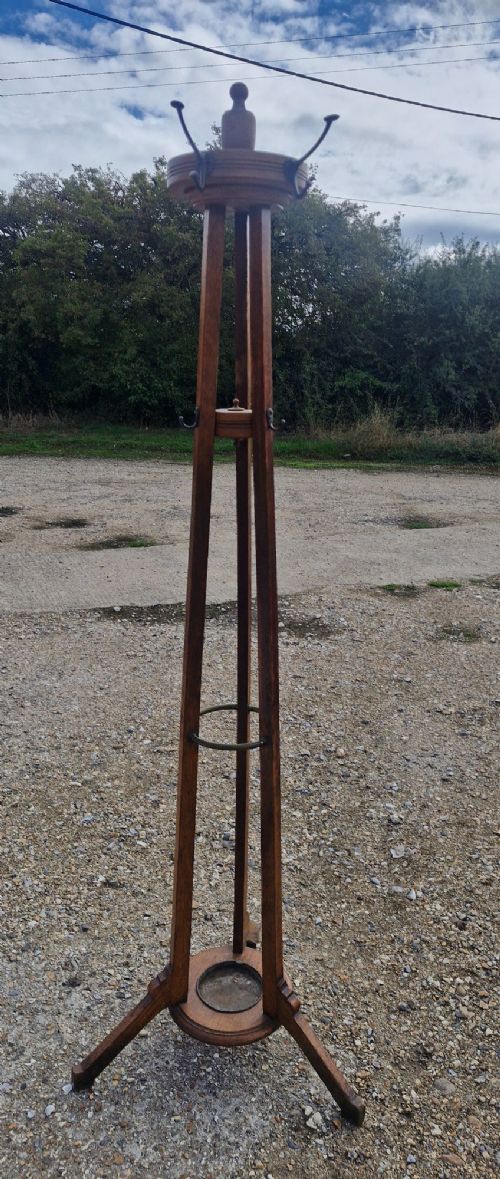
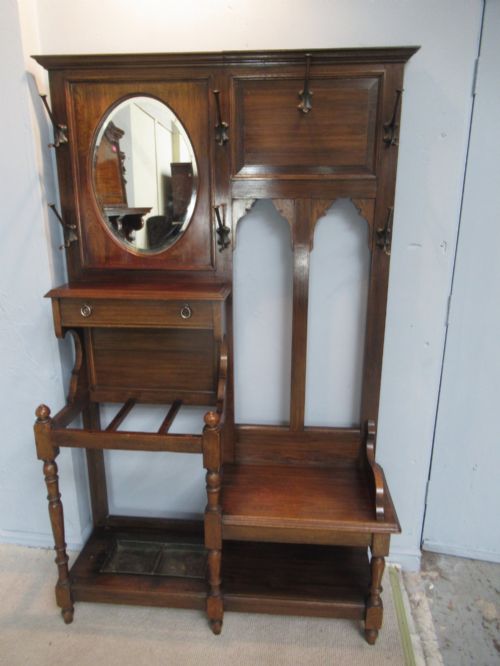
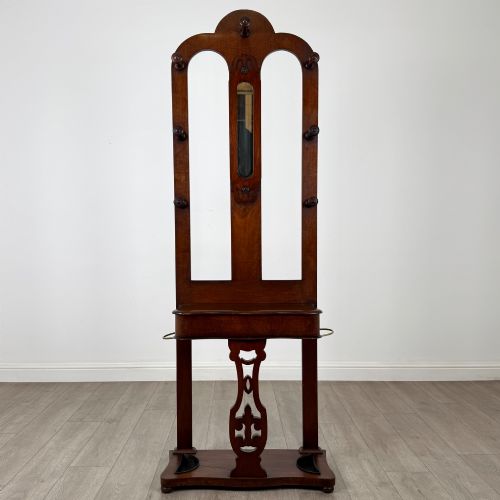
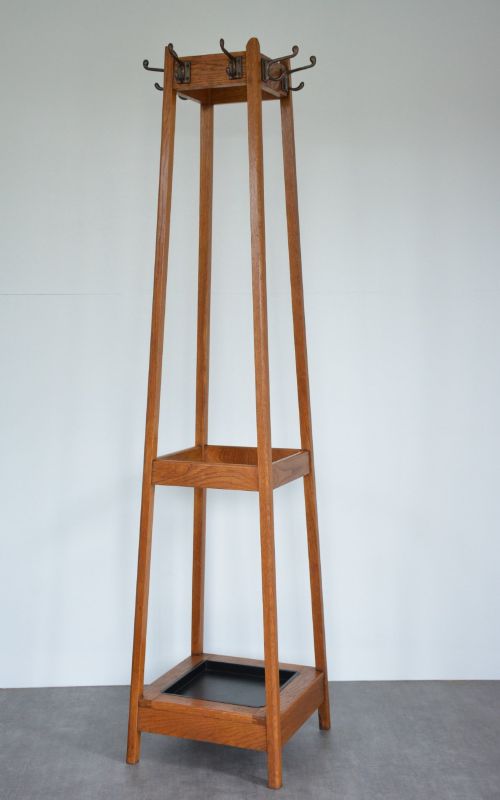
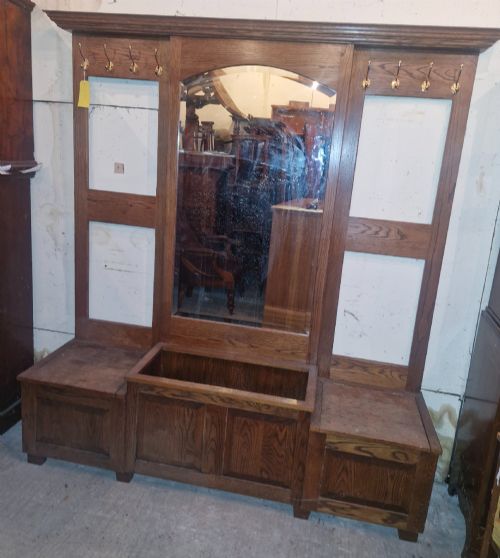
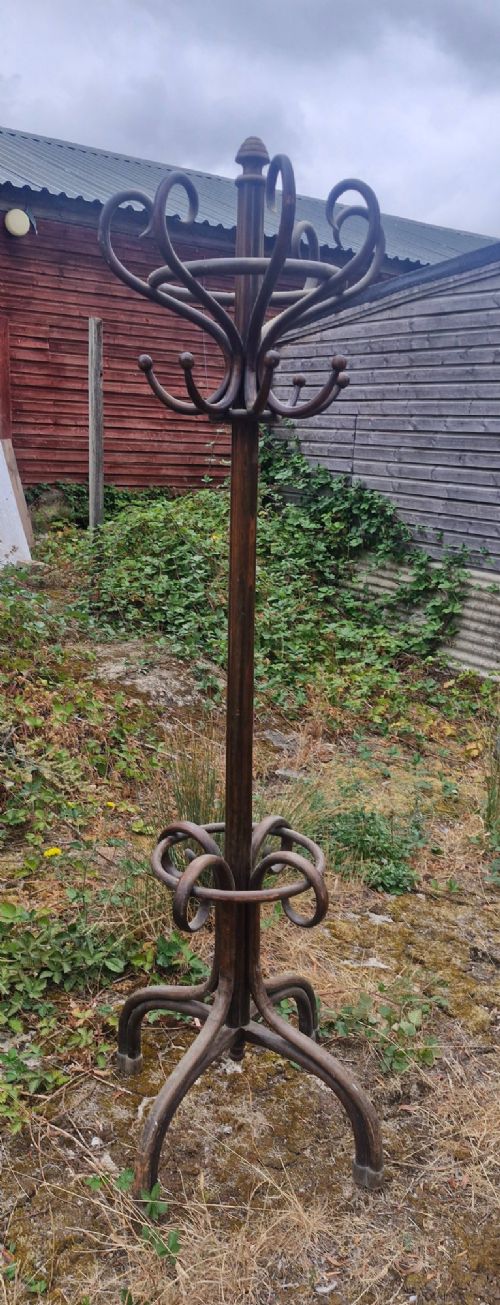
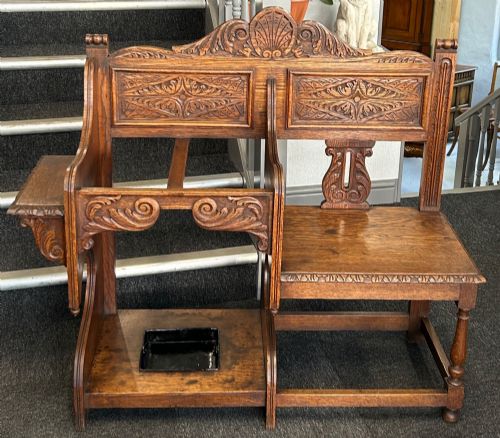
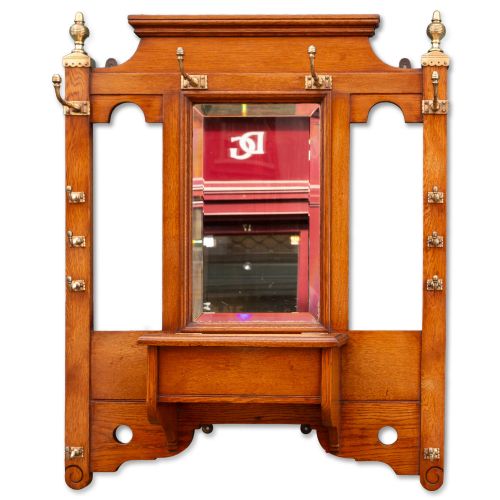
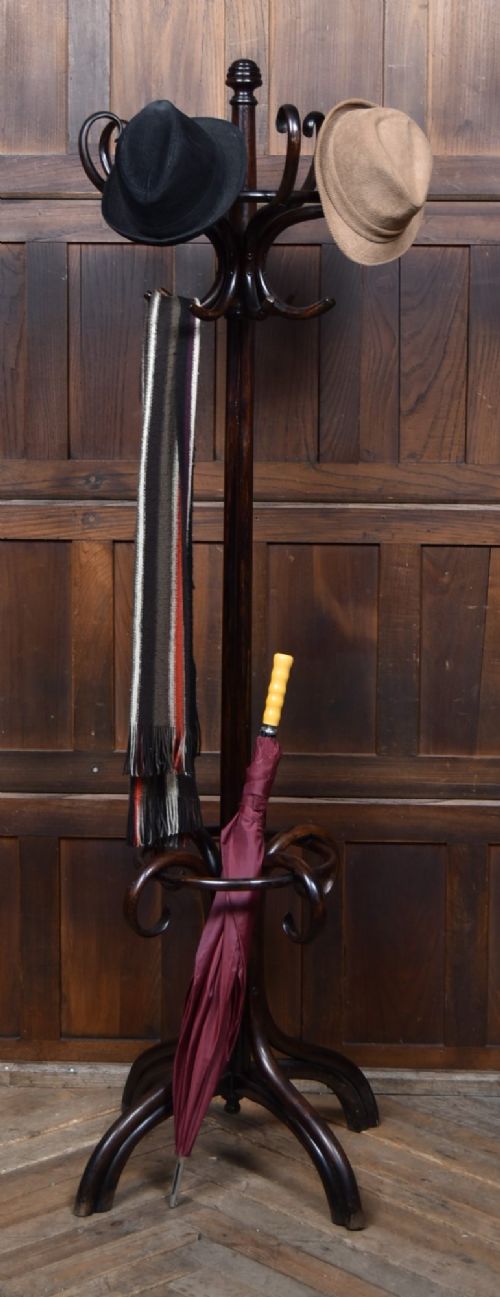
An edwardian wooden coat stand serves as a functional piece of hallway furniture designed to hold hats, coats, and umbrellas. The selections here include revolving hat and coat stands, wall-mounted racks, and multi-functional hall seat stands.
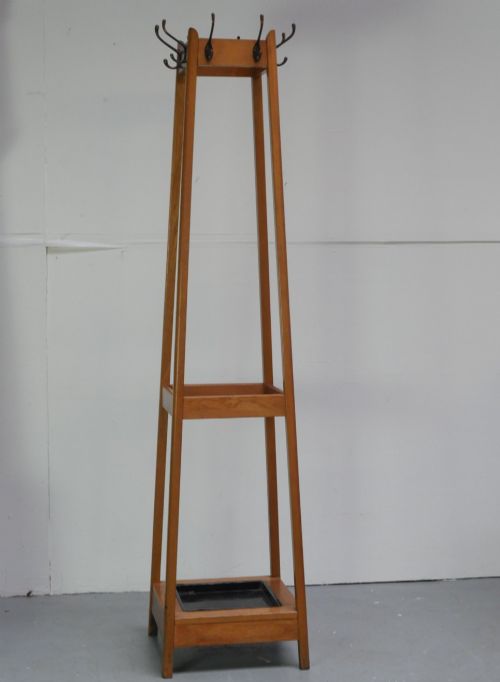
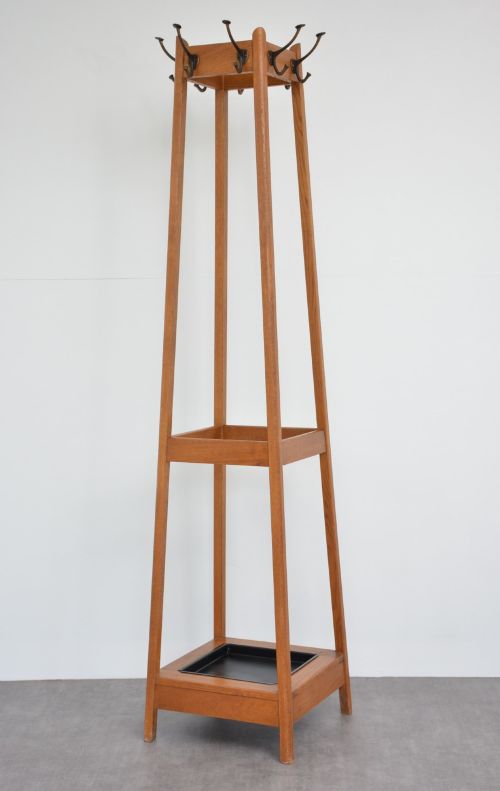
The most common versions met on this page span the Edwardian period, along with related pieces from the Victorian era and the early twentieth century. These objects frequently combine practical umbrella holders with metal drip trays and brass hooks.
Makers and designers worked within styles ranging from Arts and Crafts to Austrian bentwood, utilising timbers such as oak, mahogany, walnut, and beech.
How they were made
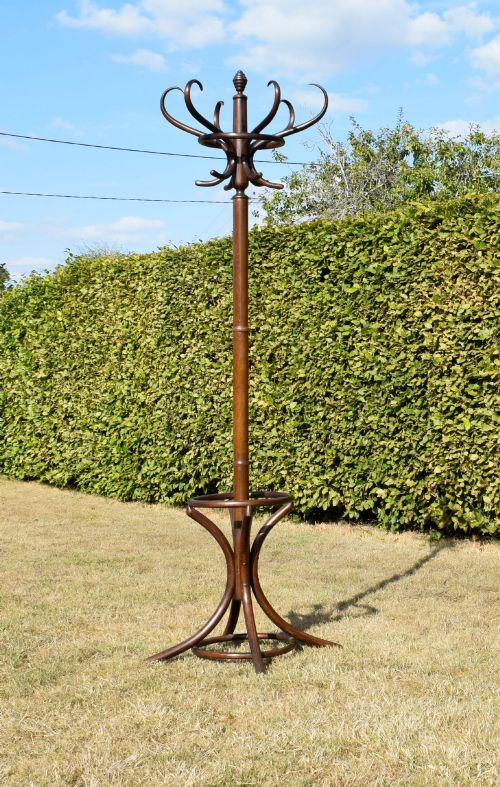
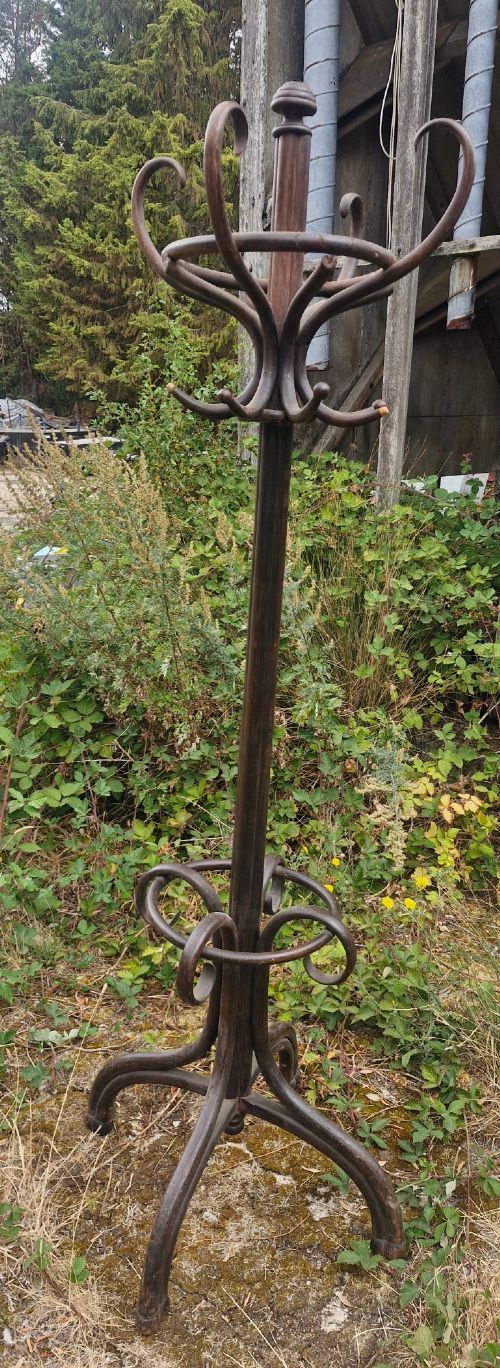
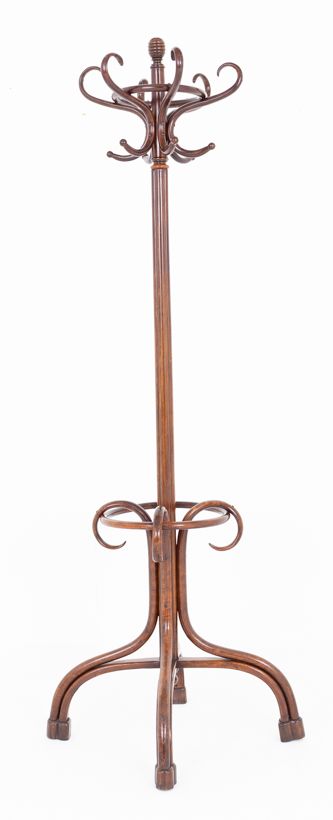
Maker workshops utilised steam-bending techniques on beech and other flexible timbers to create the characteristic curved forms seen in bentwood hat stands. Joinery methods for oak and mahogany hall stands involved solid construction, often featuring carved panels and integrated compartments.
Metal components such as brass hooks, iron brackets, and glass inserts added functional utility to wooden frames. Drip trays fashioned from metal collected water from wet umbrellas placed in the integrated holders.
Listings feature oak, mahogany, walnut, and beech timbers alongside bentwood and brass elements across the Edwardian and Victorian periods.
What varies in quality
The distinction between standard utility items and finer examples lies in the integrity of the timber selection and the complexity of the woodworking. Solid golden oak, figured walnut, and carved details elevate certain hall stands above plain commercial pieces.
Structural robustness defines the better examples, particularly in revolving models and heavy bentwood stands that must support the weight of numerous garments without leaning. The retention of original brass fittings and metal drip trays adds to the integrity of a piece.
Thonet·Jas Shoolbred·GW Evans
The Edwardian Wooden Coat Stand Glossary
- Bentwood
- Wood that has been heated with steam and bent into curved shapes. This technique defines the airy frames of nineteenth and early twentieth-century coat stands.
- Hallstand
- A piece of hall furniture combining coat hooks, a mirror, umbrella stands, and sometimes a seat. They greeted visitors in domestic entranceways.
- Hall tree
- An alternative term for a freestanding coat, hat, and umbrella stand. These tall vertical structures organise garments in an entryway.
- Valet stand
- A specialised piece of furniture designed to drape a suit or coat overnight. The Edwardian beech versions provide tailored clothes storage.
- Demi lune
- A half-moon shape used for furniture that sits flat against a wall. Bentwood coat stands often utilise this profile to save floor space.
Edwardian Wooden Coat Stand: Frequently Asked Questions
What is a bentwood coat stand?
A bentwood coat stand is a tall vertical structure created through steam-bending timber into curved loops and hooks. These pieces offer lightweight strength for hanging hats and garments.
Thonet and similar makers popularised this construction method during the Victorian and Edwardian periods, resulting in distinct rounded profiles.
How did Victorians use hall stands?
Victorians used hall stands in entranceways as a central drop-off point for outdoor wear and accessories. Guests and residents hung coats and hats on the brass hooks while placing umbrellas into the integrated holders.
Many examples included built-in drip trays to protect wooden floors from wet weather gear.
Are revolving hat stands stable?
Revolving hat stands feature a rotating upper section designed to give easy access to multiple garments in a narrow hallway. Their stability relies upon a heavy weighted base and sound original construction.
Good quality examples balance the load evenly as hats and coats are turned around the central spindle.
How do I identify an Edwardian coat stand?
Edwardian coat stands typically display lighter timbers such as golden oak or beech compared to the darker mahogany favoured in earlier decades. Design influences often span Arts and Crafts simplicity alongside revived traditional forms.
Dates around nineteen hundred to nineteen ten frequently align with specific hardware choices like brass hooks and metal drip trays.