

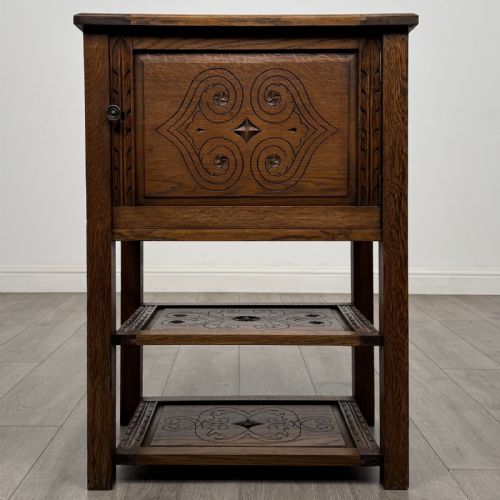
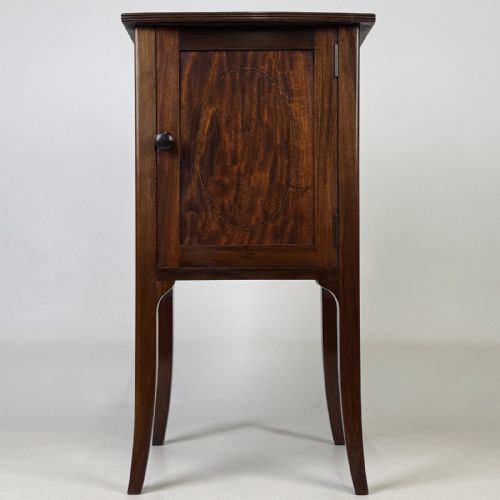
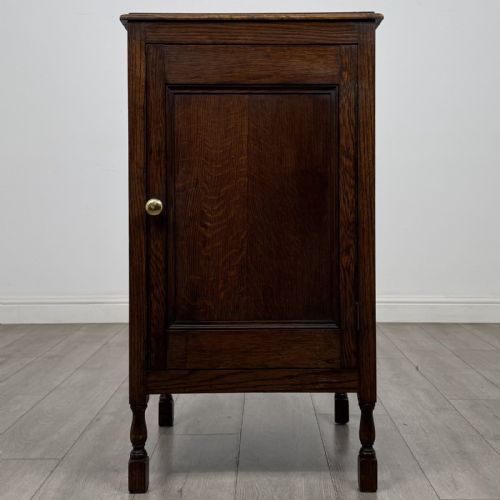
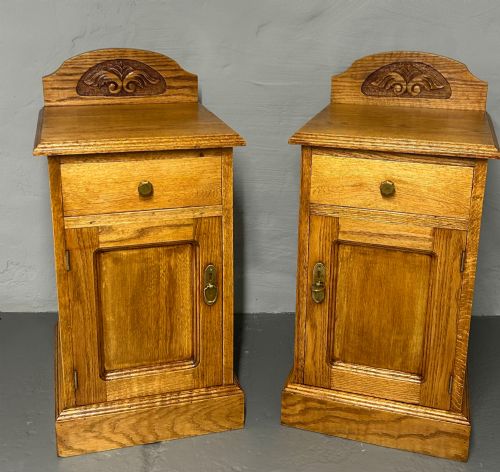
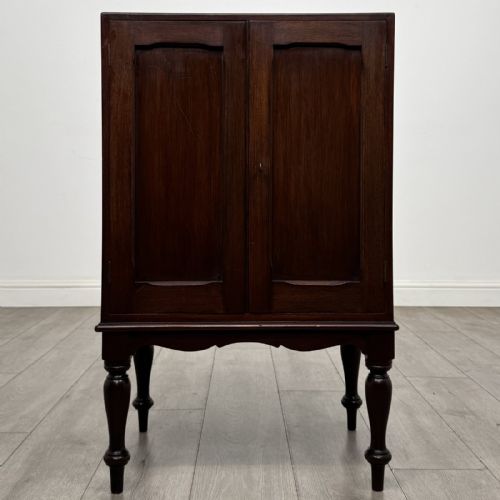
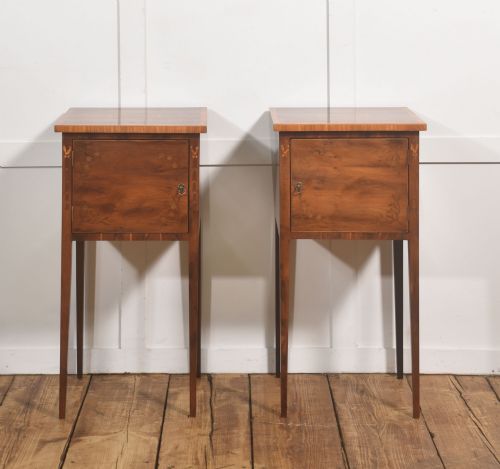
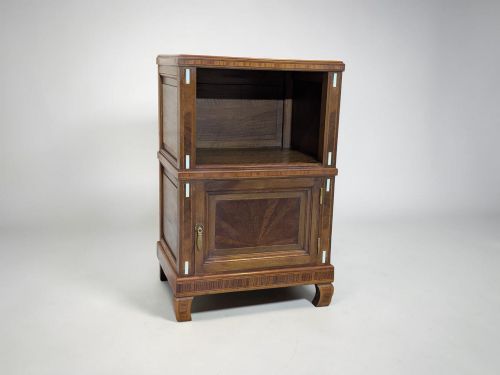
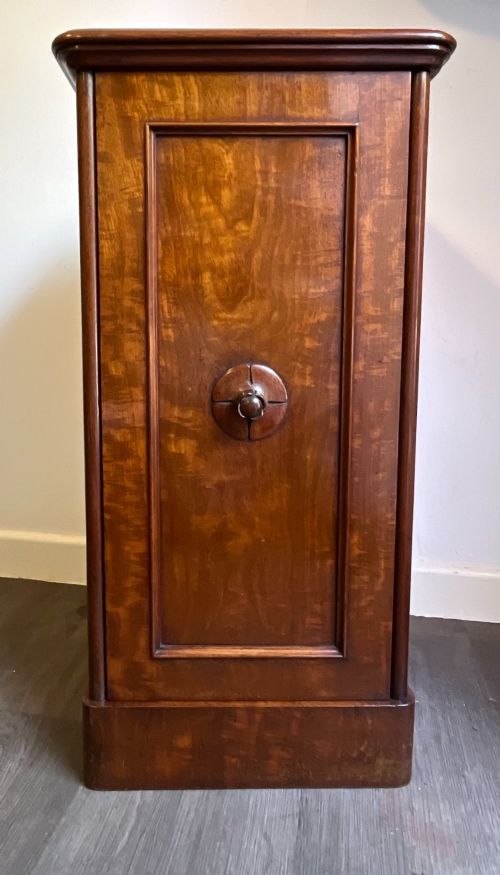
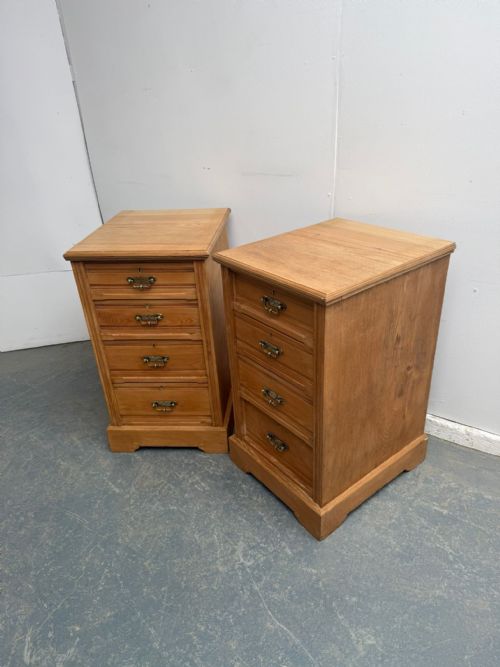
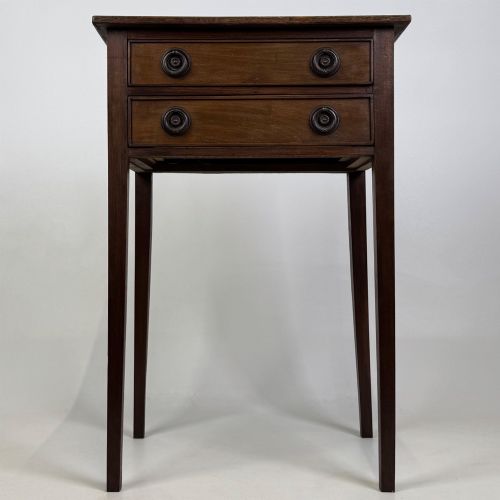
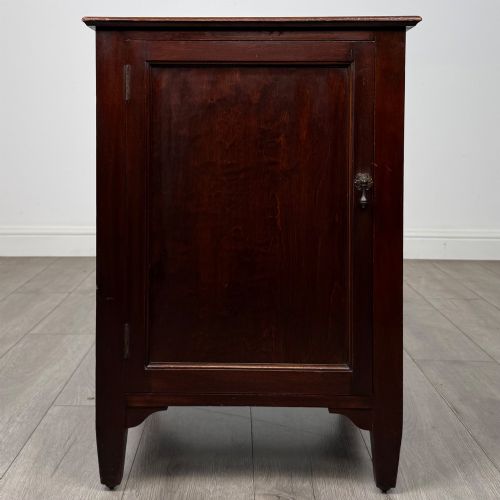
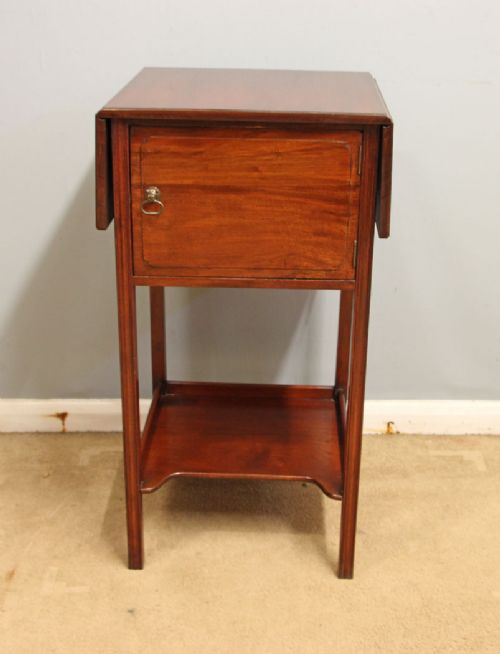
Edwardian Wooden Bedside Cabinet
These edwardian wooden bedside cabinet selections bring compact period utility to the bedroom, combining practical enclosed storage with classical timber craftsmanship.
Edwardian Wooden Bedside Cabinet
An edwardian wooden bedside cabinet serves as a compact storage unit designed to sit beside a bed, holding night-time essentials within its cupboard or drawer space. The pieces found here predominantly reflect the Edwardian era, alongside related Victorian and revival forms that share similar proportions.
Makers of the period worked extensively in mahogany, oak, satinwood and walnut, often applying delicate stringing, crossbanding or satinwood inlay to enrich the timber surfaces. Cabinets vary from simple single-door cupboards to pieces fitted with small drawers or open display shelves.
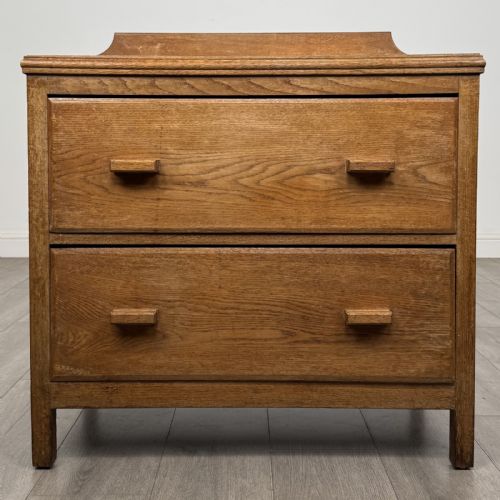
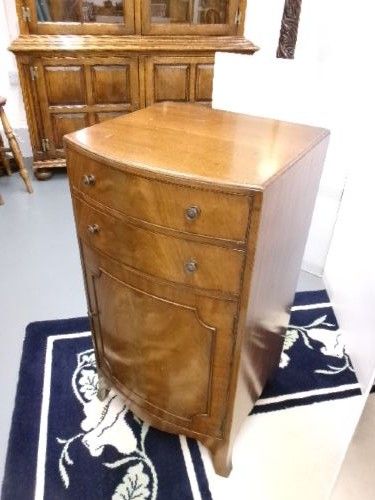
While many examples follow standard rectangular pedestals, buyers also encounter Sheraton revival serpentine commodes, cylindrical marble-top variants and sturdy Arts and Crafts designs in ash or oak. Each variant offers a distinct character shaped by the prevailing taste of its decade of origin.
Construction and Materials
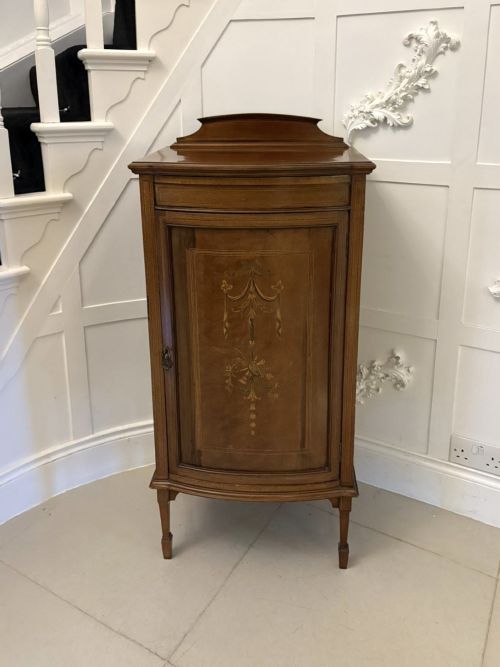
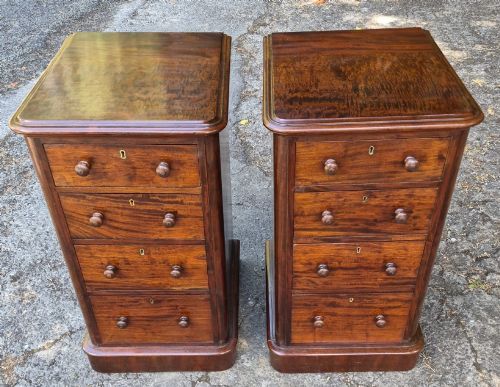
Cabinetmakers built these pieces using solid timbers like oak, ash and mahogany, frequently applying flame mahogany veneer or walnut over secondary woods to achieve striking figure patterns. Inlaid examples incorporate contrasting materials such as boxwood and satinwood to create geometric stringing or floral motifs.
Fittings and hardware typically include brass handles, hinges and castors, often patinated through age and use. Joinery relied on traditional dovetail techniques for drawer construction and sturdy mortise and tenon joints for the main cabinet carcasses.
Edwardian Wooden Bedside Cabinet Retail Price Guide 2026
Typical asking prices for edwardian wooden bedside cabinet among the pieces listed under this phrase on Sellingantiques today, from the lower quarter to the upper quarter. They describe what is for sale here now, not the wider market.
Materials represented across the selection include solid oak, mahogany, walnut, ash, satinwood, and flame mahogany veneer.
Judging Quality and Finish
Quality rests in the selection of the timber grain and the crispness of any inlaid marquetry or stringing. Superior examples display thoughtful book-matching on veneered surfaces and tight, clean joints that endure decades of daily opening and closing.
The integrity of the original hardware, feet and internal shelving distinguishes a finer piece from one that has undergone heavy replacement or alteration. Original wax finishes that retain a warm, soft lustre indicate careful conservation over time.
Denby & Spinks·Maple & Co
The Edwardian Wooden Bedside Cabinet Glossary
- Inlay
- A technique where contrasting woods or metals are fitted into recessed cavities on the surface to create decorative patterns. It frequently defines Edwardian and Sheraton revival cabinet doors.
- Serpentine
- A curved line that bows outward in the centre and recesses inward near the edges, often seen on the fronts of higher-end commodes. This shaping demands skilled carpentry to execute cleanly.
- Satinwood
- A durable, hard timber with a yellowish lustre that takes a fine polish. It appears often as banding or full veneer on decorative bedroom furniture.
- Dovetail
- A traditional interlocking joint used at the corners of drawers, prized for its tensile strength. Hand-cut dovetails indicate older, more bespoke manufacturing methods.
- Pedestal cabinet
- A tall, freestanding cupboard designed to occupy a tight footprint beside a bed. These units house a single door enclosing vertical storage space.
Edwardian Wooden Bedside Cabinet: Frequently Asked Questions
How do I care for a waxed mahogany cabinet?
Maintain the timber by applying a quality beeswax sparingly and buffing it gently with a soft, clean cloth to preserve the natural sheen. Avoid placing the cabinet near direct heat sources or strong sunlight, which can dry out the wood and fade the grain.
Regular dusting with a dry lint-free cloth prevents daily grit from scratching the polished surface.
Are Edwardian cabinets sturdy enough for daily use?
Edwardian furniture was built to serve practical domestic functions using solid construction methods like dovetailed drawers and sturdy mortise joints. Most pieces remain structurally robust for contemporary use.
Routine handling of doors and drawers should remain gentle to preserve original hinges and historical joinery.
How do I identify a Sheraton revival piece?
Sheraton revival items draw inspiration from late eighteenth-century classical designs, featuring refined proportions, tapered legs and symmetrical satinwood inlay. They were commonly manufactured around the Edwardian period as a nod to earlier Georgian elegance.
Look for light-coloured stringing, urn motifs and delicate brass hardware that mimic neoclassical aesthetics.