


Edwardian Wood Dressing Chest
An edwardian wood dressing chest brings useful bedroom storage and adjustable mirror work together in enduring timber forms.
Edwardian Wood Dressing Chest
An edwardian wood dressing chest combines the low drawer capacity of a compact chest with the mounted mirror work of a dedicated vanity table. Buyers searching for an edwardian wood dressing chest encounter sturdy timber constructions designed for turn-of-the-century bedrooms.
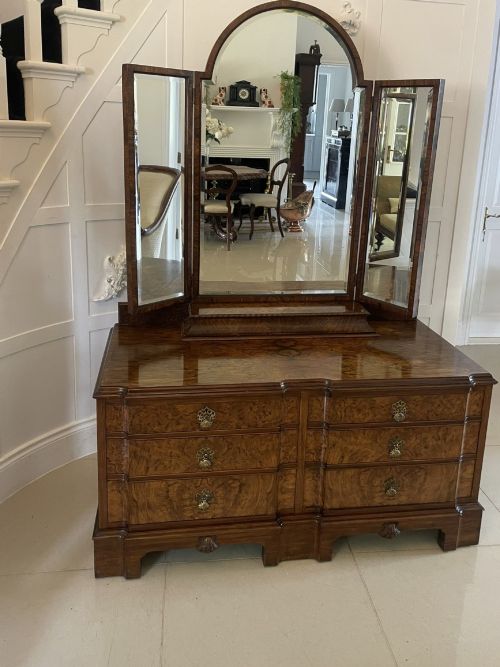
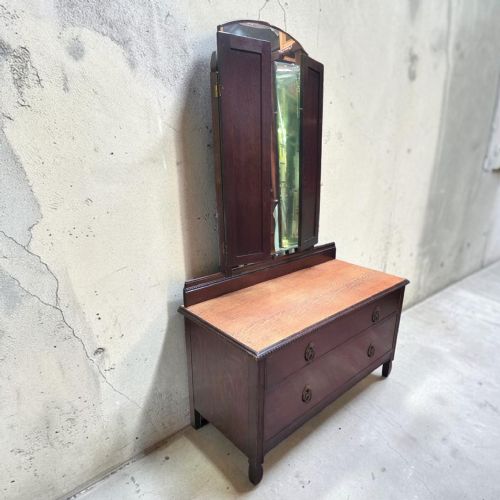
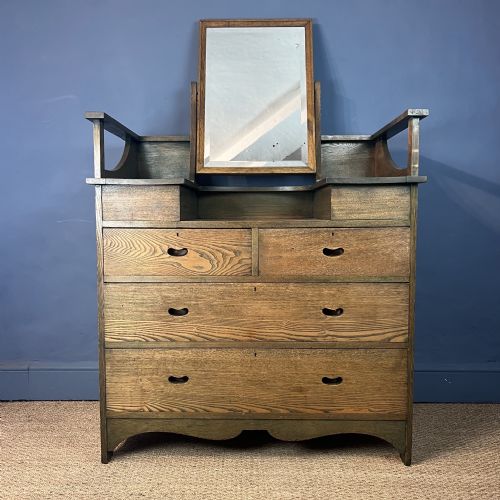
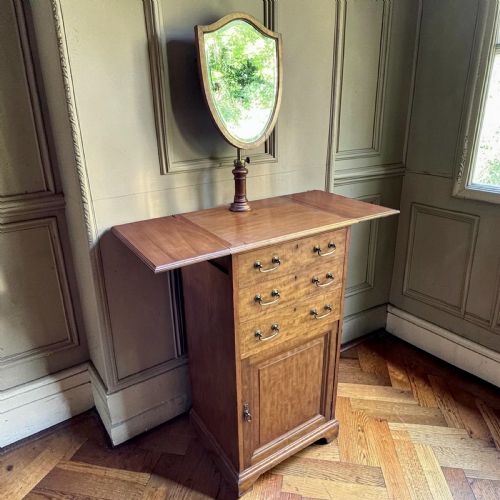
The pieces appearing on this page span several decades of bedroom furniture design, featuring Edwardian examples alongside Victorian, Arts and Crafts, and later revival styles. Forms range from simple satin walnut chests to mahogany pieces fitted with adjustable shield mirrors.
How they were made
Cabinet makers constructed these bedroom pieces using solid timbers like mahogany, oak, and ash, frequently incorporating satinwood inlay for decorative contrast. Surfaces were polished to highlight natural grain patterns.
Mirrors were set into pivoting timber frames, often of shield or oval shapes, supported by upright brackets fixed to the main chest structure. Brass hardware completed the drawer pulls and pivoting mirror fixings.
Certain pieces hide small jewellery compartments behind mirror frames designed for midnight secrets.
What varies in quality
The distinction between standard workshop production and finer cabinet work lies in the selection of timber veneers and the precision of inlay details. Pieces displaying carefully matched grain or marquetry work demonstrate higher craftsmanship.
Structural integrity depends on the retention of original mirror glass, intact brass fittings, and smooth drawer operation within the carcass.
Edwards & Roberts·George Walton·Whytock & Reid·John Taylor of Edinburgh
The Edwardian Wood Dressing Chest Glossary
- Shield mirror
- A dressing mirror cut into the curved outline of a heraldic shield. These swing within upright wooden arms mounted to the top of the chest.
- Satin walnut
- A common turn-of-the-century cabinet wood valued for its warm tone and subtle grain figures. It was widely utilised across Edwardian bedroom furniture.
- Marquetry
- The art of forming decorative patterns on wooden surfaces using thin veneers of different timbers. This technique often frames drawer fronts and tabletops.
- Pedestal dressing table
- A vanity form featuring two banks of small drawers supporting the main tabletop. It offers floor-standing storage alongside surface workspace.
Edwardian Wood Dressing Chest: Frequently Asked Questions
What is an edwardian wood dressing chest?
An edwardian wood dressing chest is a dual-purpose bedroom furnishing that unites a set of drawers with an attached upright mirror. These pieces were designed to provide both clothing storage and a surface for grooming.
Most examples feature a low chest base surmounted by pivoting mirror glass framed in matching timber. They reflect the domestic utility and cabinet making standards of the early twentieth century.
How do I date a wooden dressing chest?
Dating relies on observing timber choices, hardware styles, and construction methods relative to recorded periods. Edwardian pieces often utilise satin walnut or mahogany with simpler lines than heavily carved Victorian counterparts.
Matching the mirror frame shape and inset inlay techniques to known revival styles or Arts and Crafts movements helps narrow the decade of manufacture.
Are the mirrors original to the chests?
Mirror glass frequently suffered accidental breakage over a century of domestic use, leading to period replacements. Original mirrors often show subtle edge silvering degradation or minor foxing consistent with age.
The backing boards, mounting brackets, and screw fixings provide evidence of whether the glass has remained undisturbed since manufacture.
How do I care for antique dressing chest wood?
Timber surfaces require protection from direct sunlight and excessive humidity fluctuations to prevent veneer lifting or wood splitting. Regular dusting with a soft cloth maintains the polished finish without chemical buildup.
Applying occasional appropriate wax preserves the moisture content of mahogany, oak, and walnut without sealing the pores.