


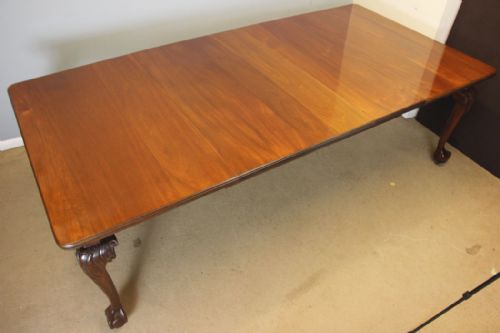


Edwardian Wind Out Table
An edwardian wind out table brings mechanical ingenuity to the dining room, using a clever internal screw mechanism to expand for gatherings.
Edwardian Wind Out Table
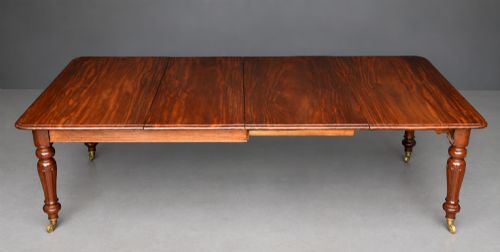
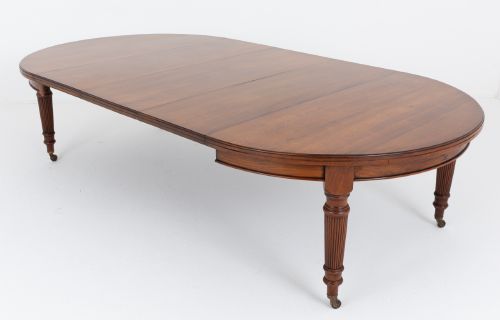
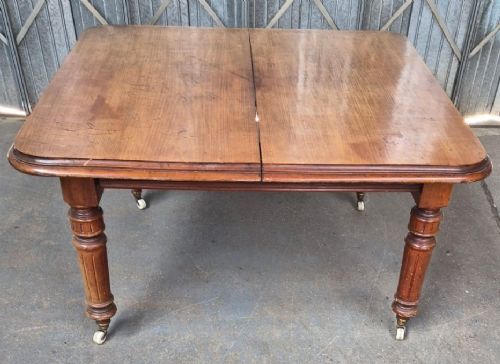
An edwardian wind out table is a dining table designed with a clever internal screw mechanism that allows extra leaves to be inserted as the framework expands. These pieces span periods from the Victorian era into the twentieth century, though the Edwardian examples predominate here.
Most pieces encountered on this page are constructed from mahogany or walnut, occasionally appearing in oak, ash, or Cuban mahogany. They range in size from single-leaf tables seating modest groups to large formats accommodating ten or twelve diners across multiple leaves.
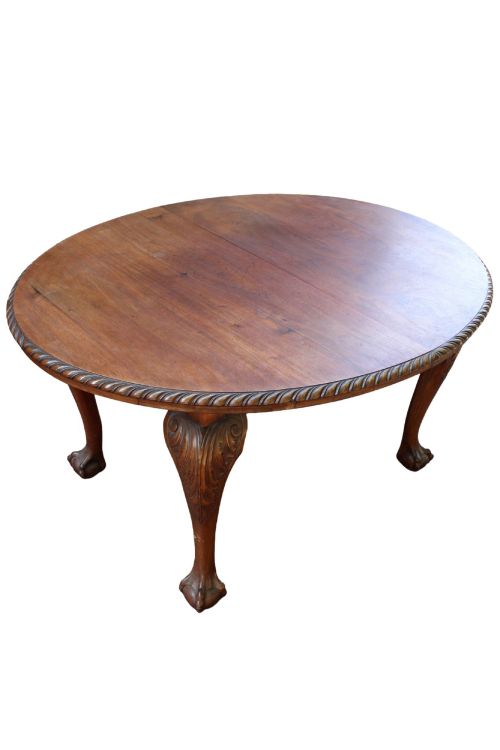
Makers such as Gillows contributed to this tradition, producing dining tables that combined substantial timber frames with smooth mechanical action. The forms vary from plain surfaces to Chippendale style interpretations featuring carved details.
How They Were Made
Makers utilised dense timbers like mahogany, walnut, and oak for the main frames and leaves, ensuring the structural stability required for daily dining use. Cuban mahogany and ash also appear, providing different grain patterns and tonal depths across the top surfaces.
The defining mechanical feature relies on brass winding gear and steel components housed beneath the rails, operated by a detachable handle. This screw mechanism draws the two halves apart smoothly to receive the matching leaves.
Dated pieces span the Victorian era, Edwardian period, and early twentieth century up to nineteen twenty.
What Varies in Quality
The calibre of an extending table rests upon the precision of its internal screw mechanism and the seamless alignment of its leaves. Superior examples operate smoothly without binding, ensuring that when fully closed or extended, the top remains completely level.
Timber selection dictates the visual hierarchy, with figured mahogany and rich walnut achieving greater prominence than standard utility woods. Furthermore, restrained carving in styles such as Chippendale Revival indicates a higher grade of craftsmanship than plain functional iterations.
Gillows
The Edwardian Wind Out Table Glossary
- Wind out
- A mechanical dining table system operated by a handle inserted beneath the rim to rotate an internal screw. This action expands the frame to accommodate loose leaves.
- Extending table
- A dining table designed with removable leaves and a sliding framework to alter its overall length. It serves large households needing adjustable seating capacities.
- Leaf
- A separate board inserted into an expanded table to increase its surface area. Extra leaves are stored separately when the table is closed.
- Chippendale Revival
- A decorative style popular in the Edwardian period referencing eighteenth-century design motifs. It often incorporates carved cabriole legs and detailed edge moulding.
Edwardian Wind Out Table: Frequently Asked Questions
How do you operate the winding mechanism?
A removable metal handle fits into a socket beneath the table rim. Turning this handle rotates an internal screw that pulls the framework apart.
Once the gap is wide enough, you drop the matching leaves into place and wind the mechanism back to secure them tightly.
Where were these tables used?
These tables sat primarily in formal dining rooms of substantial homes and townhouses. They provided everyday seating for family meals while adapting quickly for dinner parties.
When closed, they saved floor space, expanding only when guests arrived.
How do I care for the timber surface?
Polished mahogany and walnut require regular dusting with a soft, dry cloth to prevent grit accumulation. Apply natural beeswax periodically to maintain the lustre of the wood.
Keep the table away from direct heat sources and strong sunlight to prevent warping and fading.
Can I use extra leaves safely?
The supporting frame and wooden runners are engineered to carry the weight of multiple inserted leaves. Ensure the brass screw mechanism is fully tightened so the leaves lock firmly against one another.
Avoid placing excessive weight on the unsupported centre sections when fully extended.