




Edwardian Weather Instrument
These pieces for an Edwardian weather instrument bring atmospheric change into the home through brass dials, glass cases and carved timber.
Edwardian Weather Instrument
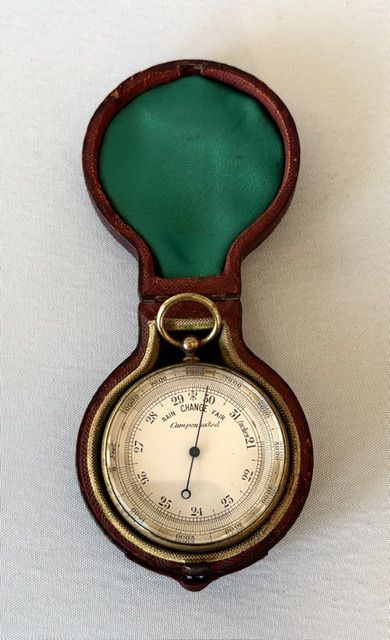
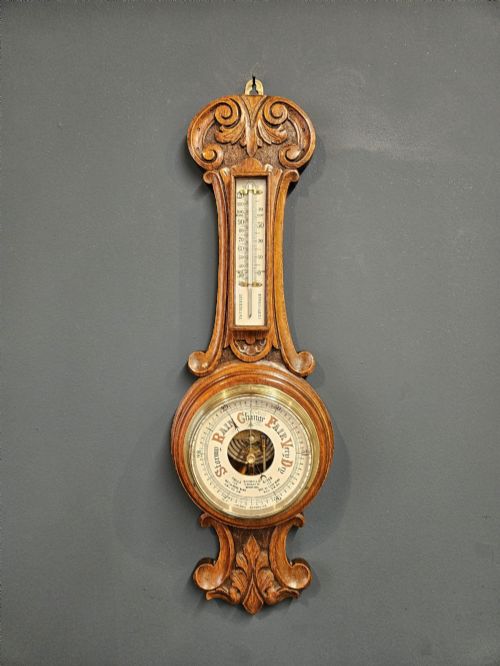
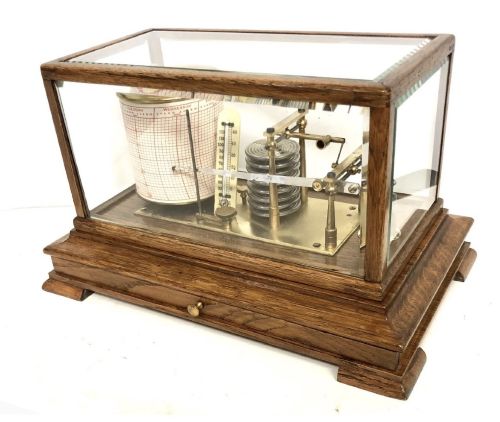
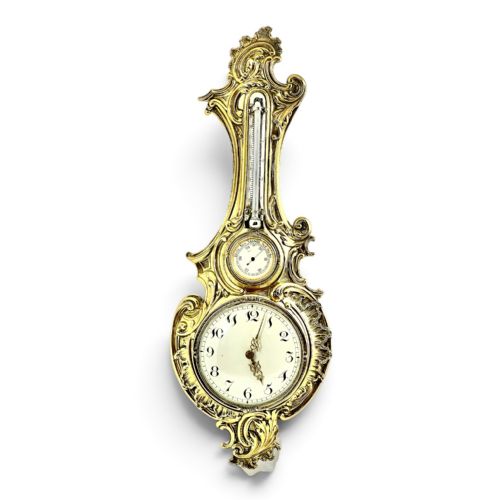
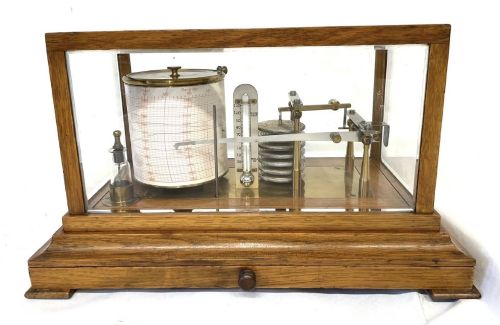
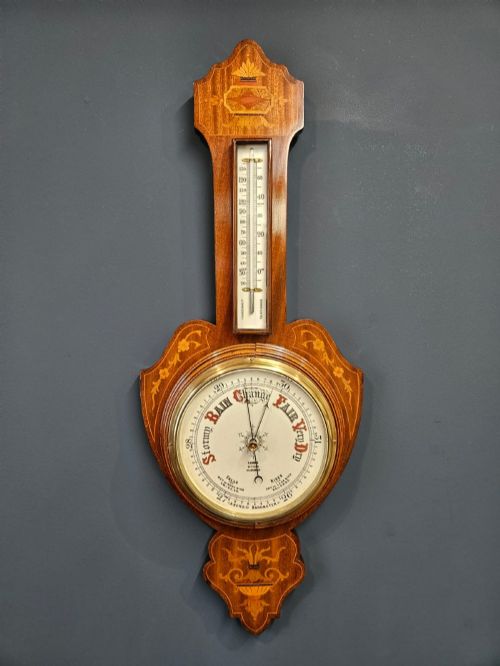
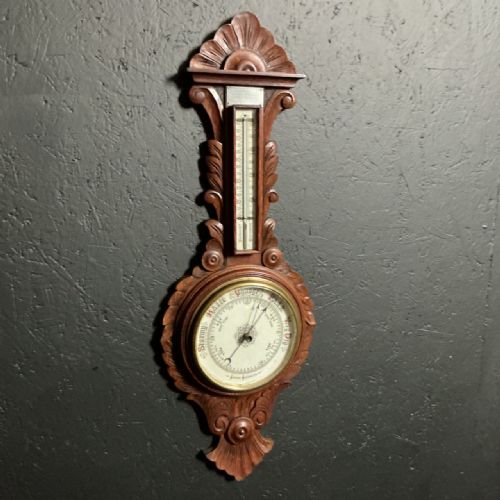
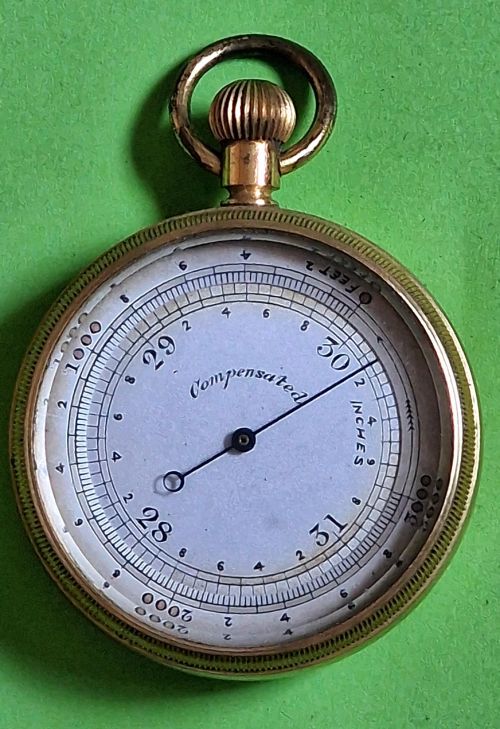
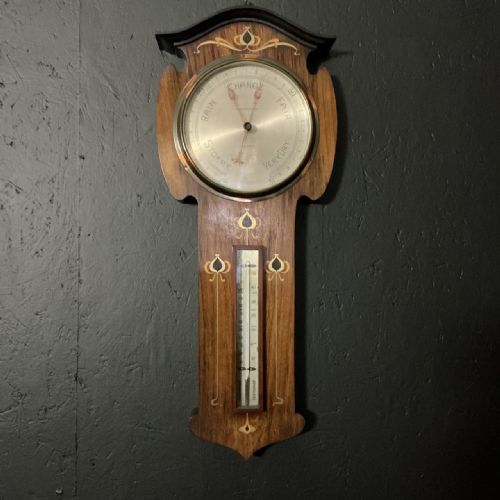
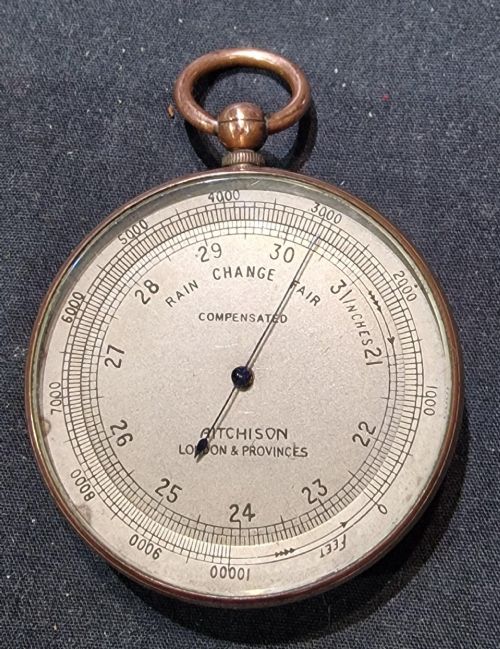
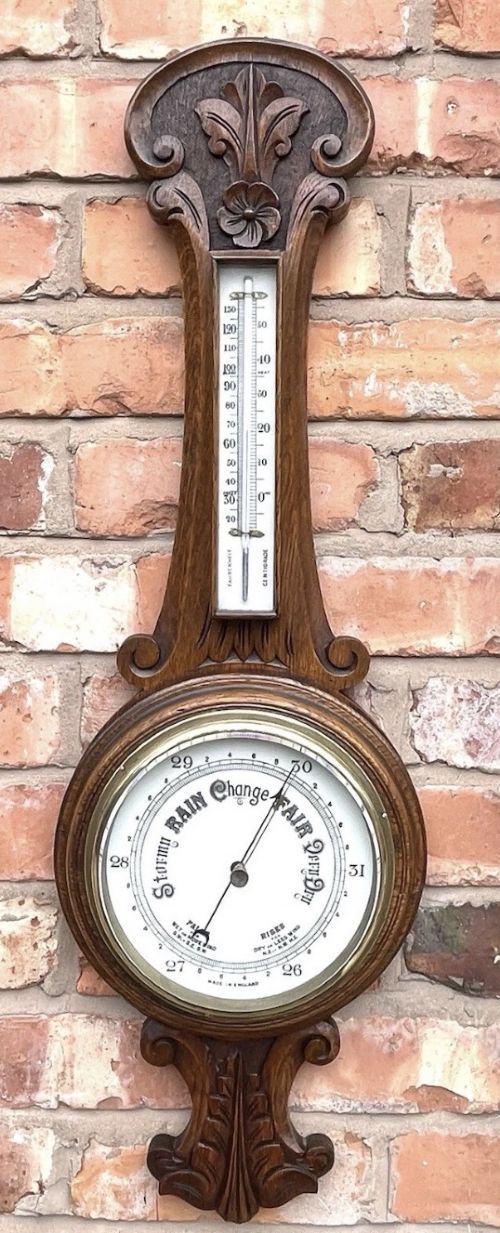
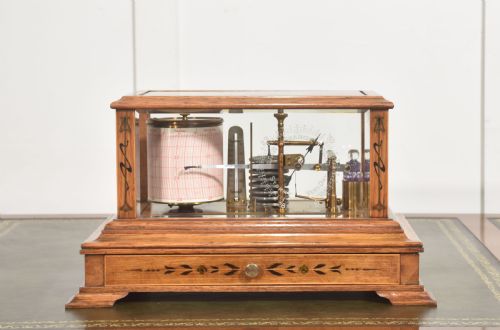
An edwardian weather instrument serves to record pressure, temperature and moisture, taking forms such as wall-hanging aneroid barometers, desk-top barographs and pocket-watch designs. The selection brings together timber cases of oak and mahogany alongside brass mechanisms made for domestic interiors.
The objects stem from periods spanning the late nineteenth century through to the early decades of the twentieth, with specific pieces dated across the nineteen-hundreds and nineteen-ten brackets. Wall banjos and glass-lidded recording barographs dominate the physical forms available.
Makers recorded in the evidence include Short & Mason and Negretti & Zambra, alongside London retailers such as G & L Guanziroli. These workshops provide the signed scientific instruments that sit alongside unbranded domestic wall barometers.
Materials and Construction
Cases utilise solid and veneered timbers including oak, mahogany, walnut and rosewood, frequently carved with foliage or inlaid with lighter decorative banding. Metal elements rely on brass for bezels, mercury tubes and mechanical levers, paired with steel springs and paper recording charts.
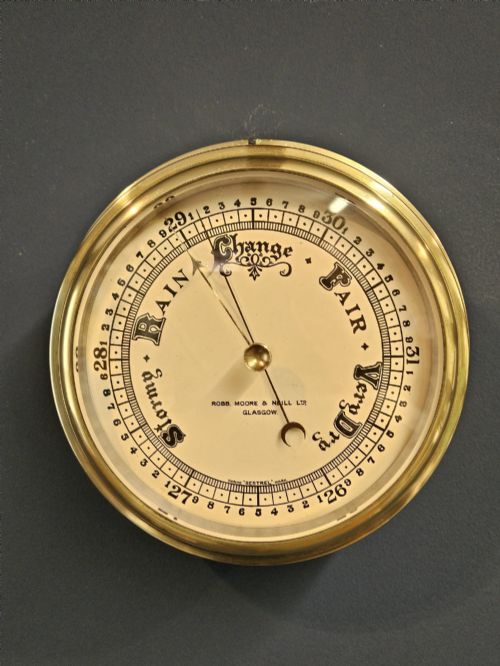
Glass covers protect the dials and chart cylinders, often shaped with bevelled edges to catch the light. Porcelain and silvered metal dials carry the engraved numerals and weather descriptions used to read barometric pressure.
Edwardian Weather Instrument Retail Price Guide 2026
Typical asking prices for edwardian weather instrument among the pieces listed under this phrase on Sellingantiques today, from the lower quarter to the upper quarter. They describe what is for sale here now, not the wider market.
Some pocket barometers include compasses on the reverse, designed for Edwardian gentlemen caught between changing weather and lost directions.
Judging Quality
Quality rests upon the precision of the mechanical movement and the crispness of the timber carving or brass casting. Signed mechanisms by established makers carry greater weight than unmarked pieces produced for general retail.
The integrity of the wooden case, the clarity of the bevelled glass and the presence of original components such as chart drawers or mercury tubes define the standing of each instrument.
Short & Mason·Negretti & Zambra·G & L Guanziroli·Hezzanith·Aitchison
The Edwardian Weather Instrument Glossary
- Barograph
- A self-recording aneroid barometer that traces pressure changes onto a rotating paper chart with an ink pen.
- Aneroid barometer
- An instrument that measures air pressure using an expansion and contraction metal capsule without liquid.
- Stick barometer
- A tall wall instrument utilising a vertical glass tube filled with mercury to measure atmospheric pressure.
- Hygrometer
- A device for measuring the humidity or moisture content of the air, sometimes combined with a thermometer.
- Bezel
- The metal ring that holds the glass face in position over the dial of a barometer.
Edwardian Weather Instrument: Frequently Asked Questions
How do I set a barometer?
Adjust the setting hand to align with the current needle position by turning the screw on the front glass. Tapping the glass gently before reading ensures the mechanism settles.
Future changes in pressure will move the needle away from this marker, showing whether the weather is rising or falling.
Where should I hang a wall barometer?
Choose an interior wall away from direct sunlight, radiators and doors that cause sudden temperature shifts. Stable ambient conditions keep the wooden case and internal brass parts functioning reliably.
Ensure the mounting hook is secure, particularly for heavier carved oak and mahogany examples.
What is the difference between a barometer and a barograph?
A standard barometer shows only the pressure at the exact moment of reading via a dial and pointer. A barograph contains a clockwork drum that rotates a paper chart to record pressure continuously over a full week.
Both use internal aneroid capsules, but the barograph provides a visual history of atmospheric trends.
How do I replace barograph charts?
Lift the pen arm clear of the rotating drum and lift the brass cylinder off its spindle. Wind the clockwork movement gently before sliding a fresh paper chart around the drum.
Lower the pen arm back onto the paper and adjust the zero screw to match the current local pressure reading.