


Edwardian Watercolour Miniature
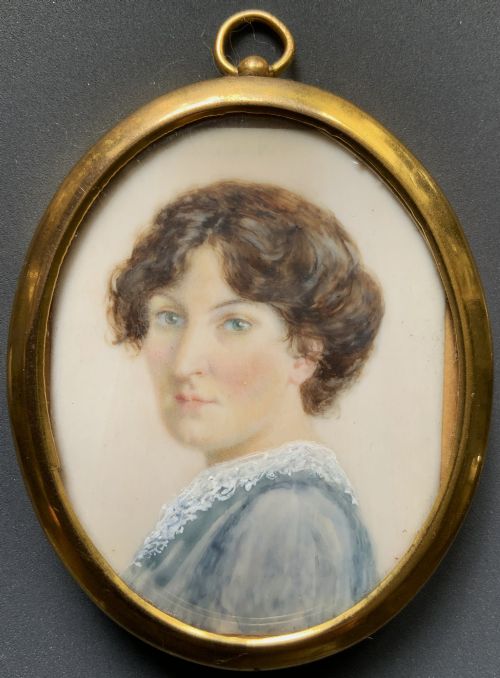
An edwardian watercolour miniature captures a refined likeness on a tiny scale, offering intimate portraiture suited for mantelpieces or small wall spaces.
Edwardian Watercolour Miniature
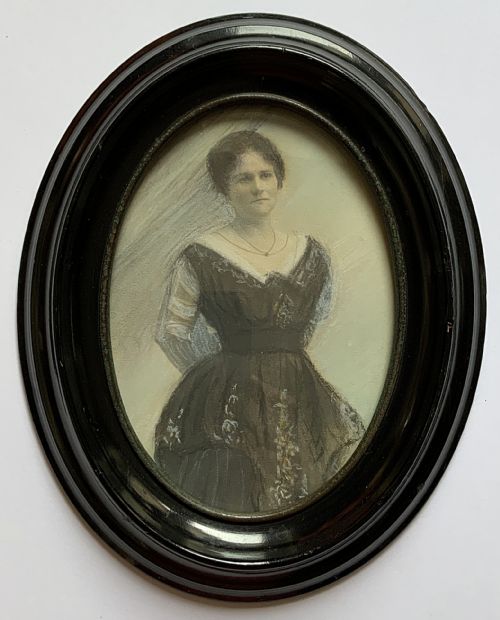
When you search for an edwardian watercolour miniature, you encounter delicate portraits rendered on paper or ivory, housed within modest frames of wood, brass, or gilt. These works preserve the likenesses of Victorian and Edwardian subjects, ranging from young girls to military commanders and ladies in costume.
While the search term points specifically to the Edwardian era, the selection includes pieces spanning from the late nineteenth century into the 1920s. You meet both anonymous studies and signed works by listed artists such as Susie Lassam RMS RA.
The dominant forms are oval or rectangular portrait paintings, often preserved behind glass in ebonised wood or metallic mounts. These intimate artworks reflect the enduring popularity of portable portraiture before the widespread dominance of photography.
How they were made
Artists executed these small-scale works using watercolour, pencil, and pastel applied directly to paper or ivory sheets. The delicate pigments required a steady hand and fine brushes to capture intricate details of facial expression and period costume within a restricted surface area.
Makers housed the finished paintings in purpose-built frames fashioned from brass, carved wood, or ebonised timber, frequently fitted with protective glass and backing cards. Some frames incorporate suspension loops or folding struts for desk placement, while others rely on simple matched pairs.
Several ladies immortalised in these miniatures attended sittings specifically dressed in elaborate fancy dress and historic costume.
What varies in quality
Quality rests primarily in the precision of the brushwork and the psychological depth of the portraiture. Superior examples display subtle tonal gradations in the watercolour and pastel, capturing lifelike skin tones and textural details in hair and fabric without heavy-handed outlining.
The housing contributes significantly to the overall merit, distinguishing modest framed prints from meticulously preserved hand-painted miniatures in heavy silver or gilt mounts. Original backing cards, contemporary annotations, and signatures by recognised members of miniature societies elevate the standing of a piece.
Susie Lassam RMS RA·Edward Smyth·Leslie Moore·Eleanor M Ross
The Edwardian Watercolour Miniature Glossary
- Watercolour
- A paint consisting of a pigment suspended in a water-based solution. It forms the primary medium for delicate, translucent miniature painting.
- Ebonised wood
- Timber treated to resemble ebony through staining or finishing. It provides a dark, contrasting border popular in nineteenth and early twentieth-century framing.
- Miniature painting
- A work executed on a vastly reduced scale. These portraits demand extreme precision and fine instrumentation from the artist.
- RMS
- Royal Miniature Society. Membership denotes an established standard of proficiency among British painters working in small formats.
Edwardian Watercolour Miniature: Frequently Asked Questions
What is an edwardian watercolour miniature?
It is a small-scale portrait painting created during the early twentieth century using water-based pigments on paper or ivory.
These compact artworks were designed to be displayed on desks or intimate wall spaces, frequently framed in brass, wood, or gilt.
How do I identify the period?
Look to the framing materials, the subject's clothing, and any contemporary annotations left on the reverse of the mount.
Victorian and Edwardian pieces often feature ebonised wood frames, convex glass, or handwritten notes detailing the identity of the sitter.
Were these painted from life?
Many portraits were commissioned directly from living subjects by professional miniature painters operating within societies.
Some examples also record historical figures or study pieces created during costume and fancy dress sessions.
How should I display them at home?
Because watercolour pigments are sensitive to strong sunlight, place these miniatures away from direct windows to prevent fading.
Their small dimensions make them ideal for grouping on narrow wall panels or displaying individually on small collector shelves.