


Edwardian Wardrobe with Mirror
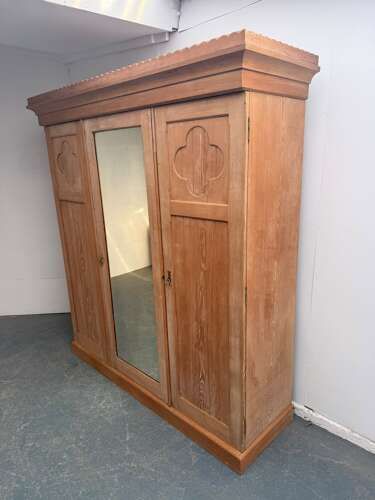
An edwardian wardrobe with mirror brings full-length glass and generous hanging space to the bedroom, combining practical function with period presence.
Edwardian Wardrobe with Mirror
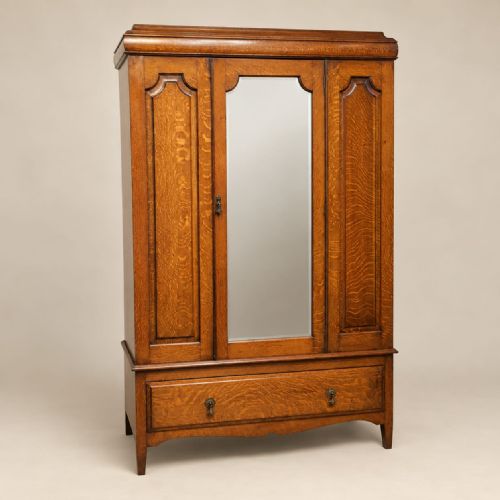
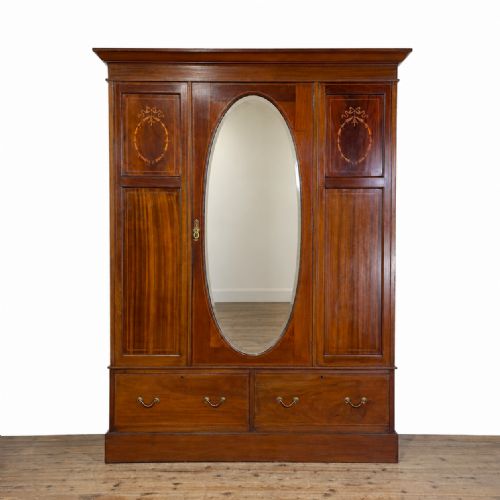
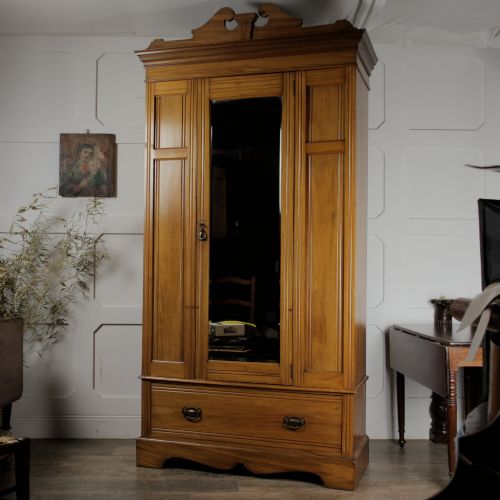
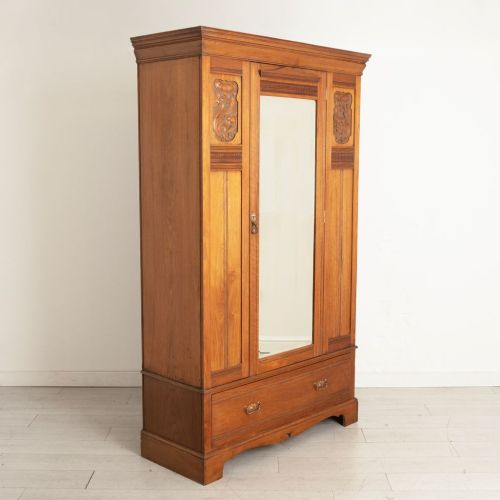
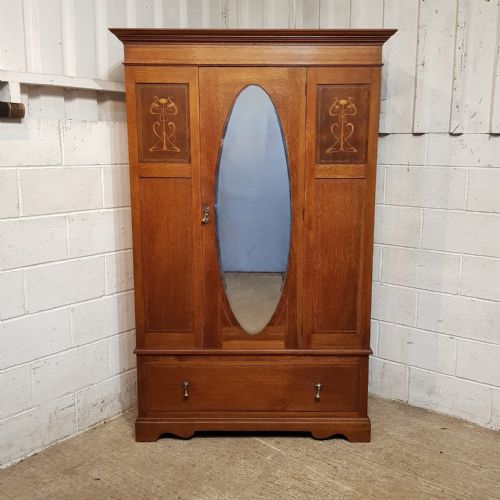
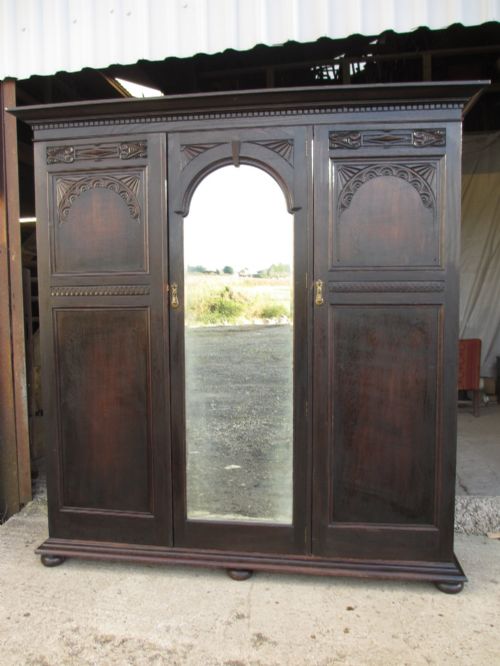
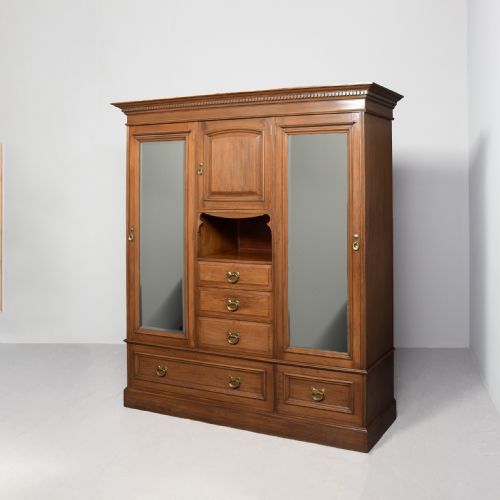
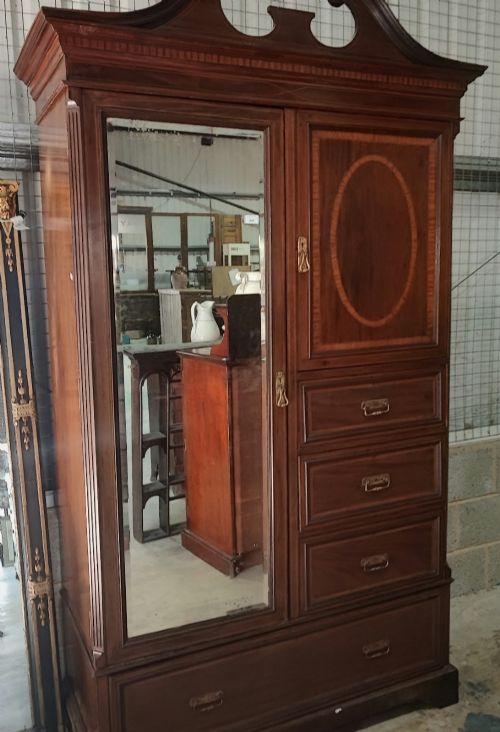
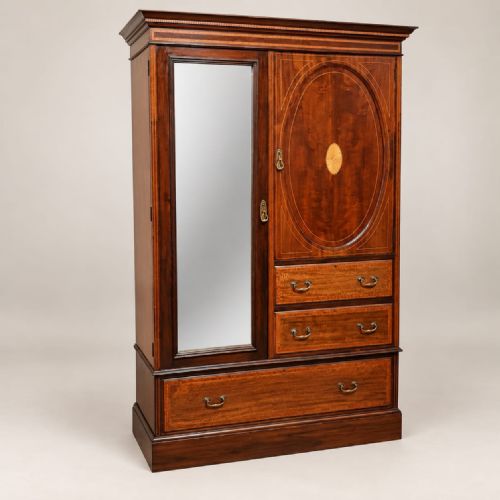
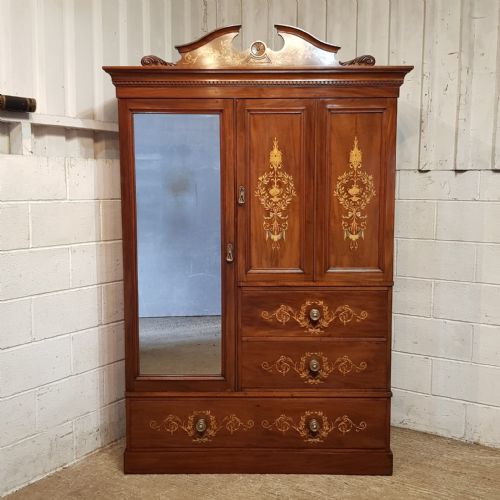
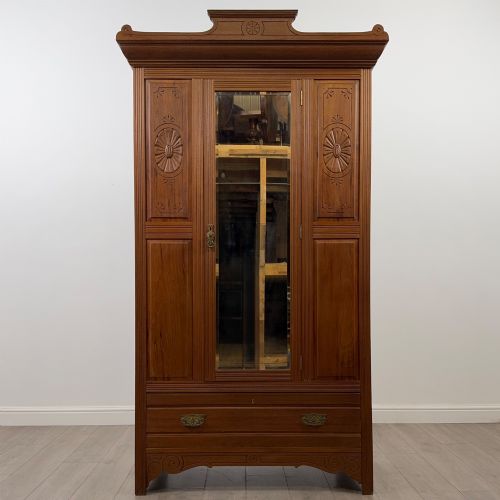
An edwardian wardrobe with mirror typically centres on a large glass door, flanked by timber panels and internal hanging rails or drawers. These pieces emerge primarily from the Edwardian period and around 1900, alongside related Victorian and early twentieth-century examples.
The forms range from single pine cupboards and compactums to triple mahogany wardrobes and complete bedroom suites. Makers of the time also produced smaller variations like miniature wardrobes and jewellery cabinets alongside the standard full-size bedroom furniture.
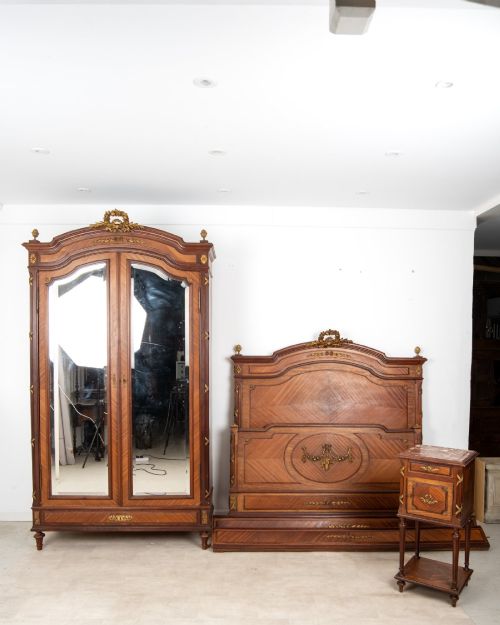
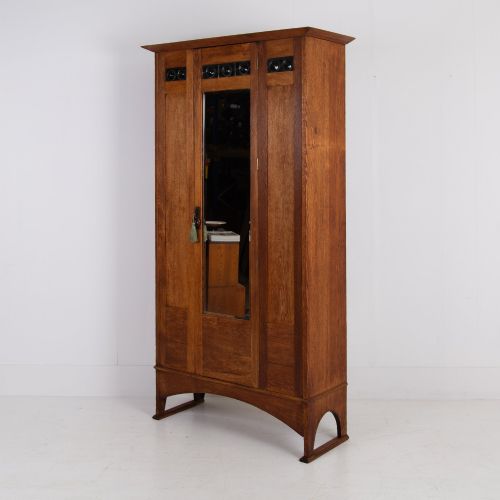
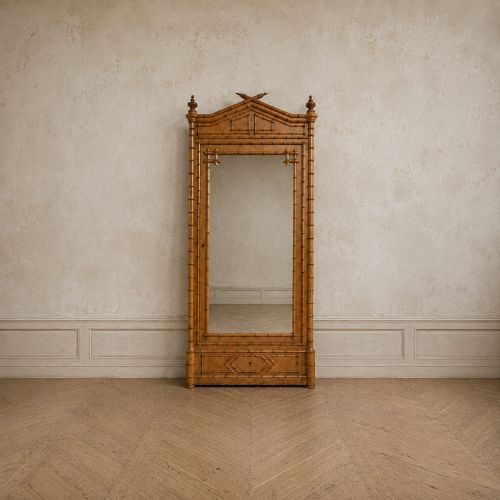
Stylistic influences span Arts and Crafts simplicity, Art Nouveau curves, and Louis XVI Revival details, giving buyers a broad palette of designs. Mahogany, oak, walnut, and pine serve as the primary woods, often enhanced by satinwood or inlay.
How They Were Made
Cabinet makers utilised solid timbers such as mahogany, oak, walnut, and pine for the main carcasses, frequently applying finer veneers of satinwood or detailed inlay to the exterior surfaces. Brass hardware and ormolu mounts provided functional pulls and decorative accents.
Mirrored doors required heavy bevelled glass secured safely within sturdy timber frames to support the weight and movement of large panels. Lead light panels and painted finishes appeared on specific regional or maker-specific commissions.
Construction methods relied on traditional joinery techniques to build durable combination wardrobes, compactums, and linen presses designed for daily domestic service.
Edwardian Wardrobe with Mirror Retail Price Guide 2026
Typical asking prices for edwardian wardrobe with mirror among the pieces listed under this phrase on Sellingantiques today, from the lower quarter to the upper quarter. They describe what is for sale here now, not the wider market.
Gentlemen's wardrobes included specialised internal trouser presses so trousers stayed sharp while waiting for the morning valet.
What Varies in Quality
The grade of timber and the ambition of the design separate standard utilitarian bedroom furniture from high-end cabinet work. Elaborate triple wardrobes with extensive satinwood inlay or distinctive Art Nouveau carvings demand greater skill than plain pine single units.
Attribution to documented makers such as Maple and Co or Heal's elevates a piece through superior construction and finish. The clarity and bevelling of the mirror glass, alongside the preservation of original brass and ormolu fittings, also influence the overall standard.
Maple & Co.
The Edwardian Wardrobe with Mirror Glossary
- Compactum
- A multi-functional wardrobe combining hanging space, drawers, and shelving within a single large piece of furniture. This layout maximises bedroom storage efficiently.
- Combination wardrobe
- A wardrobe that integrates hanging compartments with a chest of drawers or a linen press section. It offers diverse storage options inside one frame.
- Lead light
- Glass panels held together by thin lead cames, frequently seen in Arts and Crafts design. They create decorative patterns within cabinet doors.
- Satinwood
- A dense, lustrous timber from Sri Lanka and India used for fine veneers and stringing. It provides a pale, golden contrast against darker woods.
- Ormolu
- Gilded bronze mounts applied to furniture for decorative effect, common in revival styles. The technique involves a mercury amalgam process on cast bronze.
Edwardian Wardrobe with Mirror: Frequently Asked Questions
What is a compactum wardrobe?
A compactum is a multi-functional bedroom piece that combines hanging space, sliding trays, and drawers within a single carcass. It provides comprehensive storage for various garments without requiring multiple pieces of furniture.
These units often feature central mirrored doors flanked by linen presses or hanging sections, suiting larger bedrooms where integrated storage is preferred.
How do I clean the mirror glass?
Antique mirror glass requires gentle treatment to preserve the silvering behind the plate and the surrounding timber frame. Use a soft cloth with a mild cleaning solution applied to the cloth rather than sprayed directly onto the glass.
Avoid letting moisture seep behind the bevelled edges or into the wood joints, as dampness can damage both the frame and the mirror backing over time.
Are these wardrobes easy to dismantle?
Many large Edwardian and Victorian wardrobes were constructed with knockdown bolts and separate cornices, bases, and sides to allow for transport up staircases. This modular design helps when moving heavy triple wardrobes or combination units between rooms.
Care should be taken when handling mirrored doors during dismantling to prevent twisting the heavy glass plates within their wooden frames.
How do I identify an Edwardian piece?
Edwardian furniture typically dates from the reign of Edward VII between 1901 and 1910, though pieces around 1900 share the same aesthetic. Stylistically, they often feature lighter timbers, neoclassical influences, or Arts and Crafts simplicity compared to heavy Victorian designs.
Maker labels, simpler brass hardware, and lighter wood tones like satinwood inlay help distinguish these wardrobes from earlier nineteenth-century examples.