

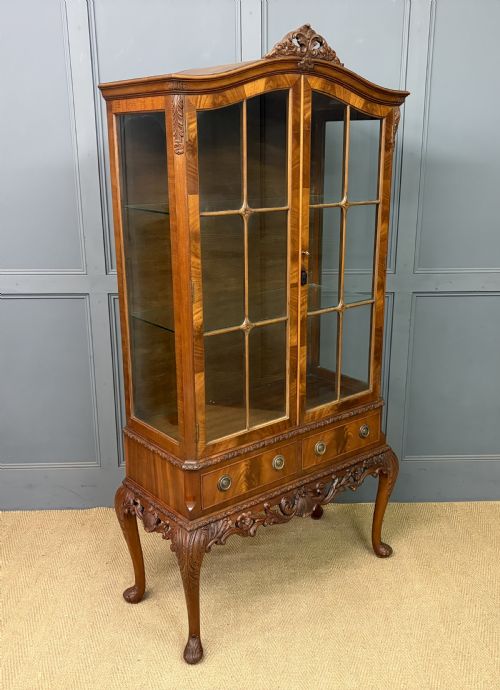
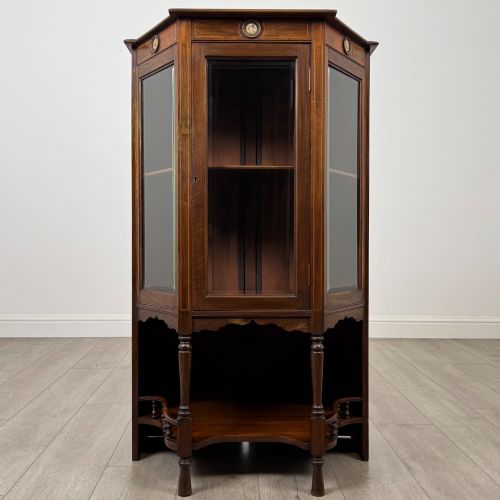
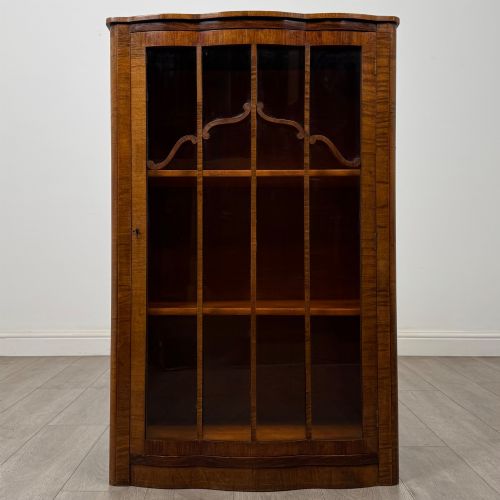
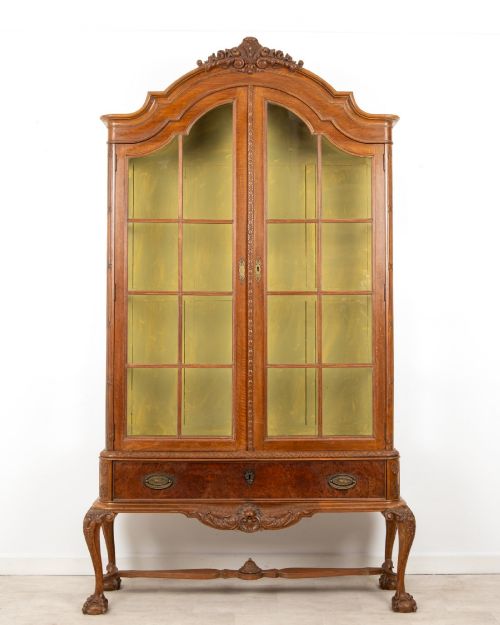


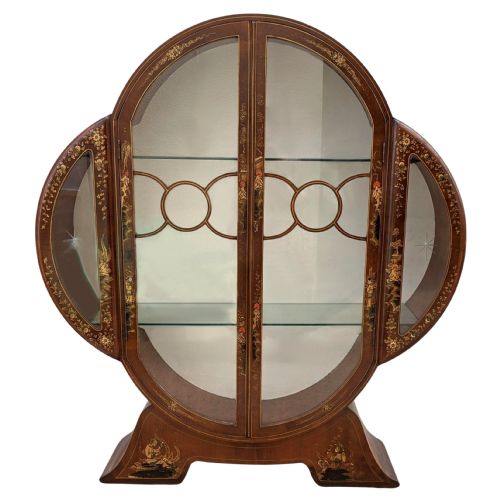

Edwardian Walnut Vitrine
An Edwardian walnut vitrine is a refined display cabinet designed to showcase cherished possessions behind glass.
Edwardian Walnut Vitrine
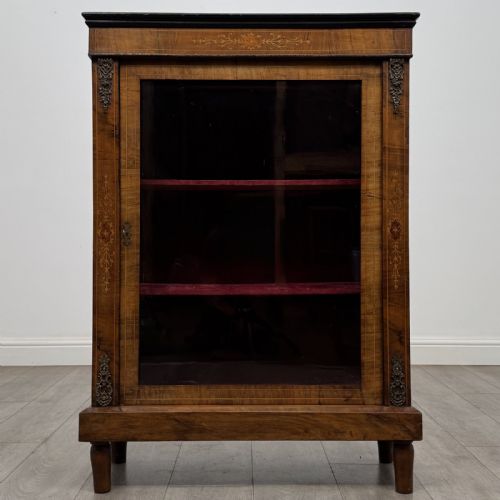
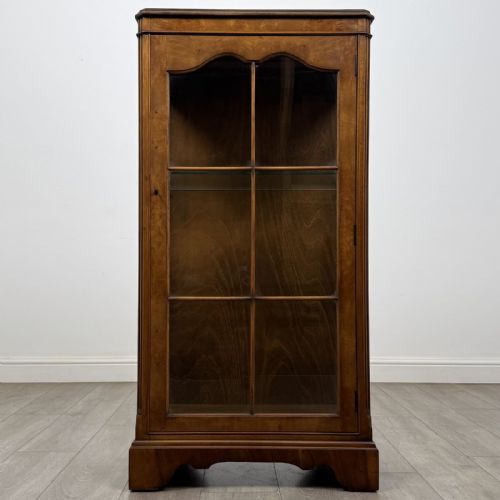
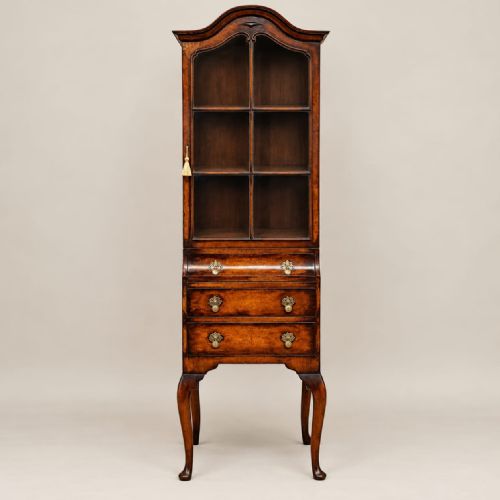
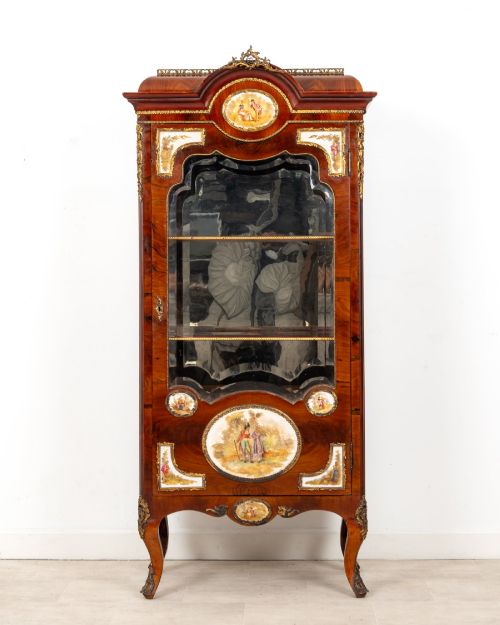
The selections on this page span from the Victorian and Edwardian eras into the early twentieth century, showing revival influences such as Queen Anne and Louis XV. Most examples rely on the warmth of walnut, frequently enhanced by figured grains, burr patterns, or contrasting kingwood.
Forms vary from upright corner cabinets and single-door pier cabinets to low octagonal and serpentine display tables. Each variation provides a distinct silhouette suited to different interior spaces and collection types.
How they were made
Construction relies heavily on solid walnut frames overlaid with figured or burr walnut veneers to create striking grain patterns across the panels. Cabinetmakers selected these timber cuts for their visual movement, often framing them with delicate stringing or contrasting kingwood borders.
Glazing is a central feature, utilising large panes of glass set into wooden doors to maximise interior light. Brass and ormolu mounts frequently accent the key escutcheons, hinges, and feet, adding metallic contrast to the polished timber surfaces.
Edwardian Walnut Vitrine Retail Price Guide 2026
Typical asking prices for edwardian walnut vitrine among the pieces listed under this phrase on Sellingantiques today, from the lower quarter to the upper quarter. They describe what is for sale here now, not the wider market.
The furniture spans multiple forms including corner cabinets, pier cabinets, and bijouterie tables.
What varies in quality
Quality reveals itself in the selection of the timber veneers and the precision of the cabinetmaker's joinery. Superior pieces display book-matched burr walnut or figured walnut that flows symmetrically across the doors and drawers.
Hardware and interior detailing also differentiate the tiers of production. Finer cabinets feature cast ormolu mounts, well-fitted brass locks, and original velvet linings rather than plain replacement fabric.
Maple & Co.
The Edwardian Walnut Vitrine Glossary
- Vitrine
- A glass-fronted cabinet or case specifically designed for displaying fine porcelain, ornaments, or curiosities. These pieces often feature glazed sides to allow maximum light to reach the objects inside.
- Burr walnut
- A specialised timber cut taken from the warted growth on a walnut tree, producing swirling, intricate grain patterns. It was highly prized by cabinetmakers for decorative veneer panels.
- Bijouterie table
- A shallow glass-topped display table intended for holding small valuable items such as jewellery, medals, or miniatures. They typically stand on slender legs and open from the top or sides.
- Pier cabinet
- A tall, narrow display cabinet designed to fit against the wall space between windows. Victorian and Edwardian examples often incorporated glazed doors and velvet-lined interiors.
- Kingwood
- A dense, heavy exotic timber featuring dark violet-brown tones with lighter golden streaks. It was frequently utilised for banding and decorative inlay on finer walnut furniture.
Edwardian Walnut Vitrine: Frequently Asked Questions
What is an edwardian walnut vitrine used for?
These cabinets were originally manufactured to exhibit precious porcelain, glassware, and small ornaments in drawing rooms and parlours. The enclosed glass design kept dust away from delicate collectibles while keeping them visible to guests.
Today, they serve the exact same purpose in modern homes. They offer a secure and elegant way to display curated collections without cluttering surfaces.
How do I clean the glass and wood?
Maintenance requires gentle dusting of the walnut surfaces with a soft, dry cloth to protect the polished finish and delicate veneers. Avoid using harsh chemical sprays or excess water on historic timber.
Glass panels can be cleaned with a mild glass cleaner applied directly to a cloth rather than the wood. This prevents any moisture from seeping into the surrounding frame joints.
Are these cabinets suitable for small rooms?
Many variations, particularly corner cabinets and narrow pier cabinets, are specifically designed to occupy minimal floor space. Their vertical orientation draws the eye upward without dominating the room.
Table formats, such as bijouterie tables, function well as central accent pieces or low coffee tables with built-in display capacity.
How do I distinguish Edwardian from Victorian pieces?
Victorian examples tend to feature heavier proportions, darker finishes, and more ornate or heavily carved details influenced by historic revival styles. Burr walnut and elaborate ormolu mounts are common markers of this period.
Edwardian pieces generally exhibit lighter frames, simpler lines, and a greater emphasis on delicate inlaid stringing. The overall aesthetic shifts toward a brighter, airier elegance.