
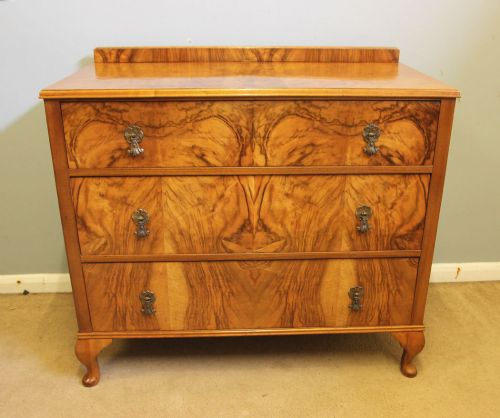


Edwardian Walnut Dresser
An edwardian walnut dresser brings warm timber tones and practical storage to a room, combining period character with everyday utility.
Edwardian Walnut Dresser
The selection includes items produced in the Edwardian era alongside pieces from adjacent periods such as the late Victorian era and the 1930s. Design influences span from Queen Anne revival styles to Arts and Crafts simplicity, reflecting the diverse tastes of the period.
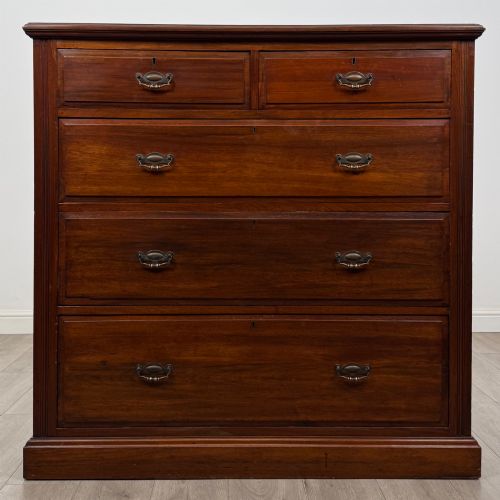
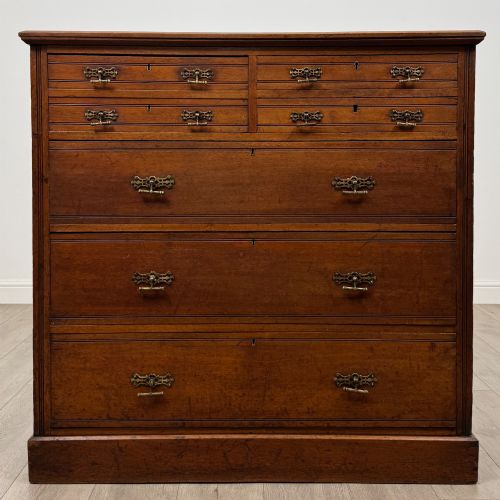
Forms vary from standard drawer chests and bow-fronted designs to tallboys and glazed cabinet combinations. Walnut remains the unifying material across these functional household pieces.
How they were made
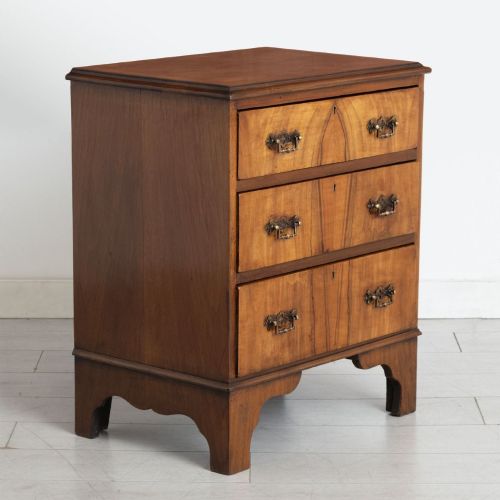
Cabinet makers utilised solid walnut, satin walnut, and oak for structural integrity while applying figured walnut and burr walnut veneers to display rich grain patterns on drawer fronts and surfaces. Brass fittings provide hardware accents on handles and key escutcheons.
Construction techniques combine traditional joinery with period machinery, allowing for curved bow fronts, concave shaping, and fitted mirror attachments on dressing chests and sideboards.
Some Edwardian dressing chests come with secret compartments designed for stashing midnight chocolates away from curious family members.
What varies in quality
Quality rests in the selection of timber veneers, where highly figured walnut and burr walnut display superior depth compared to plainer grain surfaces. The choice of solid secondary timbers like oak and the precision of drawer construction dictate the overall standard of a piece.
Maker attribution elevates standing, with documented pieces from firms such as Jas Shoolbred, Heals, Gillows of Lancaster, and WC Burt demonstrating refined proportions and cabinetmaking expertise.
Jas Shoolbred·Heals·Gillows of Lancaster·WC Burt
The Edwardian Walnut Dresser Glossary
- Burr walnut
- A veneer taken from the warted growth of a walnut tree, producing a swirling, highly decorative grain pattern. It appears frequently on high-end Edwardian cabinet doors and drawer fronts.
- Satin walnut
- A pale timber with a smooth texture used extensively for bedroom furniture and chests of drawers during the late nineteenth and early Edwardian periods. It offers a lighter aesthetic than dark European walnut.
- Dresser base
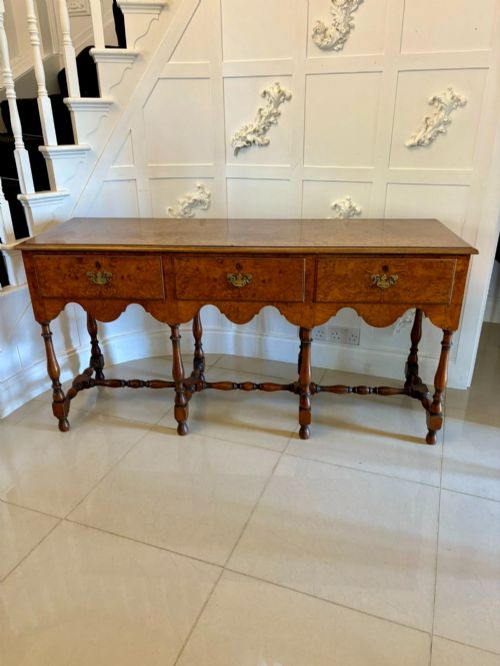
- A low sideboard or cabinet surface originally used for food preparation or serving, later adopted as a decorative living room storage unit. These often feature multiple drawers and cupboards.
- Wellington chest
- A tall, narrow chest of drawers secured by a hinged locking stile on one side that fastens with a key. This form maximises vertical storage space in compact rooms.
Edwardian Walnut Dresser: Frequently Asked Questions
What is an edwardian walnut dresser?
An edwardian walnut dresser is a piece of wooden storage furniture produced around the early twentieth century, typically taking the form of a chest of drawers, dresser base, or dressing chest.
These items utilise walnut timber, often featuring decorative burr or figured veneers, and reflect design influences ranging from simple Arts and Crafts styles to Queen Anne revivals.
Where were these pieces used?
These items served functional roles throughout the Edwardian home, including bedrooms, dining rooms, and hallways for storing clothing, linens, and household goods.
Dresser bases and side cabinets provided surface space for serving or display, while dressing chests equipped with mirrors functioned as personal grooming stations.
How do I care for walnut furniture?
Walnut furniture requires placement away from direct sunlight and heat sources to prevent timber warping and veneer cracking over time.
Regular dusting with a dry cloth and occasional application of appropriate furniture wax helps maintain the lustre of the polished wood surface.