


Edwardian Walnut Beds
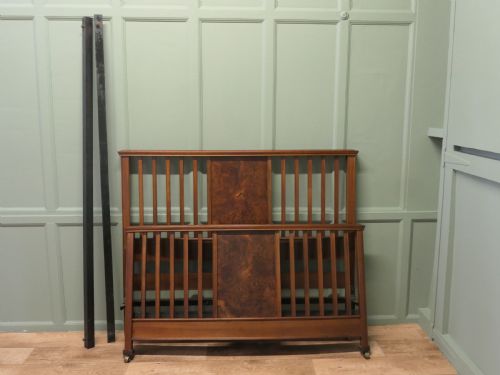
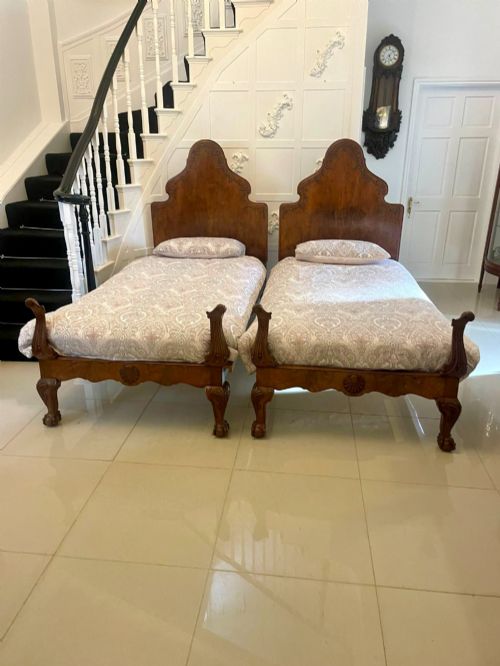
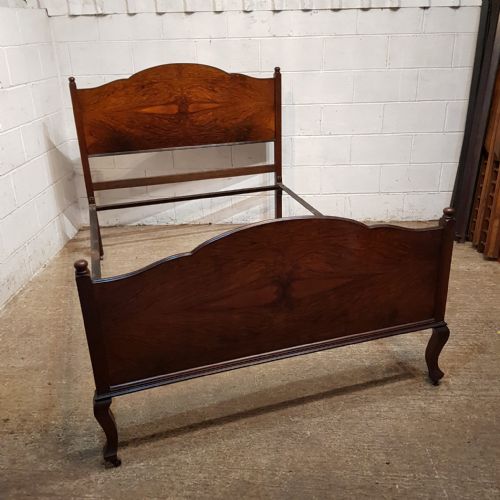
Edwardian walnut beds combine the rich grain of burr timber with the restrained lines typical of the period.
Edwardian Walnut Beds
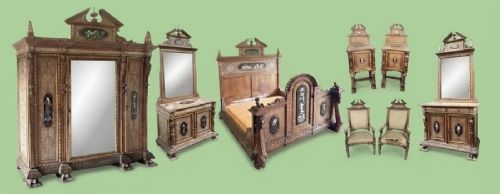
Most examples originate from the early twentieth century, aligning with the Edwardian era and immediately adjacent decades. These pieces range from simple panelled headboards and footboards to matched pairs designed for larger chambers. Alongside full bedsteads, the category frequently embraces associated bedroom furniture including bedside cabinets, cupboards, and window seats sharing the same timber.
Materials and construction methods
Makers utilised walnut as the primary timber, frequently selecting burr walnut for its distinctive swirling grain patterns on prominent surfaces like headboards and footboards. Solid walnut provided structural integrity for framing, rails, and carved details. Secondary timbers and structural reinforcements were integrated where necessary to support the weight of mattresses.
Surface finishing relied on traditional polishing techniques that highlighted the natural tone and figure of the walnut. Decorative elements such as brass fittings, turned components, and carved panels were incorporated to add visual texture. Upholstered panels occasionally accompanied the wooden frames, utilising fabric or textile inserts.
Listings combine walnut, burr walnut, and brass across Edwardian and Victorian periods, alongside associated items like bedside tables and window seats.
Distinctions in craftsmanship
Quality in these beds is determined by the selection of the timber veneer and the precision of the cabinetwork. Superior examples display carefully matched burr walnut grains across wide panels, demonstrating thoughtful planning by the maker. Inferior pieces rely on plainer cuts of timber with less attention paid to visual symmetry.
Construction details distinguish the finer workshops from standard production. Robust joinery, crisp carving, and substantial framing separate high-grade output from lighter, utilitarian manufacturing. The inclusion of matching side cabinets or original hardware further elevates the integrity of a suite.
Waring and Gillow·Howard and Sons·Gill and Reigate·Heals
The Edwardian Walnut Beds Glossary
- Burr walnut
- A figured timber obtained from the wart-like growths on walnut trees. It yields complex, swirling grain patterns highly prized for decorative veneer panels.
- Bedstead
- The framework of a bed designed to support a mattress and base. It typically comprises headboards, footboards, and connecting side rails.
- Pot cupboard
- A small bedside cabinet originally designed to house a chamber pot. These pieces frequently match the timber and style of the main bed.
- Queen Anne style
- A revival design movement characterised by cabriole legs, pad feet, and graceful, curved outlines. It influenced many early twentieth-century bedroom pieces.
Edwardian Walnut Beds: Frequently Asked Questions
How do I clean walnut wood?
Dust surfaces regularly with a soft, dry cloth to prevent the accumulation of abrasive particles. Avoid harsh chemical cleaners or excessive moisture which can damage the polish.
Apply a traditional beeswax polish occasionally to nourish the timber and maintain a soft sheen. Buff the surface gently after application to preserve the grain.
Are these beds standard sizes?
Older bed dimensions often differ from modern mattress standards. Single and double formats exist, but measuring the internal frame space is essential before sourcing a mattress.
Many antique bedframes require custom mattresses or minor adjustments to slats and supports to accommodate contemporary bedding securely.
How do I match bedside cabinets?
Look for matching timbers and finishes, noting whether the grain is straight walnut or figured burr walnut. Similar decorative carving or matching hardware helps maintain visual harmony.
Consider the height of the cabinet relative to the mattress rail to ensure correct proportions beside the bedstead.
What is a pot cupboard?
A pot cupboard is a compact bedside cabinet featuring an enclosed cupboard space. Historically, these items were built to conceal a chamber pot.
Today they function as conventional bedside tables with interior shelving for storage, maintaining period character within a bedroom.