
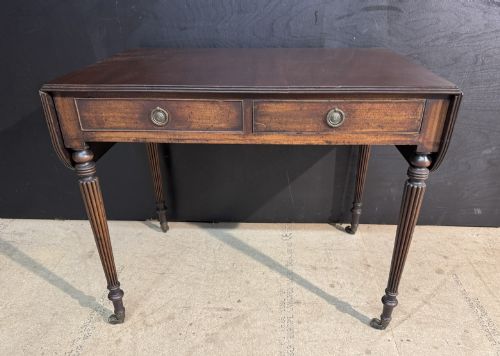
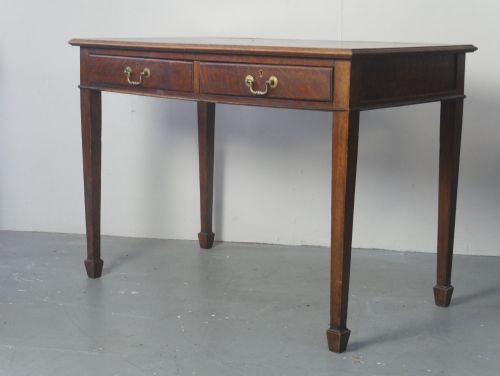
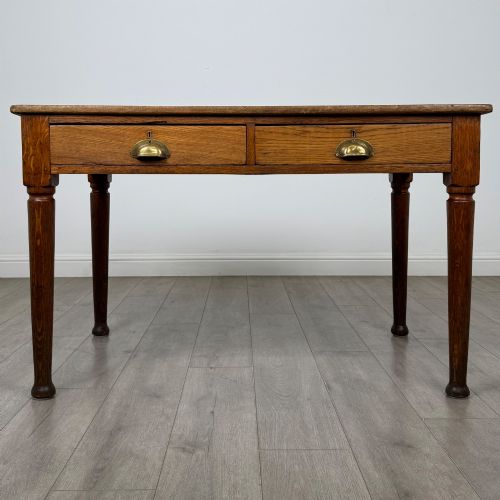
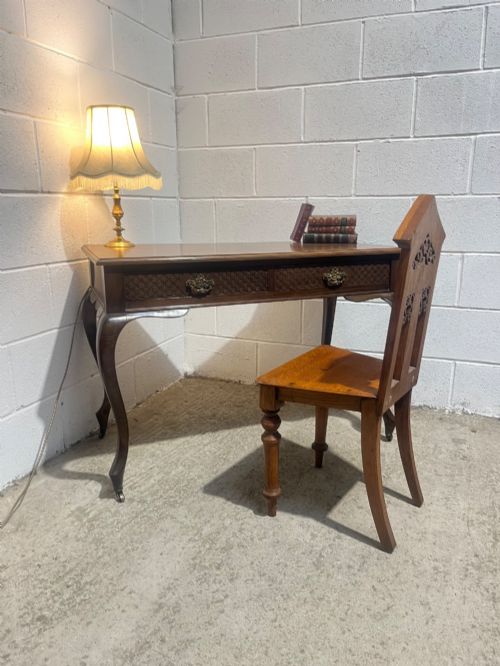

Edwardian Two Drawer Desk
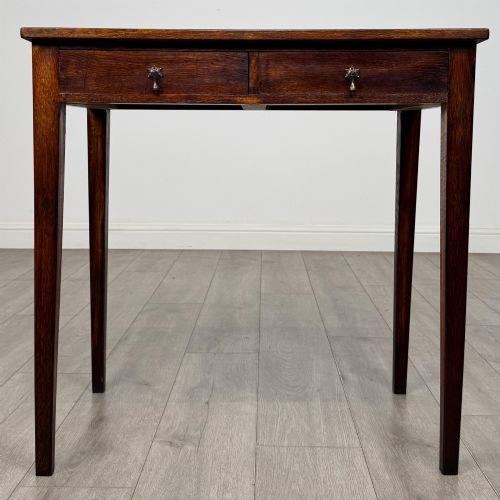
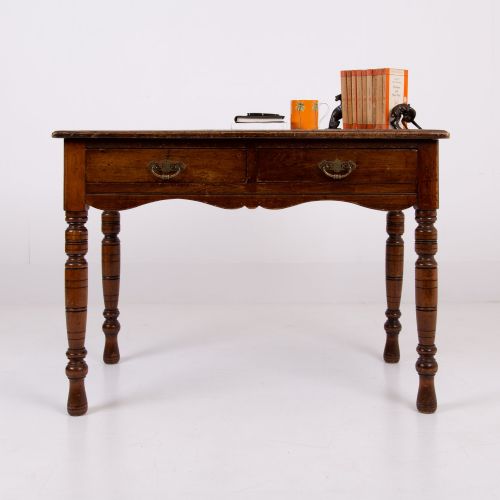
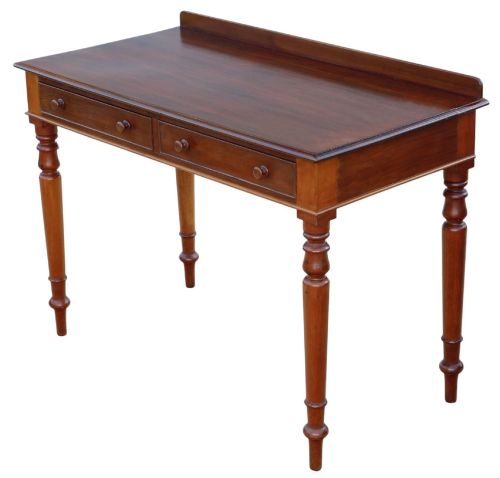
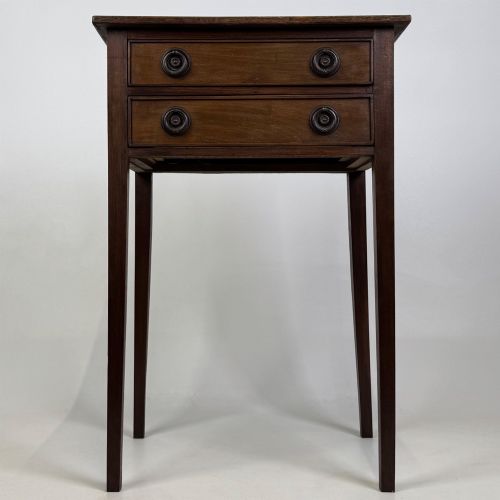
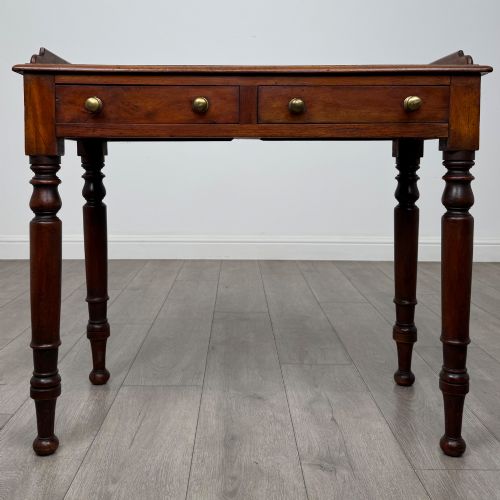
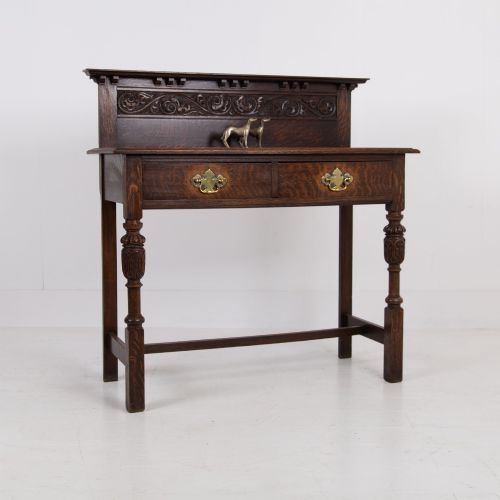
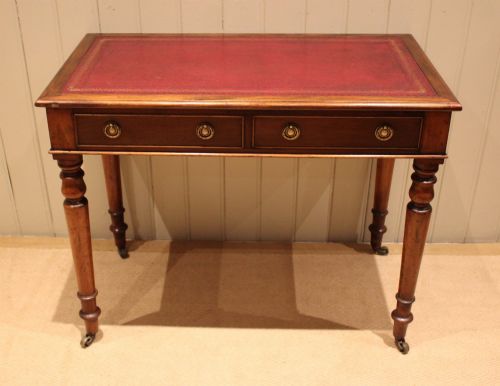
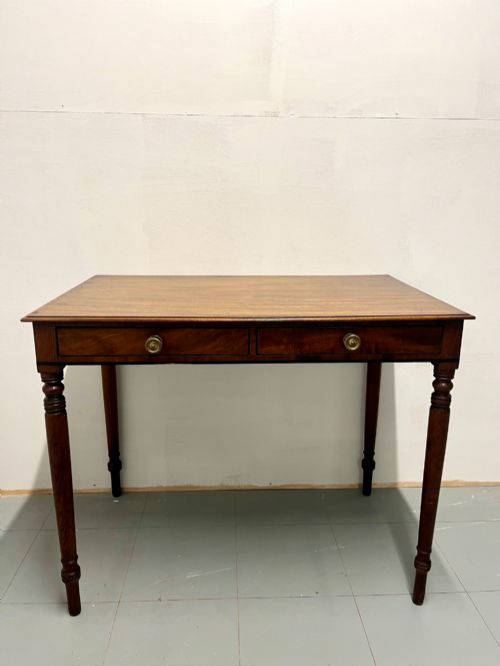
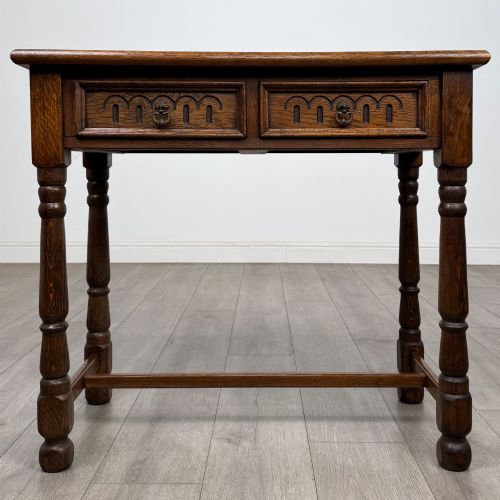
An edwardian two drawer desk offers compact proportions and practical writing space, shaped in mahogany or oak for daily domestic use.
Edwardian Two Drawer Desk
An edwardian two drawer desk combines domestic utility with compact proportions, providing a surface for correspondence alongside twin under-counter storage. These pieces emerge predominantly from the Edwardian era, alongside related nineteenth-century and early twentieth-century examples.
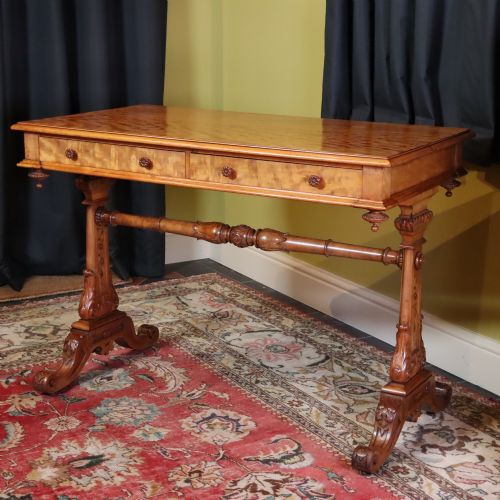
Buyers encounter writing tables, side tables, and occasional furniture adapted for similar uses, frequently rendered in mahogany, oak, or satinwood. The form ranges from simple provincial oak tables to finely inlaid satinwood creations intended for refined reception rooms.
Quality and Proportion
The distinction between standard utility pieces and finer examples rests on timber selection and decorative restraint. Finer desks utilise highly figured mahogany, burr walnut, or meticulously arranged satinwood veneers matched across the writing surface.
Proportion and execution of detail dictate overall merit, separating straightforward workshop production from pieces bearing refined inlay, superior brass hardware, and balanced framing.
Some desks hide tiny compartments for inkwells and stationery behind folding fronts, keeping correspondence secret from prying eyes.
Heal and Son·Gillows·Andrew Thomson and Sons·Jenners
The Edwardian Two Drawer Desk Glossary
- Edwardian
- Pertaining to the reign of King Edward VII, spanning from nineteen hundred and one to nineteen hundred and ten, characterised by lighter furniture forms.
- Satinwood
- A durable, lustrous timber native to India and Sri Lanka, highly prized for its pale yellow colour and smooth, satin-like finish in cabinetmaking.
- Inlay
- A decorative technique where contrasting woods or metals are inserted into recessed cavities on the surface of the primary timber.
- Side Table
- A small, versatile table designed to stand against a wall, frequently fitted with drawers for domestic storage.
- Campaign
- Portable furniture designed for easy dismantling and transport, typically constructed from teak or mahogany with recessed brass fittings.
Edwardian Two Drawer Desk: Frequently Asked Questions
Where should I place a two drawer desk?
These compact tables suit living rooms, studies, or hallways where large furniture overwhelms the floor plan. Their finished backs often allow placement away from walls.
Ensure adequate clearance for chairs if used regularly for writing, or utilise the surface for lamps and decorative objects.
How do I care for polished mahogany surfaces?
Maintain the finish using traditional beeswax applied sparingly and buffed with a soft, lint-free cloth. Avoid chemical sprays that degrade antique polishes over time.
Keep wooden furniture away from direct heat sources and strong sunlight to prevent timber shrinkage and veneer lifting.
What is the difference between an Edwardian desk and a Victorian one?
Edwardian writing furniture generally displays lighter proportions, brighter wood tones, and restrained inlay work influenced by neoclassical revivals. Victorian examples tend to be heavier, utilising darker figured mahogany and bolder structural forms.
Construction methods and secondary timbers help distinguish between transitional pieces spanning the turn of the century.
Can I use these desks for daily computer work?
Most period writing tables accommodate laptops and modern stationery comfortably within their two drawers. Measure knee clearance beneath the drawer rails before purchasing for regular seating use.
Protect delicate leather or wood surfaces with a suitable desk blotter to prevent accidental scratches from modern equipment.