

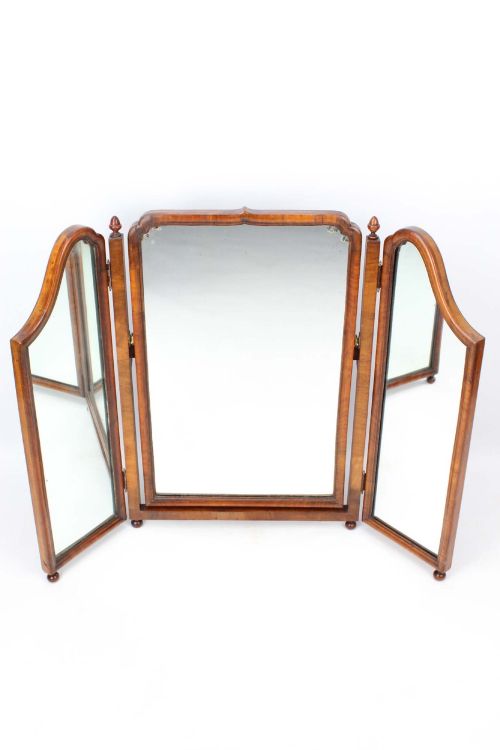
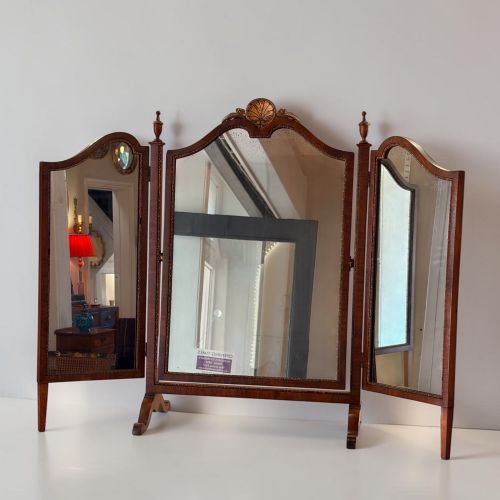
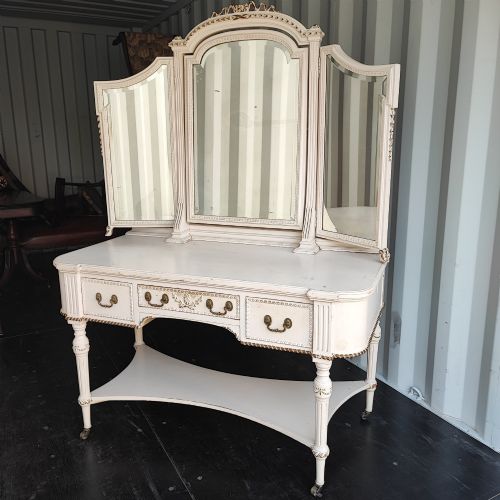
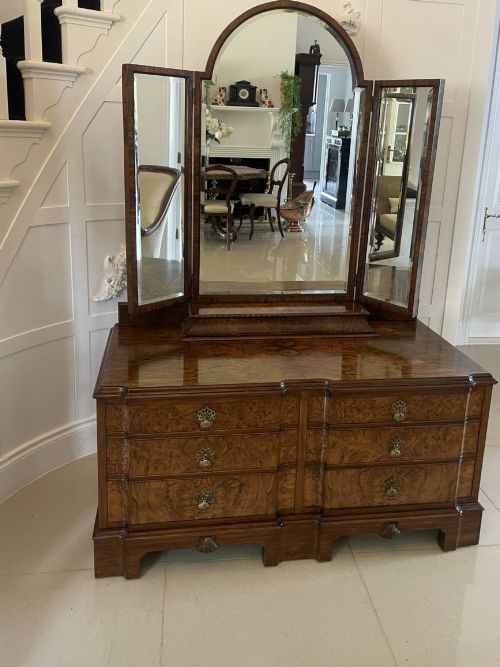


Edwardian Triptych Table Mirror
These Edwardian triptych table mirrors sit upon dressers and chests to reflect light and angle your view.
Edwardian Triptych Table Mirror
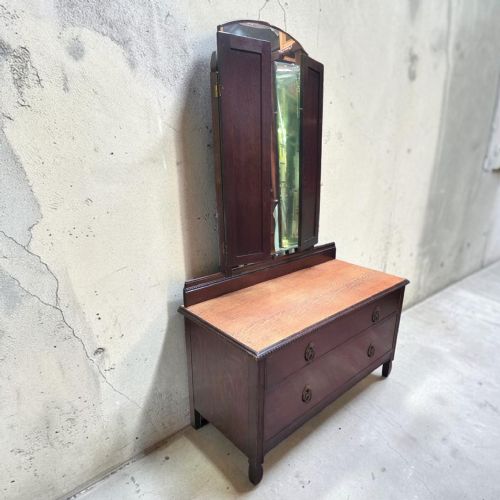
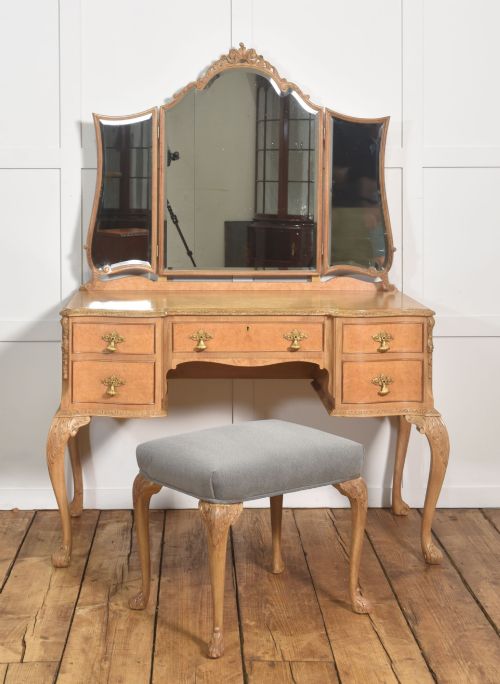
An edwardian triptych table mirror provides three folding glass panels for dressing, often mounted to a larger dressing table or standing independently on a base.
You meet these pieces in various timbers and metals, ranging from burr walnut and oak to brass and satinwood, spanning the Edwardian period alongside pieces from nineteen hundred to nineteen twenty.
The form appears both as standalone folding vanity mirrors and as part of dressing chests, incorporating styles such as Queen Anne revival, Art Deco and Arts and Crafts.
Materials and construction
Cabinet makers utilised solid woods and veneers like walnut, burr walnut, oak and satinwood, sometimes applying paint or gilt finishes to the frames.
Brass formed structural mounts, hinges for the folding side wings, and decorative elements such as lion finials on dressing mirrors.
Mirror glass was fitted into hinged wooden or brass frames to allow adjustable angles for the side panels.
Edwardian Triptych Table Mirror Retail Price Guide 2026
Typical asking prices for edwardian triptych table mirror among the pieces listed under this phrase on Sellingantiques today, from the lower quarter to the upper quarter. They describe what is for sale here now, not the wider market.
Lion finials occasionally keep watch atop the brass frames.
Judging quality
The choice of timber creates a clear distinction, with burr walnut and figured satinwood sitting above standard oak or plain painted surfaces.
The complexity of the frame construction, from simple brass folds to intricate chinoiserie painted woodwork or inlaid veneers, determines the grade of the piece.
Maples·Maurice Adams
The Edwardian Triptych Table Mirror Glossary
- Triptych
- A three-panelled object where the two outer wings fold inwards over the central glass. This configuration allows multiple viewing angles.
- Burr walnut
- A highly figured wood grain obtained from the wart growths of walnut trees. Cabinet makers prize it for decorative veneer panels.
- Satinwood
- A durable exotic timber with a lustrous yellow sheen. It often takes fine inlay work.
- Chinoiserie
- European decorative art imitating Chinese motifs and styles. It appears in painted lacquer finishes on furniture.
Edwardian Triptych Table Mirror: Frequently Asked Questions
How do I use a triptych mirror?
Place the mirror on a flat surface like a dressing chest or table, adjusting the two hinged side panels inward or outward to catch the light and view different angles.
Ensure the hinges move freely without straining the wood or brass frame during adjustment.
Are these mirrors freestanding?
Many examples are designed to stand independently on a table base or swing support feet, while others originally attached directly to the back of a matching dressing chest.
Check the base or mounting points to understand how the particular piece was intended to be supported.
How do I date an edwardian mirror?
Examine the timber, the style of the frame, and construction methods such as the type of brass hinges and mirror glass backing used.
Pieces span from the late nineteenth century through the Edwardian era into nineteen twenty, showing transitional styles like Arts and Crafts or early Art Deco.
What woods were used for frames?
Common timbers include walnut, burr walnut, oak, and satinwood, frequently selected for their grain pattern or suitability for inlaid decoration.
Some examples utilise brass frames or incorporate painted finishes such as chinoiserie.