


Edwardian Triple Wardrobe
An edwardian triple wardrobe provides substantial bedroom storage through a tripartite architectural format dominated by central mirrored doors.
Edwardian Triple Wardrobe
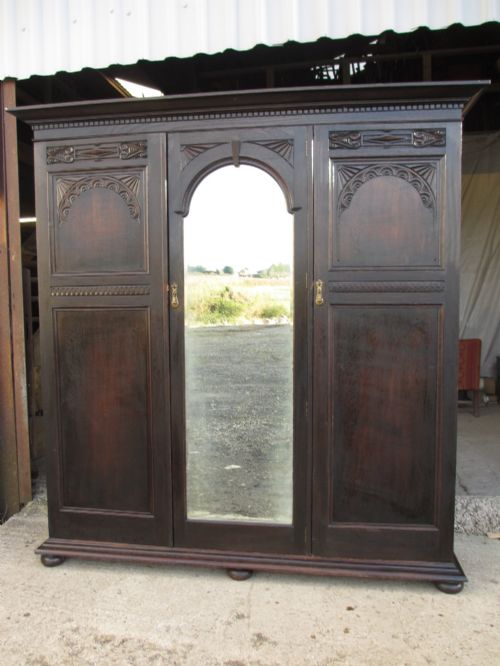
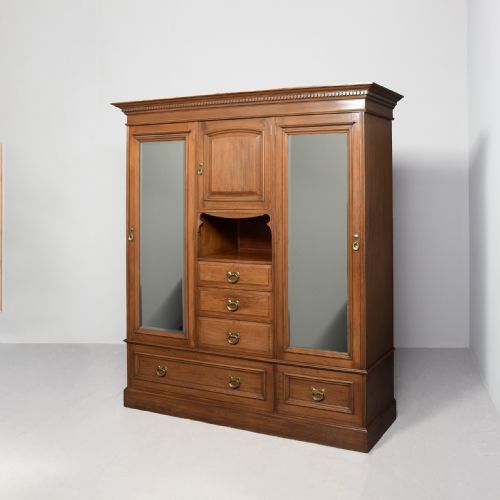
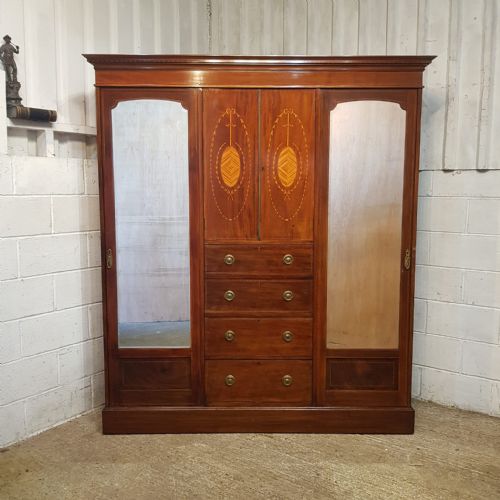
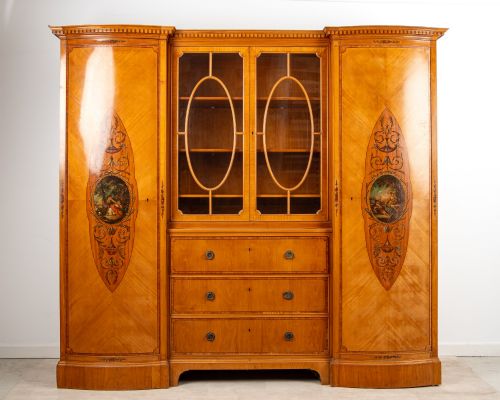
An edwardian triple wardrobe stands as a monumental piece of domestic furniture, engineered to handle the extensive garments of the early twentieth century. These large armoires typically divide their massive internal capacity into hanging compartments flanking a central section fitted with shelves, drawers, or linen presses.
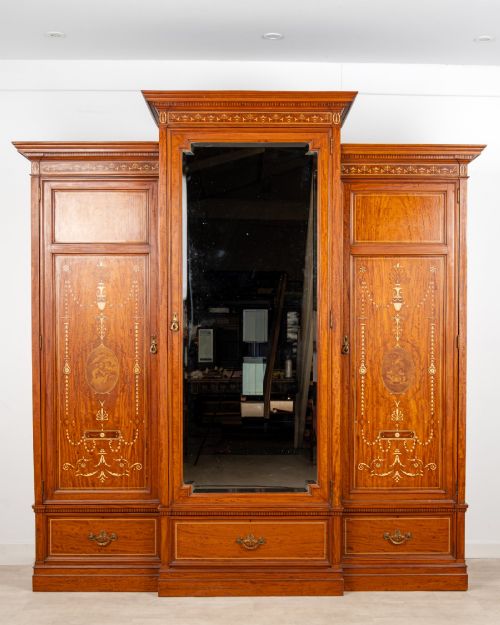
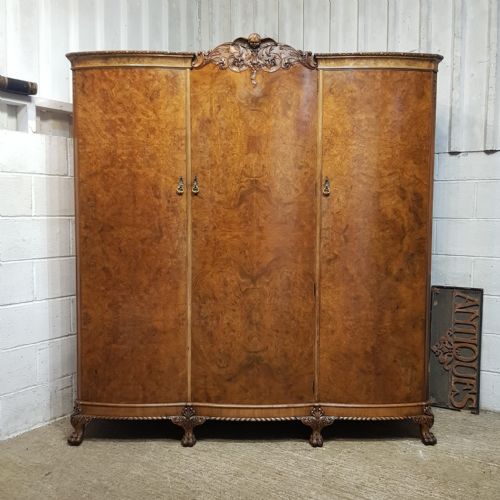
Mahogany forms the predominant timber encountered in this format, frequently enhanced with delicate stringing, satinwood inlay, or flame veneers. Oak and walnut also appear regularly, offering alternative grains from plain dark finishes to highly figured burr surfaces.
The prevailing format on this page relies on Edwardian construction methods from around nineteen hundred, though Victorian antecedents and later adaptations into the nineteen-twenties surface frequently. Revival styles such as Chippendale, Queen Anne, and Art Nouveau heavily influence the decorative vocabulary of these three-door pieces.
Materials and Construction
Cabinet makers utilised solid timbers alongside stable veneered panels of mahogany, walnut, and oak to construct these large carcasses without warping. Flame mahogany and burr walnut veneers were carefully selected to create symmetrical grain patterns across the wide central and side doors.
Decorative surfaces frequently incorporated contrasting satinwood inlay, boxwood stringing, and hand-painted panels executed within Chinoiserie or floral motifs. Brass hardware, including heavy escutcheons, hinges, and hanging hooks, secures the interior and accents the exterior facade.
Practical engineering allowed many of these large structures to dismantle into manageable sections, known as knockdown construction, facilitating transport up staircases and into domestic chambers. Central doors commonly received bevelled glass mirrors reflecting light across the bedroom.
Listings feature mahogany, oak, walnut, satinwood, and pine across Victorian and Edwardian periods.
Judging Quality
Superior examples derive from distinguished workshops such as Maple & Co or Waring & Gillow, where cabinet work displays meticulous attention to hidden secondary woods and dovetail joinery. Lesser pieces rely on simpler mass production with standard factory mouldings and minimal interior fittings.
The choice of timber veneer fundamentally dictates visual distinction, with heavily figured burr walnut, flame mahogany, and painted satinwood commanding higher craftsmanship standards than plain dark oak or utilitarian pine. Crisp carving on pediments and crisp inlay work separate high-end bespoke orders from standard commercial output.
Maples & Co·Waring & Gillows·Heals
The Edwardian Triple Wardrobe Glossary
- Compactum
- A multi-functional wardrobe featuring a combination of hanging space, internal linen slides, and graduated drawers within a single carcass. This layout maximises storage efficiency in large bedrooms.
- Breakfront
- A cabinet design where the central section projects forward from the flanking outer sections. This architectural arrangement creates depth and shadow across the front elevation.
- Stringing
- Thin lines of contrasting wood inlay used to outline door panels and cornices. It defines the geometric boundaries of Edwardian casework.
- Armoire
- A large freestanding cupboard intended for garments. The term is often used interchangeably with a triple wardrobe.
- Pediment
- The decorative architectural crowning structure situated at the very top of the wardrobe. It often takes a plain, dentil, or swan-neck profile.
Edwardian Triple Wardrobe: Frequently Asked Questions
How do these wardrobes dismantle for transport?
Most Edwardian triple wardrobes were built using knockdown construction, meaning the two side sections, the central section, the cornices, and the plinths separate entirely.
Bolts, dowels, and tongue-and-groove joints secure the components together without requiring modern metal fasteners in the primary framework.
What is a compactum wardrobe?
A compactum is a specialised variation of the wardrobe that integrates multiple storage solutions within the three-door layout, including linen slides, jewellery drawers, and hanging space.
This design replaced the need for separate tallboys and linen presses in early twentieth-century bedrooms.
Are these wardrobes suitable for modern hangers?
Many historical wardrobes feature shallower internal depths than contemporary closets because historical garments required less lateral hanging clearance.
Buyers often install front-facing pull-out rails or specialised slim hangers to accommodate standard modern clothing inside the antique carcass.
How do I distinguish Edwardian from Victorian examples?
Edwardian wardrobes generally display lighter timbers, more restrained satinwood inlay, and refined proportions influenced by eighteenth-century revival styles.
Victorian counterparts tend to utilise heavier, darker mahogany or pitch pine with robust mouldings and denser, deeper carved ornamentation.