






Edwardian Table Chime
An edwardian table chime brings melodic timekeeping and resonant calls to meals into the home, prized for both precise movements and decorative presence.
Edwardian Table Chime
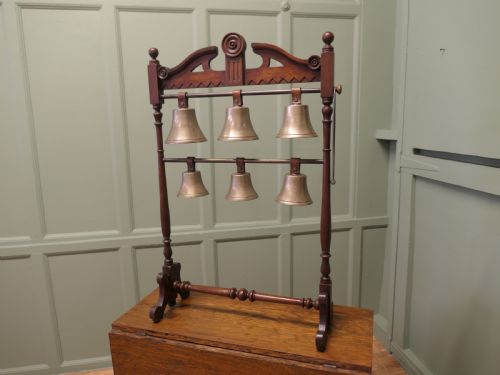
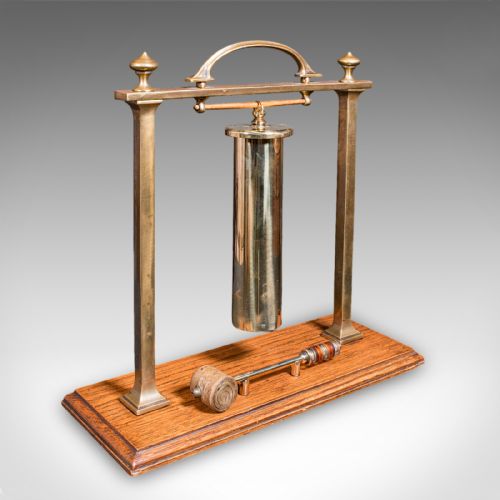
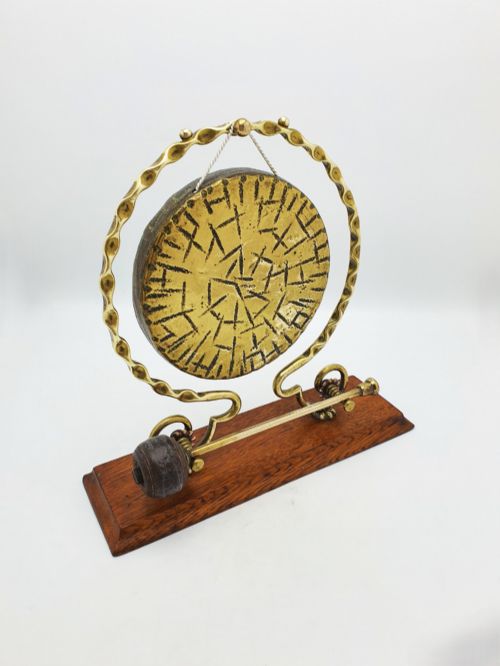
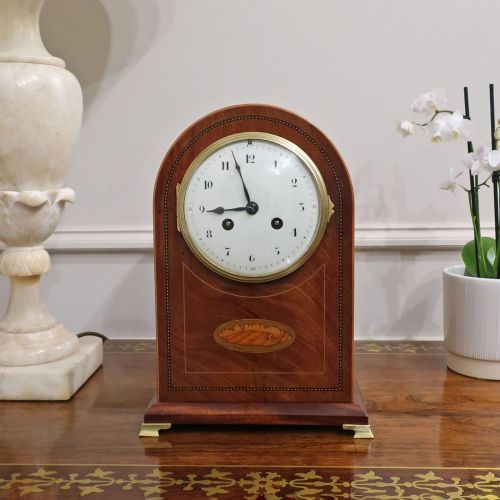
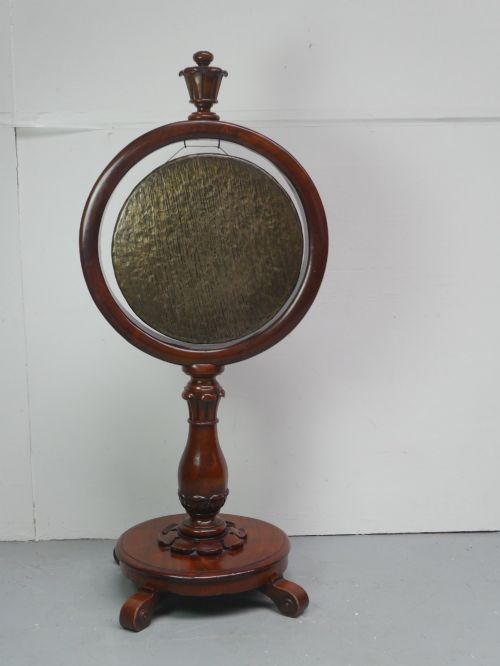
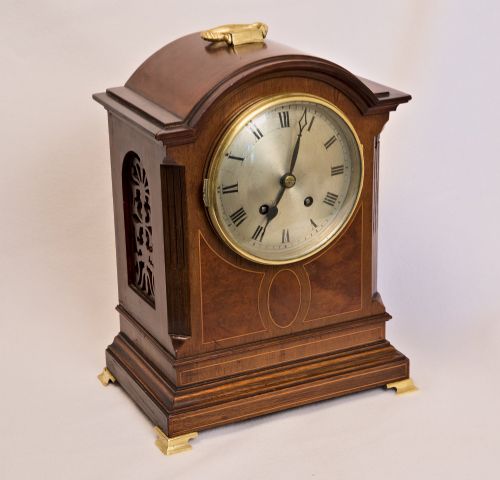
An edwardian table chime encompasses both acoustic gongs used for summoning tea or dinner and mechanical chiming mantel clocks from the early decades of the twentieth century. These pieces sit comfortably upon sideboards, mantels and tables, combining domestic utility with period craftsmanship.
The selections span traditional wooden cases housing striking movements alongside brass and bronze gongs mounted on oak, walnut or carved stands. Styles stretch from restrained Edwardian mahogany lancet shapes to earlier Victorian influences and decorative Art Nouveau lines.
Materials and construction
Cabinetmakers utilised rich timber varieties including mahogany, walnut, oak, satinwood and rosewood to house the clock movements, frequently adding delicate stringing and inlay. Metal components rely on cast brass, bronze, silver plating and iron for both the structural gong tubes or bells and the internal gear trains.
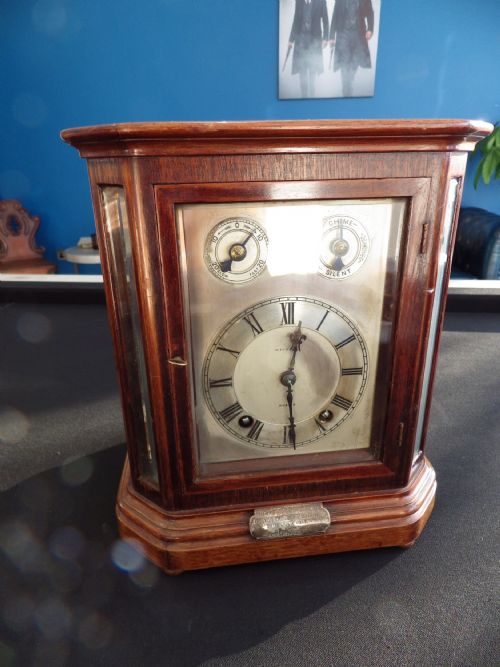
Acoustic gongs pair metal bells and tubular elements with solid wood bases, while mechanical timepieces employ complex brass gear assemblies driven by spring-wound movements. Mixed media variations incorporate cattle horn, glass panels and enamel dials to complete the physical structure.
Some dinner gongs come paired with genuine cattle horn mounts for that truly rustic Victorian dining summons.
Assessing craftsmanship
Superior examples distinguish themselves through the crisp execution of timber inlays, the substance of the wood casing, and the tonal purity of the bell or gong. Maker signatures on the movement plates and detailed timber carving elevate individual pieces above standard production items.
The complexity of the chiming mechanism, from simple ting-tang strikes to full multi-rod arrangements, dictates the mechanical ambition of the design. Heavy glass panels, well-finished brass fittings and balanced proportions signal higher standards of period workshop output.
Winterhalder And Hofmeier·Junghans
The Edwardian Table Chime Glossary
- Ting Tang
- A two-hammer striking system that sounds two distinct notes on two bells or gongs before the hour.
- Bracket Clock
- A portable clock originally designed to sit on a wall bracket but subsequently placed on tables and mantels.
- Dinner Gong
- A resonant metal plate, bowl or tube struck with a handheld mallet to announce meals.
- Lancet Top
- A clock case shaped with a pointed Gothic arch profile at the upper centre.
Edwardian Table Chime: Frequently Asked Questions
How do I wind a mechanical table chime?
Most spring-driven clocks utilise a key inserted into dedicated winding holes on the dial face to tension the internal springs.
Care must be taken not to over-wind the movement, turning the key gently until firm resistance indicates full tension.
Where were table gongs placed in the home?
Table gongs typically stood on hall sideboards, dining room side tables or verandas for afternoon tea.
Their primary function was generating a clear acoustic signal to gather household members and guests.
What is the difference between a gong and a clock chime?
A gong relies on a manual strike against a suspended metal bell or tube using a mallet.
A clock chime sounds automatically via internal gear trains linked to the timekeeping movement.
How do I identify an Edwardian wooden case?
Edwardian cases often feature lighter mahogany or walnut timbers, sometimes complemented by subtle string inlay.
The overall aesthetic tends toward refined geometric proportions rather than heavy Victorian ornamentation.