


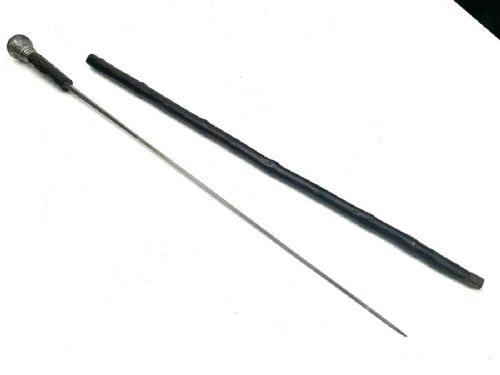


Edwardian Sword Walking Stick
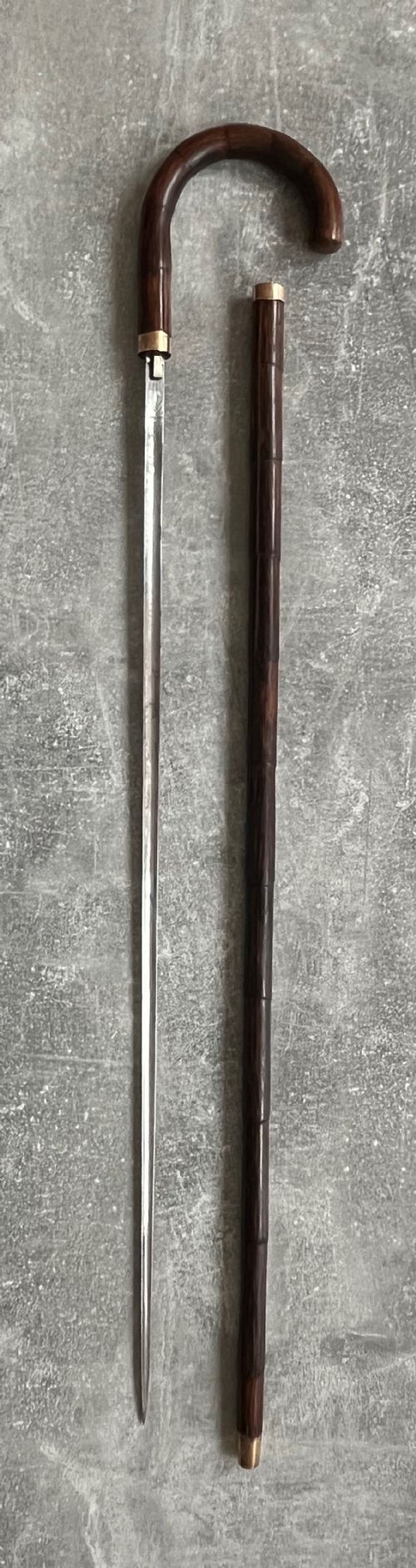
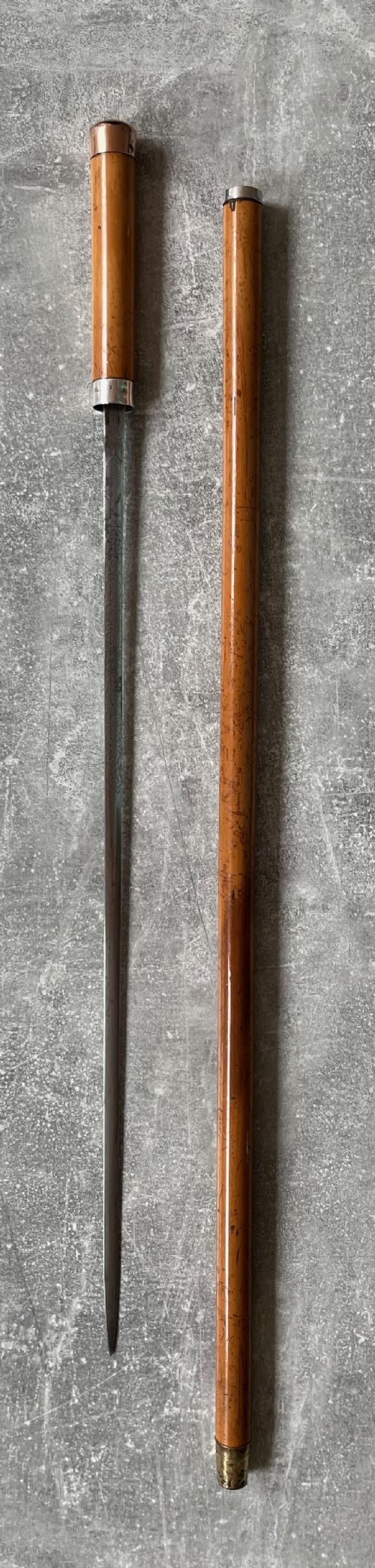
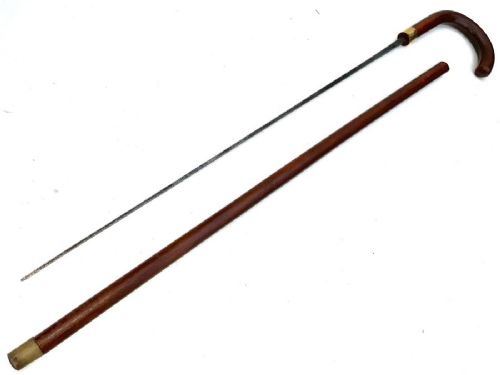
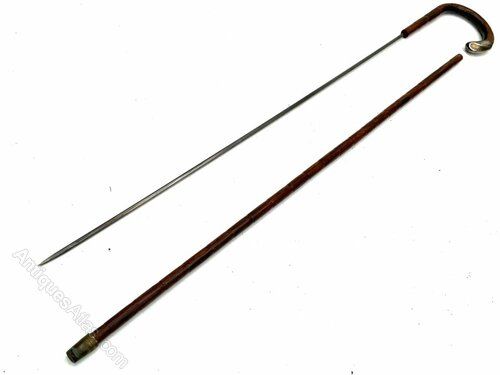
An Edwardian sword walking stick is a gentleman’s accessory concealing a steel blade beneath an ordinary guise, favoured for discreet personal defence.
Edwardian Sword Walking Stick
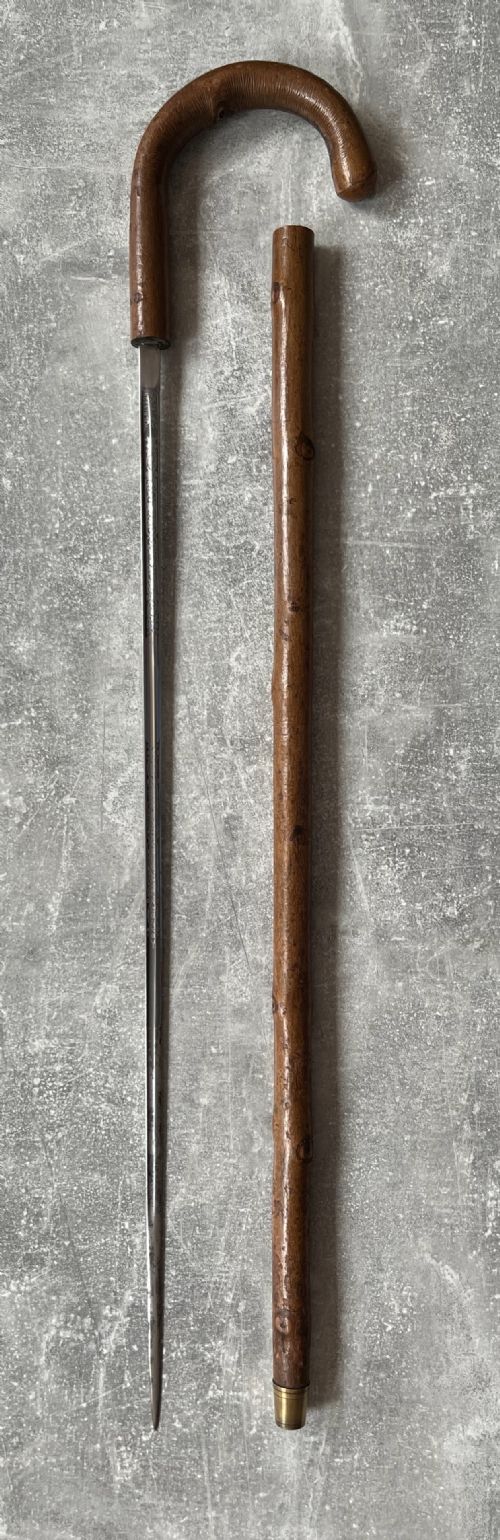
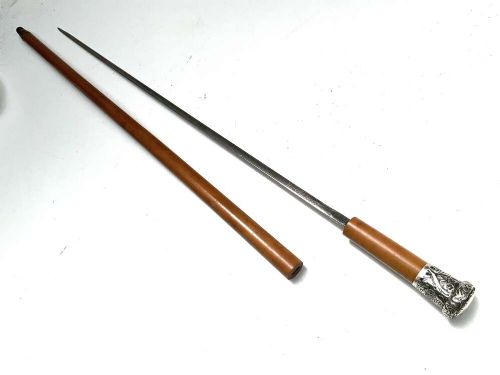
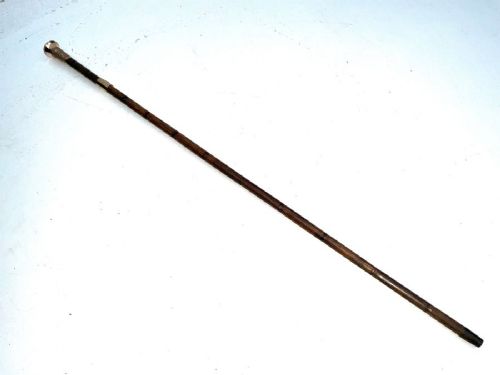
When searching for an edwardian sword walking stick, collectors encounter a diverse range of gentleman’s accessories designed to conceal a blade within a shaft of wood or cane. The selection commonly includes pieces spanning the late nineteenth century through to the interwar years, reflecting changing fashions in personal protection and gentleman's attire.
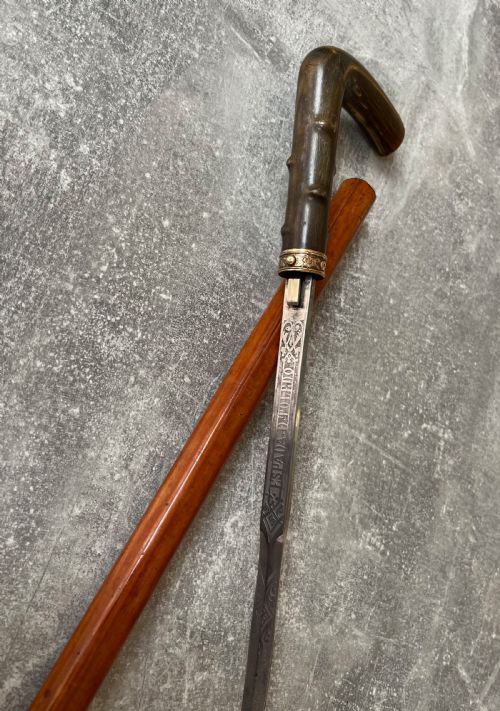
The version most frequently met on this page pairs a malacca cane or timber shaft with a concealed steel blade, often secured by a button release mechanism. Handles vary widely from simple crook shapes and root balls to silver-mounted designs, horn, bone pistol grips, and carved horse heads.
Origins stretch across British workshops and military contexts, encompassing standard civilian walking sticks alongside pieces linked to regiments such as the Grenadier Guards and masonic lodges. Dating evidence points predominantly to the Edwardian decade and adjacent Victorian and 1920s periods.
How They Were Made
Shafts rely on resilient natural materials including malacca cane, bamboo, partridge wood, hazel, holly, rosewood, and chestnut, shaped to house the internal steel blade safely. Metals such as brass and silver provide collars, mounts, and tops, while handles frequently incorporate horn, bone, or cast ormolu.
Blades are forged from steel, with specific examples bearing maker inscriptions such as Wilkinson or originating from Toledo, demonstrating specialised metalworking traditions. Button release mechanisms and precise joinery ensure the concealed blade locks firmly inside the wooden housing during everyday use.
Materials across the listings feature malacca cane, partridge wood, horn, and steel, spanning the Victorian, Edwardian, and 1920s periods.
What Varies in Quality
Distinction across the range rests on the pedigree of the blade and the sophistication of the mounting materials. Examples bearing signed Wilkinson or etched Toledo blades represent a higher echelon of craftsmanship compared to standard commercial iterations.
Materials and hardware further separate standard items from superior pieces, with solid silver collars, London assay hallmarks, and carved horn or horse head handles indicating finer workshop production. The seamless alignment of the shaft segments also marks the competence of the original maker.
Wilkinson
The Edwardian Sword Walking Stick Glossary
- Malacca Cane
- A robust glossy rattan stem from Southeast Asia prized for walking sticks. Its natural mottled brown surface resists splitting.
- Swagger Stick
- A short cane carried by military officers. Certain variants incorporate a hidden blade or dual purpose.
- Toledo Blade
- A steel blade produced in Spain. Renowned for flexibility and temper, these blades appear in high-grade British mountings.
- Collar
- A metal band encircling the top of the shaft. Silver collars frequently carry hallmarks indicating the year of manufacture.
- Crook Handle
- A curved top formed by bending the wood or attaching a hooked grip. This shape allows the stick to hang conveniently from an arm.
Edwardian Sword Walking Stick: Frequently Asked Questions
How do you release the hidden blade?
Most pieces utilise a simple button release mechanism set near the collar to unlatch the blade from the wooden scabbard.
Pressing this internal catch allows the sword to slide smoothly out of the shaft while keeping the locking mechanism secure during normal walking use.
Were these used by the military?
Military officers frequently carried specialised sticks, sometimes featuring regimental associations like the Grenadier Guards.
These pieces served as functional walking aids or swagger sticks that concealed defensive blades for personal use.
What woods were commonly used for the shafts?
Craftsmen utilised resilient timbers such as partridge wood, hazel, holly, rosewood, and chestnut alongside tropical canes like malacca and bamboo.
Each timber was selected for its straight grain, structural strength, and ability to be hollowed out safely for the steel blade.
How are London hallmarks dated on the mounts?
Silver collars and mounts often feature assay office stamps and date letters indicating the specific year of manufacture.
Matching these stamped date codes against standard British hallmarking tables reveals the exact year the silver mount was tested and registered.