


Edwardian Style End Tables
Edwardian style end tables combine utility and decorative refinement, appearing primarily as mahogany and oak side, lamp or occasional tables from the early twentieth century.
Edwardian Style End Tables
Edwardian style end tables encompass a varied selection of compact occasional pieces, including lamp tables, side tables, nests of tables and wine tables. When searching for edwardian style end tables, buyers encounter specimens dating from the Edwardian period itself alongside broader early twentieth century interpretations and revival styles.
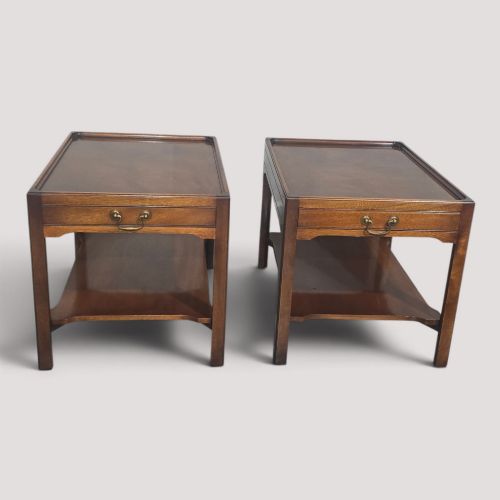
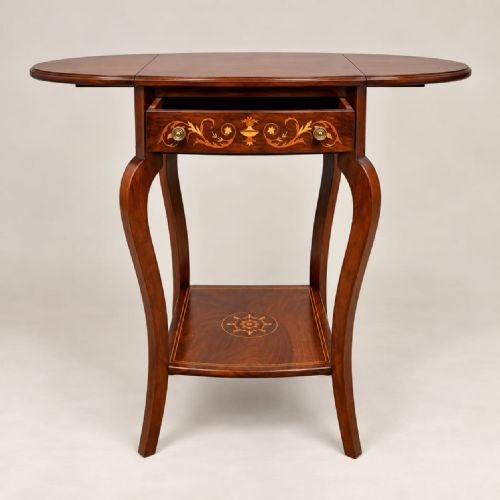
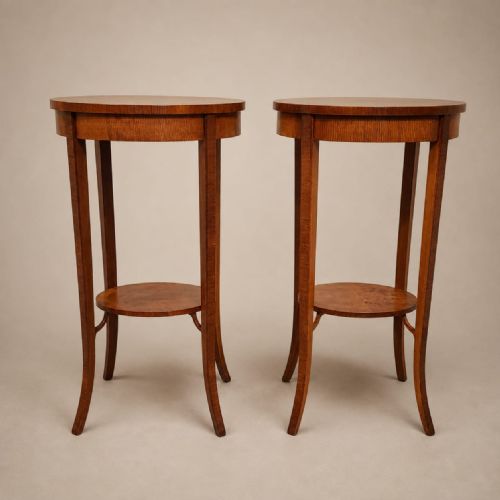
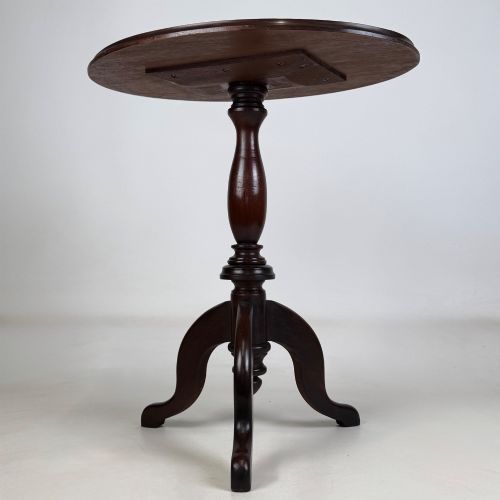
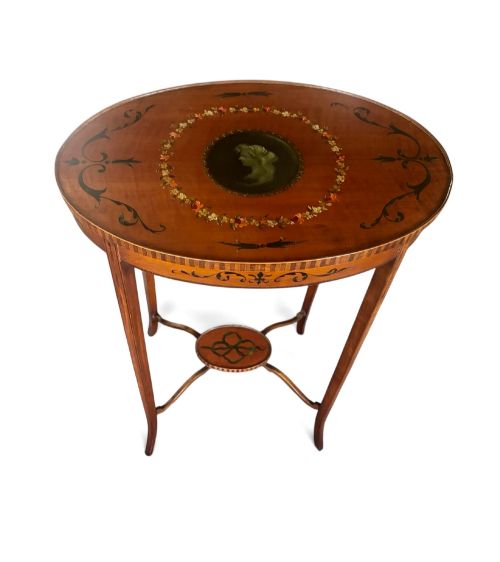
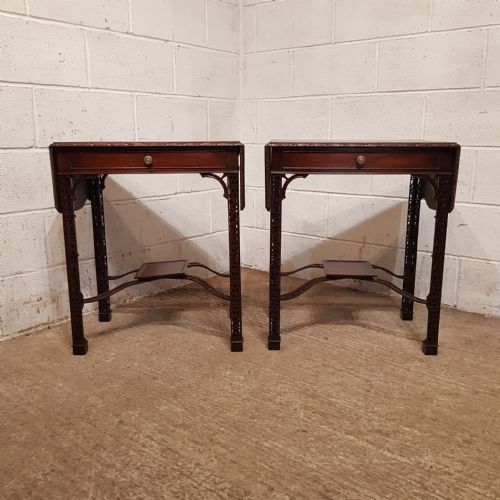
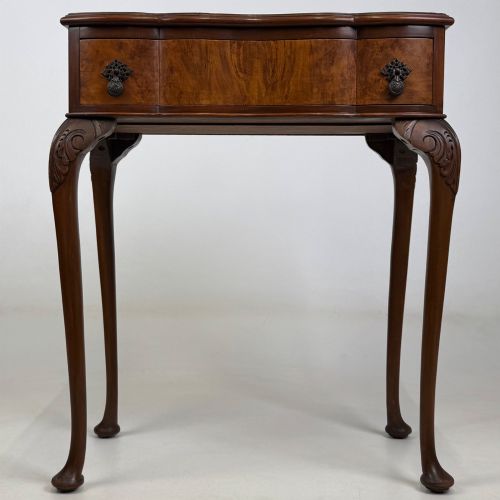
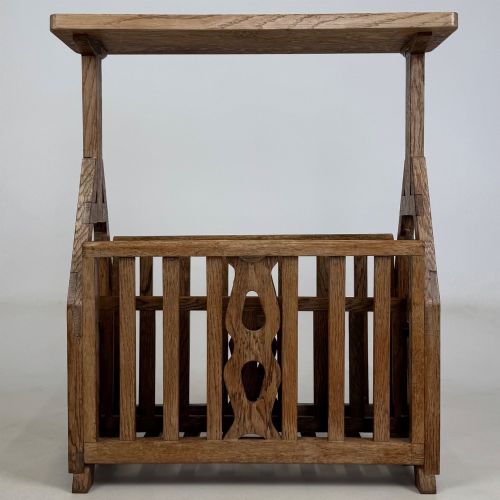
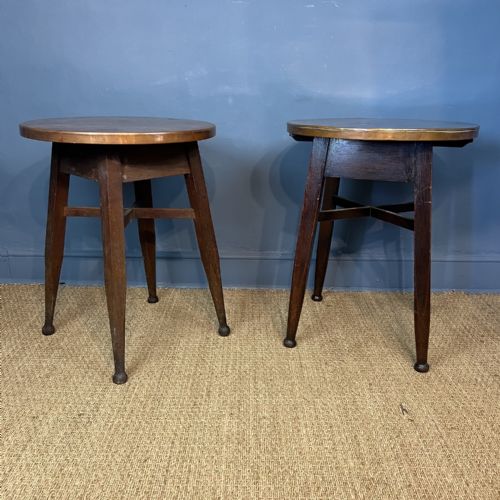
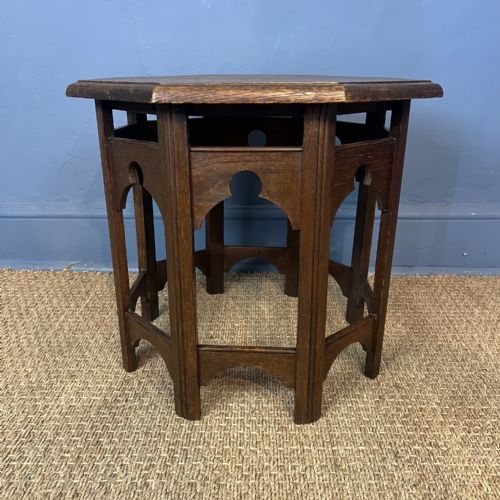
The assortment on this page spans simple oak utilitarian forms to sophisticated satinwood and mahogany tables featuring boxwood inlay, painted floral decoration and marquetry. Alongside standard four-legged side tables, the selection includes drop leaf designs, revolving bookcases, and nested sets intended for flexible placement in domestic spaces.
How they were made
Construction relies heavily on traditional timber selection, utilising solid and figured mahogany, oak, walnut, satinwood and yew wood. Cabinetmakers employed solid timber alongside precise veneers to highlight grain patterns on tabletops.
What varies in quality
Quality rests on the selection of timber and the precision of decorative details, such as the intricacy of marquetry, inlaid boxwood stringing and hand-painted floral decoration. Pieces featuring figured mahogany or walnut exhibit superior visual depth compared to plain alternatives.
Structural integrity and the refinement of joinery distinguish standard utilitarian tables from finer parlour pieces. The presence of makers associated with the Arts and Crafts movement or specific workshops elevates the stature of an individual table.
Liberty and Co·Baillie Scott·Archibald Knox·Robert Adam
The Edwardian Style End Tables Glossary
- Occasional table
- A small, movable table designed for a specific, non-essential domestic task such as holding a lamp or book. These pieces provide flexible surface space in principal rooms.
- Nest of tables
- A set of graduated tables designed to fit neatly beneath one another when not in use. This space-saving innovation gained popularity during the Edwardian era.
- Marquetry
- The art of applying pieces of veneer to a structure to form decorative patterns and pictures. Craftsmen utilise various coloured woods to achieve tonal contrast.
- Satinwood
- A durable, lustrous yellowish timber native to Ceylon and India. Cabinetmakers frequently utilised this wood for fine inlay work and decorative panels during the Edwardian period.
- Drop leaf
- A table top configuration featuring hinged flaps that fold down to reduce the footprint of the furniture. This allows the piece to be stored compactly against a wall.
Edwardian Style End Tables: Frequently Asked Questions
What defines an Edwardian end table?
Edwardian end tables are compact occasional furniture pieces produced roughly between nineteen hundred and nineteen ten. They typically feature lighter proportions than their Victorian predecessors.
These tables frequently incorporate mahogany, satinwood inlay, or oak, reflecting a shift toward brighter, less cluttered domestic interiors.
How do I style an occasional table at home?
An occasional table functions effectively beside a sofa or armchair to hold lamps, books, or decorative objects. Their compact size allows for easy repositioning within a room.
Matching pairs can anchor a seating area symmetrically, while single tables serve as focal points in hallways or corners.
What is a nest of tables?
A nest of tables consists of three or four graduated tables that stack together into the footprint of the largest single piece. They offer exceptional versatility for entertaining.
Originating earlier, these sets became staples of Edwardian drawing rooms for serving tea or holding reading material.
How do I distinguish Edwardian from Victorian tables?
Victorian tables often display heavier proportions, darker timbers like rosewood or heavy mahogany, and dense ornamentation. Edwardian pieces generally favor lighter woods, satinwood stringing, and simpler geometric forms.
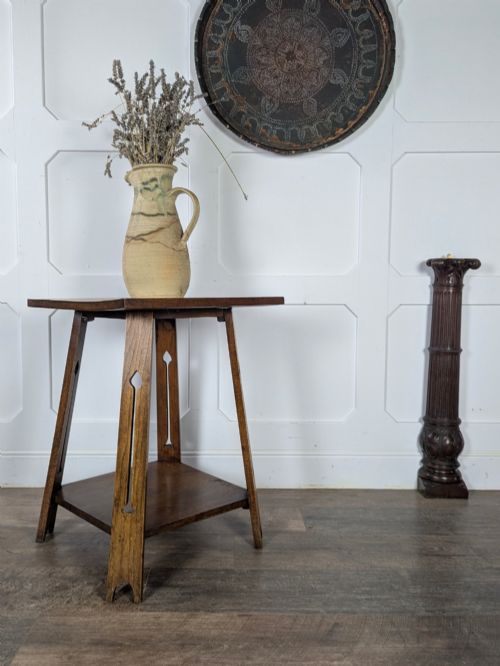
Arts and Crafts examples from the Edwardian era emphasise exposed construction and natural oak finishes instead of classical revival motifs.