
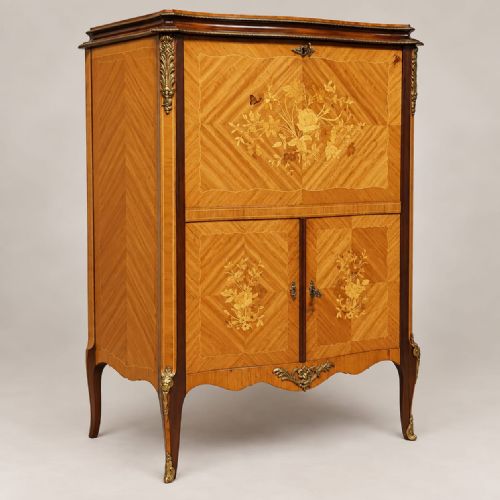
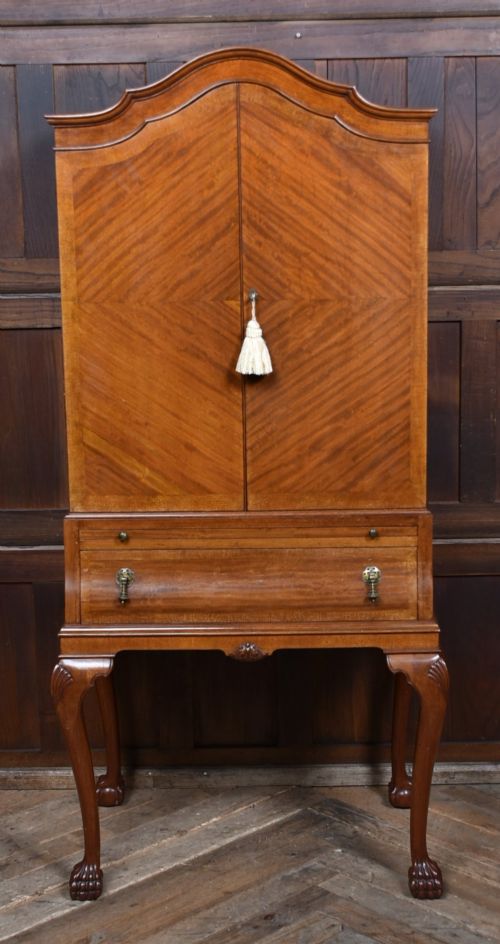
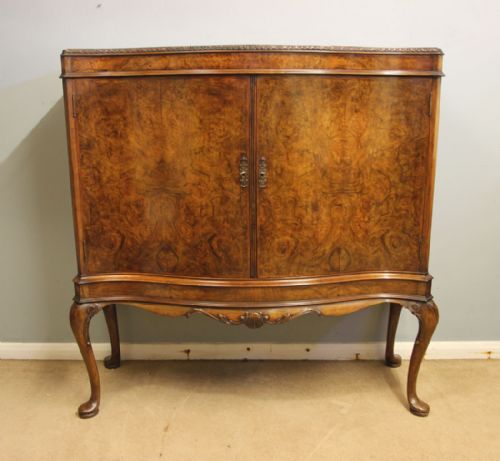


Edwardian Style Cocktail Cabinet
These edwardian style cocktail cabinet examples bring period form and drinks storage together, offering timeless joinery for the modern dining room.
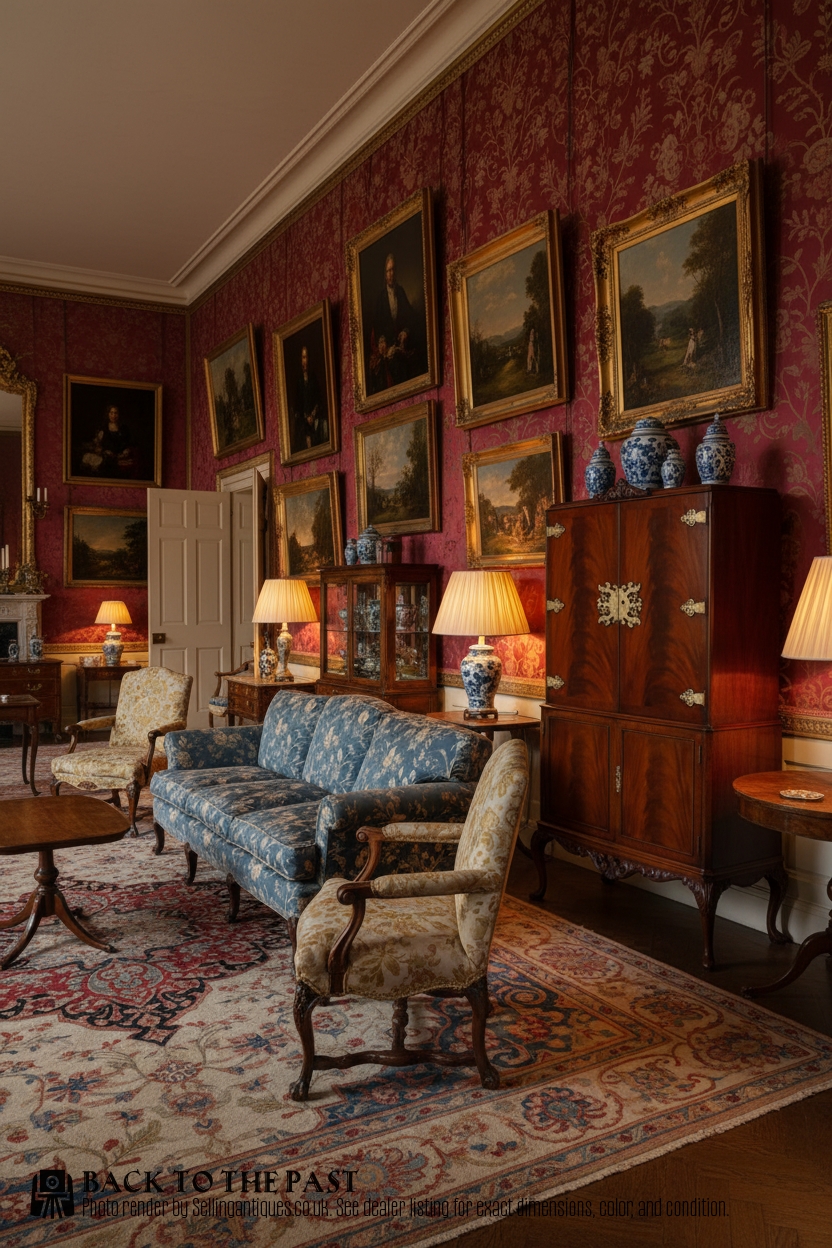
Edwardian Style Cocktail Cabinet
When you search for an edwardian style cocktail cabinet, you encounter drinks cabinets, side cabinets, and bar cabinets spanning the Edwardian period, the 1920s, and the 1930s. These pieces serve as dedicated furniture for holding glassware and bottles, often taking the form of sideboards, buffets, or freestanding tables.
The versions you meet most frequently on this page combine Edwardian or later manufacturing dates with revival styles such as Queen Anne, Louis XV, or Georgian influences. Walnut, mahogany, and burr walnut dominate the selection, frequently paired with glass display elements and brass hardware.
How they were made
Cabinet makers utilised dense timbers such as mahogany and walnut, often selecting burr walnut veneers to create decorative figure on curved surfaces like serpentine fronts. Marquetry inlay provides ornamental detail across drawer fronts and top panels.
Structural integrity relies on traditional joinery paired with brass fittings and glass panels for display sections. Gilded wood and specialised metamorphic mechanisms also appear, allowing certain tables to transform for serving.
Keep an eye out for metamorphic surprise tables that convert from innocent side furniture into instant cocktail stations.
What varies in quality
The distinction between standard production and superior craftsmanship rests in the selection of timber veneer, such as finely figured burr walnut against plain mahogany. Cabinetmakers who invested time in complex serpentine shapes and detailed marquetry inlay achieved a higher tier of design.
Hardware choice and the execution of revival styling, from Queen Anne legs to Louis XV curves, separate simpler utility pieces from sophisticated display furniture.
The Edwardian Style Cocktail Cabinet Glossary
- Burr walnut
- A wood veneer derived from the burl growth of a walnut tree, prized for its swirling, highly figured grain patterns. It frequently covers the primary surfaces of upscale drinks cabinets.
- Serpentine front
- A furniture front characterised by a concave central section flanked by two convex ends, creating a gentle S-curve. This shape demands advanced woodworking skill.
- Marquetry
- The art of applying small pieces of veneer to a structure to form decorative patterns or pictures. It appears on the exterior panels of many revival cabinets.
- Metamorphic
- Describing a piece of furniture designed to transform its function, such as a table that opens into a bar or drinks server. These pieces rely on clever hidden hinges and folding leaves.
- Queen Anne style
- A design movement noted for cabriole legs, pad feet, and graceful, curved lines without heavy carving. It heavily influences many of the walnut cabinets in this group.
Edwardian Style Cocktail Cabinet: Frequently Asked Questions
What is an edwardian style cocktail cabinet?
An edwardian style cocktail cabinet is a piece of furniture designed specifically for storing and serving drinks, glassware, and accessories. These cabinets often feature internal shelving, mirrored backs, and dedicated spaces for bottles.
While drawing design inspiration from the Edwardian era, many examples in this style date from the 1920s and 1930s, incorporating revival aesthetics like Queen Anne or Georgian forms.
How were these cabinets used?
These cabinets functioned as the social centrepiece of a room during evening entertaining, keeping spirits, wines, and glassware neatly organised behind closed doors. Owners would open the cabinet to prepare drinks for guests.
Some variants include metamorphic tables or display cabinets that double as serving surfaces, bridging the gap between practical storage and formal presentation.
How do I live with one?
Living with a walnut or mahogany drinks cabinet involves placing it out of direct sunlight to protect the timber veneers and polished finishes. Regular dusting with a soft cloth maintains the natural sheen of the wood.
Ensure the cabinet sits on a level floor so that doors, drop-fronts, and internal drawers continue to open and close smoothly without binding.
How can I tell the periods apart?
Distinguishing between periods involves looking closely at the timber selection, hardware, and stylistic revival cues. Pieces from the Edwardian era often show simpler proportions, while 1920s and 1930s examples frequently embrace bolder burr walnut veneers and specific revival styles like Queen Anne or Art Deco.
Examining the internal construction, drawer linings, and back panels also provides clues to whether a piece belongs to the late nineteenth century, the Edwardian period, or the interwar years.