


Edwardian Style Case
Edwardian style case pieces bring glass, mahogany, and brass together to display and protect valued objects.
Edwardian Style Case
When searching for an Edwardian style case, a buyer meets display cabinets, bookcases, corner cabinets, bijouterie tables, and clocks spanning the Edwardian period, Victorian era, and early twentieth century. These furnishings range from tall floor-standing display cabinets and longcase clocks to serpentine bijouterie tables and smaller tabletop or hanging pieces.
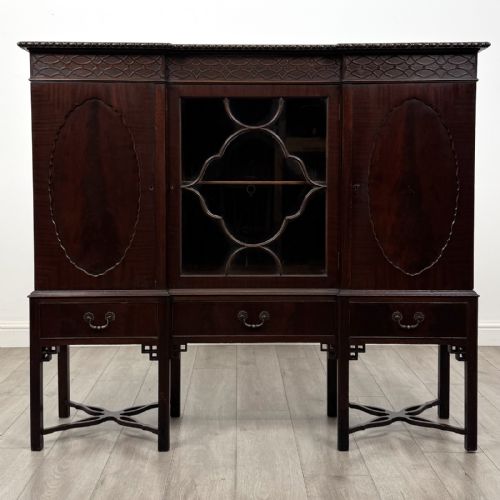
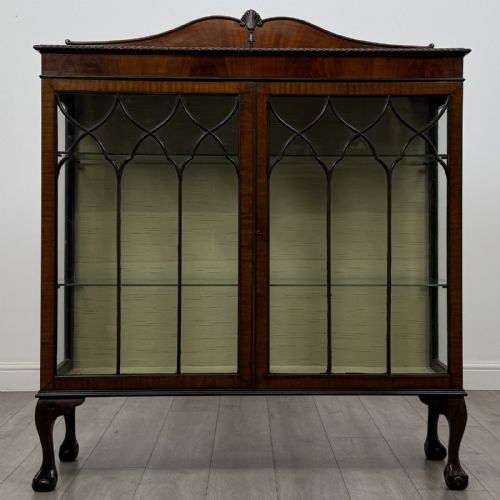
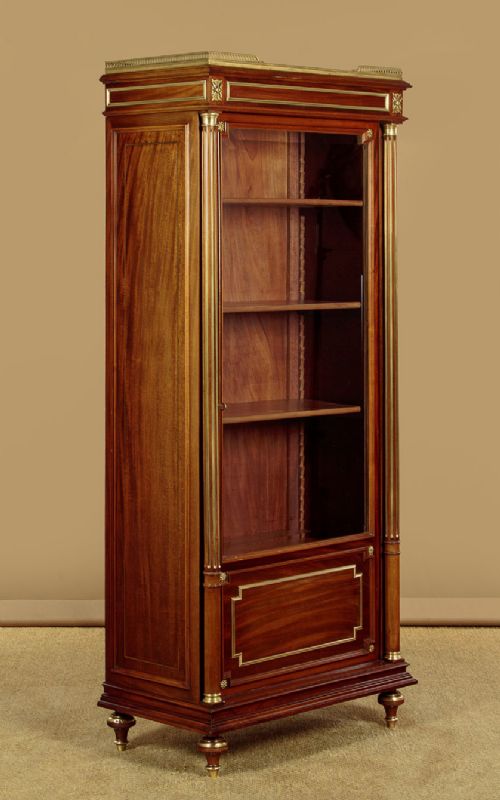
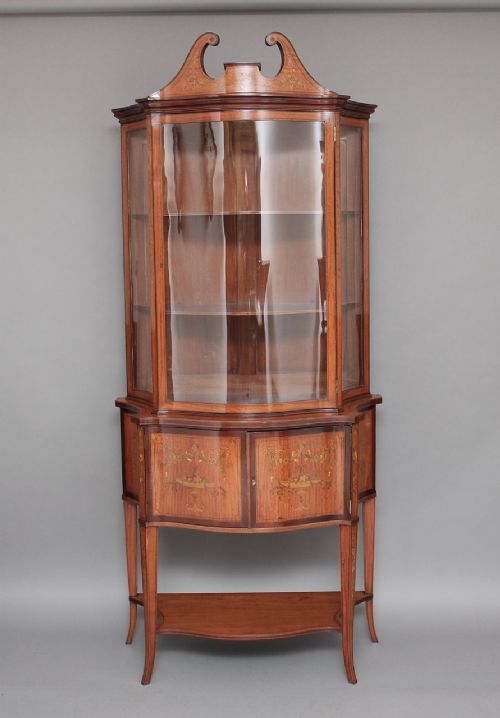
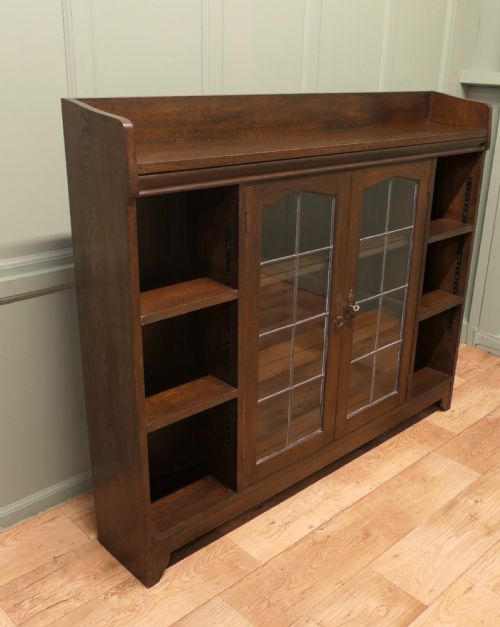
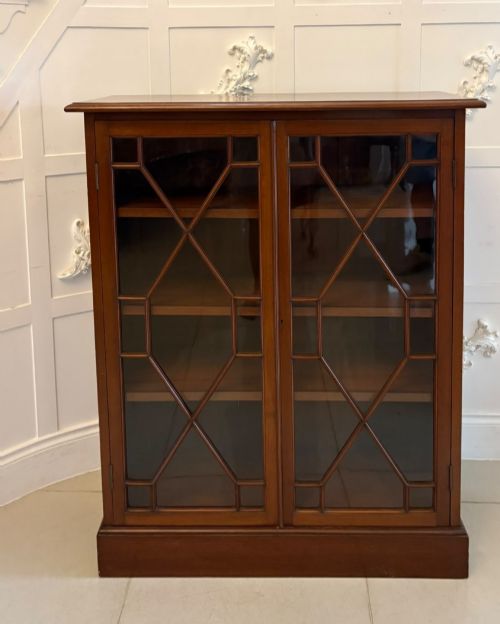
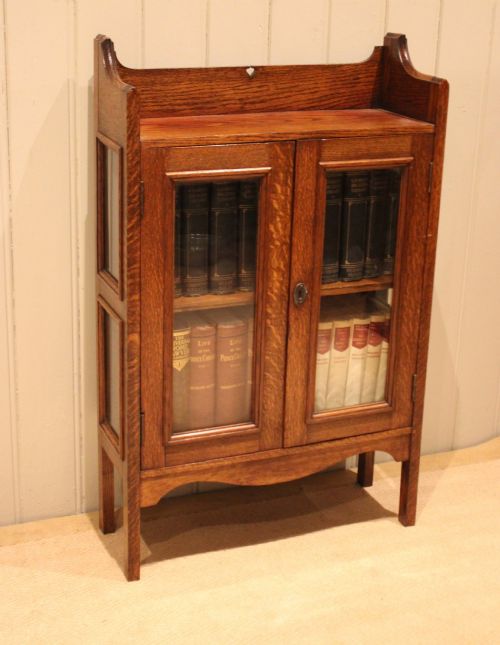
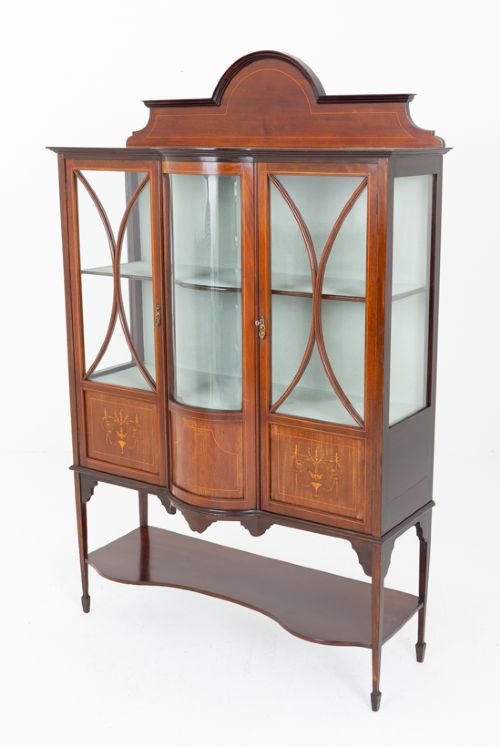
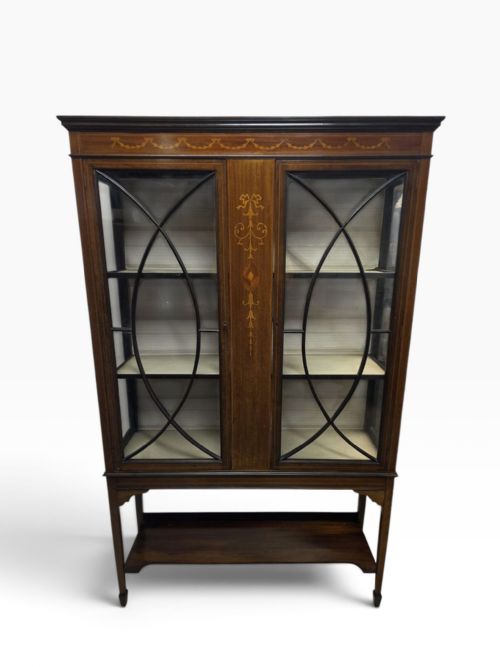
The version most commonly met on this page is the mahogany display cabinet or bookcase, frequently incorporating satinwood inlay, Sheraton Revival details, or glazed sides designed to showcase contents clearly. Alongside these, buyers encounter brass-mounted bookcases, oak students' bureaus, and specialised vitrines lined with velvet or fabric.
Origins stretch across English, French, and Continental workshops, with revival styles referencing Georgian and Chippendale aesthetics alongside Arts and Crafts simplicity and Art Deco walnut veneers. The grouping encompasses both substantial architectural furniture and compact table cases intended for precious items.
Materials and construction methods
Cabinetmakers utilised timber carcasses built primarily from mahogany, satinwood, walnut, and oak, frequently applying figured veneers and delicate string inlay to enrich the exterior surfaces. Glass panels were integrated into doors and sides to permit interior visibility, supported by brass mounts, gilt metal, and ebonised framing.
Interior components often involved fabric or velvet linings designed to cushion delicate objects within bijouterie tables and display cabinets. Structural joinery accommodated glazed doors, hanging hardware, and clock movements housed securely within fitted wooden or metal cases.
Edwardian Style Case Retail Price Guide 2026
Typical asking prices for edwardian style case among the pieces listed under this phrase on Sellingantiques today, from the lower quarter to the upper quarter. They describe what is for sale here now, not the wider market.
Object forms range from tall floor-standing display cabinets and longcase clocks to hanging corner cupboards and table-height bijouterie cases.
Distinguishing quality across examples
The refinement of the timber and the precision of the inlay separate finer examples from standard production, particularly where satinwood stringing and figured mahogany veneers meet seamlessly. Superior pieces demonstrate crisp carving on claw feet, balanced proportions, and clean glazing bars that frame the glass securely without distortion.
Hardware choice and internal execution further define the standard, visible in the weight of brass mounts, the fit of closing doors, and the quality of fabric linings inside bijouterie tables and display compartments.
Deakin & Francis·A. Wilcox·W&H
The Edwardian Style Case Glossary
- Bijouterie table
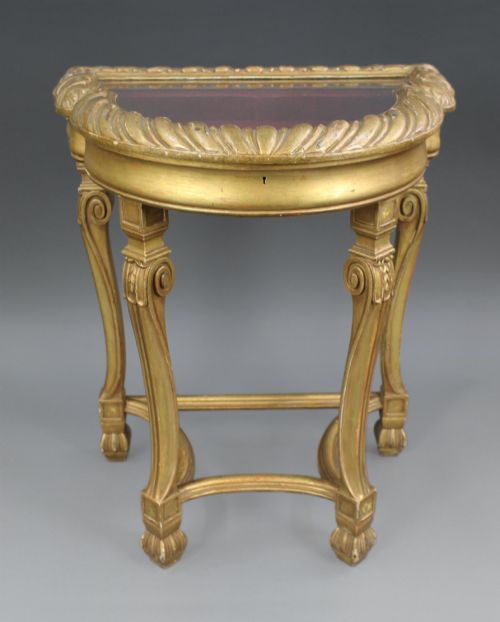
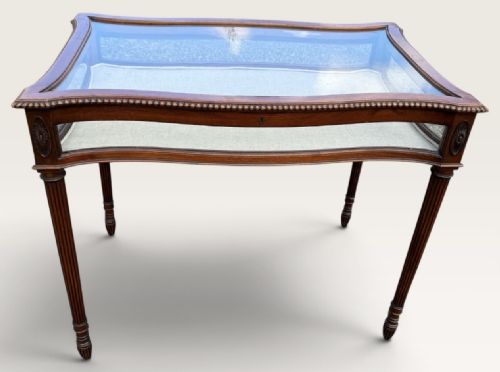
- A glass-topped display table designed to hold small valuables, medals, or jewellery. These tables often feature hinged lids and velvet-lined interiors.
- Sheraton Revival
- A late nineteenth and early twentieth century design movement inspired by Thomas Sheraton. Pieces in this style utilise light timber inlays, satinwood, and classical proportions.
- Fusee
- A conical pulley used in clock movements to maintain equal driving force as the mainspring unwinds. This mechanism contributes to accurate timekeeping in antique clocks.
- Veneer
- A thin layer of figured wood applied over a secondary timber base to create decorative exterior surfaces. This technique permits complex patterns without structural instability.
- Plaque
- A decorative ceramic or porcelain panel inset into furniture. These elements appear on Victorian and Edwardian cabinetry for visual contrast.
Edwardian Style Case: Frequently Asked Questions
What is an Edwardian style case?
An Edwardian style case refers to furniture and enclosures designed for display and storage, encompassing glazed cabinets, bookcases, corner units, and bijouterie tables. These items reflect the craftsmanship and aesthetic preferences of the early twentieth century and related revival periods.
Buyers select these pieces to organise books, ceramics, and small collectables while maintaining visibility through glass panels and fitted interior spaces.
How were display cabinets used?
Display cabinets and vitrines served to protect delicate ornaments, porcelain, and silver from dust while allowing household members and guests to view them. Bijouterie tables specifically held personal treasures and small accessories close at hand in reception rooms.
In domestic interiors, these furnishings functioned as both practical storage and focal points for displaying curated possessions.
How do I live with antique cabinets?
Living with these pieces involves placing them away from direct sunlight and sudden temperature shifts to protect timber veneers and historic glass. Regular dusting with a dry cloth preserves the polished finish of mahogany and oak surfaces.
Internal velvet or fabric linings benefit from gentle brush cleaning, and doors should be kept aligned to ensure smooth operation of original latches and locks.
How can I tell periods apart?
Distinguishing between Victorian, Edwardian, and later twentieth-century pieces relies on observing stylistic markers such as inlay types, hardware, and structural proportions. Victorian examples often lean towards heavier ebonised or dark mahogany finishes, whereas Edwardian pieces frequently introduce lighter satinwood and Sheraton Revival details.
Examining the construction methods, secondary timbers, and glass bevelling helps clarify whether a piece originates from the nineteenth century or later revival periods.