


Edwardian Sterling Silver Vessel
These pieces of edwardian sterling silver vessel span domestic tablewares and decorative containers shaped by early twentieth century design.
Edwardian Sterling Silver Vessel
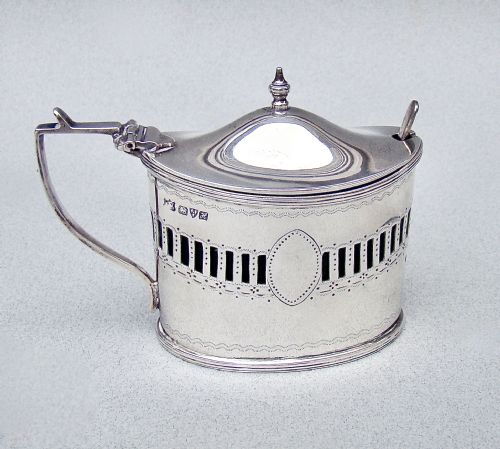
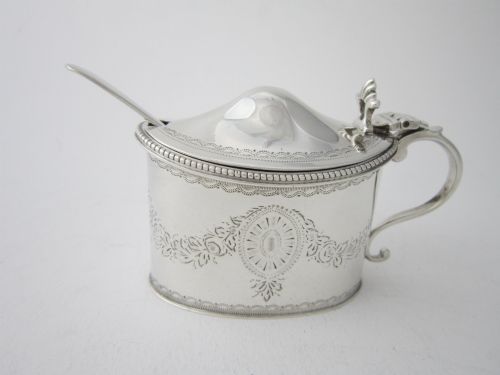
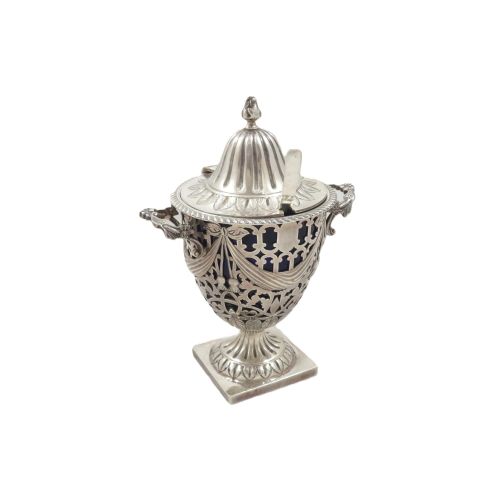
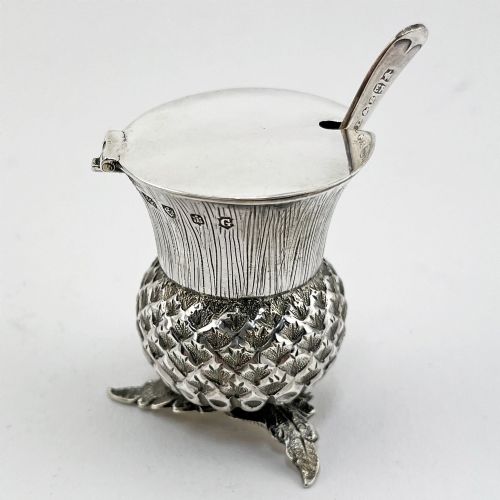
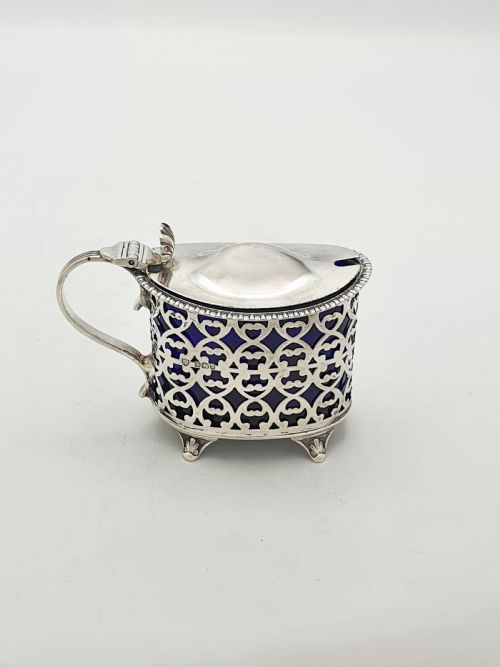
When searching for an edwardian sterling silver vessel, collectors encounter a diverse group of domestic containers spanning the periods from 1900 through the 1930s. The selection on this page leans heavily toward mustard pots, sugar boxes, drinking vessels, and scent bottles originating from Edwardian and George V workshops.
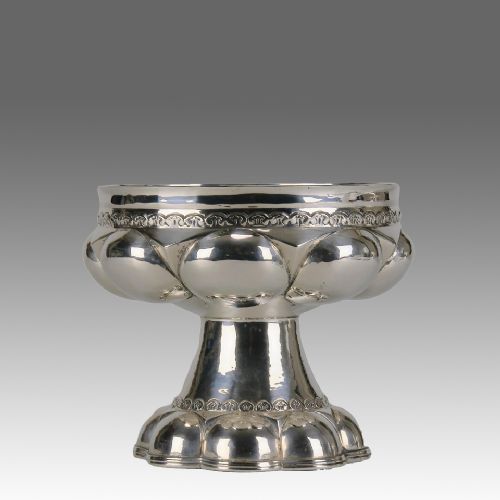
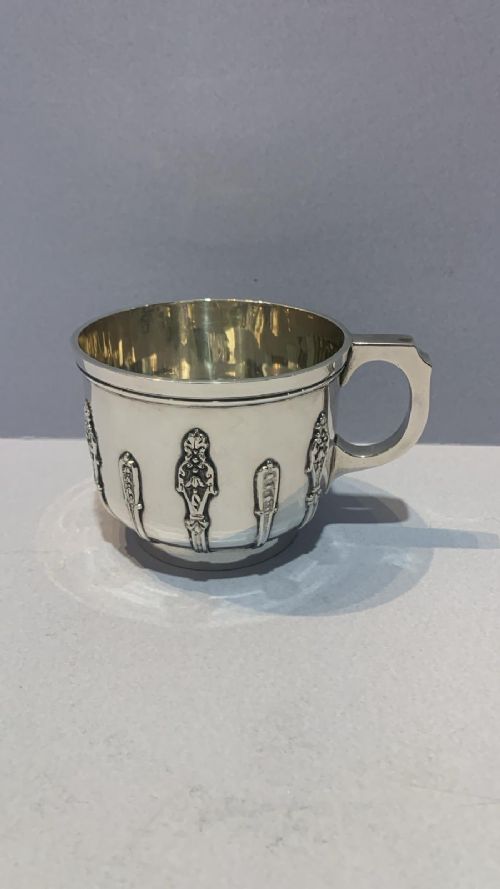
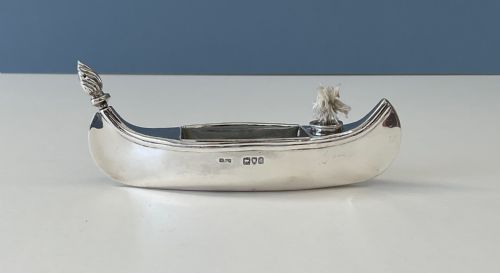
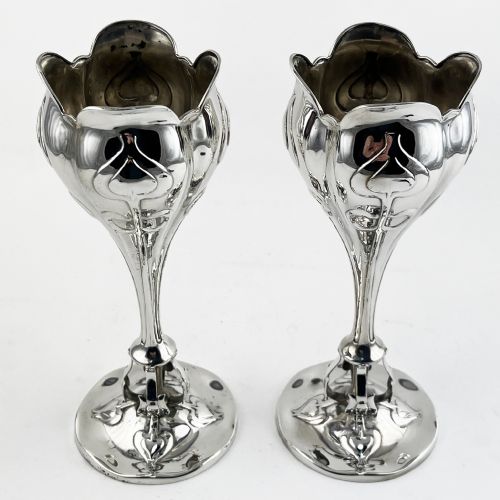
Forms range widely from practical tea caddies and condiment pots to decorative vases, chalices, and novelty items modelled as canoes or watering cans. These pieces reflect the varied social rituals of their time, serving both functional dining roles and decorative display functions in domestic interiors.
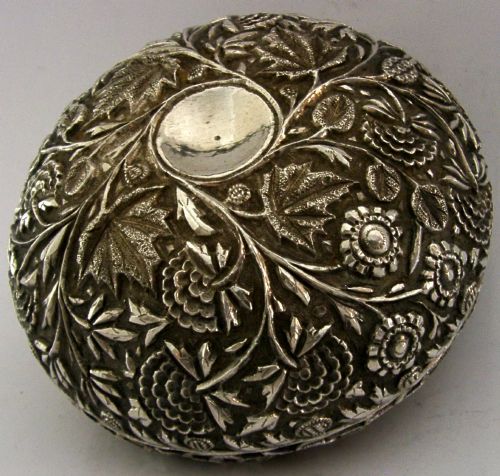
Origins include domestic British assay offices in Chester, Birmingham, Sheffield, and London, alongside continental and Anglo Indian production. Styles encompass the flowing lines of Art Nouveau, the geometric rigour of Art Deco, and the traditional motifs of Georgian Revival and Celtic Revival.
How They Were Made
Makers utilised sterling silver and solid silver alongside contrasting elements of cut glass, cobalt glass, blue glass, and enamel. Metalsmiths employed techniques such as piercing, casting, and repoussé to shape bodies ranging from polygon sugar shakers to twin fluted epergnes.
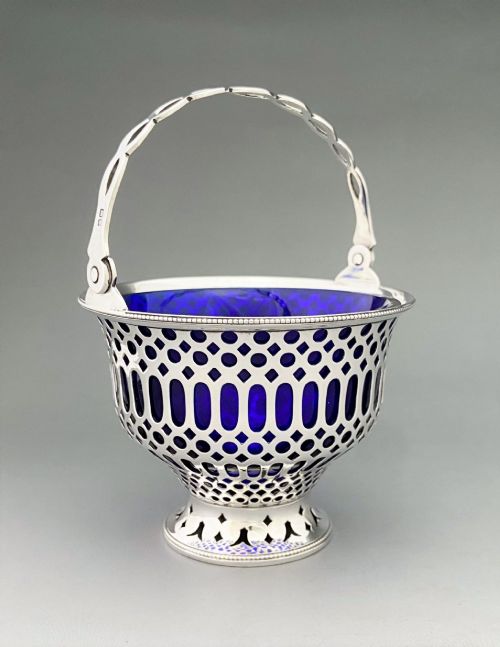
Glass components were frequently blown and hand cut, then fitted with pierced silver mounts, hinged lids, or collars. Enamel work added colour detail to small scent bottles and trinket boxes, while interior liners of coloured glass protected silver surfaces from acidic condiments.
Makers working in Birmingham, Chester, and London produced these vessels using traditional silversmithing techniques alongside glass inserts.
What Varies in Quality
Quality rests upon the crispness of cast or pierced ornamentation and the structural integrity of hinged lids, handles, and mounts. Heavy gauge silver retains its form and engraving depth far better through decades of handling than thinner alternatives.
The integration of mixed materials dictates distinction, particularly where glass liners fit snugly within pierced silver baskets or where enamel decoration remains completely intact. Recognised silversmith marks and clear assay office hallmarks provide additional assurance of material standard and workshop origin.
Nathan and Hayes·Alfred Marston·Walker and Hall·Hukin and Heath·Roberts and Belk·Omar Ramsden·Joseph Rodgers and Sons·Asprey·George Ernest Hawkins·Heath and Middleton
The Edwardian Sterling Silver Vessel Glossary
- Quaich
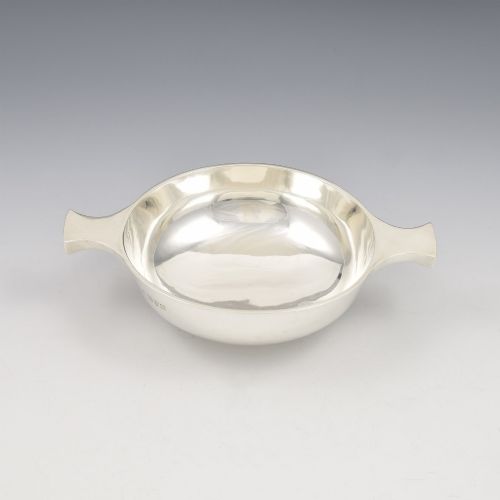
- A traditional two handled drinking vessel of Scottish origin. Early twentieth century examples often adapt this Celtic form in solid sterling silver.
- Tyg
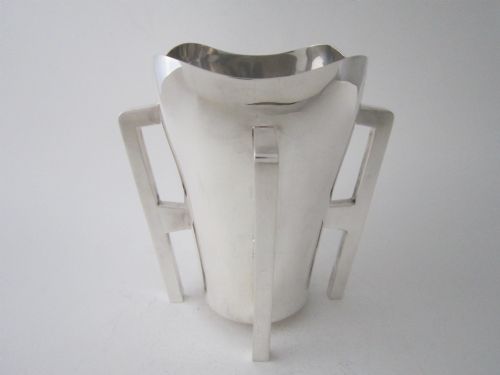
- A large drinking cup featuring multiple handles to allow communal passing around a table. These pieces frequently appear in solid silver with cut glass bodies.
- Tea Caddy
- A small lidded container designed for storing dry tea leaves. Edwardian versions display refined embossing and secure fitted lids.
- Epergne
- A central table centrepiece featuring multiple branching holders for fruit or flowers. Fluted silver configurations from this period create dramatic vertical displays.
- Pot Pourri Box
- A decorative lidded vessel with a pierced top designed to diffuse scented dried plant material. These containers often incorporate intricate scrollwork and hinged closures.
Edwardian Sterling Silver Vessel: Frequently Asked Questions
What is an edwardian sterling silver vessel?
It is a manufactured container or drinking vessel created in sterling or solid silver during the early twentieth century.
These pieces encompass domestic items such as mustard pots, sugar boxes, vases, and scent bottles decorated in styles from Art Nouveau to Georgian Revival.
How were these silver vessels used?
They served primarily dining, dressing table, and decorative functions in middle and upper class Edwardian homes.
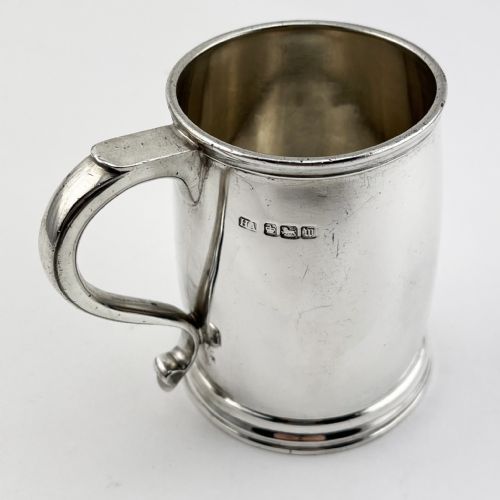
Containers held condiments, sugar, or cosmetics, while chalices, mugs, and loving cups marked christenings, presentations, and communal toasts.
How do I identify the period?
Hallmarks stamped directly onto the silver provide the most reliable indicator of date and assay office origin.
Stylistic cues such as organic whiplash lines point to Art Nouveau, while geometric facets indicate later Art Deco production.
Are glass and enamel components original?
Many vessels combine silver mounts with cut glass, cobalt glass inserts, or enamelled lids as part of their initial design.
Fitted components generally match the contours and manufacturing tolerances of the surrounding metalwork.
How should I care for silver and glass vessels?
Regular gentle dusting and occasional cleaning with a non abrasive silver polish preserve the metal surface.
Glass liners remove easily for washing in warm soapy water, ensuring moisture does not become trapped against the silver.