




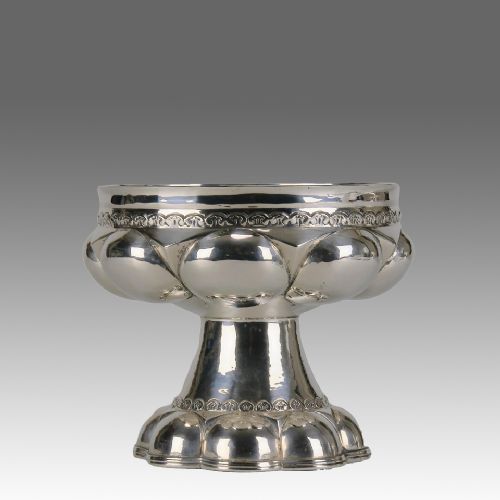


Edwardian Stemware
Edwardian stemware brings brilliant crystal and coloured glass to the table, offering drinking vessels designed for elegance.
Edwardian Stemware
Edwardian stemware encompasses wine glasses, champagne coupes, hock glasses, and dram glasses produced around the early decades of the twentieth century. These pieces reflect the aesthetic shifts of periods spanning Late Victorian, Edwardian, Arts and Crafts, Art Nouveau, Jugendstil, Belle Epoque, and Art Deco. Buyers seeking edwardian stemware encounter drinking vessels and service glassware designed for formal dining and celebrations.
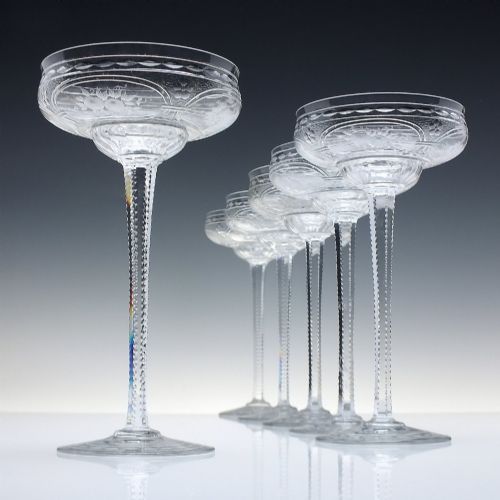
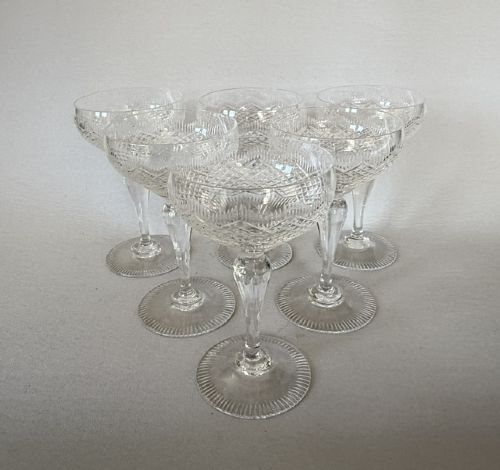
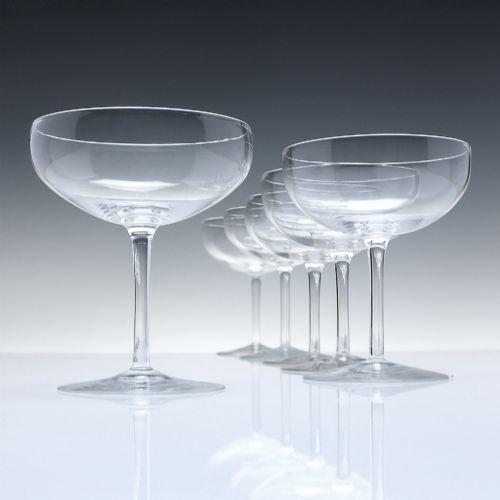
The selection ranges from matched sets of six or eight wine glasses to individual goblets, chalices, tazzas, and large drinking services. Forms include tall champagne glasses, small champagne bowls, and slender hock glasses suited for specific table settings. English, French, and German origins dominate the selection, bringing diverse regional design sensibilities to the table.
How Edwardian stemware was made
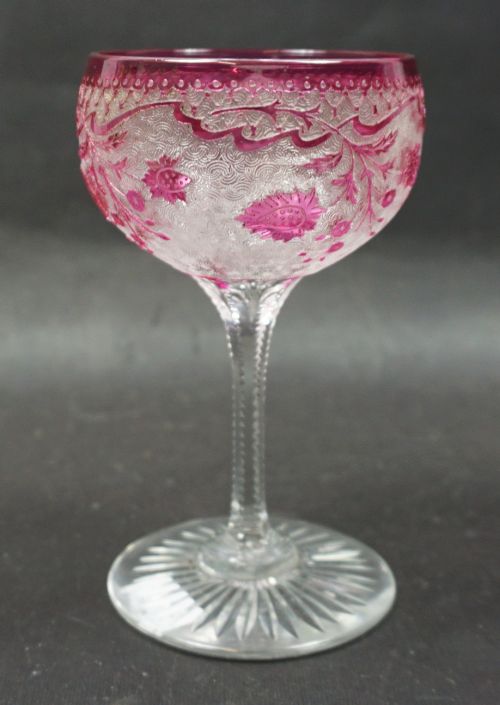
Glassmakers utilised lead crystal, crystal glass, and standard glass as the foundational material for these drinking vessels. Molten glass was blown and shaped by hand into stems, bowls, and chalices, often heavier and clearer in top tier examples. Overlay glass techniques allowed makers to fuse layers of different coloured glass together before cutting away the top layer to reveal contrasting hues beneath.
Decoration relied on skilled handwork such as intaglio engraving, where designs were carved deeply into the glass surface, and rock crystal cutting. Artisans applied enamel decoration and gold leaf gilding to surface areas for added visual richness. Workshops also produced cut glass patterns that caught the light along the facets of wine glasses and vases.
Edwardian Stemware Retail Price Guide 2026
Typical asking prices for edwardian stemware among the pieces listed under this phrase on Sellingantiques today, from the lower quarter to the upper quarter. They describe what is for sale here now, not the wider market.
Listings feature lead crystal, cut glass, and overlay glass shaped into wine glasses, champagne coupes, and vases across early twentieth century styles.
What varies in quality
Quality in edwardian stemware rests upon the precision of the glass cutting and the execution of surface decoration. Crisp intaglio engraving and finely applied enamel or gold leaf distinguish superior examples from simpler production. The clarity and weight of lead crystal also indicate higher standards of manufacture.
The presence of named makers and cohesive, matched sets elevates the standing of specific drinking vessels. Artisans and factories achieved varying levels of artistic ambition, moving from standard utility glassware to elaborate Art Nouveau or Arts and Crafts designs.
Stevens and Williams·Baccarat·Nathan and Hayes·Theresienthal·Harry Powell for James Powell·Webb Corbett
The Edwardian Stemware Glossary
- Intaglio
- A technique where a design is incised or engraved into the surface of the glass so that the pattern sits below the outer plane. This method creates subtle, tactile relief work seen on fine wine glasses.
- Hock glass
- A tall-stemmed wine glass traditionally used for German white wines. These glasses frequently feature coloured bowls and elaborate enamel decoration.
- Champagne coupe
- A broad, shallow-bowled glass designed for sparkling wine and champagne. They appear in matched sets suited for historical table settings.
- Overlay glass
- A method where a layer of coloured glass is fused over a clear or contrasting crystal base. Craftsmen then cut through the outer layer to expose the underlying colour.
- Tazza
- An ornate pedestal cup or shallow vessel raised on a stem. These decorative pieces often incorporate gilding and grapevine motifs.
Edwardian Stemware: Frequently Asked Questions
How do I identify periods?
Identifying periods involves looking at stylistic markers such as Art Nouveau curves, Arts and Crafts simplicity, or Edwardian formality. Materials like lead crystal and overlay glass also offer clues to the era of production.
Matching the design characteristics with documented workshop styles helps narrow down the manufacturing decade.
How were these glasses used?
These glasses served specific roles during formal dining, from hock glasses for white wine to tall champagne glasses for toasts. Complete drinking services provided uniform glassware for multi-course meals.
Smaller dram glasses and chalices fulfilled specialised roles for spirits and ceremonial dining occasions.
How do I care for antique glass?
Care requires gentle hand washing in warm water using mild detergent to protect delicate enamel and gold leaf decorations. Avoid sudden temperature changes to prevent thermal shock to lead crystal.
Store pieces securely on stable surfaces, keeping stems separated to prevent chipping along the rims.