



Edwardian Silver Watch Holder
These edwardian silver watch holder pieces are practical desk and pocket companions designed to keep timepieces safe, combining period metalwork with daily utility.
Edwardian Silver Watch Holder
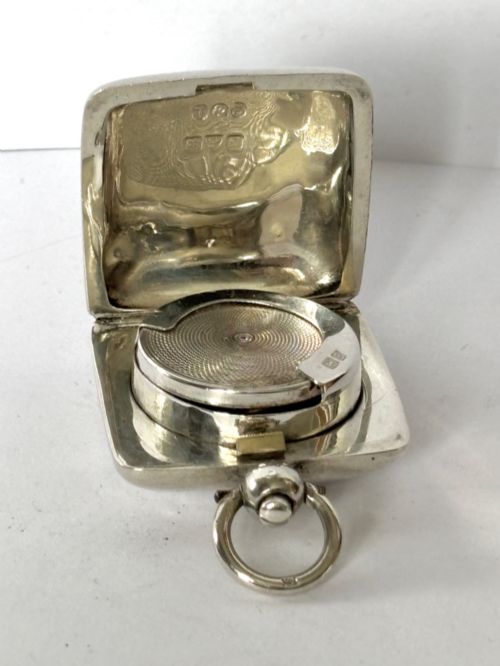
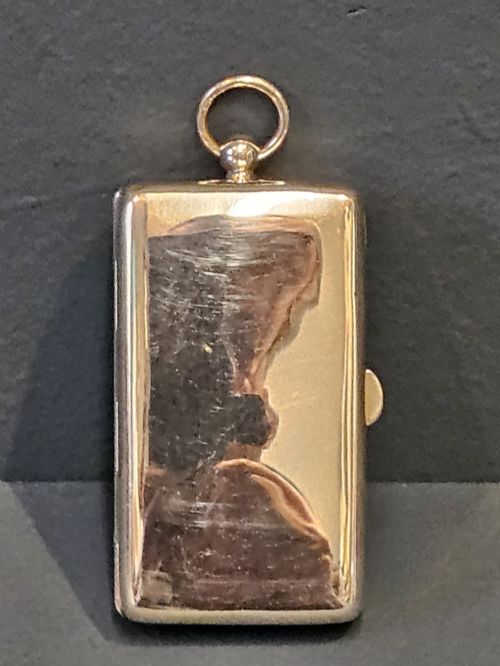
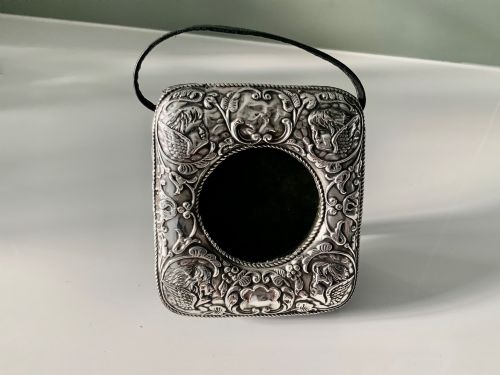
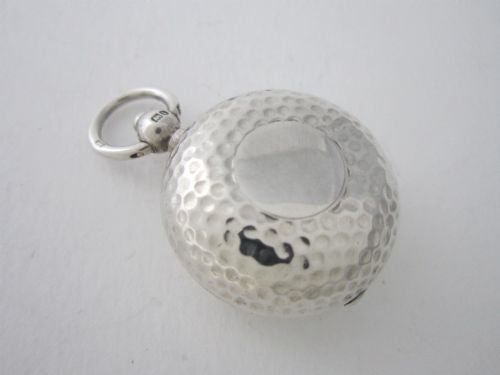
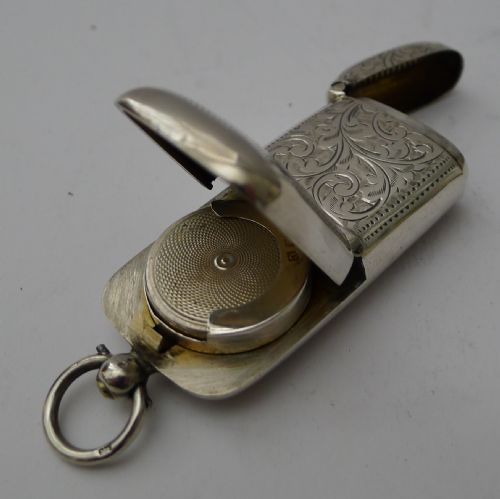
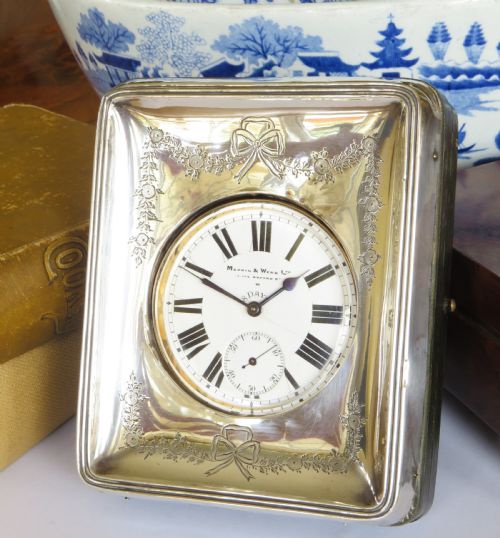
An edwardian silver watch holder encompasses pocket watch cases, travel clocks, and desktop items designed to secure small timepieces during the early twentieth century. Buyers seeking this phrase encounter sterling silver constructions often paired with velvet interiors, glass panels, or enamel finishes.
The selections on this page bridge the late Victorian era through to the George V and Art Deco periods. Forms range from dedicated pocket watch holders and desk pieces to multi-functional sovereign and vesta combinations that reflect the domestic habits of the time.
Materials and construction methods
Makers utilised sterling silver for the primary structural cases, often stamping or casting the metal to achieve clean profiles. Glass and enamel frequently appear as protective or decorative elements alongside interior velvet linings.
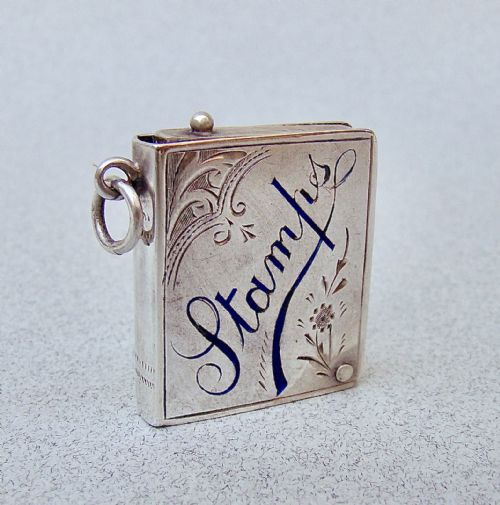
The construction relies on hinged lids, secure clasps, and fitted compartments tailored to hold pocket watches, sovereign coins, or stamps securely in place during travel or desktop use.
Edwardian Silver Watch Holder Retail Price Guide 2026
Typical asking prices for edwardian silver watch holder among the pieces listed under this phrase on Sellingantiques today, from the lower quarter to the upper quarter. They describe what is for sale here now, not the wider market.
Some ingenious Victorian designs squeezed a pocket watch holder, a match vesta, and a coin pouch into a single pocket-sized silver contraption.
Factors that define quality
The distinction between standard items and superior examples rests in the crispness of the hallmarks, the integrity of the silver hinges, and the preservation of any enamel or glass elements. Finer pieces retain unblemished interior linings and retain robust mechanical closures.
Overall craftsmanship reveals itself in the balance of the proportions and the precision of any applied decoration or gilt accents, distinguishing workshop production from mass manufacturing.
Aaron Lufkin Dennison·Mappin & Webb·Crisford & Norris
The Edwardian Silver Watch Holder Glossary
- Sterling Silver
- An alloy consisting of pure silver and other metals, usually copper, to increase durability while maintaining a bright metallic lustre. This standard material forms the body of most period watch holders and cases.
- Hallmark
- An official stamp applied to precious metals indicating the standard of purity, the assay office, and the date letter. These marks provide precise chronological context for antique pieces.
- Vesta Case
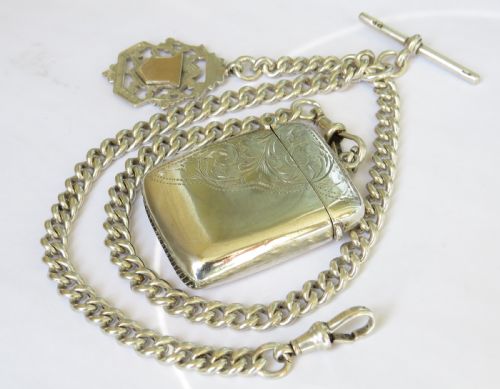
- A small pocket container designed to hold matches, frequently combined with sovereign holders or watch accessories during the period. They feature striker grooves on the base.
- Sovereign Case
- A specialised small circular container engineered to hold gold sovereign coins securely. These pieces often share design motifs with pocket watch holders.
Edwardian Silver Watch Holder: Frequently Asked Questions
What is an edwardian silver watch holder?
These items are protective enclosures or desk stands created to house pocket watches safely.
They reflect the metalworking standards of the early twentieth century, utilising sterling silver and fitted interiors.
How were pocket watch holders used?
Owners placed their pocket watches inside these cases to protect them from scratches and dust while resting on bedside tables or desks.
Travel versions allowed individuals to transport timepieces securely during journeys.
What materials are typical for these pieces?
Sterling silver forms the primary exterior material, frequently complemented by interior velvet linings to cushion the watch.
Some examples incorporate glass panels or coloured enamel details for added visual appeal.
How do I identify the period of a holder?
Assay office marks and date letters stamped directly onto the silver provide the exact year of manufacture.
Stylistic cues such as late Victorian motifs or later Art Deco lines also indicate the era.