

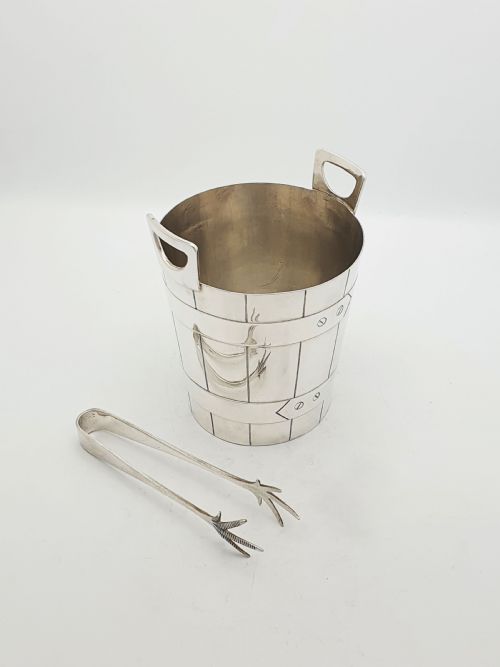


Edwardian Silver Plated Ice Bucket
These Edwardian silver plated ice bucket pieces combine practical barware utility with period display appeal, offering buyers a touch of early twentieth century entertaining style.
Edwardian Silver Plated Ice Bucket
When searching for an edwardian silver plated ice bucket, buyers encounter a functional category that extends into wine coolers, champagne buckets, and biscuit barrels designed for period hospitality. The selections span from the late Victorian era through the Edwardian period and into the early twentieth century, reflecting shifting domestic habits in dining and entertaining.
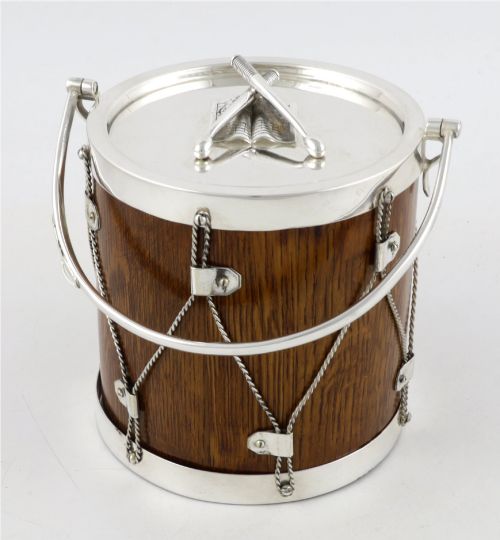
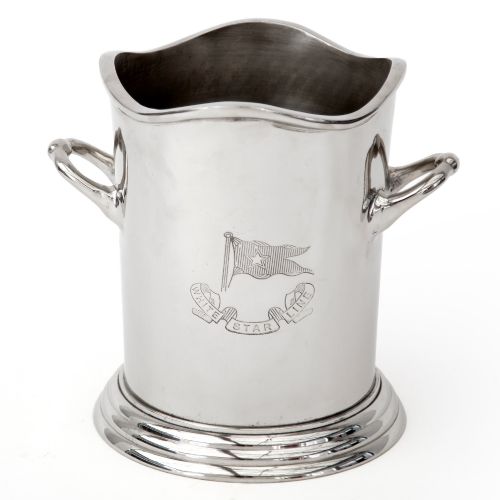
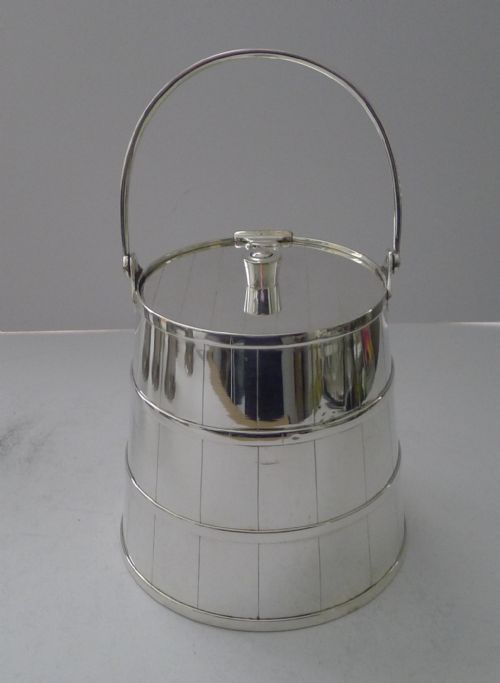
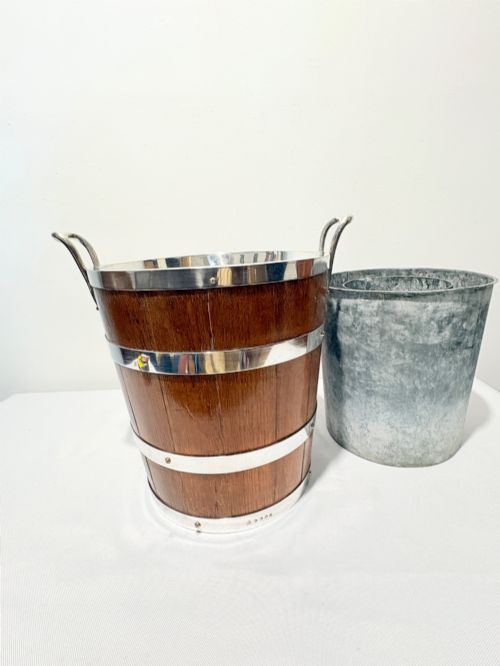
The most common forms on this page include barrel-shaped oak vessels, twin-handled wine coolers, and presentation bowls fitted with silver plate mounts. These items often feature auxiliary elements such as glass liners, ceramic creamware liners, and matching claw tongs.
Origins represented in the inventory point towards English craftsmanship alongside maritime and Scandinavian examples. While some pieces adhere strictly to Edwardian aesthetics, others bridge late Victorian ornamentation and early Art Deco or Scandinavian modern lines.
Materials and construction
The fabrication relies heavily on silver plate and EPNS applied over base metals such as nickel silver, paired with structural timber elements like oak. Makers combined these metallic surfaces with blown or cut glass liners and ceramic creamware to hold ice and liquids securely.
Metalworking techniques involved spinning or pressing plate onto supportive frames, complemented by turned wooden staves and detailed mounts. Handles, shields, and claw tongs were cast separately and attached with mechanical fixings or solder.
Edwardian Silver Plated Ice Bucket Retail Price Guide 2026
Typical asking prices for edwardian silver plated ice bucket among the pieces listed under this phrase on Sellingantiques today, from the lower quarter to the upper quarter. They describe what is for sale here now, not the wider market.
Several ice buckets double cleverly as biscuit barrels, proving Victorians took their snacks as seriously as their chilled wine.
Assessing quality in silver plate barware
Quality differences emerge in the weight of the metal and the thickness of the silver plating relative to the underlying base metal. Heavier gauge oak staves and sturdier metal mounts indicate a higher standard of original production.
The presence of original fitted components, such as cut glass liners, ceramic creamware inserts, and matching tongs, distinguishes exceptional survivals from incomplete examples. Crispness in cast details and mounts further separates standard utilitarian items from presentation pieces.
Dawson·James Dixon And Sons
The Edwardian Silver Plated Ice Bucket Glossary
- EPNS
- Electroplated nickel silver. This denotes a base metal of nickel silver coated with a layer of pure silver through an electrolytic process.
- Creamware
- A type of fine earthenware developed in the eighteenth century. It provides a durable ceramic liner for wooden and metal ice buckets.
- Claw tongs
- Small grasping utensils designed for picking up ice cubes. They frequently accompany period barware sets.
- Wine cooler
- A vessel intended to chill bottles using ice and water. These share similar forms and materials with dedicated ice buckets.
- Cut glass
- Glass decorated by cutting facets or patterns into the surface using a wheel. It adds weight and sparkle to interior liners.
Edwardian Silver Plated Ice Bucket: Frequently Asked Questions
What is an edwardian silver plated ice bucket used for?
These vessels were originally designed to hold ice for drinks during formal dining and drawing room entertaining.
Today, they function practically as table coolers or serve as decorative accent pieces in home bars and living spaces.
How do I clean an edwardian silver plated ice bucket?
Maintenance requires gentle washing with warm water and mild soap, avoiding harsh abrasives that could wear through the thin silver plating.
Periodic polishing with a specialised silver cloth helps maintain the reflective finish without damaging the underlying metal.
Are these ice buckets safe for modern use?
Most pieces retain their functional integrity, especially those fitted with intact glass or ceramic liners that protect the metal and wood components from direct moisture.
Careful handling ensures that older soldered joints and wooden staves remain stable during regular entertaining.
How can I tell an Edwardian piece from a Victorian one?
Dating relies on stylistic markers, hallmarks where present, and construction details that reflect changing manufacturing standards between the late nineteenth and early twentieth centuries.
Victorian items often display heavier ornamentation, while Edwardian examples lean towards cleaner silhouettes and lighter proportions.