


Edwardian Silver Plated Holder
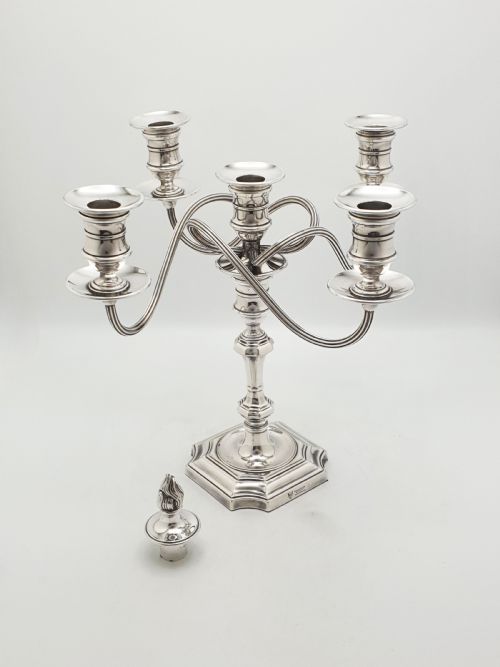
An edwardian silver plated holder brings functional elegance to the dining table, combining durable base metals with a gleaming silver surface.
Edwardian Silver Plated Holder
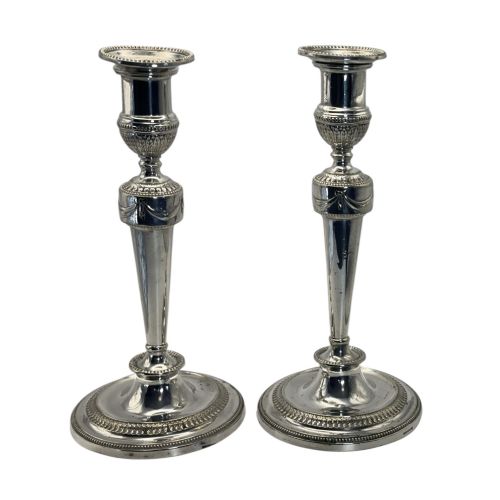
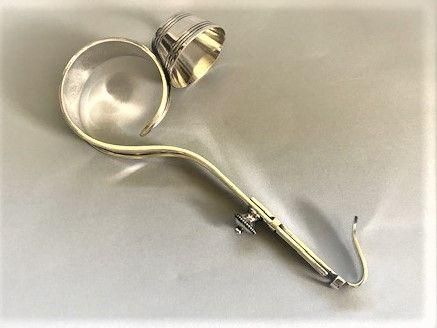
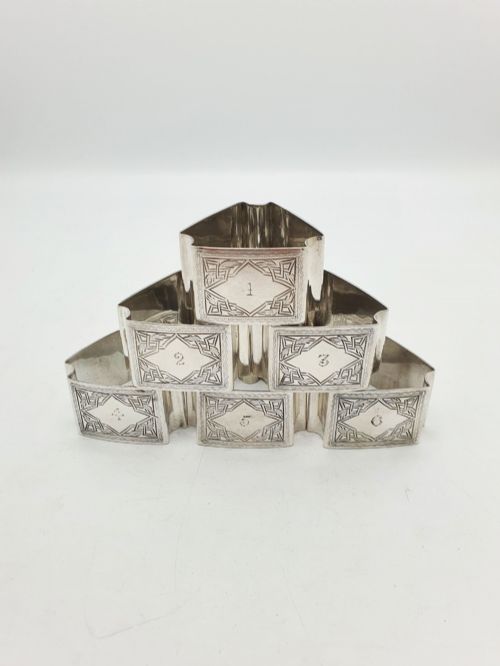
When you search for an edwardian silver plated holder, you encounter items designed for dining and entertaining from the late nineteenth and early twentieth centuries. The selection centres heavily on bottle and champagne holders, alongside table accessories like cruet sets and candlesticks.
These items originate predominantly from the Edwardian period and the surrounding decades, reflecting the formal dining habits of the era. You will frequently find pieces intended to hold wine bottles, soda syphons, or decanters securely at the table.
The forms range from simple pierced cylinders to elaborate multi-bottle frames designed by prominent makers. Each piece serves a specific domestic function, bridging utility with the decorative tastes of the period.
Materials and Techniques
Makers utilised base metals such as electroplated nickel silver or brass as the foundation for these items. A layer of silver was then applied via electroplating to create a bright, reflective finish without the full cost of solid silver.
Many designs incorporate cut glass inserts, mahogany bases, or ceramic elements to complement the metalwork. Piercing, embossing, and cast decorative mounts were frequently employed to achieve styles ranging from Art Nouveau curves to Rococo Revival motifs.
Assessing Quality
The standard of an edwardian silver plated holder depends heavily on the crispness of its decorative stamping and the thickness of the original plating. Superior examples retain their smooth metallic sheen and show careful attention to structural joints and mounts.
Weight and balance also dictate distinction, as finer items feel substantial in the hand rather than hollow. The integration of secondary materials, such as heavy cut glass liners or turned mahogany bases, often signals a higher grade of production.
Mappin & Webb·Brook and Son Edinburgh·Walker and Hall·Henry Wilkinson·Christofle·Hardy Brothers
The Edwardian Silver Plated Holder Glossary
- Electroplated Nickel Silver
- A base alloy of copper, nickel, and zinc coated with a thin layer of pure silver through electrolysis. This technique became widespread in the nineteenth century for producing affordable tableware.
- Cruet Set
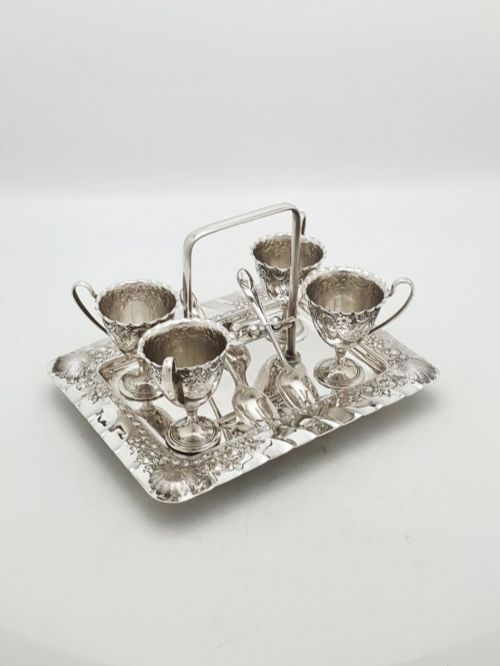
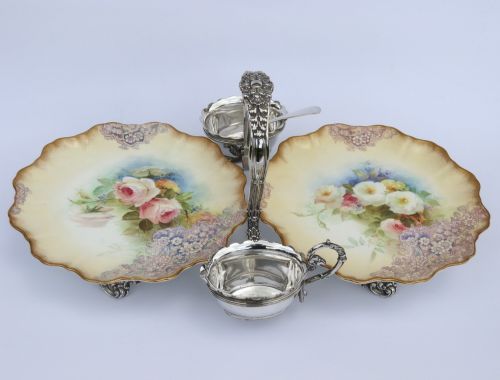
- A matched set of glass bottles or cruets mounted in a metal frame for holding condiments such as oil, vinegar, salt, and pepper. They typically feature a central carrying handle.
- Bottle Holder
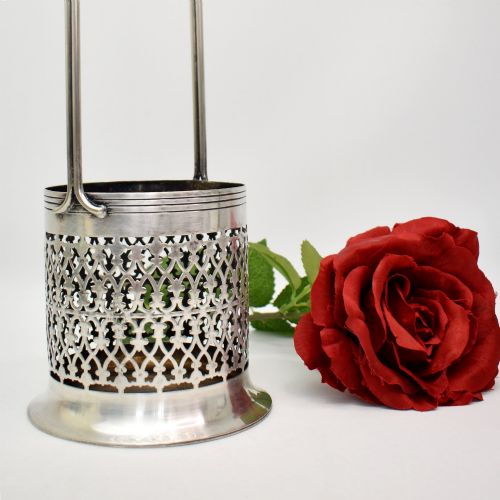
- A cylindrical metal vessel designed to hold wine, champagne, or soda syphons at the dining table. They frequently feature pierced or embossed decorative patterns.
- EPNS
- An abbreviation commonly stamped on metalware to denote electroplated nickel silver. It indicates that the item has a silver skin over a base metal core.
Edwardian Silver Plated Holder: Frequently Asked Questions
What were bottle holders used for?
These vessels were placed on the dining table to hold wine, champagne, or soda syphons securely during meals. They protected table linens from condensation and added a decorative element to the service.
Later in the evening, they kept bottles upright and within easy reach of guests. Their sturdy metal walls prevented tipping during lively dinner parties.
How do I clean a silver plated holder?
Maintenance requires a soft cloth and a specialised silver polish formulated for plated items. Vigorous scrubbing must be avoided to protect the thin layer of silver from wearing away.
Gentle wiping preserves the underlying base metal and any decorative embossing. Storing the piece away from damp environments prevents premature tarnishing.
Are these items made of solid silver?
Most pieces from this era consist of a base metal core coated with a thin layer of pure silver. Manufacturers utilised electroplating to achieve the appearance of solid silver at a lower production cost.
Marks such as EPNS indicate the use of this plating technique rather than solid precious metal. This method provided durability for everyday dining accessories.
How can I date an Edwardian piece?
Dating relies on stylistic clues, maker marks, and historical documentation associated with the workshop. Edwardian items frequently display distinct Art Nouveau curves or neoclassical revival motifs popular around the start of the twentieth century.
Maker stamps and registration numbers stamped into the metal provide further chronological context. Comparing the design to dated examples in archives helps narrow the manufacturing period.